
True Winter Capsule Wardrobe Ideas for Clean, High-Contrast Outfits
“True Winter” is a color-season label, not a weather forecast. It may help you explore cool, clear colors and stronger contrast, but it does not tell you how much insulation or coverage a local winter requires. Build the outfit for your actual climate first, then use palette ideas as optional guidance for color.
Start with the pieces you wear most: a coat or indoor layer, two bottoms, several tops, and shoes suited to your routine. Check how the pieces combine and whether the fabrics work for your temperatures and care habits. Black, white, navy, and brighter colors are examples, not a required shopping list; keep useful items that fall outside the palette.
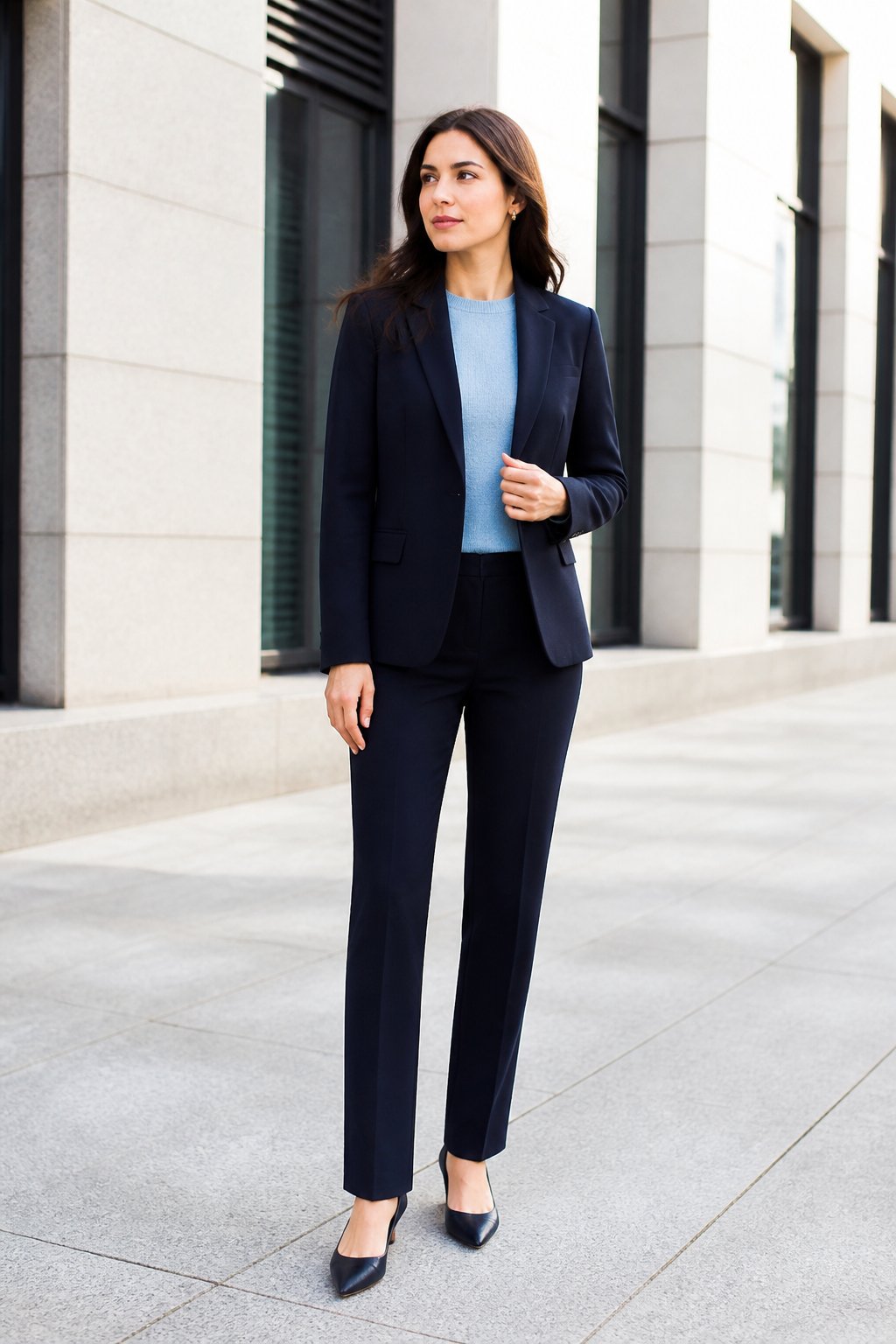
High-Contrast Blazer With Straight Pants and Pointed Flats
A blazer with straight pants gives a clear work outfit, especially when the layer and trousers suit the workplace. Check shoulder movement, waistband comfort while seated, and trouser length with the shoes you will wear. High contrast can come from black and white, but a tonal outfit works too if that feels more like you.
Pointed flats create a sharper finish than a round-toe flat, but choose them only if they are comfortable for your commute. For a cold walk, add an outer layer appropriate to the temperature; the blazer is not a substitute for a winter coat. A structured bag is optional and does not need to match the shoes.
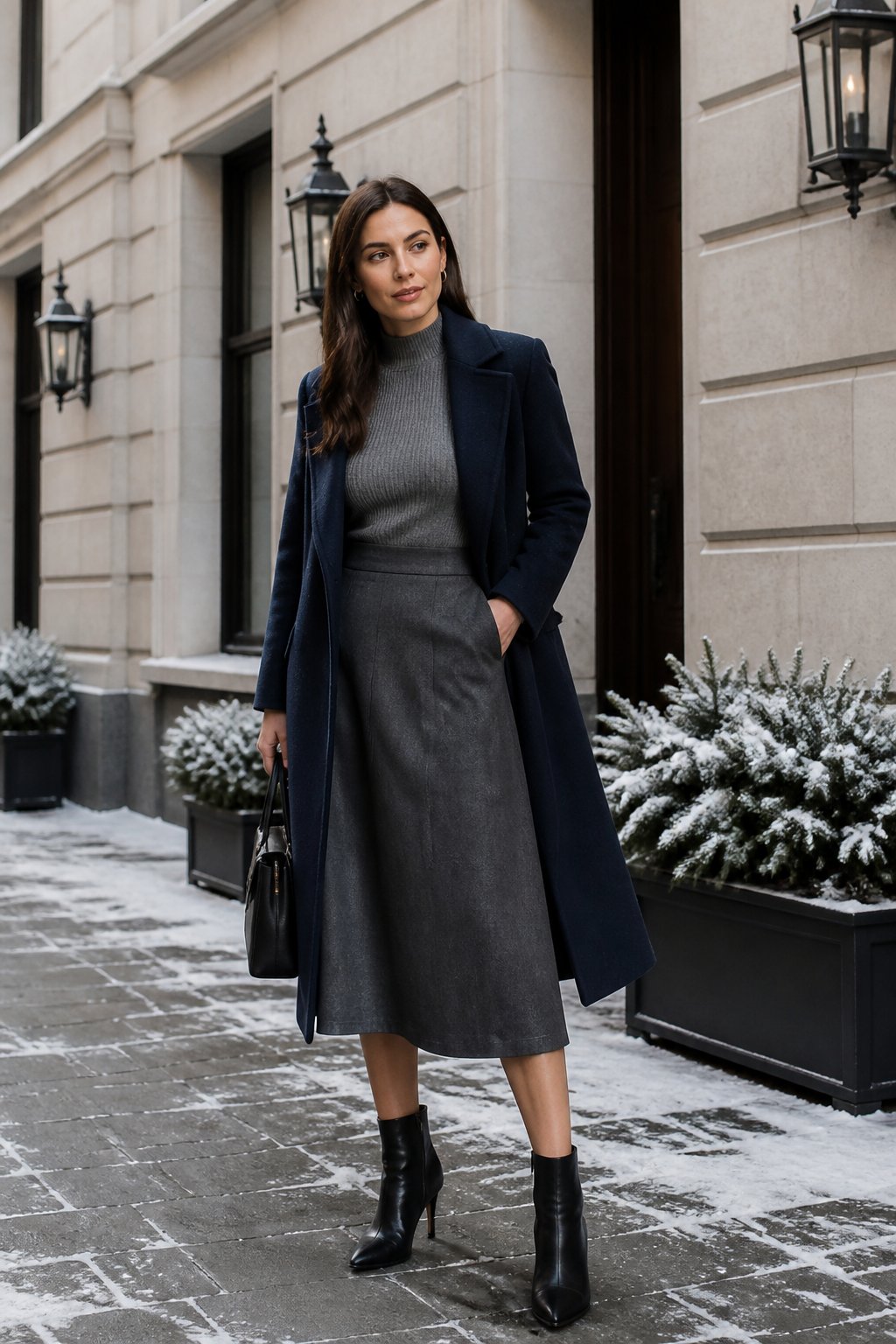
Ribbed Knit Top With a Midi Skirt and Ankle Boots
A ribbed knit top and midi skirt balance a fitted upper layer with more movement below. Check the skirt waistband while sitting and walking, and see whether the ribbing catches on the fabric. Ankle boots can work with the hem, but test the gap between boot and skirt in the weather you expect.
For an office day, choose a skirt length and slit that suit your movement and the workplace. If the outfit feels too formal, swap the boots for a simpler flat; if it needs warmth, add tights or a longer coat where appropriate. Color can help create contrast, but fit and temperature decide whether the pieces are useful.
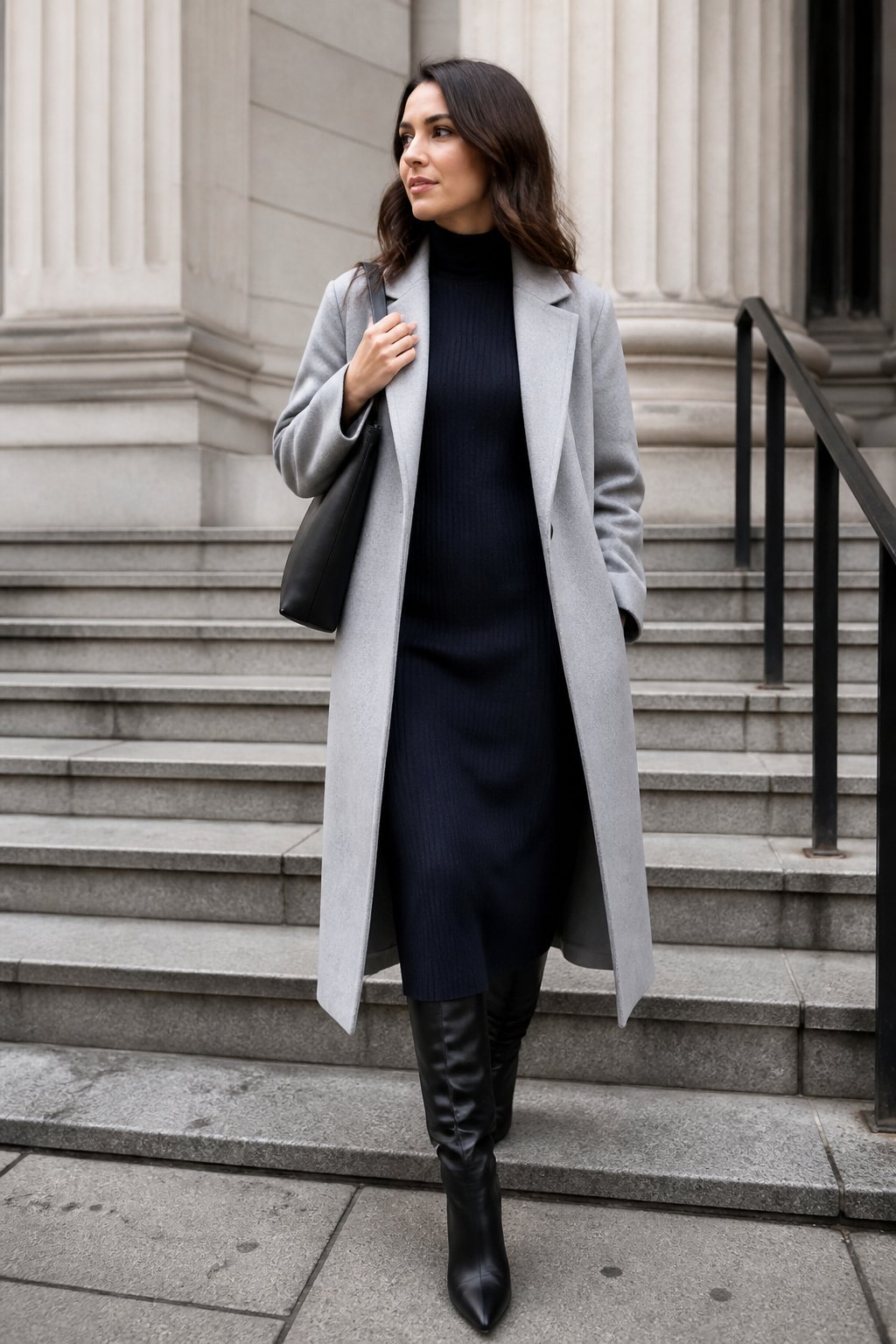
Tailored Coat With a Column Dress and Knee Boots
A tailored coat over a column dress is a simple event outfit when both pieces fit comfortably. Check the coat sleeve over the dress, the dress hem while walking, and any slit when sitting. Knee boots can create a continuous line, though a flat shoe may be better for your route or venue.
Once indoors, the dress should still feel complete if you remove the coat. Use a cardigan or shawl only if you want another layer, and check how it changes the silhouette. For a ceremony, follow the host’s dress expectations and consider how long you will stand; a polished outfit should still allow you to move.
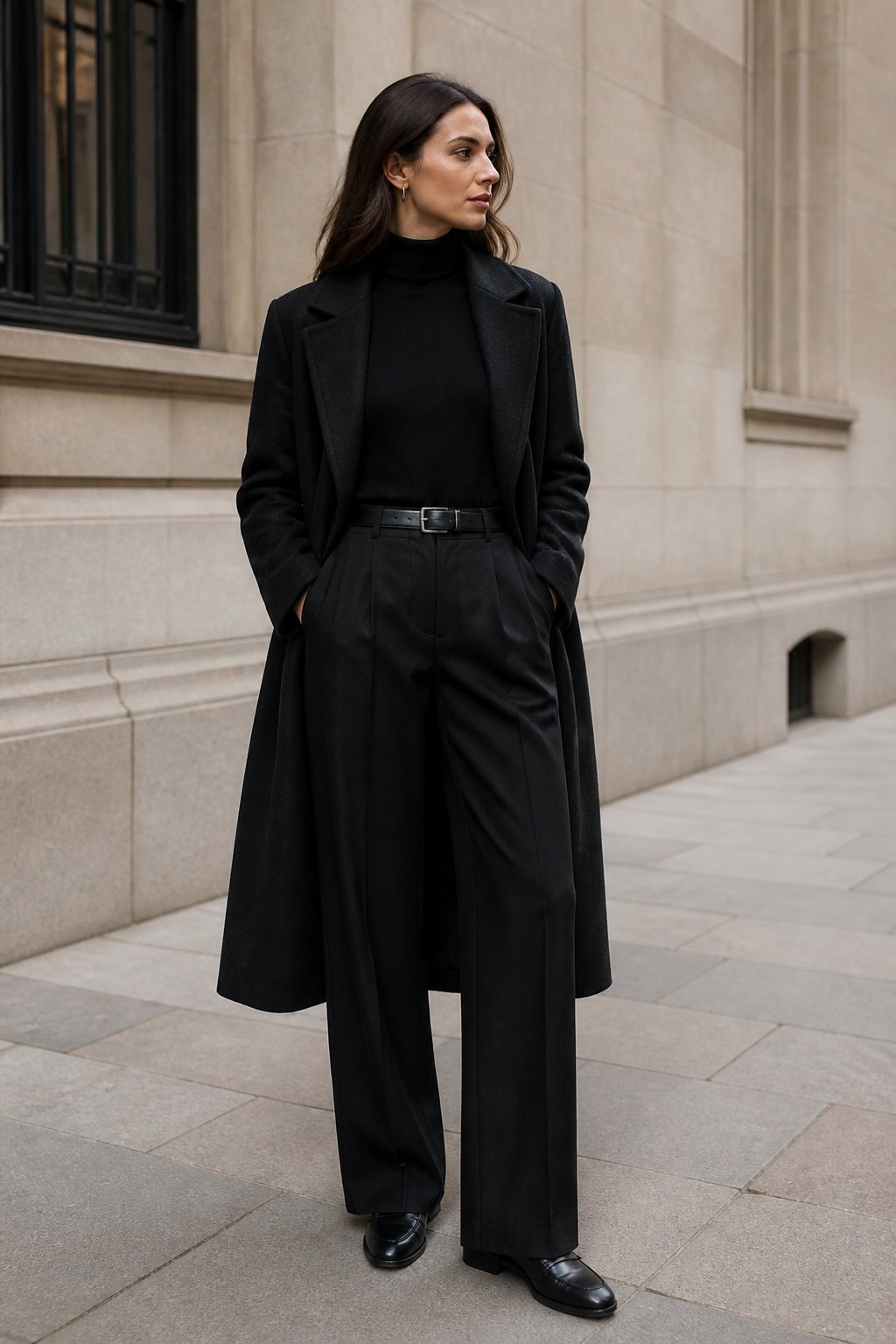
Black Turtleneck With Wide-Leg Trousers and Loafers
A black turtleneck with wide-leg trousers is a repeatable base when you already wear those pieces. Check neck comfort, sleeve length, and whether the trousers sit smoothly over the shoe. A loafers-and-turtleneck pairing may suit a mild indoor day; for colder outdoor time, plan a coat and layers separately.
The same turtleneck can sit under a blazer, vest, or coat, but test the combination for bunching at the arms and neckline. If black feels too stark, use charcoal, navy, or a color you prefer. Keep the base because it earns repeat wear, not because a seasonal chart says it is essential.
Sweater Set With a Midi Skirt and Minimal Jewelry
A sweater set with a midi skirt gives you a coordinated top and a separate layer. Try the cardigan both open and closed, and check that the skirt waistband is not crowded by the knit. Minimal jewelry is optional; a contrasting shoe or bag can add interest without requiring more clothes.
For an office or family plan, consider whether you need the cardigan throughout the day or only in cool rooms. If it stays on, make sure the sleeves allow easy movement; if you take it off, the top should still provide the coverage you want. Separate the pieces afterward to see whether each works with other outfits.
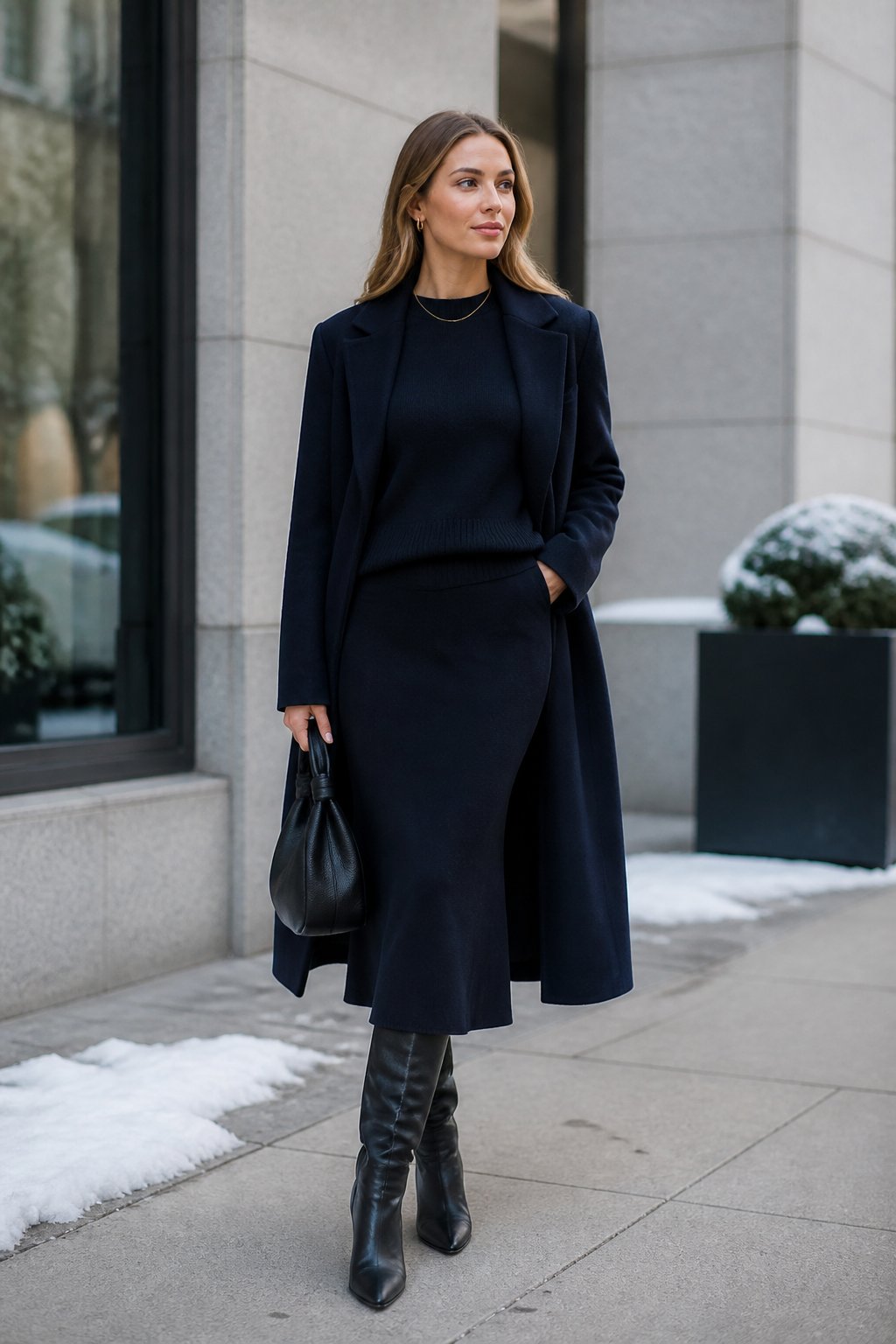
Button-Up Shirt With a Dark Vest and Straight Jeans
A button-up shirt, dark vest, and straight jeans create a smart-casual combination. Check for shirt gaping, vest length, and whether the jeans meet the actual dress code. If the vest feels restrictive, leave it open or replace it with a looser layer; the shirt and jeans can still make a complete outfit.
This can work for a weekend or a casual office, depending on the denim and setting. A belt is not required if the waistband fits well. Use color contrast if you enjoy it, but do not discard a comfortable shirt or jeans because their shade does not match a named season.
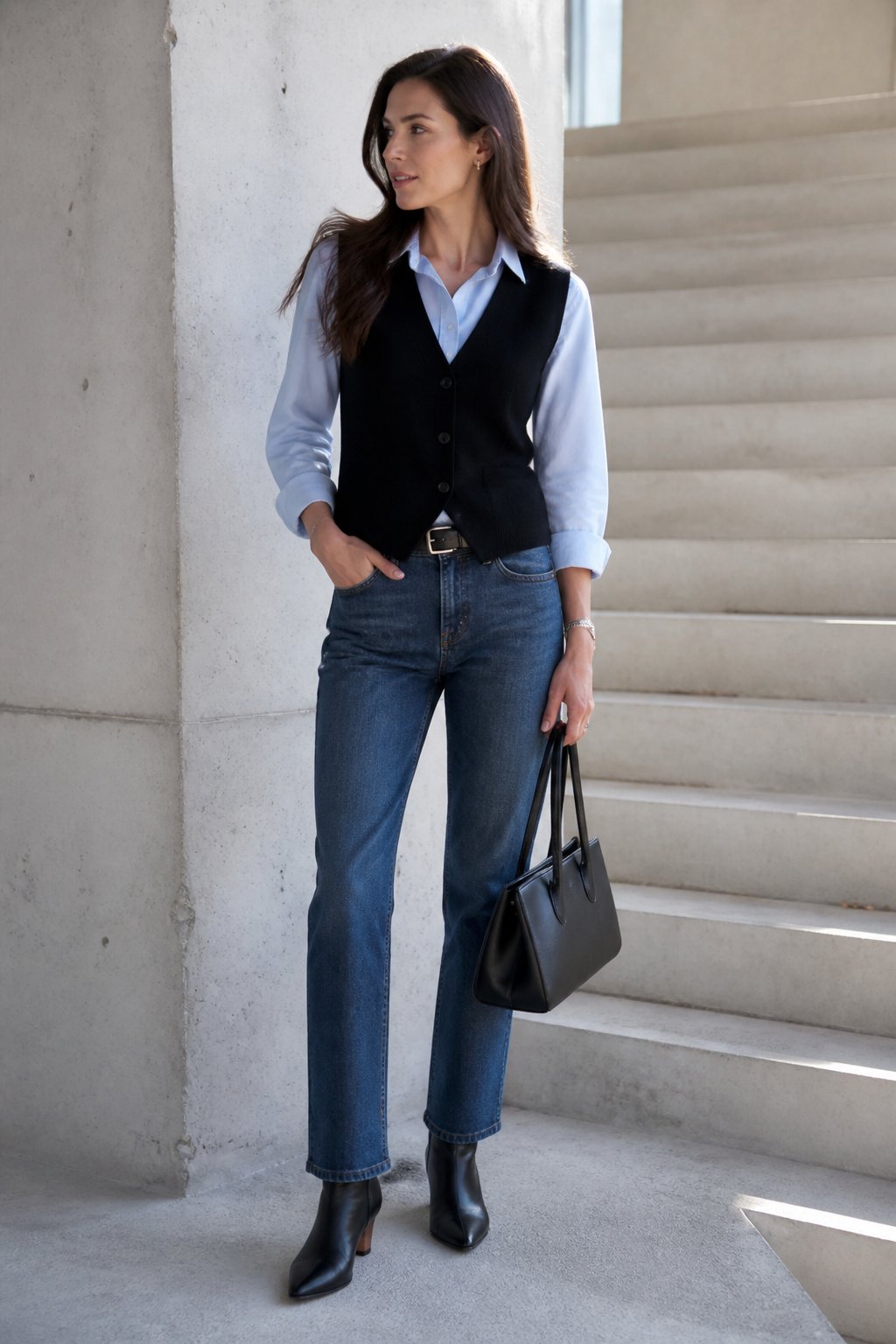
Knit Dress With a Structured Jacket and Tall Boots
A knit dress with a structured jacket pairs one soft piece with a more defined layer. Check the dress for cling, stretch, and ease of movement, then confirm the jacket closes or sits comfortably over it. Tall boots are one option; a lower shoe may be easier if you will walk or stand for a long time.
For colder weather, add a coat that suits the temperature rather than relying on the jacket alone. If you remove the jacket indoors, see whether the dress still feels appropriate for the setting. Choose a bag and jewelry based on what you need to carry; the outfit does not depend on metallic accessories to look finished.
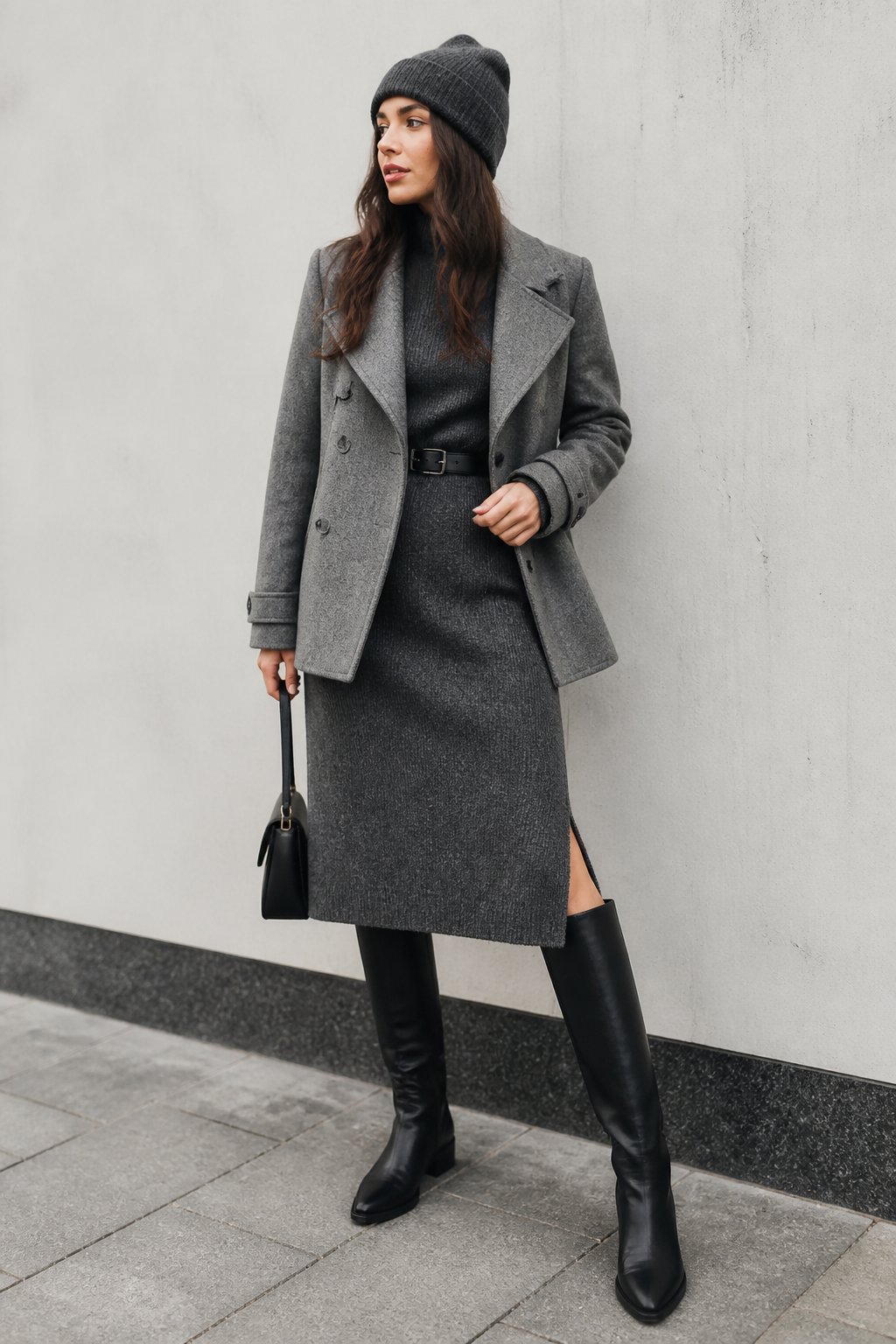
Monochrome Knit Set With a Long Coat and Loafers
A monochrome knit set simplifies matching and gives you two pieces to wear separately. Check the care labels and fit at the waist, seat, and sleeves before treating it as a frequent-wear option. A long coat adds another proportion; try it open and closed to see which version feels balanced.
For a winter visit or commute, plan enough warmth for the time outdoors, including a coat and footwear that suit the conditions. Loafers may work indoors or in mild weather but are not automatically practical for snow or ice. Keep the set if its pieces combine with the rest of your wardrobe, not solely because they match.
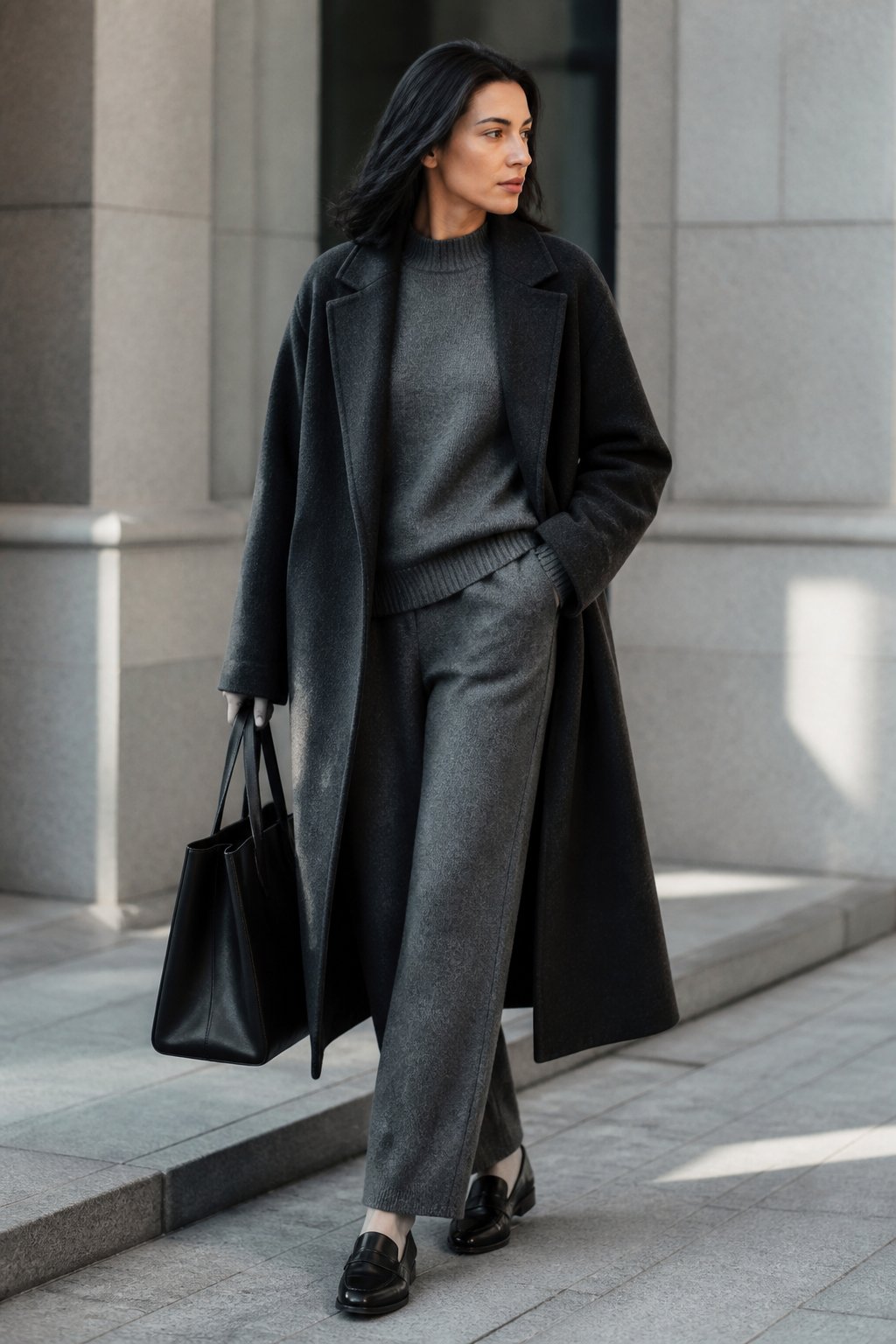
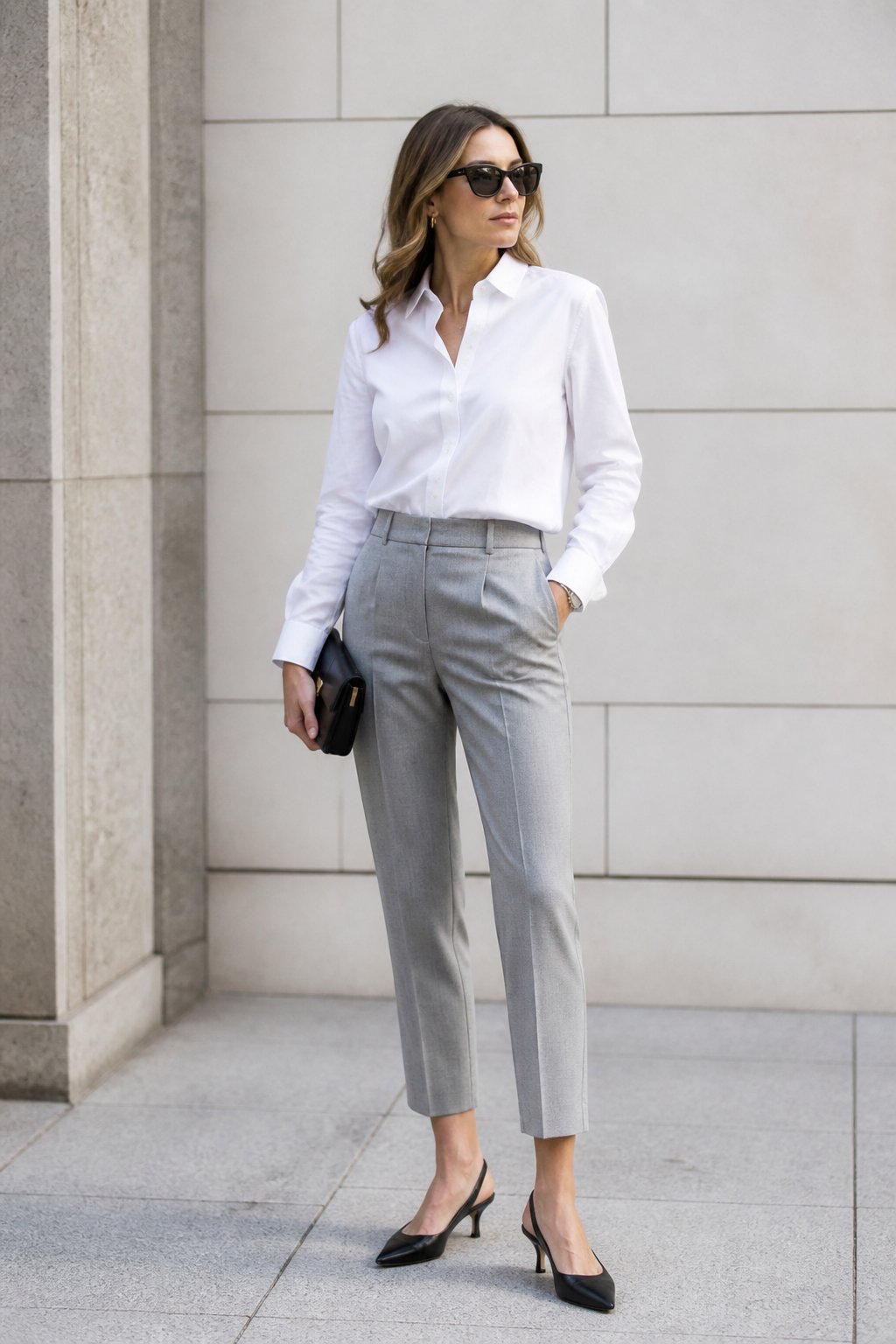
Crisp Shirt With Cropped Trousers and Slingbacks
A crisp shirt and cropped trousers can make an indoor outfit with a clean outline. Check the trouser length with your preferred shoes and whether the shirt stays tucked as you move. Slingbacks are a dressier option; for colder weather, a closed shoe and proper outer layer may be more appropriate.
This combination is most useful when the day is mainly indoors or the weather is mild. If the hem leaves too much skin exposed for your comfort or climate, choose a longer trouser or different shoe. The contrast can come from the colors you already own, rather than a new set of season-specific basics.
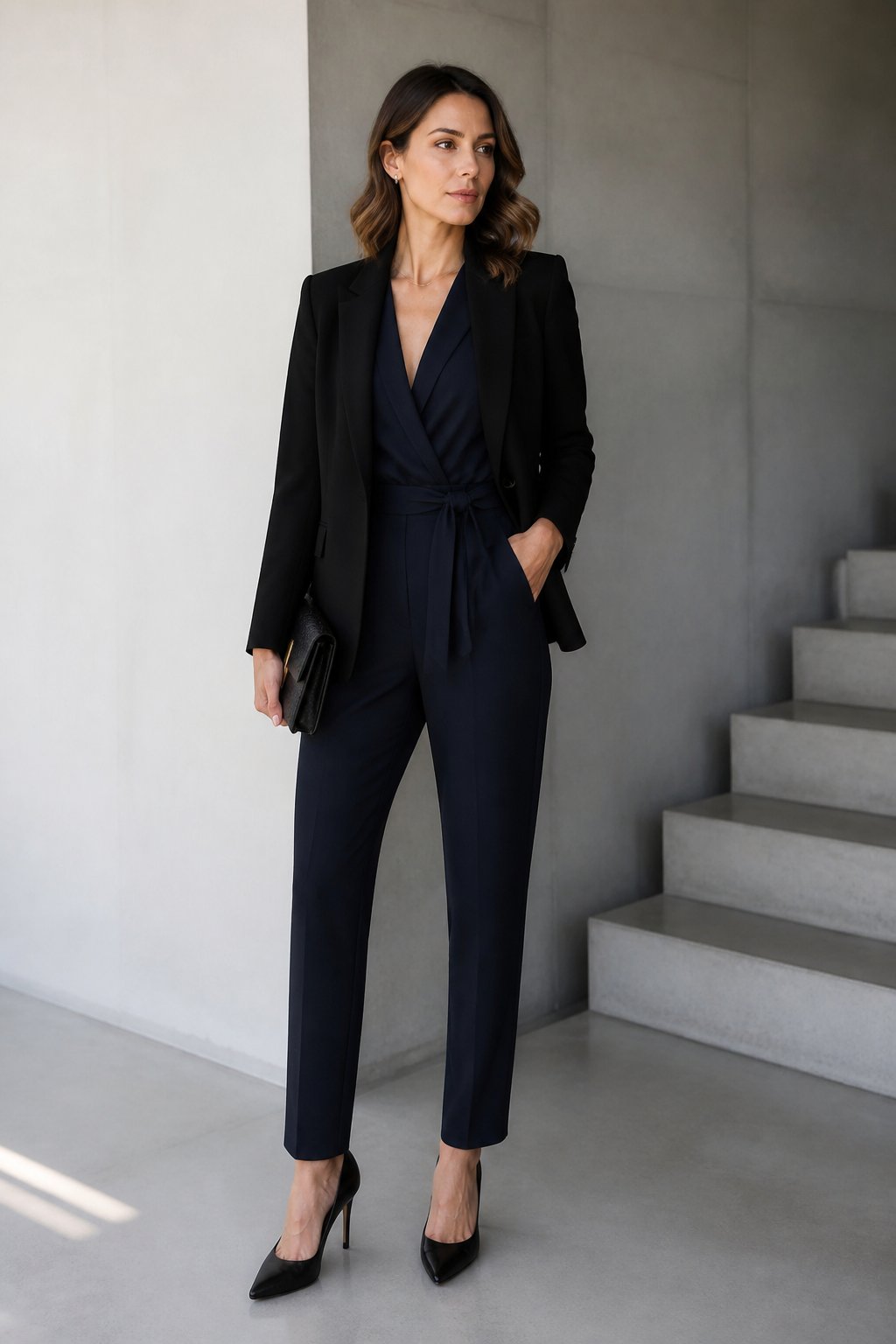
Sharp Jumpsuit With a Blazer and Simple Heels
A jumpsuit with a blazer is a one-piece base for an event or office day, if the cut fits your body and dress code. Sit, reach, and test fastening it before wearing it for hours; check the rise and hem with the shoes you plan to use. A blazer adds structure but cannot fix a jumpsuit that pulls or restricts movement.
For travel, think through restroom access, the fabric’s care instructions, and how the outfit feels after sitting. Do not assume a jumpsuit will resist wrinkles; that depends on the garment. Add a coat for the destination’s weather and keep accessories simple if the outfit already meets the occasion.
What to avoid
Avoid treating True Winter as a strict uniform of black, optic white, and bright jewel tones. A color-season system can suggest combinations, but it cannot determine what you enjoy wearing or what your wardrobe needs. Keep colors outside the palette when they suit your preferences and coordinate with your clothes.
Do not reject warm, muted, or earthy colors automatically. If a shade feels too close to your face, try it as a shoe, bag, trouser, or layer farther away. Compare it in the lighting where you dress, and keep the choice if you feel good wearing it.
High contrast is one possible styling direction, not a condition for a workable capsule. If black-and-white feels too sharp, combine navy with charcoal or use a softer color near your face. If you prefer strong contrast, a light and dark piece can create it without requiring a whole new wardrobe.
Shoes and bags do not have to match each other or the season palette. Choose for comfort, weather, dress code, and repeat wear. A black loafer, brown boot, or colorful bag may be exactly the useful piece your wardrobe needs, even when a guide recommends a narrower range.
Do not assume that a smooth or structured fabric will be warmer, more durable, or easier to care for. Those qualities vary by construction, lining, fiber, and garment. Read care labels and assess the actual piece; try it with the layers you plan to wear before deciding whether it belongs in a cold-weather rotation.
Plan the next step
If you are exploring color analysis, use the capsule wardrobe systems guide to compare the site’s seasonal framework. Treat its palette descriptions as styling references, and use your own preferences and existing wardrobe to decide what to keep.
The site’s Dark Autumn guide explores a deeper, warmer palette; True Summer explores a cooler, softer direction. Compare those guides if color is the question. If you need cold-weather outfit planning, choose layers for local temperatures and daily plans regardless of the season name.
Keep these outfit ideas handy.
Save this guide on Pinterest (opens in a new tab)More ideas for your wardrobe
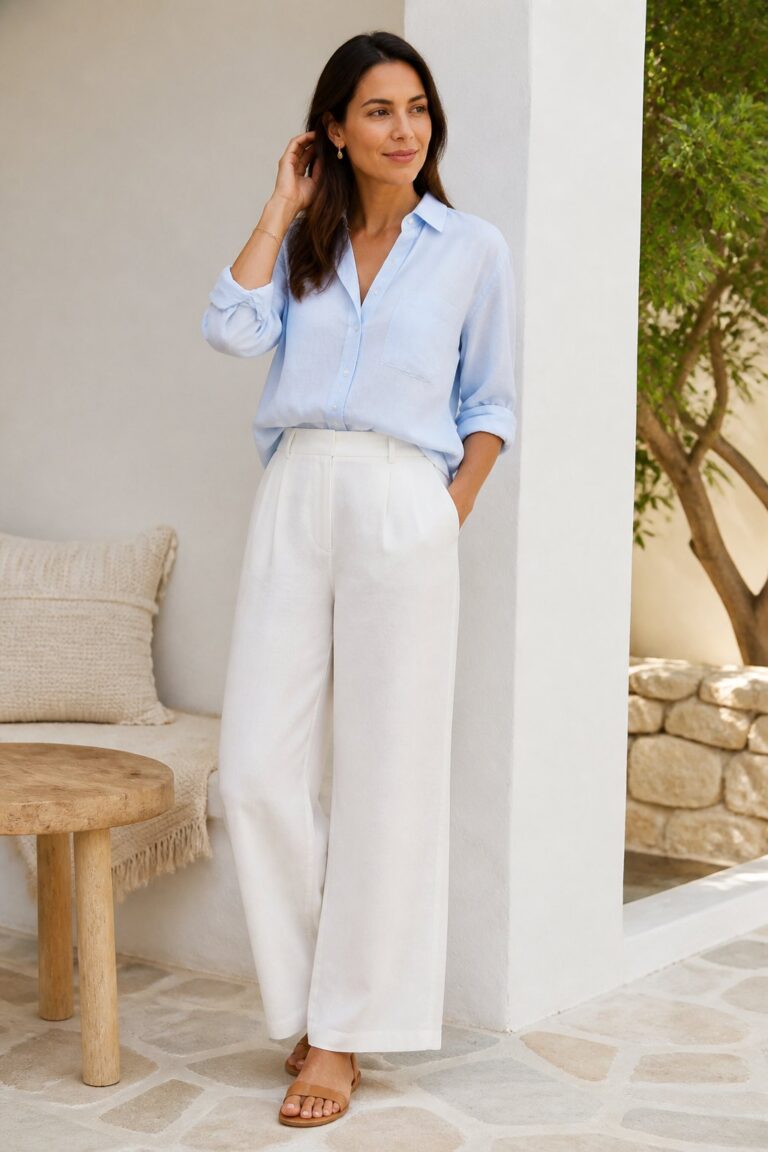 Color Season Capsule WardrobeLight Summer Capsule Wardrobe Ideas for Cooler, Airier Outfits
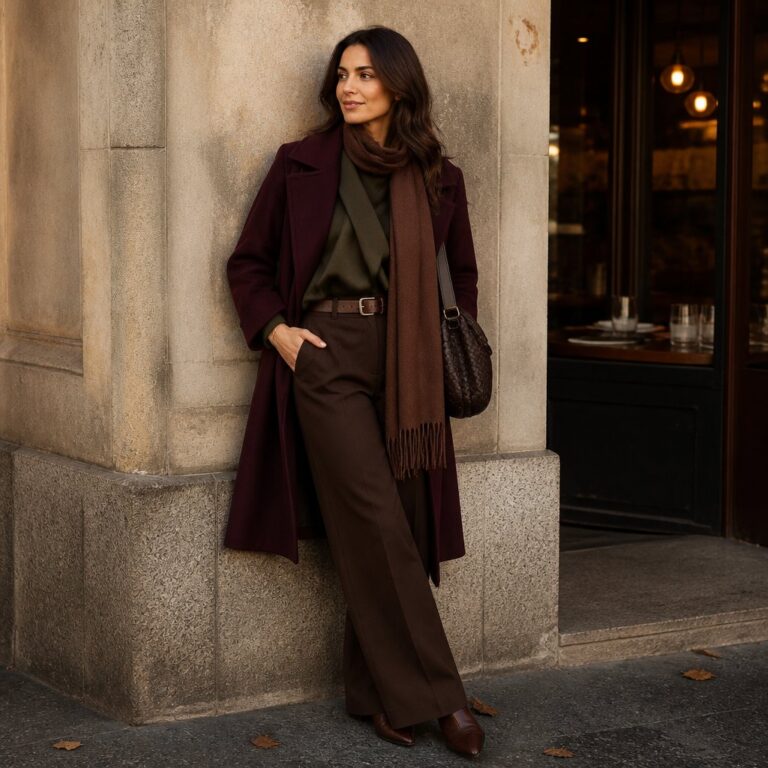 Color Season Capsule WardrobeDark Autumn Capsule Wardrobe Ideas for Rich, Everyday Outfits
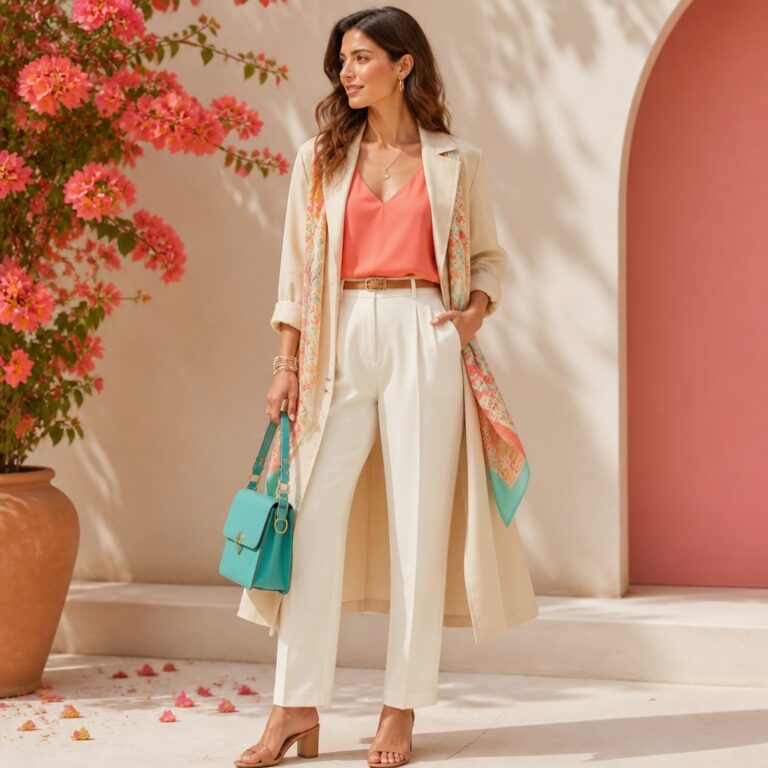 Color Season Capsule WardrobeWarm Spring Capsule Wardrobe Ideas for Bright, Wearable Outfits
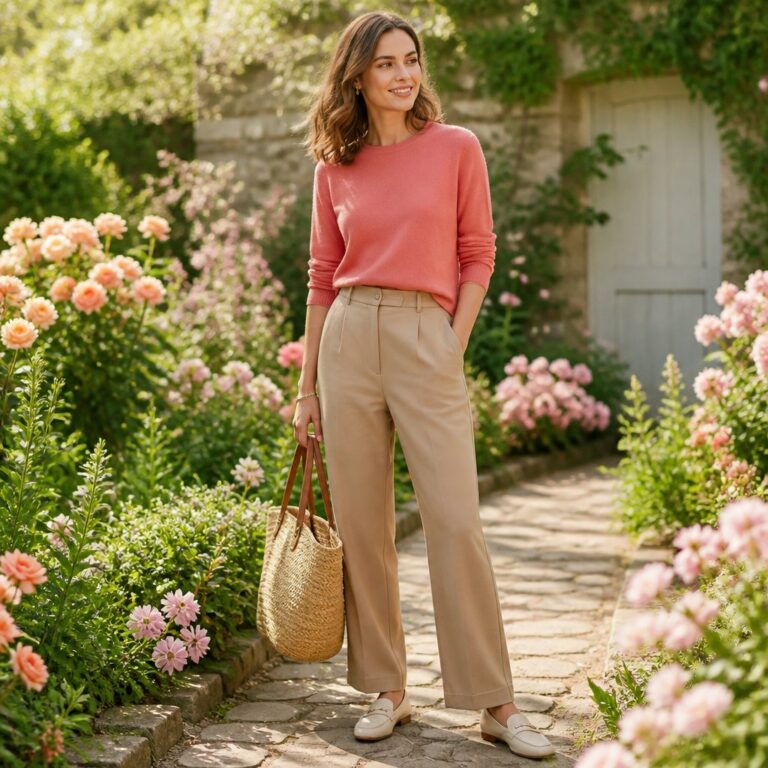 Color Season Capsule WardrobeLight Spring Capsule Wardrobe Ideas for Clear, Warm, Wearable Outfits