
The workwear edit / Dress with purpose
Work outfits that feel effortlessly polished.
Good office style works on real schedules: meetings, commutes, hybrid days, and everything in between. Explore practical starting points for getting dressed without reinventing every outfit.
Find your office style ↓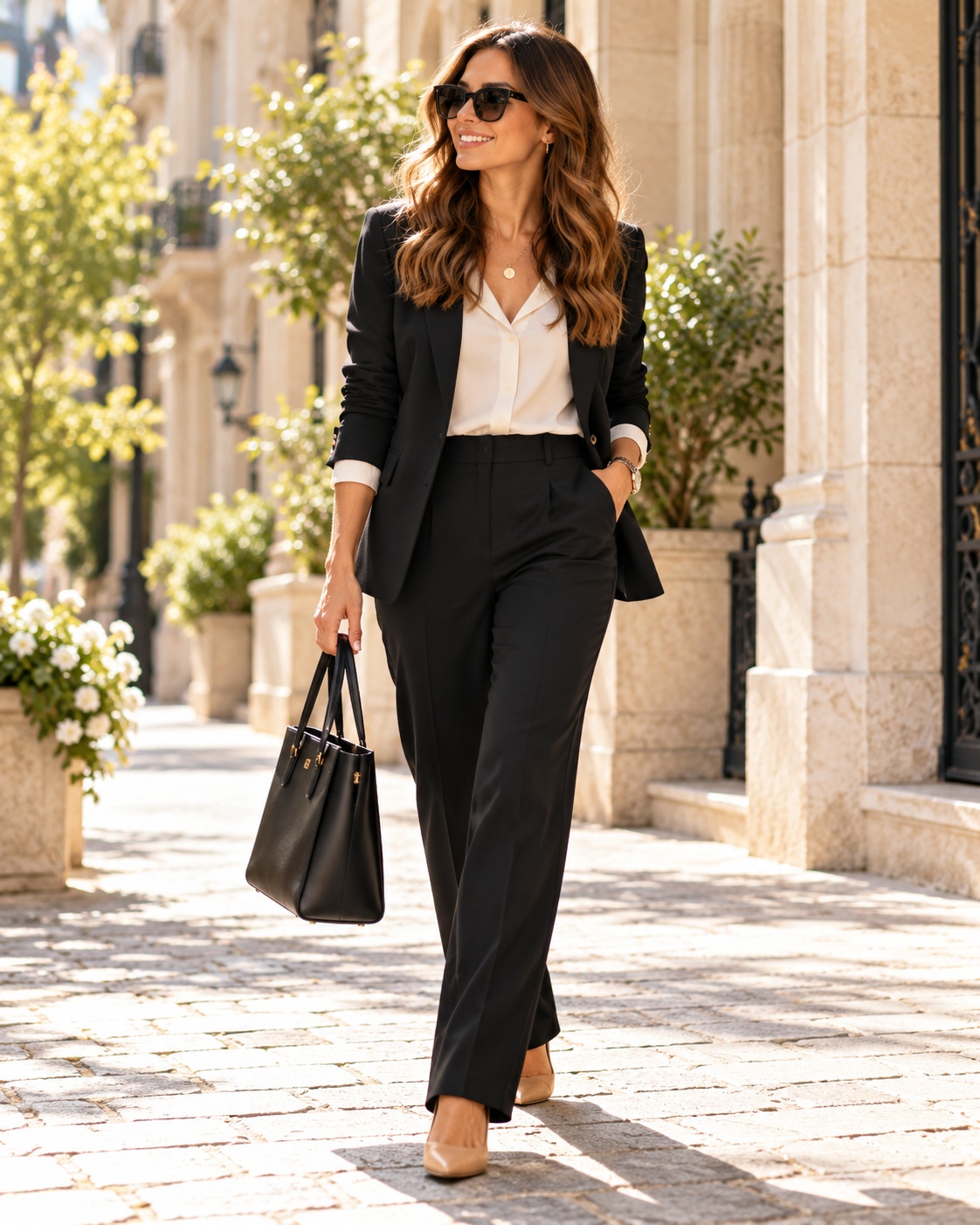 9 to 5, your way ♡
Choose your starting point
Find your workwear formula.
Five practical paths, depending on the office, your wardrobe, and the decisions that take the most time.
Office capsule
Build a useful set of work staples without filling the closet with duplicates.
Explore capsule pieces ↗02Repeatable formulas
Use a small number of silhouettes to get dressed quickly and consistently.
Find outfit formulas ↗03Dress-code clarity
Understand when business casual and smart casual look different.
Compare the dress codes ↗04Midsize office style
Adjust fit, proportions, layers, and comfort for your shape and workday.
Explore midsize looks ↗05Modest office style
Find intentional coverage, shape, and polish without extra fuss.
Browse modest outfits ↗The Outfit Method / Smarter mornings
Wear the pieces you love. More than once.
Once you’ve selected your workday formulas, map them against actual meetings, weather, laundry, and commuting needs before buying something new.
The full workwear library
Explore the complete guide
Work outfit ideas should feel professional without feeling stiff — clothes you can sit in, stand in, and walk through a commute in while still looking pulled together. This hub organizes every work-focused article on The Outfit Method into clear pathways, whether you are building a capsule from scratch, navigating a business casual dress code, or looking for office outfits through a midsize or modest lens.
The articles below cover different work-dressing needs: full capsule systems, repeatable outfit formulas, dress-code guidance, and specific office outfit articles for different body types and style preferences.
How to use this hub
Use this page when you want office outfits that fit real workdays instead of runway versions of business casual. Start with work capsule wardrobe ideas if you need the foundation, then move to work outfit formulas for repeatable combinations. If your workplace dress code sits between polished and relaxed, business casual vs smart casual helps you tell the difference without overthinking it.
The most useful work wardrobe is usually the one you can repeat on busy mornings without second-guessing. Watch for the pieces you wear every week, the layers that make you feel polished, and the shoes you can comfortably commute in. If you already have those basics, use the weekly outfit planner to map a few formulas to your actual calendar before you shop for anything new, so each purchase fills a real gap instead of adding more decision fatigue.
Where to start
If you are building a work wardrobe from scratch, begin with work capsule wardrobe ideas. It gives you the base pieces and proportion logic that make every work outfit easier. If you already have the basics but your outfits feel repetitive, jump to work outfit formulas for plug-and-play combinations.
Work capsule wardrobe path
A work capsule is the most efficient way to build a professional wardrobe. Work capsule wardrobe ideas lays out the foundation — the trousers, blazers, knits, and dresses that mix into dozens of outfits. Business casual capsule wardrobe narrows the focus to everyday office dressing with a relaxed professional feel. For the broader system, capsule wardrobe staples covers the pieces that earn their space in any capsule, and weekly outfit planner helps you test your rotation across a real workweek.
Work outfit formulas path
Once you have the pieces, work outfit formulas shows you how to turn them into daily combinations. The formula approach — repeating the same silhouette logic with different colors and textures — is especially useful for workwear because it reduces morning decisions while keeping your outfits looking varied.
Business casual path
If your office dress code is business casual — or you are not sure where business casual ends and smart casual begins — business casual vs smart casual clarifies the difference with practical examples. Business casual capsule wardrobe gives you the specific pieces and outfits for that setting.
Midsize office path
Office dressing through a midsize lens means finding pieces that keep the line clean without feeling restrictive. Midsize office outfits covers 10 polished formulas — relaxed blazers, wide-leg trousers, knit dresses, sweater vests, and ponte pants — all with specific fit guidance for desk-to-meeting days.
Modest work path
For modest workwear, modest work outfits and modest office outfits provide covered, polished combinations built around longline blazers, high-neck blouses, midi dresses, and structured layers. Coverage is built into the design rather than added through extra pieces.
How to keep work outfits repeatable
The most effective work wardrobes are built around two or three silhouettes that genuinely fit and flatter, rotated through the week by changing the color, layer weight, or shoe. A well-cut blazer, a pair of straight-leg trousers, and a midi knit dress can anchor more combinations than a closet full of one-off purchases. The articles above give you the formulas — the rest is finding the silhouettes that work for your body and your office.
Frequently asked questions
How many work outfits do I actually need?
For a standard five-day workweek, 7–10 outfit combinations give you enough variety without overbuying. That is achievable with 12–15 core pieces when they are chosen to work together. A work capsule built around a consistent neutral palette means any top works with any bottom.
What is the difference between business casual and smart casual?
Business casual typically includes structured pieces like blazers, tailored trousers, and button-ups in a relaxed fit. Smart casual is one step down — dark jeans with a polished top and loafers, or a knit dress with clean sneakers. Business casual vs smart casual explains the full breakdown with outfit examples.
Plan the next step
Start with work capsule wardrobe ideas to build your foundation, then use work outfit formulas for daily combinations. The weekly outfit planner will help you test your rotation before Monday morning.