
Rainy-Day Workwear: How to Choose Hems, Shoes, and Layers for the Commute
A rainy commute can make a familiar work outfit feel less practical: trouser hems brush wet pavement, shoes stay damp, and a warm indoor office suddenly makes a protective outer layer uncomfortable. The solution is not one universal rainy-day uniform. It is a small set of choices that respond to the forecast, walking route, dress code, and time spent indoors.
Use this guide to decide how much weather protection you need, where a trouser or skirt hem should fall, which shoes make sense for your route, and how to handle layers once you arrive. The outfit examples are starting points. Fabric performance, comfort, and workplace expectations vary, so test your own pieces before relying on them in heavy rain.
Start with the commute, not the closet
Before choosing clothes, estimate how you will get from door to desk. A short walk from a covered garage is different from a long transit transfer or a bike ride. Notice whether the route includes puddles, stairs, crowded buses, or time standing outside. Also consider whether you can store wet shoes or an umbrella at work. These practical details determine whether you need a weather-resistant outer layer, a change of shoes, or simply a hem that clears the ground.
Check the forecast near the time you leave and return. Light drizzle, steady rain, wind-driven showers, and warm humid rain each call for different choices. A heavy rain shell may be sensible for a wet walk but uncomfortable to wear all day indoors. If the forecast is uncertain, a removable layer and a compact umbrella can give you options without building the entire outfit around the worst-case scenario.
Make sure your workplace dress code remains the guide for what looks appropriate. A practical commute layer can be taken off before a meeting; the clothing underneath should still fit your office. If you work in a formal setting, keep the base outfit polished and use a separate protective coat for the journey. A casual office may allow a neat sneaker or a washable trouser on wet days.
How much rain protection does the day require?
For brief drizzle, a close-weave coat or umbrella may be enough, provided the route is short and you can avoid standing water. For steady rain, consider an outer layer designed for wet weather, a hood or umbrella, and footwear that can handle damp sidewalks. Wind-driven rain may reach cuffs and trouser hems even when the coat is long, so pay attention to closures and the direction of the route. For a warm, humid day, prioritize breathable layers you can remove rather than stacking heavy fabrics.
Terms such as water-resistant and waterproof are not interchangeable across all garments. Check the maker’s care and product information instead of assuming that a trench, leather shoe, or coated fabric will protect you in a downpour. A garment can also lose performance with wear or improper care. If conditions are severe, use the protective gear that is appropriate for the weather and commute; an office outfit is not a substitute for reliable rain equipment.
Think about what happens after you arrive. A coat that keeps rain off outside may feel too warm on a train or in a heated lobby. A foldable umbrella, removable shell, and light cardigan can be easier to manage than one thick layer. Keep a small towel or spare socks at work if wet feet are a recurring problem, and let damp items dry fully according to their care instructions.
Choose a hem that stays clear of wet ground
On rainy days, the most useful hem is often the one that clears puddles and does not drag when you walk. Straight or ankle-length trousers can be easier to manage than extra-long wide legs, especially on a route with uneven pavement. That does not mean wide-leg trousers are off limits: check the length with the shoes you plan to wear and consider a temporary cuff or a different pair if the hem would sweep the ground.
A cropped trouser can expose more ankle in cold rain, so balance hem clearance with warmth and comfort. If you wear tights or socks, choose a combination that feels suitable for the temperature. For a skirt or dress, notice whether the hem swings near puddles or catches on a wet coat. A mid-calf length can work for many commutes, but the actual cut and stride matter more than a fixed measurement.
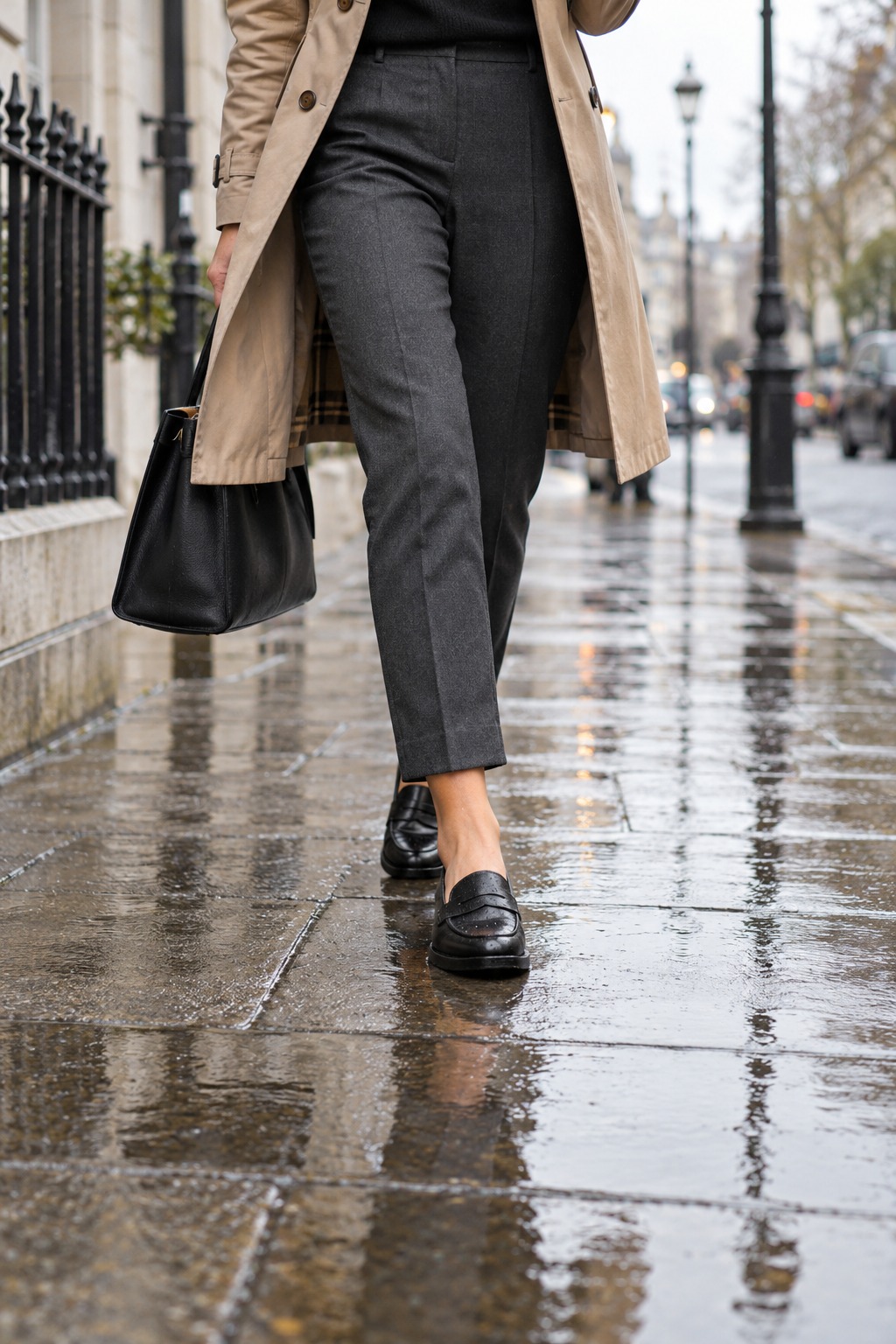
Test the hem while walking, sitting, and climbing stairs. A trouser that appears short enough when standing may touch the ground once the shoe heel changes, while a skirt may shift when you take a long step. If you commute in a different shoe from the one you wear at your desk, test both combinations and decide whether carrying a second pair is worthwhile.
Fabric weight also affects how a hem behaves. A very light trouser can cling when damp, while a heavier fabric may take longer to dry. Do not assume that one fiber or weave handles all rain the same way. Check the garment label and care instructions, and avoid wearing a delicate item in conditions likely to damage or stain it.
Compare footwear by route and indoor needs
Footwear has to do two jobs: get you through the commute and remain comfortable for the workday. A shoe with a closed toe may feel more suitable for rain than an open sandal, but construction, material, sole, and condition all matter. A smooth sole that feels fine indoors may be slippery on a wet surface. Walk carefully, and choose footwear designed for the conditions you encounter rather than relying on appearance alone.
If you walk a long distance, supportive sneakers or weather-appropriate boots may be practical for travel. You can change into office shoes after arriving if the dress code requires them. Keep the second pair at work or carry it in a bag that protects your other belongings. For a short commute, a single pair of comfortable closed shoes may be simpler, provided they suit both the route and workplace.
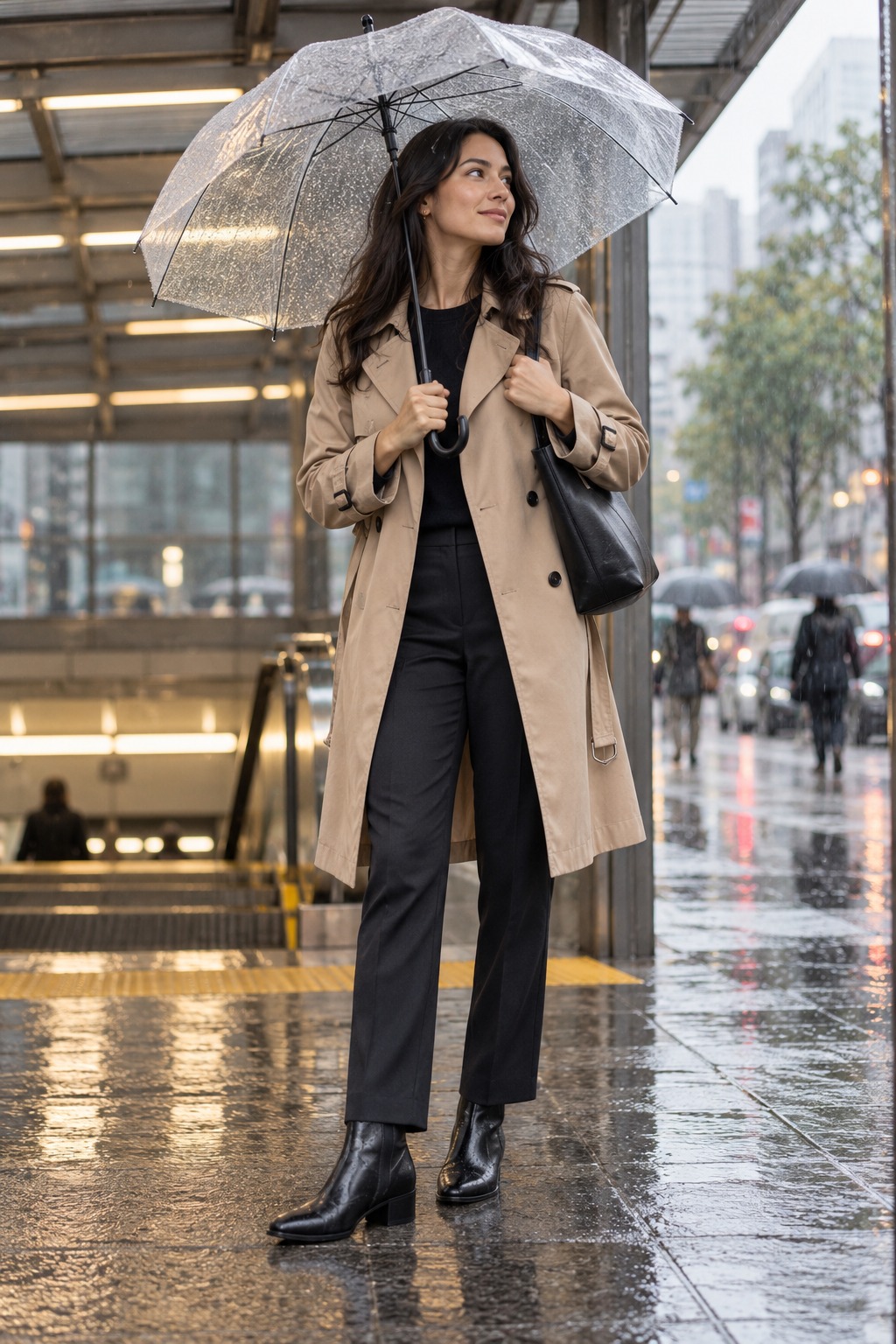
On a rainy day, think about socks and drying as much as the shoe itself. If your feet get wet, a spare pair of socks at your desk may help you feel more comfortable while the shoes dry. Avoid leaving damp footwear in a closed bag for the whole day. Follow the shoe maker’s care guidance; direct heat can damage some materials.
Heels are a personal choice, but a narrow heel can be awkward on uneven or slick surfaces. If you prefer a heel for work, consider commuting in a stable flat and changing at the office. A pair that feels secure on dry indoor floors may behave differently outdoors, so use the route as the test rather than assuming every shoe works equally well in rain.
Build a layer system that works after arrival
Use the base layer for the office and the outer layer for the journey. A fine knit, blouse, or other office-appropriate top can sit under a coat without creating bulk. If the destination is cold, keep a light cardigan at your desk. If it is warm, choose a breathable base that will still feel comfortable after you remove the coat. A removable layer gives you more control than wearing a heavy garment from the commute through the full day.
Check how your bag, coat, and sleeves work together. A shoulder bag may slide over a slick coat, and a long scarf can become cumbersome when walking in wind. Keep closures easy to use while holding an umbrella or transit pass. A hood is useful only if it stays in place and does not block your view; an umbrella may be more convenient on some routes, but can be awkward in a crowd.
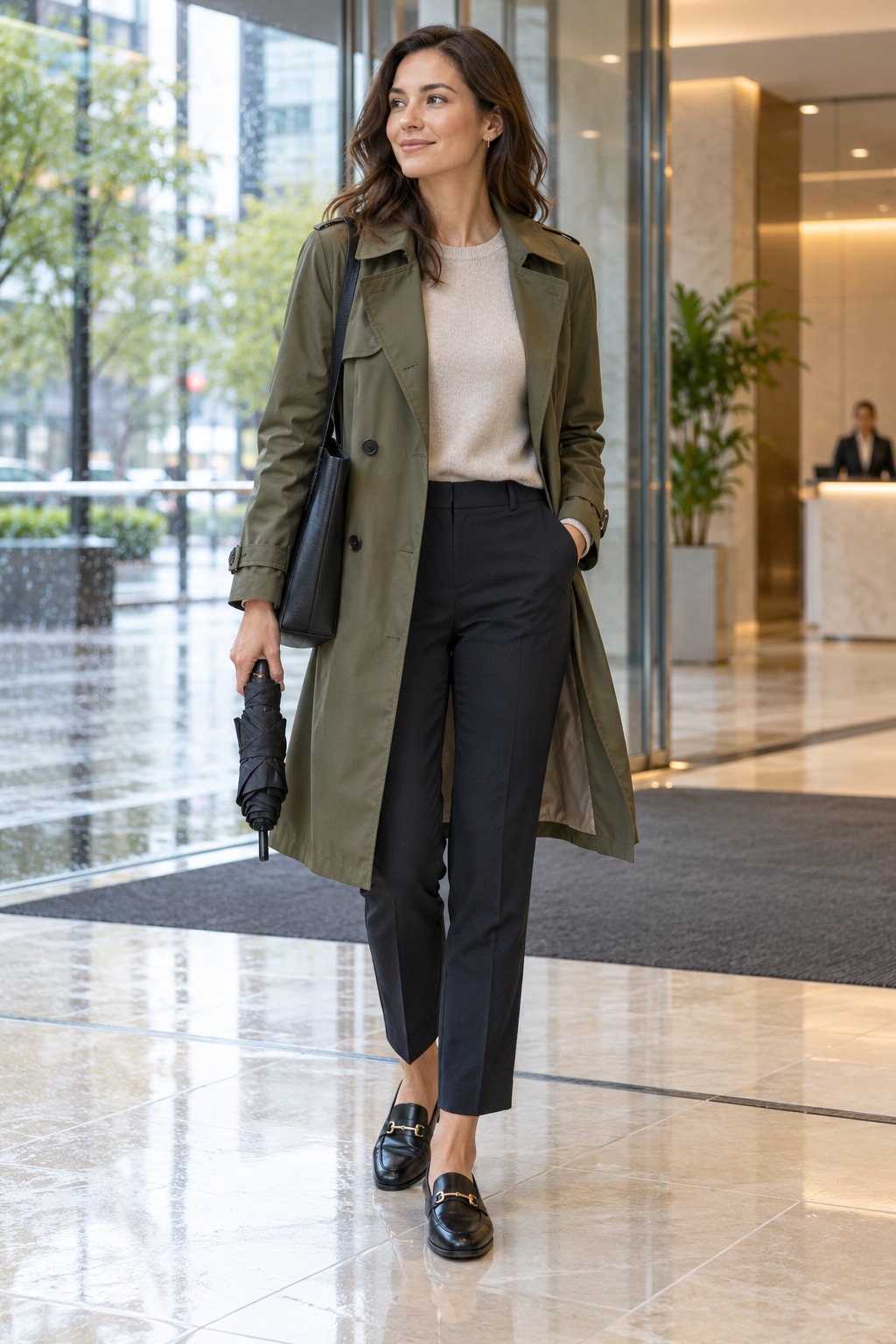
When choosing a coat length, balance coverage with movement. A longer coat can cover more of a skirt or trouser, but it may feel cumbersome on stairs or transit. A shorter shell is easier to move in but can leave lower layers exposed to splashes. Try sitting down and carrying your usual bag in the coat before relying on it for a commute.
Three practical outfit starting points
Short walk and light drizzle: Start with office-appropriate trousers or a skirt whose hem clears the ground, a comfortable closed shoe, and a light coat you can remove indoors. Carry an umbrella if the route is exposed. This is a simple option when you will not spend long outside.
Long transit transfer in steady rain: Choose a base outfit that remains polished under a weather-ready outer layer. Wear a comfortable commute shoe, then change into office footwear if needed. A hem that stays above wet pavement and socks that feel comfortable through the walk can matter more than an extra styling detail.
Warm, humid weather with afternoon showers: Use a breathable office base and keep a compact rain layer available for the trip home. Avoid adding warm pieces that you will have to carry all day. If a light layer becomes damp, allow it to dry according to its care label before storing it away.
These examples are not strict outfit formulas. Swap trousers for a skirt or dress if that better suits your preferences, and adapt shoes to your commute. The decision points remain the same: keep hems manageable, protect yourself appropriately for the weather, and make the office version comfortable after the outer layer comes off.
Keep a small rainy-day kit at work
If wet commutes are common, a few simple items at your desk can reduce the need to over-plan every outfit. Consider spare socks, a shoe bag, a small towel, and a place to hang a damp coat. A compact umbrella may be useful if you can store it safely. Keep only what fits your routine; a large emergency kit is unnecessary if your commute is short and mostly covered.
Let wet items dry before putting them away, and follow care instructions for coats and shoes. Do not place delicate leather or technical fabrics near strong heat unless the manufacturer says that is safe. If an item develops persistent odor or damage, clean or repair it according to its care label rather than simply layering over the problem.
Planning a rainy-day work outfit can also be a closet exercise. Notice which trousers stay clear of the ground, which shoes remain comfortable, and which coat works over your work clothes. Keep those reliable pieces together so they are easier to find when the forecast changes. A few tested combinations can be more useful than buying a separate outfit for every type of rain.
Common questions about rainy-day work outfits
Are wide-leg trousers practical in the rain?
They can be, if the hem clears the ground with the shoes you wear and does not sweep through puddles. Test the full outfit while walking. If the trousers are long, choose another pair or adjust the hem for a wet commute.
Should I wear waterproof shoes to work?
Choose shoes based on the route, weather, and workplace. Check the product’s intended use and care instructions; do not assume a shoe is waterproof from its appearance. A commute pair plus office shoes may work better for a long walk.
What coat works best for a rainy commute?
There is no single best coat. Consider rain intensity, wind, temperature, walking distance, and how easily you can remove the coat indoors. Verify the garment’s weather claims and choose a length that allows comfortable movement.
How can I keep my work outfit comfortable after arriving?
Separate commute protection from office layers where possible. Remove the coat, change damp shoes or socks if needed, and keep a light cardigan available for a cool workspace. Allow wet items to dry safely.
Can a trench coat handle heavy rain?
Some trench coats are designed for more weather protection than others. Check the specific product details and care label. For prolonged or heavy rain, use gear intended for those conditions rather than assuming any trench will be sufficient.
Make a rainy-day plan that suits your commute
A practical rainy-day work outfit is built from a few decisions: how exposed your route is, how much hem clearance you need, what shoes suit the surface, and how you will feel once indoors. Choose comfortable pieces that work with your dress code, verify weather claims for the actual garments, and keep a removable layer or shoe change available when it helps. Once you have tested a couple of combinations, rainy mornings become easier to manage without sacrificing the way you want to dress.
Keep these outfit ideas handy.
Save this guide on Pinterest (opens in a new tab)