
Winter Teacher Outfits That Stay Warm, Polished, and Classroom-Ready
Winter teacher outfits need to handle cold mornings, overheated classrooms, outdoor duty, and long days on your feet — all while looking professional at the front of the room. These 10 outfit combinations are built around winter-specific pieces: turtlenecks, sweater dresses, corduroy, flannel, wool coats, puffer vests, and boots that make sense for school days.
This guide is for teachers who need warmth without bulky layers that get in the way of teaching. Strong winter formulas work through morning duty, classroom movement, hallway transitions, and the afternoon temperature shift when the room suddenly feels too warm.
Use these ideas to build outfits that layer cleanly, move comfortably, and still feel polished through the season. Each look keeps the classroom setting in mind: standing, bending, walking, supervising, and staying comfortable without losing structure.
What makes a winter teacher outfit work
Successful winter teacher outfits are built in layers that can be shed as the day warms up. A warm base layer (turtleneck, fine-gauge knit, or long-sleeve tee), a mid-layer (cardigan, vest, or flannel), and an outer layer (wool coat, quilted jacket, or puffer) handle the full temperature range from parking lot to classroom. The base layer needs to look professional on its own because it is what students and colleagues actually see for most of the day. Shoes need traction for wet or icy walkways and enough support for standing and walking across hard classroom floors. The goal is not fashion — it is warmth, movement, and a pulled-together look that holds up from 7 a.m. to 4 p.m.
What to avoid in winter teacher outfits
A few common winter-dressing mistakes can make a teaching day harder than it needs to be. Avoid bulky sweaters that cannot be layered under a coat without bunching at the sleeves — the coat needs to come off easily between classes. Skip heels of any height on icy mornings; a low block heel or flat with rubber tread is safer and quieter on hallway floors. Avoid fabrics that wrinkle badly after sitting through a staff meeting (look for ponte, crepe, or wool blends that hold their shape). And avoid outfits that require constant adjusting — tugging at a skirt, pulling up a slipping waistband, or fussing with a scarf all distract from teaching. The strongest winter teacher outfits are the ones you forget you are wearing by 9 a.m.
Turtleneck Sweater with Straight Trousers and Ankle Boots
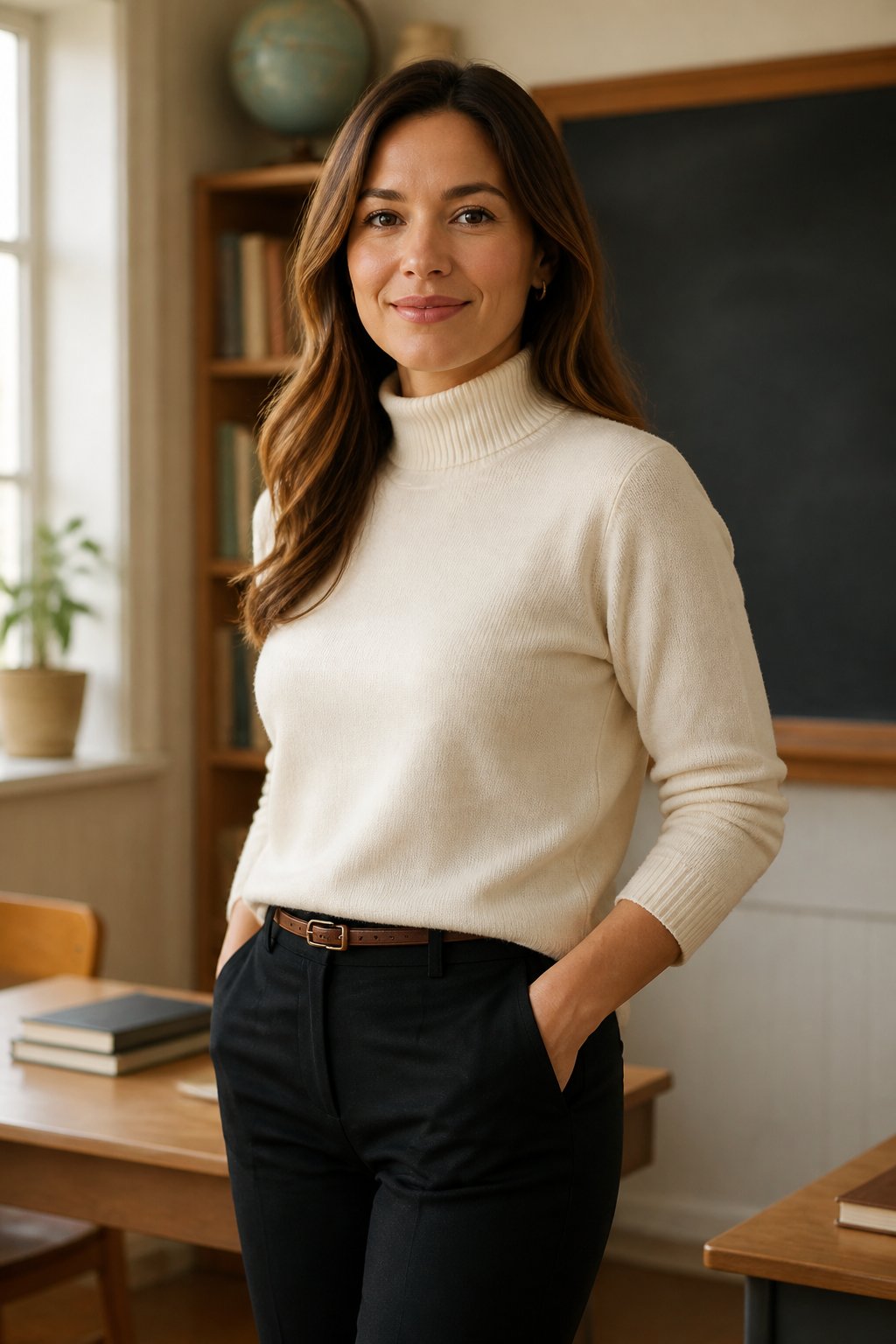
A cream turtleneck and black straight trousers is the winter teacher uniform — warm through the neck without a scarf to manage, professional through the legs, and comfortable enough for a full day of standing, sitting, and crouching at student desks. Brown ankle boots with a low block heel and rubber sole provide the traction you need for morning parking-lot walks and hallway duty, plus enough support for hours on hard floors. The turtleneck should be a fine-gauge knit rather than a chunky cable — it layers cleanly under a coat without adding bulk at the sleeves, and it looks intentional on its own when the coat comes off at 8:15. This outfit handles everything from a morning staff meeting to afternoon parent conferences without a single adjustment.
Cardigan with a Button-Up and Dark Jeans

A grey cardigan layered over a white button-up is the winter layering formula that works for teaching because it can be shed when the afternoon sun hits the windows and the classroom turns tropical. The button-up looks professional on its own once the cardigan comes off, and dark jeans in a trouser-like drape keep the outfit casual-Friday appropriate without reading as weekend wear. This combination is ideal for days with mixed activities — some desk work, some walking the room, some hallway monitoring — because the cardigan adds warmth without restricting arm movement. Brown ankle boots ground the look for winter, and the cardigan should be hip-length or longer so it does not ride up when you reach for the whiteboard. Keep a spare pair of indoor flats under your desk for the overheated afternoon hours.
Sweater Dress with Tights and Knee-High Boots
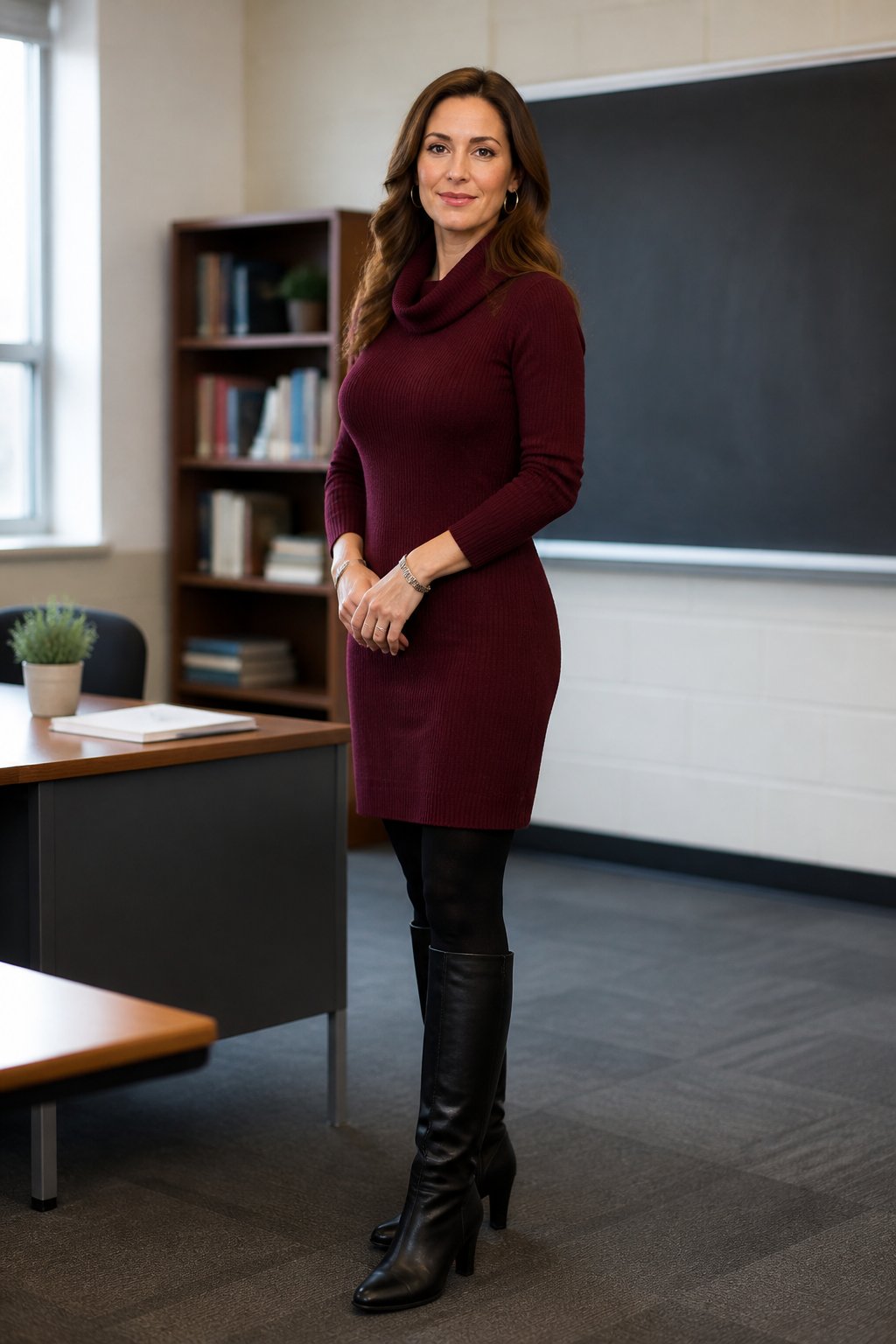
A burgundy sweater dress with black opaque tights and knee-high boots is winter dressing that feels put-together without any matching required — one piece, and you are done. The dress length should be at or below the knee for classroom appropriateness, and the thicker knit fabric holds its shape through a full day of sitting and standing without stretching out. Knee-high boots add warmth through the calves and eliminate the cold-ankle gap that ankle boots leave on frigid mornings. This outfit handles morning duty, classroom instruction, and after-school meetings equally well because there is nothing to tuck, untuck, or adjust. On days when the classroom overheats, the dress breathes better than layered separates. Add a wool coat for the commute and you are ready for anything the school day throws at you.
Plaid Blazer with Black Trousers and Loafers

A plaid blazer brings pattern into a winter teacher wardrobe without leaving professional territory — the plaid reads as academic and intentional rather than trendy. Black trousers keep the lower half clean and the silhouette balanced, and brown loafers with a rubber sole keep the look walkable for classroom circuits and hallway duty. The blazer should have enough room through the shoulders to let you write on the whiteboard and reach across a desk without restriction, and an unlined or softly structured construction prevents the stiff, boxy feeling that makes some blazers unbearable by third period. Wear it for parent conferences, observation days, or mornings when you need authority without sacrificing comfort. On icy mornings, swap the loafers for weatherproof ankle boots.
Cable Knit Sweater with Corduroy Pants and Boots
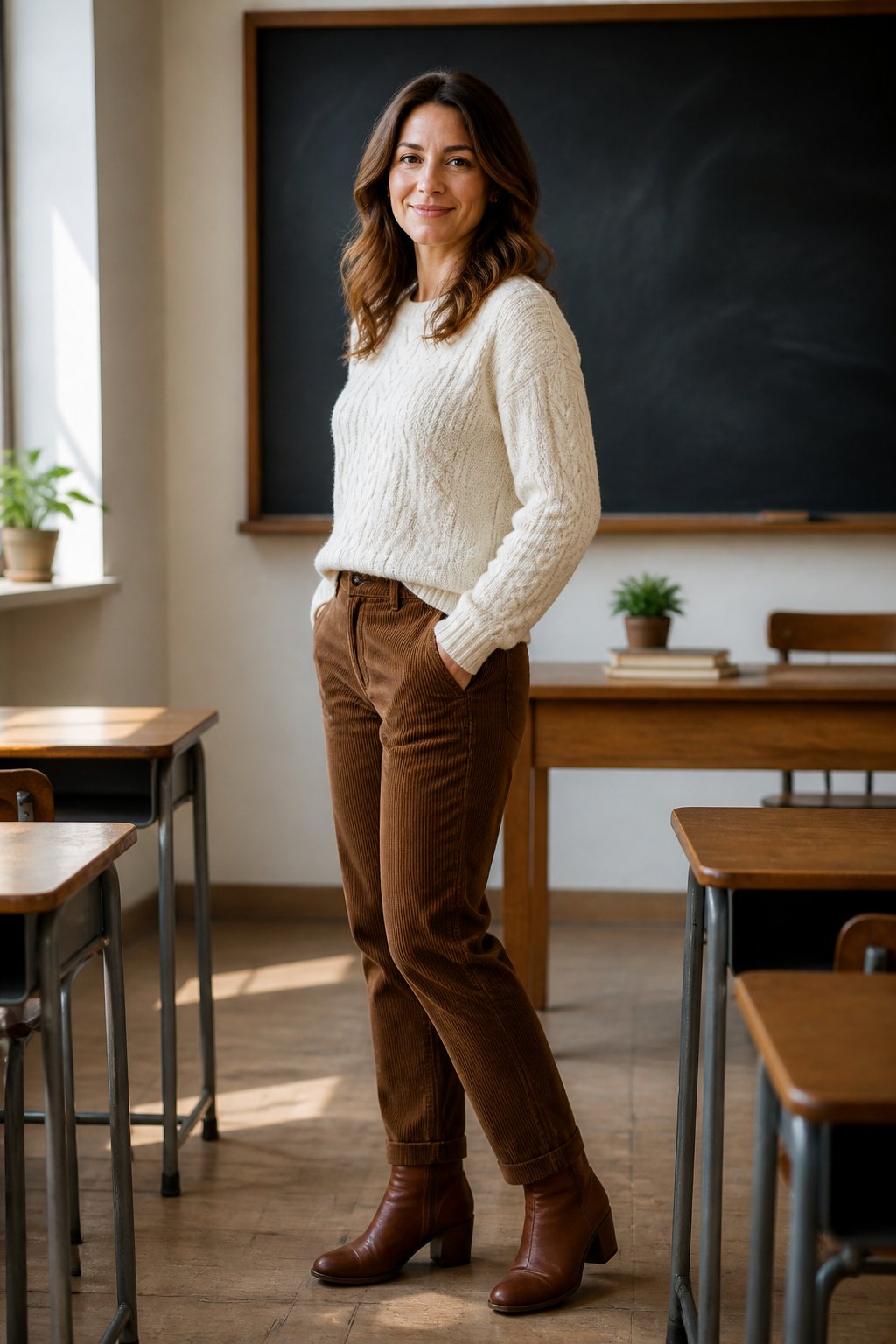
A cream cable knit sweater with brown corduroy pants is the texture-rich winter outfit that feels warm without being heavy — ideal for drafty classrooms and cold hallways. The cable knit adds visual interest near the face, the corduroy brings warmth and a soft drape through the legs, and brown leather boots with a low heel complete the earthy winter palette. Treat this as a classroom-teaching outfit first: the sweater is comfortable through the arms for whiteboard work, the corduroy moves without restriction when you crouch at a student desk, and the overall look reads as cozy and approachable — exactly the energy you want in a winter classroom. The corduroy should be a fine-wale rather than wide-wale so it does not add visual bulk. In warmer winter regions, swap the boots for loafers or oxfords.
Puffer Vest over a Long-Sleeve Tee and Jeans
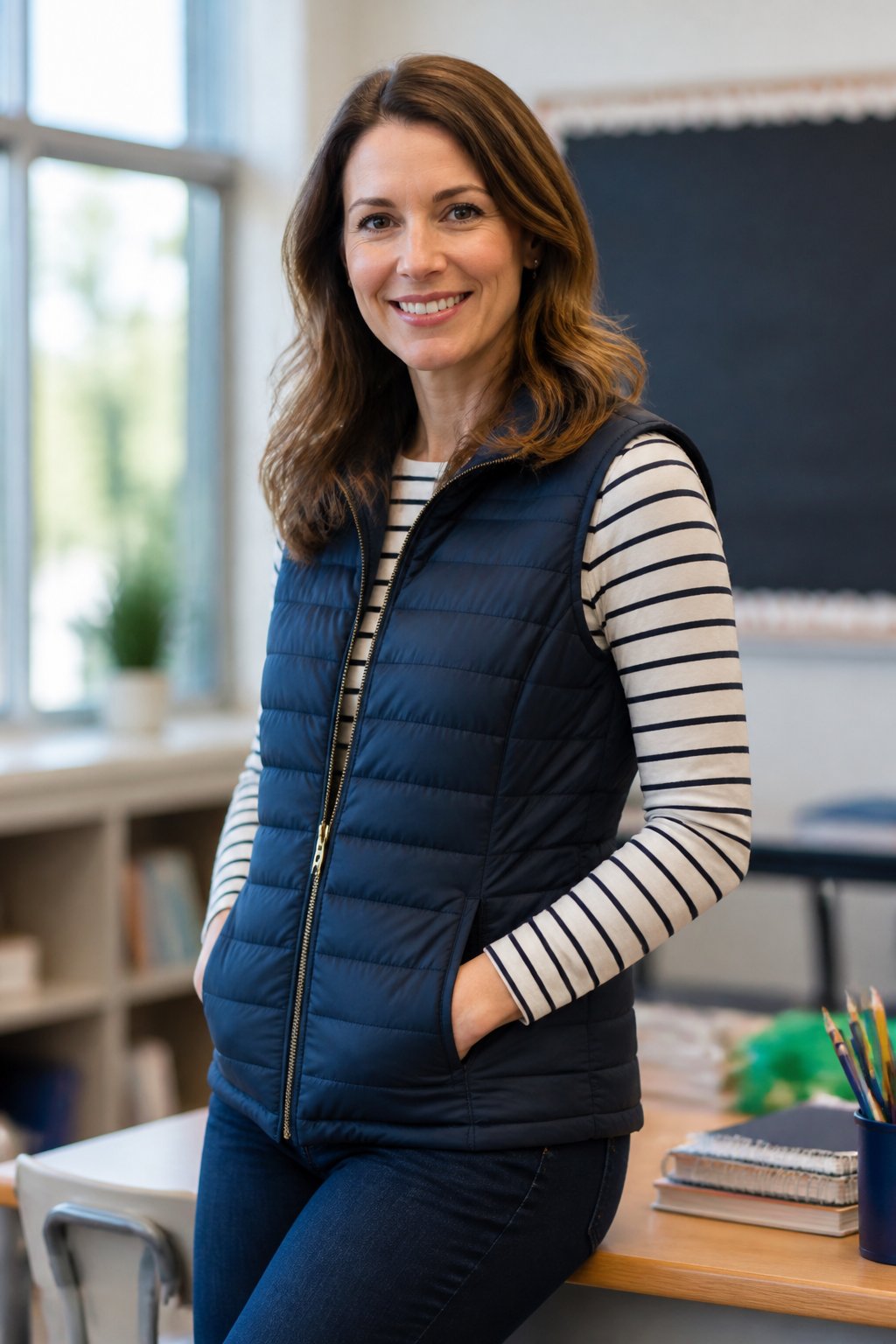
A quilted puffer vest over a striped long-sleeve tee with dark jeans is the practical winter layer designed for teachers who move between indoor and outdoor spaces all day. The vest keeps your core warm while leaving your arms completely free — no sleeve bulk, no restriction when writing or gesturing — which makes it the superior choice over a heavy coat for recess duty, bus line, and morning carpool monitoring. Dark jeans keep the outfit classroom-appropriate, and weatherproof boots or high-top sneakers handle wet sidewalks and playground surfaces. The vest should be slim-cut rather than oversized so it layers under your winter coat for the commute, then works as a standalone piece once you are inside. It also works for field-trip days when you need pockets for everything and warmth that does not slow you down.
Flannel Shirt with Ponte Pants and Sneakers
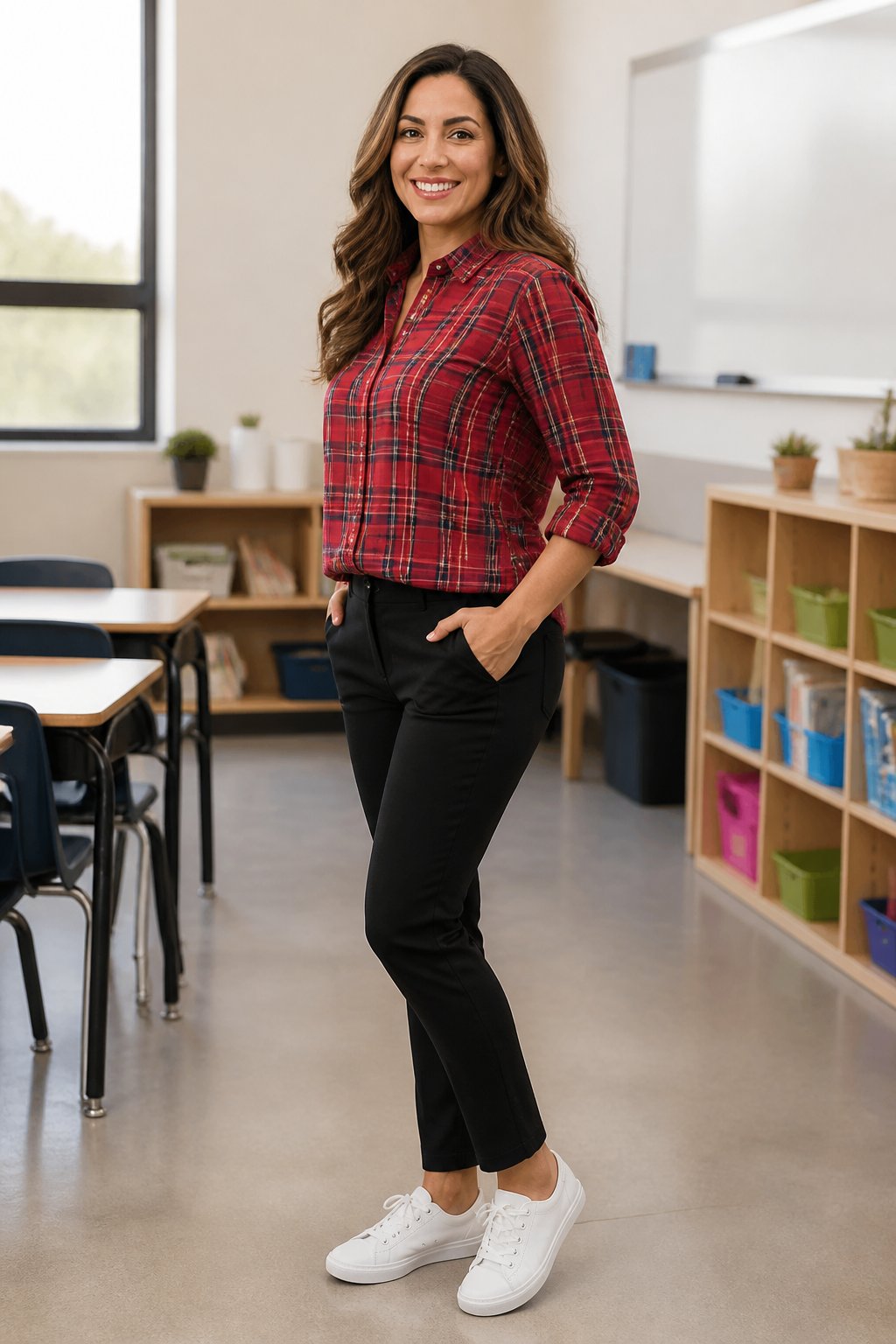
A plaid flannel shirt with black ponte pants is the cozy-teacher outfit that still reads as intentional — not pajamas, not weekend wear, but a deliberate winter choice. Ponte fabric gives you the look of tailored trousers with the comfort and stretch of a knit, which means you can sit cross-legged on the reading rug, crouch at a desk, and walk the halls without any pulling or pinching. White sneakers keep the outfit grounded and comfortable for long days on your feet, and the flannel adds warmth and pattern in a fabric that breathes better than a heavy sweater. Use it for casual Fridays, planning periods, or schedules with more movement than meetings. The flannel should be fitted enough to tuck or half-tuck without bunching at the waist. Add a puffer vest for outdoor duty and the system handles everything.
Wool Blend Coat over a Knit Dress and Boots
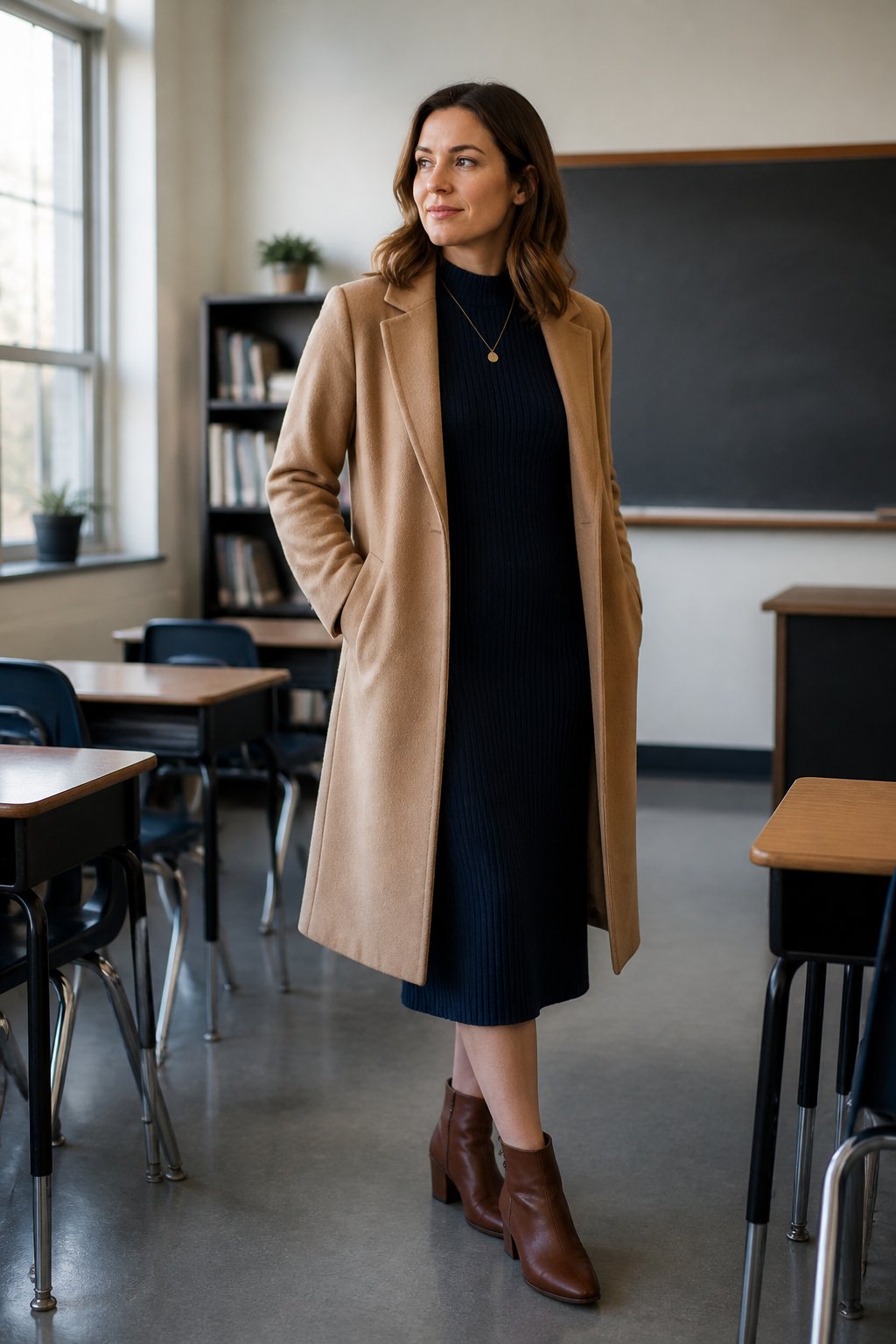
A camel wool coat over a navy knit dress is the winter morning arrival outfit that transitions to indoor teaching when the coat comes off. The coat handles the commute, morning duty, and the walk from the parking lot, while the knit dress underneath is the real outfit — professional, comfortable, and one-piece simple. This is ideal for observation days, parent-teacher conference days, and any winter morning when you need to look pulled together from the moment you walk in the building. The coat should be knee-length or longer for maximum warmth through the legs, and the knit dress should have enough weight to hold its shape without wrinkling under the coat. Knee-high or ankle boots complete the look, and the dress length should be at or below the knee for classroom movement. Once the coat is hung up, the dress carries the rest of the day on its own.
Fair Isle Sweater with Black Skirt and Tights
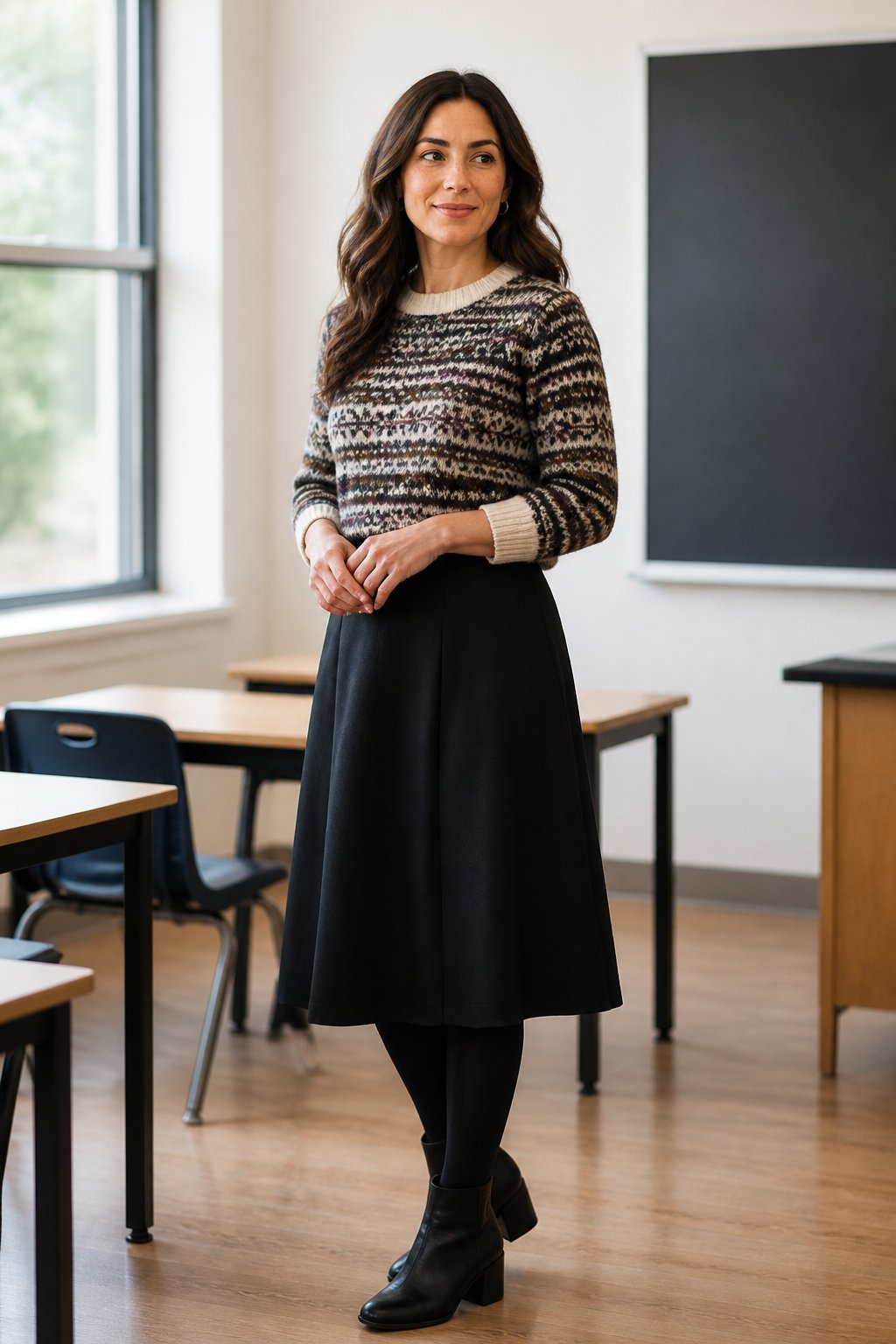
A Fair Isle sweater brings seasonal pattern into the teacher wardrobe in a way that feels festive without being loud or distracting. The pattern adds visual interest near the face, and a black midi skirt with opaque tights keeps the outfit professional and balanced through the lower half. Save it for December-through-February weeks — perfect for the weeks around winter break when students are restless and a little seasonal cheer in your outfit lifts the room’s energy. The skirt should be a midi length with enough ease to move comfortably through the classroom, and the tights need to be opaque black rather than sheer for winter warmth. Ankle boots with a low block heel ground the look and provide the traction winter sidewalks demand. On milder winter days, the Fair Isle sweater works just as well with dark jeans and boots for a more casual version of the same formula.
Quilted Jacket with Straight Jeans and Weatherproof Boots
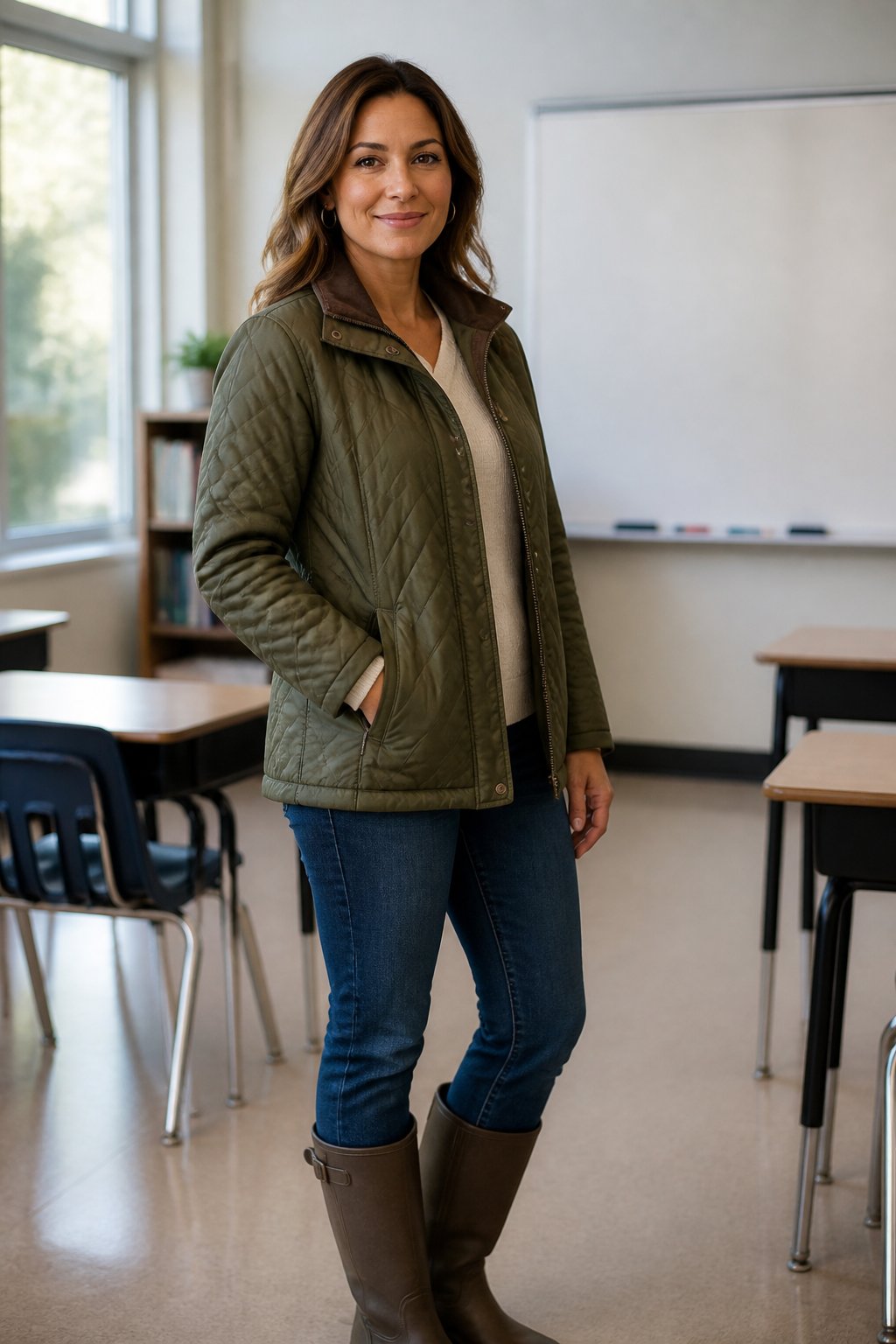
An olive quilted jacket with straight jeans and weatherproof boots is the outdoor-duty outfit that handles morning car line, recess monitoring, bus duty, and the walk from the parking lot — all without looking like you dressed for a hiking trip. The quilted jacket is lighter and more flexible than a wool coat, which makes it the better choice for active duty where you are moving, bending, and walking. Straight jeans in a dark wash keep the outfit classroom-appropriate once the jacket comes off, and the weatherproof boots should have a rubber sole with actual tread — not a smooth leather bottom that slides on wet pavement. Use it for high-movement days: field trips, fire drills, winter sports days, or any schedule that has you outside more than inside. Layer a thin knit or thermal long-sleeve underneath for extra warmth without adding bulk through the arms.
How to layer for cold classrooms and hot afternoons
Winter classrooms have their own microclimate — freezing at 8 a.m., boiling by 2 p.m. The solution is a three-layer system designed for easy shedding. The base layer is what students and colleagues see all day: a turtleneck, fine-gauge knit, button-up, or long-sleeve tee that looks professional on its own. The mid-layer is what you can remove without disrupting the outfit: a cardigan, a blazer, a vest, or a flannel shirt worn open. The outer layer handles the commute and outdoor duty: a wool coat, quilted jacket, or puffer that comes off the moment you step inside. The key is that removing the mid-layer should not ruin the outfit — the base layer needs to stand alone. Keep a spare cardigan or blazer on the back of your classroom door for unpredictable temperature swings, and always wear shoes you can stand in for hours regardless of what the thermostat does.
The most useful winter teacher shoes
Winter teacher shoes need to do three things: keep your feet warm and dry, provide traction on wet or icy surfaces, and look professional at the front of the room. Ankle boots with a low block heel and a rubber sole are the workhorse — they handle morning duty, hallway monitoring, and classroom circuits without a second thought. Knee-high boots add warmth through the calves and eliminate the gap between hem and shoe that ankle boots leave on cold days. Weatherproof lace-up boots or high-top sneakers are the outdoor-duty choice for recess and bus line. Keep a pair of indoor flats or loafers under your desk to swap into when the classroom overheats and the boots feel too heavy. The most common winter teacher shoe mistake: wearing smooth-soled leather boots that slide on wet hallway floors. Rubber tread is non-negotiable for winter teaching days.
How to add color and pattern to winter teacher outfits
Winter teacher wardrobes can drift toward all-black and all-grey without intention — the days are dark, the mornings are early, and neutral dressing is the path of least resistance. The easiest fix is one patterned or colored piece per outfit: a Fair Isle sweater instead of a solid crewneck, a plaid blazer instead of a plain one, a burgundy or forest green dress instead of navy. Pattern near the face — a striped button-up collar, a patterned scarf, a Fair Isle yoke — draws attention upward and adds energy without requiring a full-color overhaul. Even a single colorful accessory — a mustard scarf, a jewel-toned beanie for morning duty, or bold earrings — can shift the whole feel of a neutral winter outfit. The goal is not to dress like a crayon box; it is to avoid the slow fade into all-black that winter teaching can encourage.
Plan the next step
For cold classrooms, choose the formula that solves your real temperature problem first: morning duty, drafty rooms, overheated afternoons, or shoes that need to work outside and inside. A strong winter teacher outfit layers without making movement harder.
Build the bigger closet with the teacher outfit ideas. Then use repeatable classroom formulas, check shoes that work for long days, or map the week with the weekly planner.
Keep these outfit ideas handy.
Save this guide on Pinterest (opens in a new tab)More ideas for your wardrobe
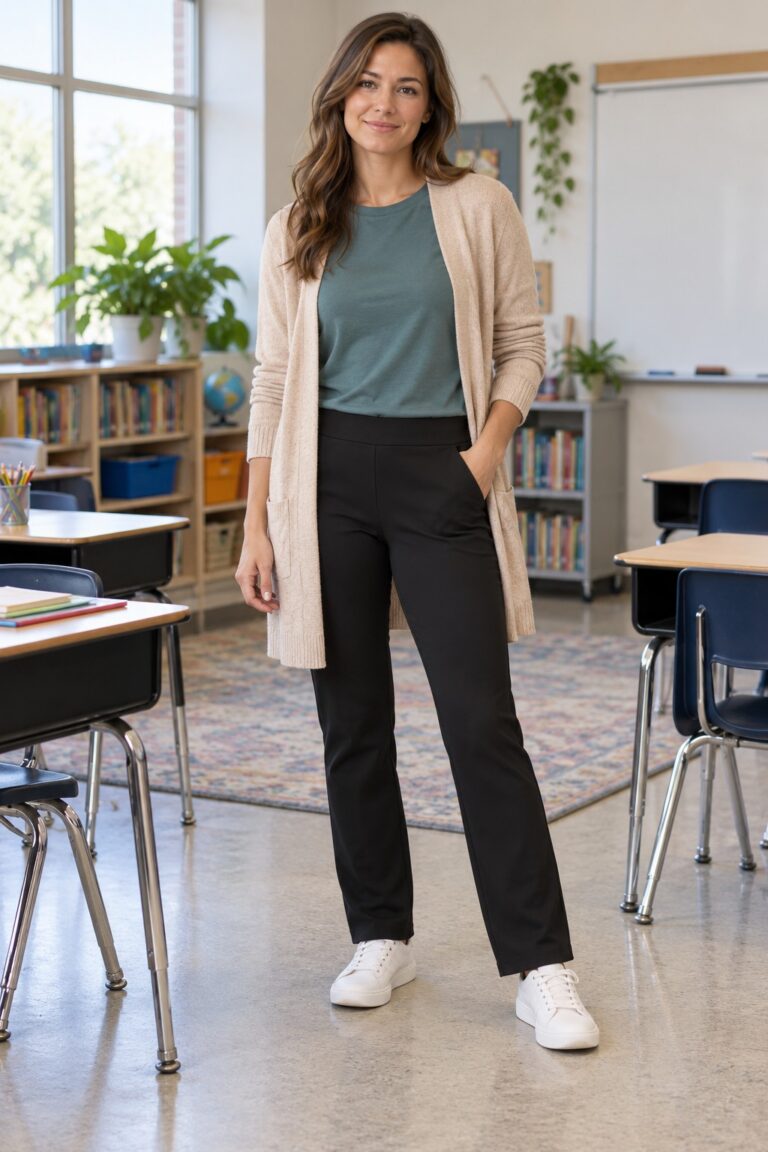 Teacher Outfit Ideas9 Elementary Teacher Outfits for Floor Time and Hallway Duty
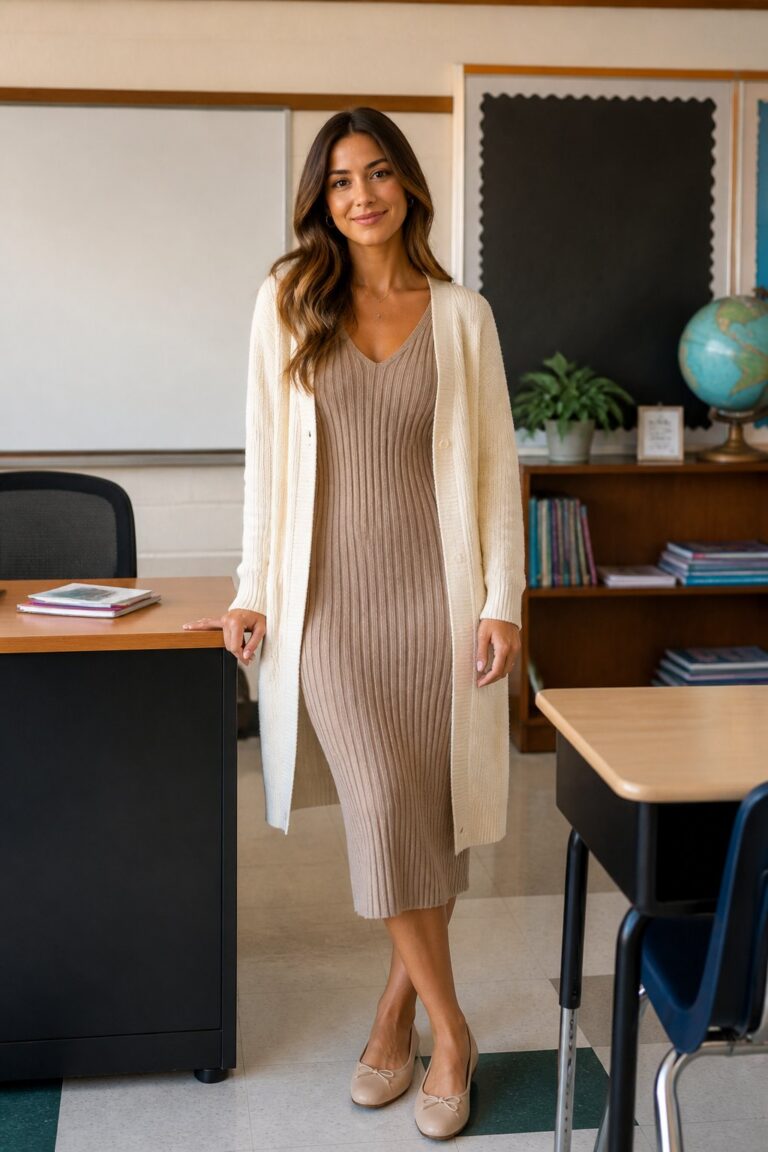 Teacher Outfit IdeasBack-to-school teacher outfits for a fresh first week
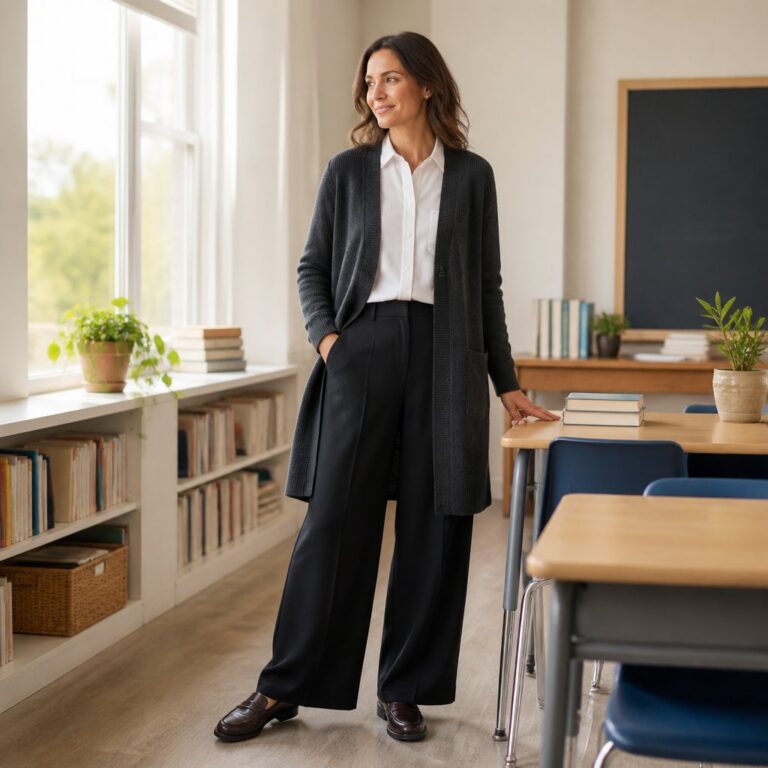 Teacher Outfit IdeasModest Teacher Outfits That Feel Polished, Covered, and Easy to Wear
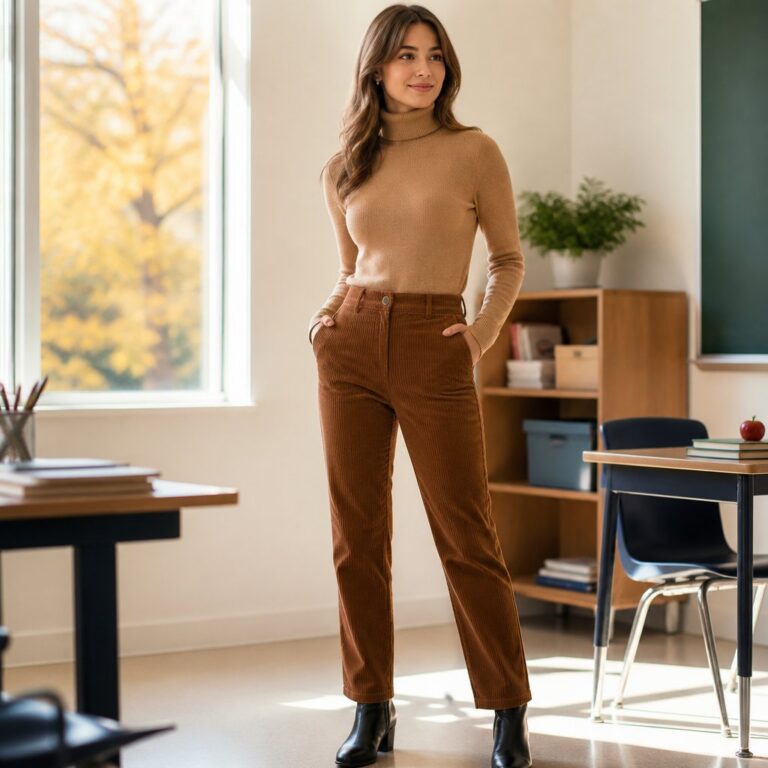 Teacher Outfit IdeasFall Teacher Outfits That Feel Polished, Comfortable, and Classroom-Ready