
Travel capsule wardrobe ideas for carry-on packing
Packing a carry-on for a week-long trip should not feel like a logic puzzle. The difficulty usually comes from trying to prepare for every possible scenario — the fancy dinner, the rainy walk, the unexpected cool evening, the hot afternoon — without bringing a suitcase that needs checked luggage. The solution is not a bigger bag or a longer packing list. It is a deliberate set of choices that work together so closely that the whole combination is worth more than the individual pieces.
A travel capsule wardrobe does not ask you to own less. It asks you to choose better. The images that follow walk through ten decisions that turn a pile of clothes into a system that fits inside one carry-on and works for the whole trip.
Start here: three colors that make twelve outfits
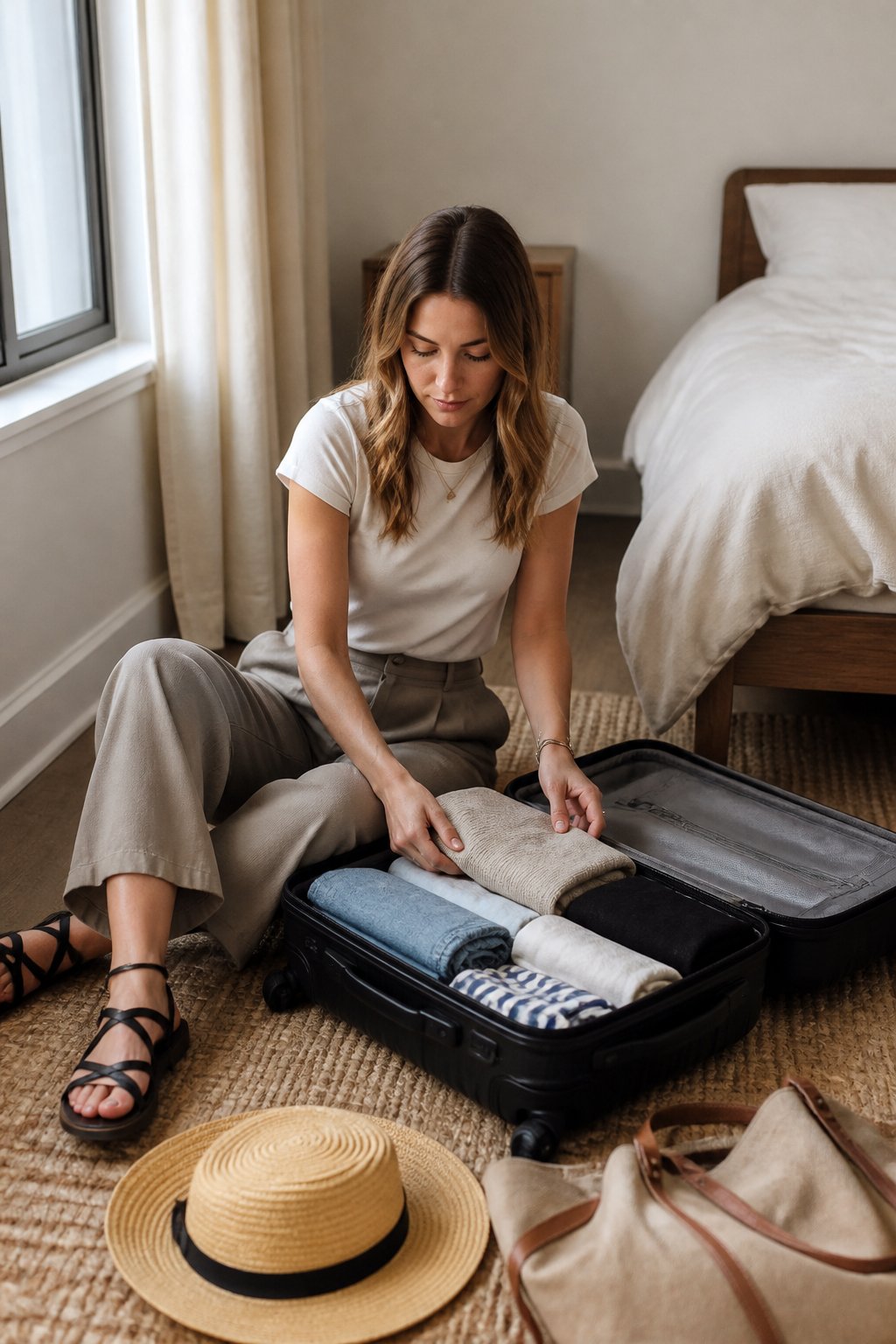
The most efficient capsule is built around three colors that all work together: a neutral base, a secondary neutral, and one accent. When every top works with every bottom in the palette, the number of outfit combinations multiplies quickly. The image that opens this guide shows a palette in action — the cream, taupe, and black of the packed items, the beige of the sweater going into the suitcase, and the sandals that tie the whole look together. If everything in your bag shares two or three colors, you cannot pack a wrong combination. The morning decision becomes about which piece to wear, not whether it matches. That speed matters when you are dressing in a hotel room with limited light and a tight schedule. If you are new to this approach, the capsule wardrobe checklist is a practical starting point for identifying your own three-color palette.
The four items that decide whether your capsule works
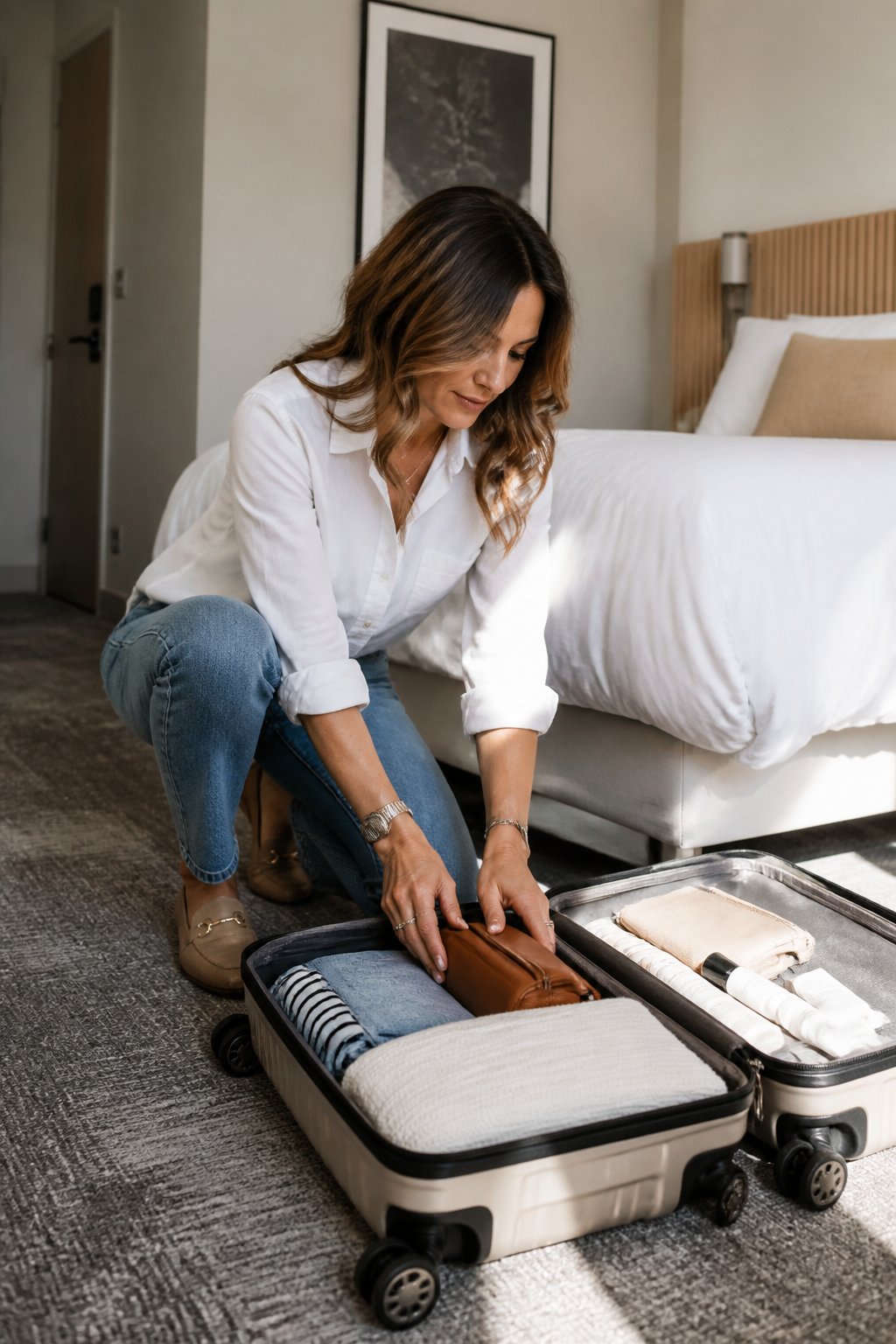
A fully packed capsule might have twelve to fifteen pieces, but most of the versatility comes from four items: two bottoms and two tops. Everything else — the third top, the extra layer, the dress — extends the range, but the core outfit count is set by those four anchor pieces. The second image captures this moment in the packing process: the suitcase is open, and the focus is on getting the structural pieces right before adding anything extra. The items visible in the image — rolled trousers, folded knits — are the kind of multipurpose pieces that form the backbone of a capsule. Choose those four anchors first. If they work together, everything else you add is a bonus. If they do not, no number of extra pieces will fix the foundation.
Every layer earns its spot
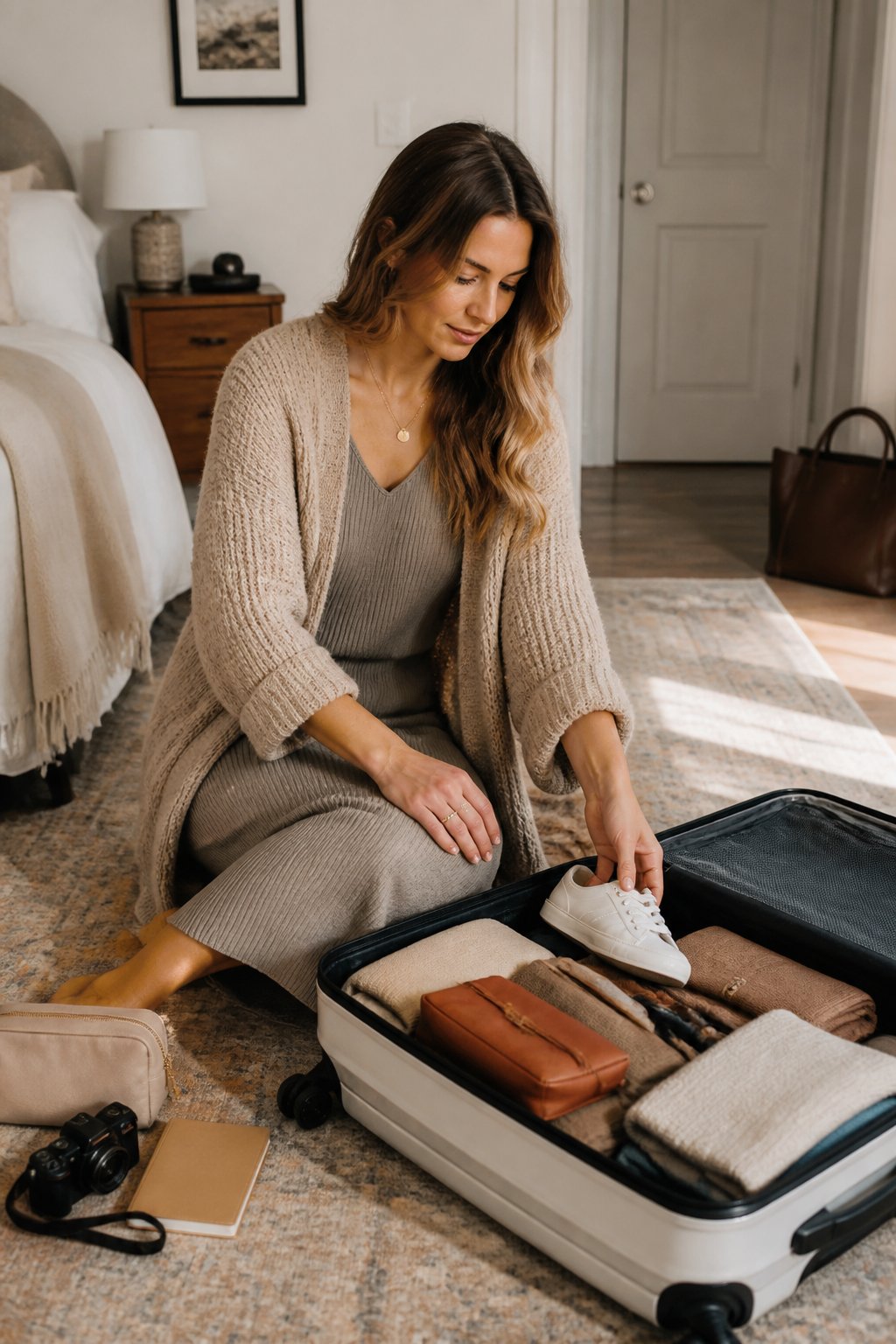
A travel capsule does not have room for pieces that only work in one configuration. Every layer you bring should be able to play at least two roles. The cardigan worn as an outer layer over a dress should also work tucked under a coat. The lightweight jacket that goes over a t-shirt should also layer under a trench. The third image shows this kind of layering logic. The woman is wearing a ribbed cardigan over a gray dress — one look. But that same cardigan could go over a different top the next day, and the dress could be worn alone for a warmer afternoon. That is the standard a piece must meet: it needs to earn its keep in at least two distinct combinations. If it can only do one job, something else in the bag is probably already covering that job.
Pack formulas, not items
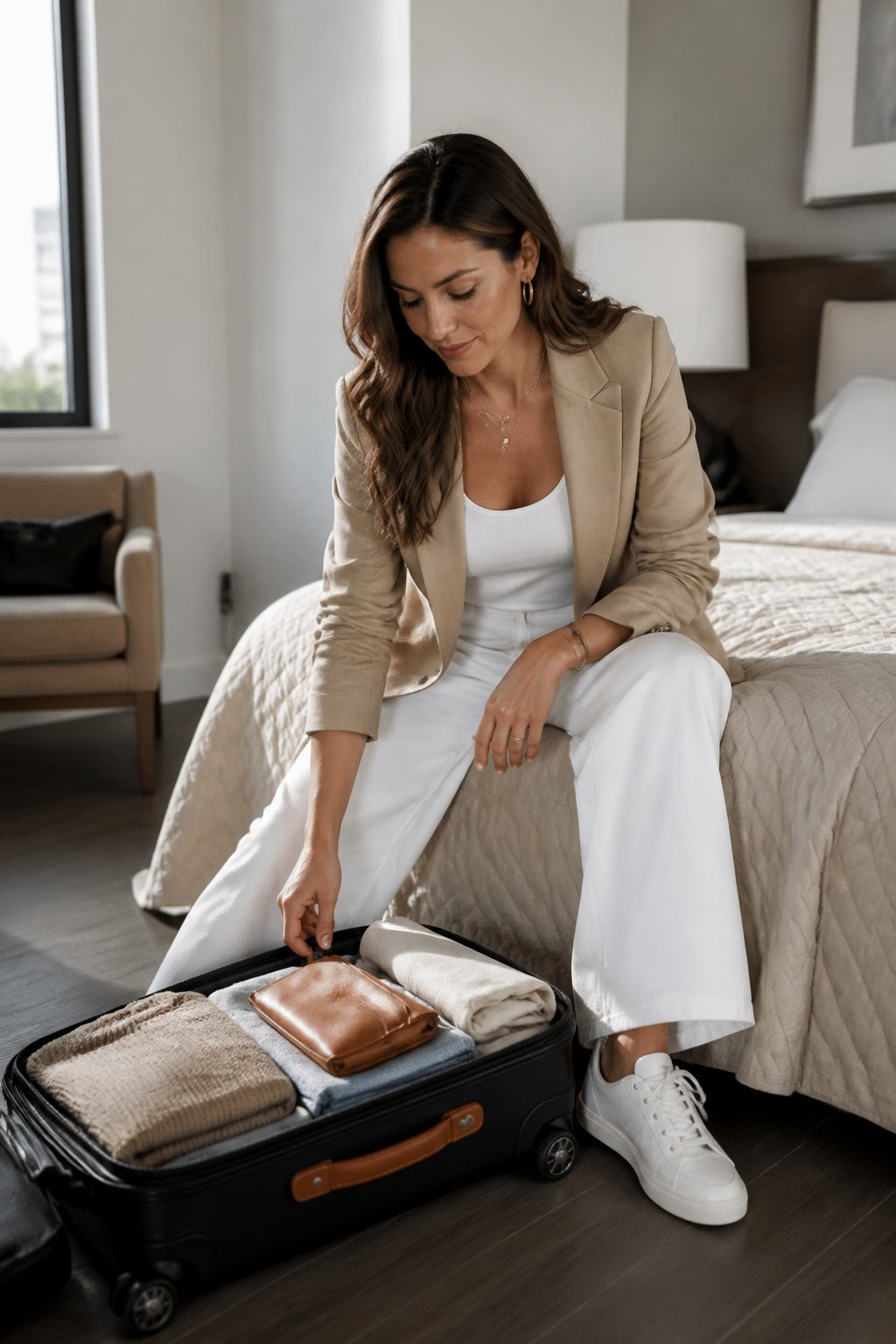
Experienced capsule packers do not think in individual garments. They think in formulas. A formula is a reusable template: for example, "tucked top + midi bottom + flat shoe." The formula can stay the same while the specific pieces change, producing a different look each time. This approach changes the packing conversation. Instead of asking "do I have enough tops?", you ask "does this formula cover enough scenarios?" The image for this section shows a packing scene where the capsule items are laid out — not as a random collection of favorites, but as pieces that clearly belong to a small set of formulas. The what is an outfit formula guide explains this method in more detail if the concept is new. The short version is: if you cannot name the three formulas your capsule is built around, you are still packing items instead of outfits.
The two-pair shoe rule for any itinerary
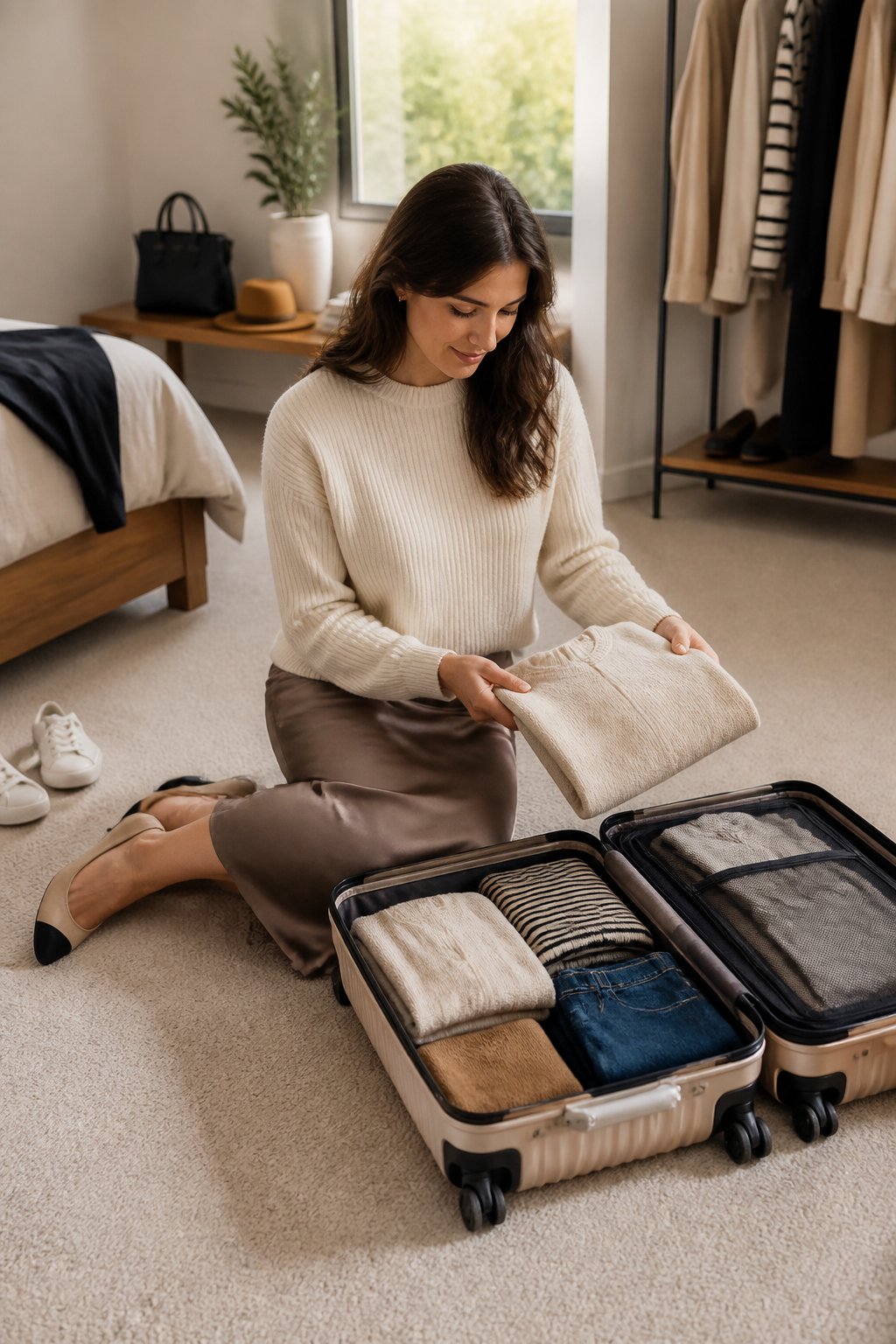
Shoes are the most space-inefficient item in any travel wardrobe. A single pair can consume as much suitcase volume as three or four tops. The easiest way to keep a capsule compact is to limit yourself to two pairs: one that covers most of the itinerary, and one that handles the single outlier event. The fifth image shows a practical example: the woman wears beige flats as her primary pair, and the capsule behind her includes a second option visible on the clothing rack. The flats cover walking days, casual meals, and general movement. The second pair — likely a dressier or sturdier option — sits in reserve for the evening or the activity that flats cannot handle. This two-pair rule alone usually frees enough suitcase space for a whole extra outfit.
Plan around the first wash cycle
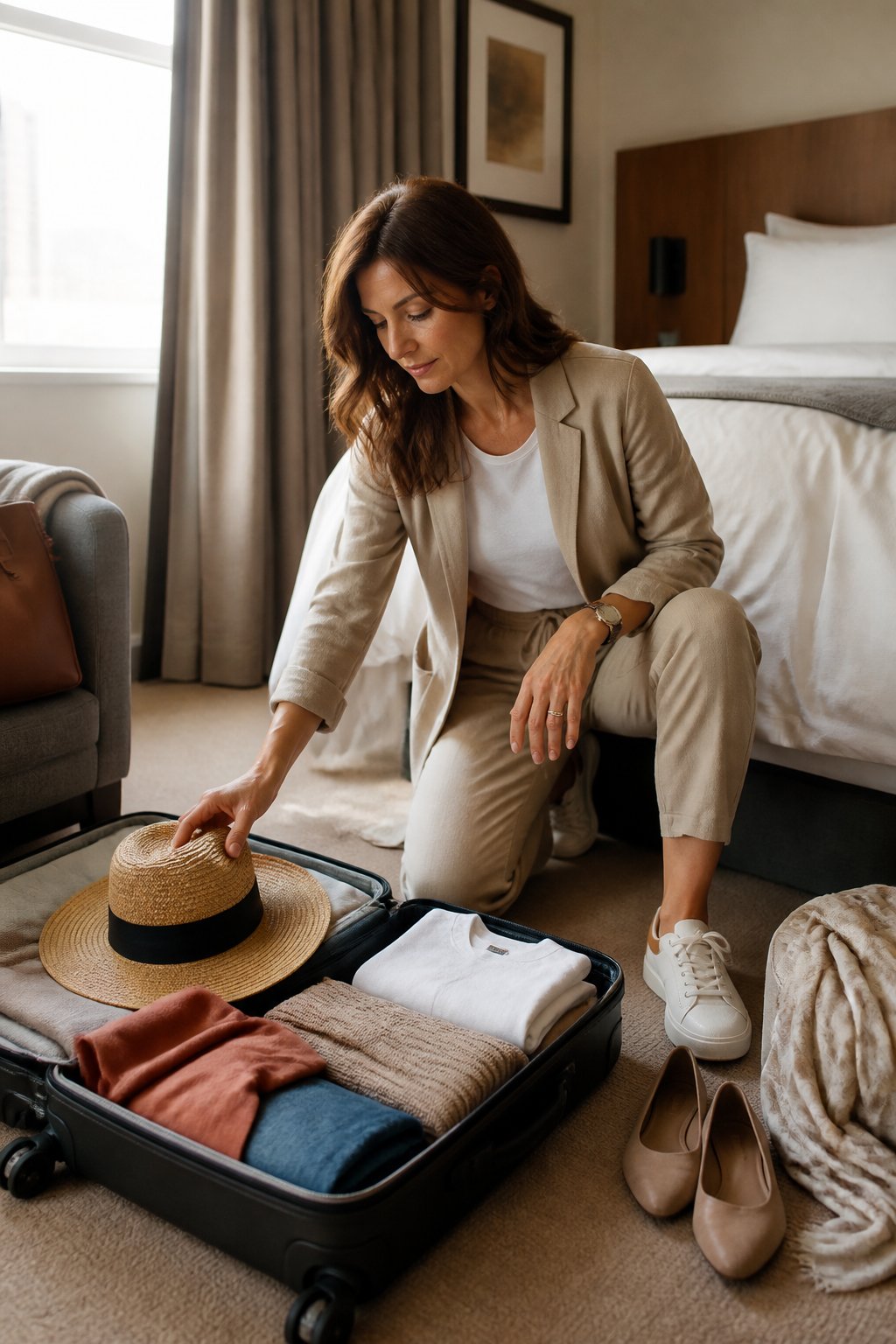
The difference between packing for a four-day trip and packing for an eight-day trip is smaller than most people think, provided you plan a laundry moment. If you can hand-wash or find a laundromat at the midpoint, your capsule only needs to cover four days. The same pieces get worn, washed, and worn again. This is not about packing less — it is about designing your capsule around the reality of washing mid-trip. The image for this section captures the packing stage where you decide which fabrics travel well enough to survive a wash cycle without special treatment. Natural fibers and sturdy knits handle it better than delicate synthetics. If you keep that constraint in mind while choosing pieces, the same capsule that works for a long weekend can stretch to a full week without growing.
Three accessories that stretch your outfits further
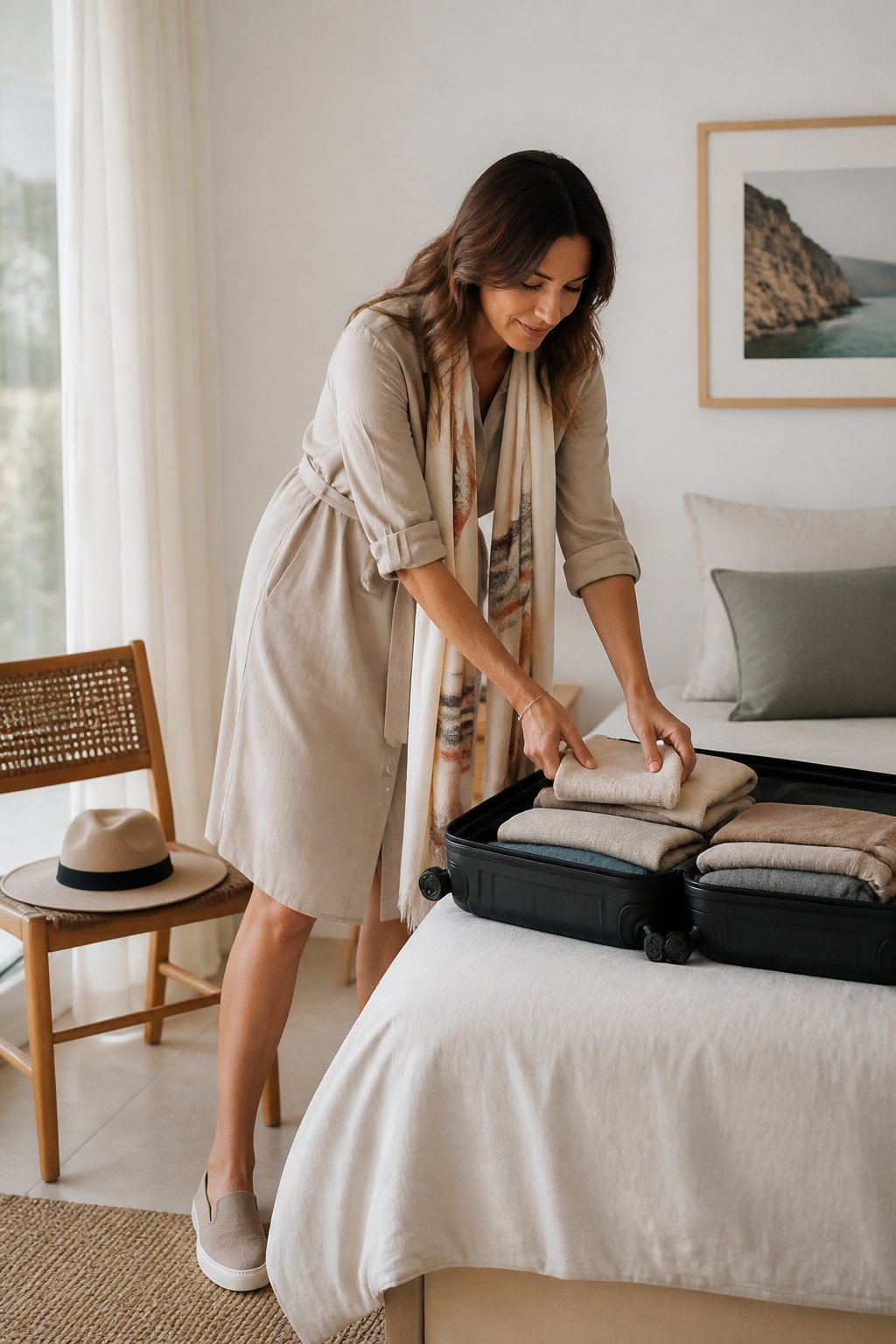
Accessories take almost no suitcase space and change an outfit more noticeably than almost any garment swap. Three types of accessory do most of the work: a scarf that adds a color block, a belt that changes the silhouette, and a piece of jewelry or a watch that signals a shift in tone. The image for this section shows the packing moment where accessories go into the bag — small items that do not look like much on their own but collectively double the range of the outfits they join. A scarf can make the same top-and-trouser combination look completely different when tied over a neutral base. A belt can turn a loose dress into a defined shape. These additions cost almost nothing in suitcase space and add disproportionate value to the overall capsule.
Build the capsule that fits your actual itinerary
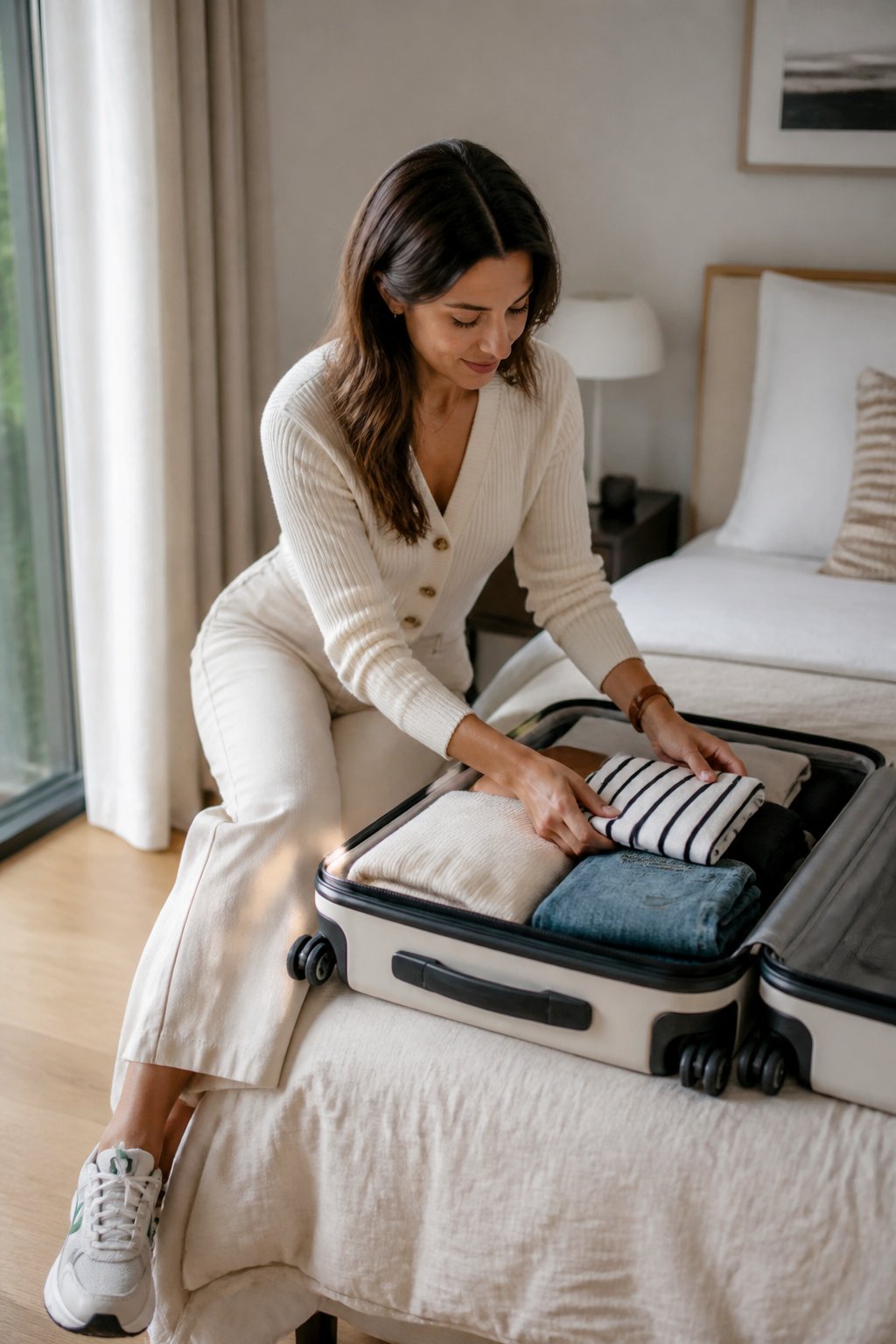
The most common capsule mistake is building a generic one. A city-break capsule needs different shoes and outerwear than a beach trip. A business-travel capsule needs more structured pieces than a leisure trip. The version of the capsule that stays the same across every departure is the foundation; the outer layer and the shoes are where you tailor it to the specific itinerary. The eighth image shows a packing scene with a suitcase open on a bed, containing a mix of stripes, neutrals, and denim — a capsule tailored for a casual urban trip. The woman is dressed in a cream cardigan and matching trousers, which is both a contained outfit and a preview of the capsule's style. If you need a broader framework for building your own, the capsule wardrobe systems guide lays out how to adjust a foundation capsule for different trip types. The key is making the adjustment before you pack, not after you arrive.
The edit: what stays home and why
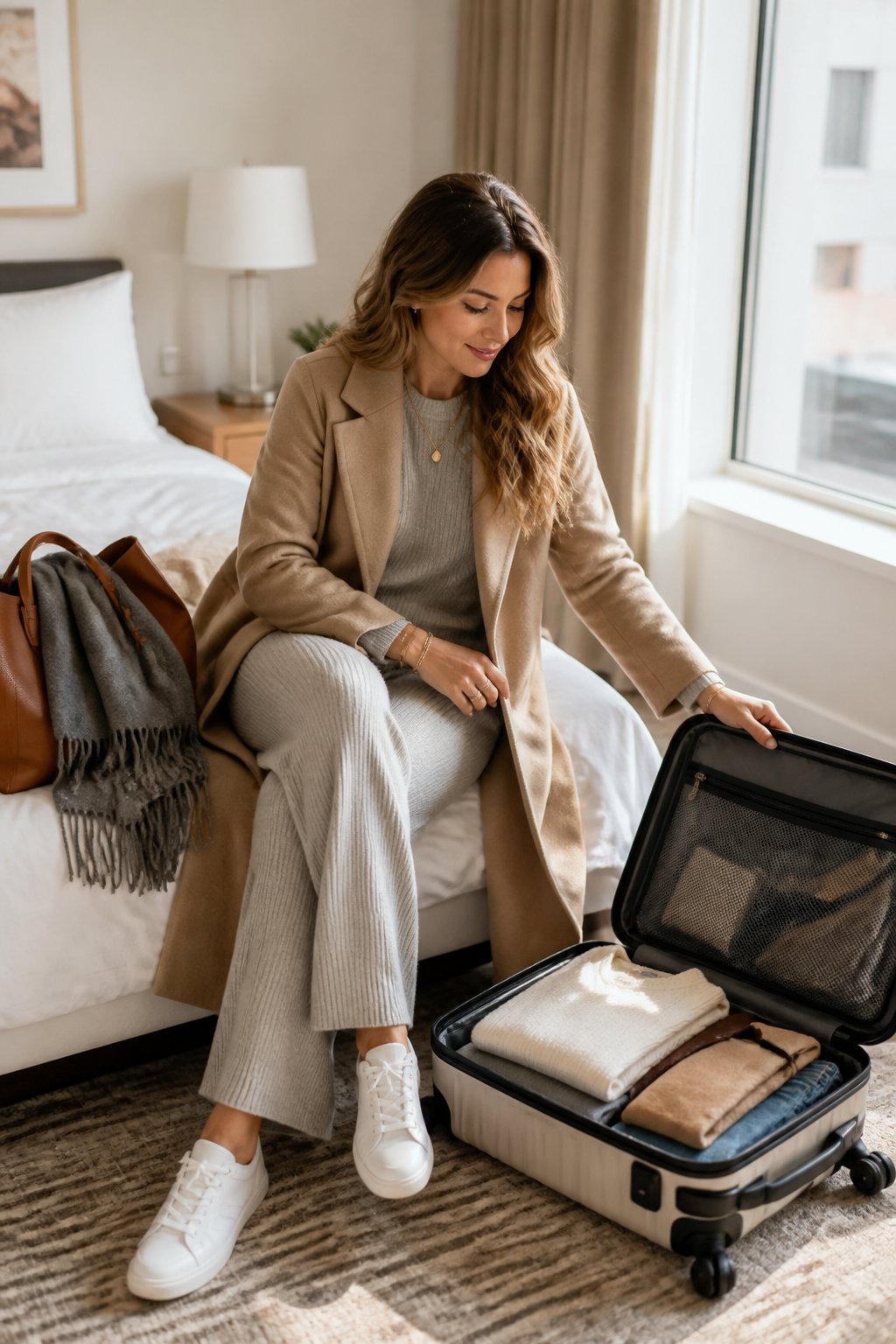
The hardest part of a capsule is not what goes in — it is what you decide to leave behind. The ninth image shows the editing stage: the moment when pieces that almost made the cut get set aside. Good editing criteria include: does this piece only work in one outfit? Does it need special care that the trip cannot provide? Does it duplicate something the capsule already covers? Most overpacking comes from including pieces that meet only one of these tests but feel too useful to leave out. A carry-on does not have room for pieces that almost work. If a garment needs a specific pair of shoes, a certain underlayer, or an occasion that may not happen, it does not belong in the bag. The capsule is better off with the space than with the hedge.
Grow your capsule one piece at a time
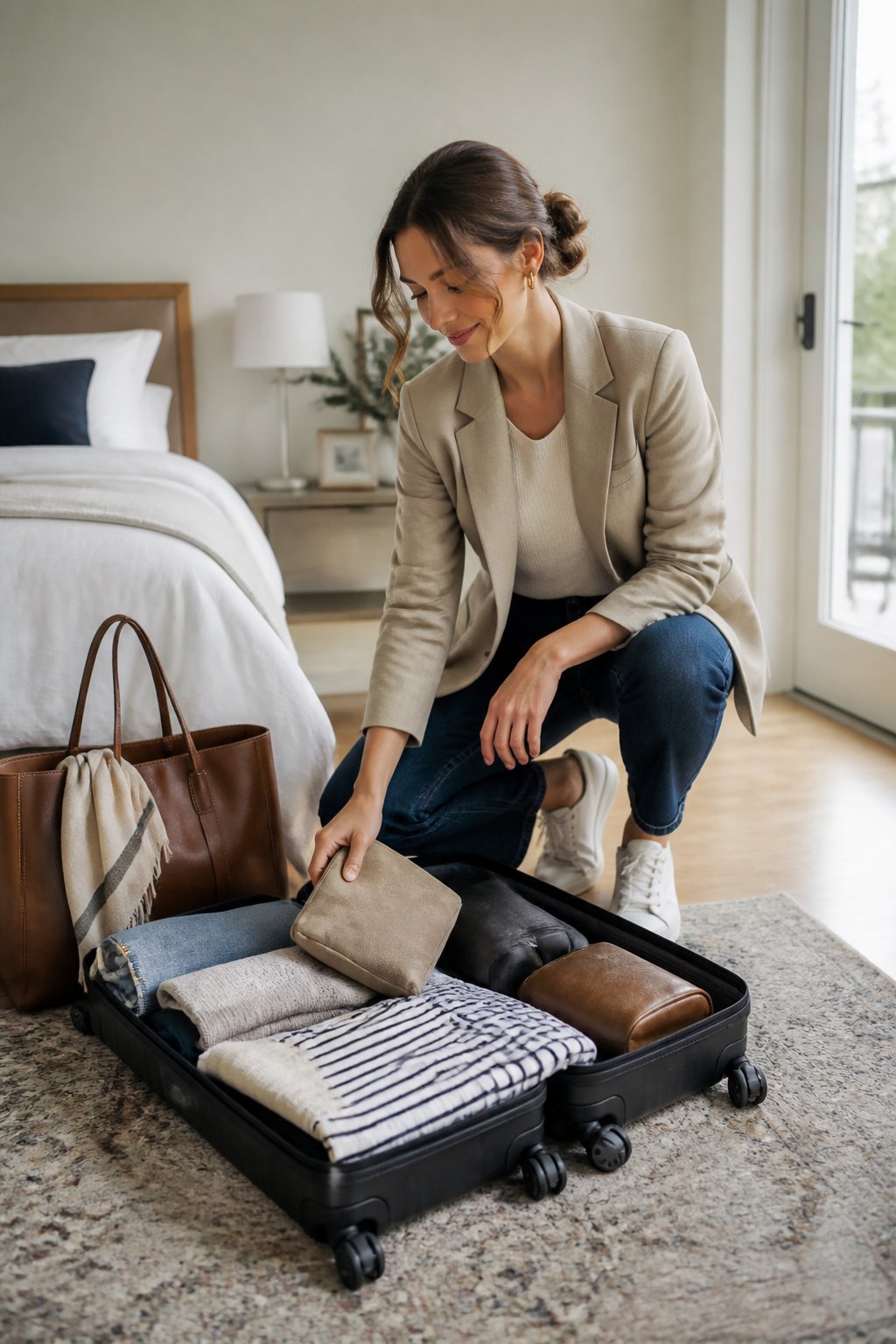
The best travel capsule is not the one you assemble fresh for every departure. It is the one you refine gradually. After a trip, ask yourself: what did I actually wish I had? Not what did I miss from my wardrobe at home, but what one piece would have made the capsule stronger? The tenth and final image shows the closing of a packing session — the capsule is assembled, the bag is ready. That same capsule will look slightly different next trip because the process of noticing gaps and adding pieces is ongoing. A single new top or a different pair of shoes can shift the whole system. The capsule wardrobe staples guide covers the pieces that tend to earn their place in most capsules, but the real principle is simpler: grow what works, replace what does not, and keep the whole thing small enough to lift with one hand. A travel capsule that fits in a carry-on is not a compromise. It is a selection. Every piece in it is there because it contributes more than the space it takes up, which is the same principle that makes a capsule wardrobe staple worth packing. When that is the standard, the suitcase practically packs itself.
Plan the next step
The ten sections in this guide each solve one specific packing problem, from your color palette to your shoe choices to the edit that keeps dead weight at home. If you work through them in order, you end up with a carry-on that covers your itinerary without guesswork. The capsule wardrobe staples page can help if you are still refining your base pieces, and the capsule wardrobe checklist gives you a printable reference for what a full capsule should include.
Once your carry-on capsule is assembled, the next question is whether it adapts to different trips. The outfit formula approach you used here also works for other travel lengths and climates, and the capsule wardrobe systems guide shows how to adjust this same framework for weekend getaways, longer trips, and warmer or colder destinations. The system you just built is the starting point, not the final version.
Keep these outfit ideas handy.
Save this guide on Pinterest (opens in a new tab)More ideas for your wardrobe
 Capsule Wardrobe SystemsVacation Capsule Wardrobe: Pack Light Without Leaving Anything Behind
 Capsule Wardrobe SystemsTrue Winter Capsule Wardrobe Ideas for Clean, High-Contrast Outfits
 Capsule Wardrobe SystemsLight Summer Capsule Wardrobe Ideas for Cooler, Airier Outfits
 Capsule Wardrobe SystemsDark Autumn Capsule Wardrobe Ideas for Rich, Everyday Outfits