
How to Choose an Outer Layer That Changes an Outfit
A familiar base outfit can look completely different when you change the outer layer. A tee and jeans feel relaxed with a soft cardigan, more polished with a blazer, and weather-ready beneath a trench. That makes the layer a useful styling tool: you can reuse pieces you already own and shift the outfit for a meeting, a weekend plan, or a cool commute without starting from scratch.
The examples below show one clear base and the outer layer that changes its character. The purpose is not to create a capsule wardrobe or to buy a different jacket for every outfit. Treat each combination as a practical starting point, then use whatever similar pieces you already have. A layer works best when it fits comfortably over the base, suits the weather, and feels appropriate for your actual plans.
Before choosing a jacket, cardigan, or coat, check the full outfit in motion. Sit, reach, and walk. A layer may look good standing still but pull across the shoulders or bunch around a bag strap. Consider where you will be indoors and outdoors, how much warmth you need, and whether the outer piece can be removed easily once you arrive.
How one layer changes an outfit
Outer layers affect shape, texture, and formality. A soft cardigan tends to make a base feel relaxed. A structured blazer adds definition. Denim or a casual jacket gives a familiar weekend feel, while a longer coat can create a more finished line and add coverage. These are common impressions rather than fixed rules: color, fabric, fit, and your setting all influence the result.
For the most flexible base, begin with pieces you enjoy wearing without the layer. A comfortable tee, trousers that fit while sitting, or a dress you can move in gives you a reliable foundation. Then choose the outerwear to meet the day. If the base has a print or strong color, try a simpler layer. If the base is quiet, texture or a subtle pattern in the outer piece can add interest.
Keep the temperature in mind. A heavy coat may work outdoors but become inconvenient in a warm office, while a thin cardigan may be easy to carry but insufficient for a cold commute. A removable layer gives you a way to adjust. Pack it where you can reach it and avoid tying a bulky piece around your waist if that does not feel comfortable or practical.
Choosing an outer layer is easier when you start with the conditions you need it to handle. Think about temperature, wind or rain, how long you will be outside, and how warm the destination will feel indoors. Then check the outfit’s silhouette and formality. A layer should work with the clothes beneath it, allow comfortable movement, and be practical to carry or remove.
A simple framework for choosing a useful layer
First, decide whether the layer is mainly for warmth, weather protection, polish, or shape. A soft cardigan can add light warmth and texture, but it will not block wind like a lined jacket. A blazer can sharpen a relaxed outfit, although a structured shoulder may feel restrictive over a bulky sweater. A trench can cover more of the body during a damp commute, while a denim jacket is usually better as a casual, moderate-weather option.
Second, compare proportions. A short jacket can define the waist or balance a long skirt. A hip-length layer often works with straight trousers and dresses. A long coat creates a continuous vertical line and can cover longer hems, but check that it does not catch underfoot or drag when you sit. These are options rather than rules: the best length depends on the garment, the wearer, and the movement required that day.
Third, test the complete outfit. Put the layer over the actual base pieces and fasten it if that is how you expect to wear it. Reach forward, sit, walk, and raise your arms. Check whether sleeves bunch, the front pulls, or a hem catches on the layer. If the outfit works only while standing still with the jacket open, it may need a different base or a more comfortable cut.
How common outer layers change an outfit
Use a cardigan when you want softness and easy removal
Straight jeans and a white tee under a soft cardigan
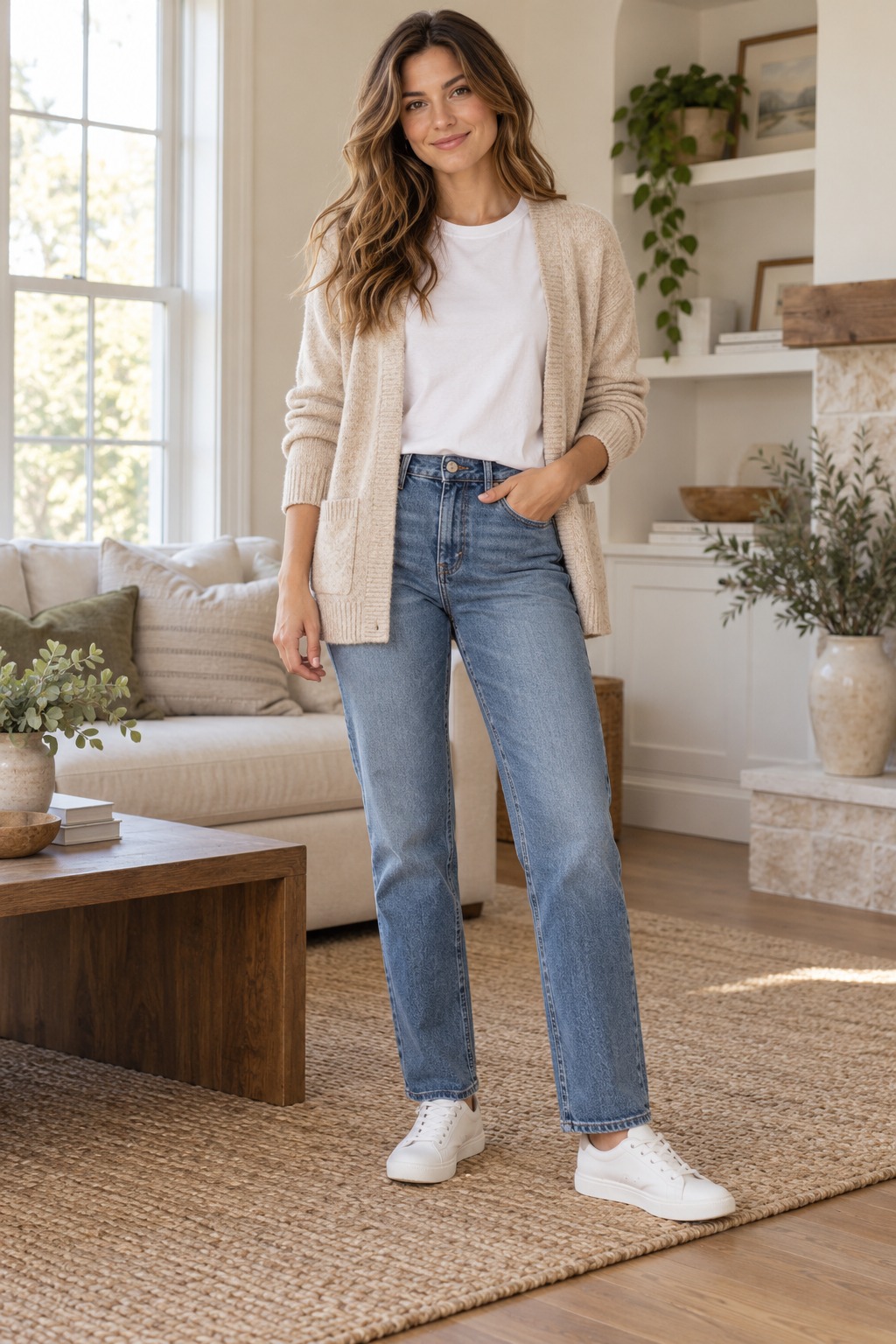
Straight-leg jeans and a simple white tee make a base that is easy to repeat. Add a soft cardigan in oatmeal, charcoal, or a muted color to make the combination feel finished without making it formal. A mid-hip length is easy to wear open or buttoned, but choose the length that works with your tee and your preferred coverage. Simple sneakers, loafers, or flat ankle boots all fit the casual direction.
To keep the cardigan from overwhelming the outfit, look at the knit weight and sleeve volume. A lighter knit layers more easily under a coat; a chunkier cardigan can serve as the main outer layer on a mild day. If the tee hangs lower than the cardigan, try a half tuck or choose a shorter base top. A small repeated color—such as a brown belt, bag, or shoe—can connect the pieces.
This is a useful outfit for errands, coffee, or an informal work setting where denim is accepted. If you need a sharper version, replace the cardigan with a blazer while keeping the jeans and tee. The base remains recognizable; the layer changes the mood.
Add a blazer when the outfit needs more structure
A knit dress under a structured blazer
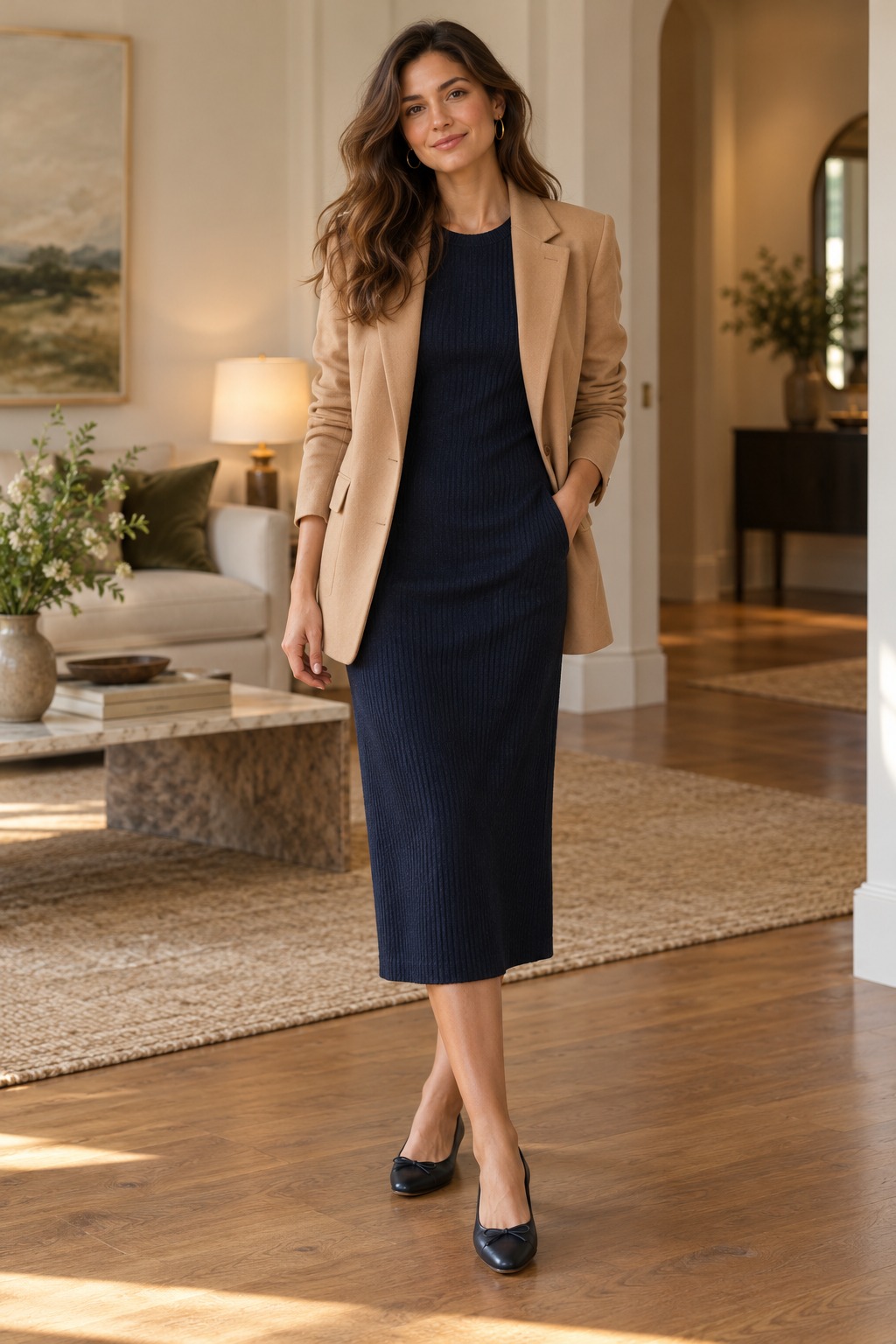
A simple knit dress can move between casual and polished depending on the layer. Wear it with a structured blazer that fits comfortably through the shoulders and sleeves. Choose a length that works with the dress hem and shoes. A blazer in camel, navy, or a subtle check can add shape while leaving the dress as the main piece. Flats or low heels keep the outfit suitable for a long day.
Try the blazer open first. It creates a clear frame without requiring you to fasten a button over the dress. If you prefer it closed, test the fit while seated and reaching forward. A soft knit dress may cling or shift under a firm jacket, so smooth the layers before deciding whether the combination works. If you want a more relaxed feel, a fine cardigan is an easy replacement.
Keep jewelry simple so the outfit can suit a meeting, lunch, or an event with a smart-casual dress expectation. When the temperature changes, remove the blazer and the dress remains a complete outfit. This layered approach can be more useful than wearing a complicated base you cannot adjust.
Choose denim for a casual layer with a defined edge
A striped long-sleeve top and relaxed trousers under a denim jacket
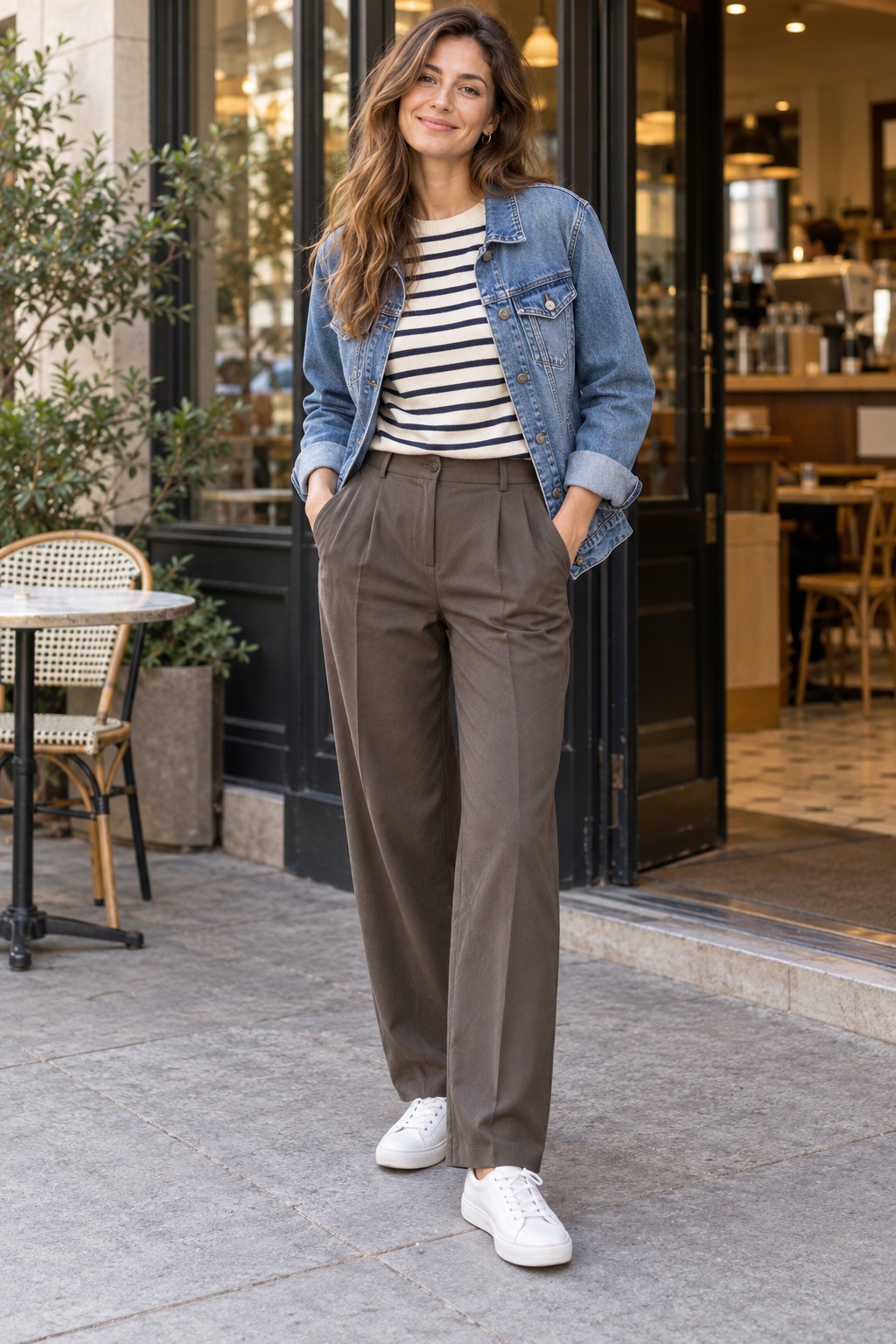
A striped long-sleeve top and relaxed trousers create a comfortable base with a little pattern. Add a denim jacket for a familiar casual finish. Choose a jacket with enough room to layer over the top without pulling at the shoulders. A shorter or waist-length jacket emphasizes the trousers’ shape; a longer denim shirt-jacket offers more coverage. Wear sneakers or flat shoes that fit the rest of your day.
Because stripes already add visual detail, you can keep the jacket simple and let the fabric texture do the work. Dark trousers and a light stripe feel classic, while a colored stripe can bring more personality. If the jacket hem and top hem compete, try a small front tuck or leave the jacket open. Roll the sleeves only if the cuff stays in place and feels comfortable.
This formula works for a casual lunch, a museum visit, or a travel day when temperatures vary. If you need more warmth, use the denim jacket as a mid-layer beneath a coat rather than expecting it to handle every weather condition on its own. A scarf or small bag can add a practical detail without requiring a second outer layer.
Use a long coat to create a vertical line and weather coverage
A silk-look blouse and tailored trousers beneath a long coat
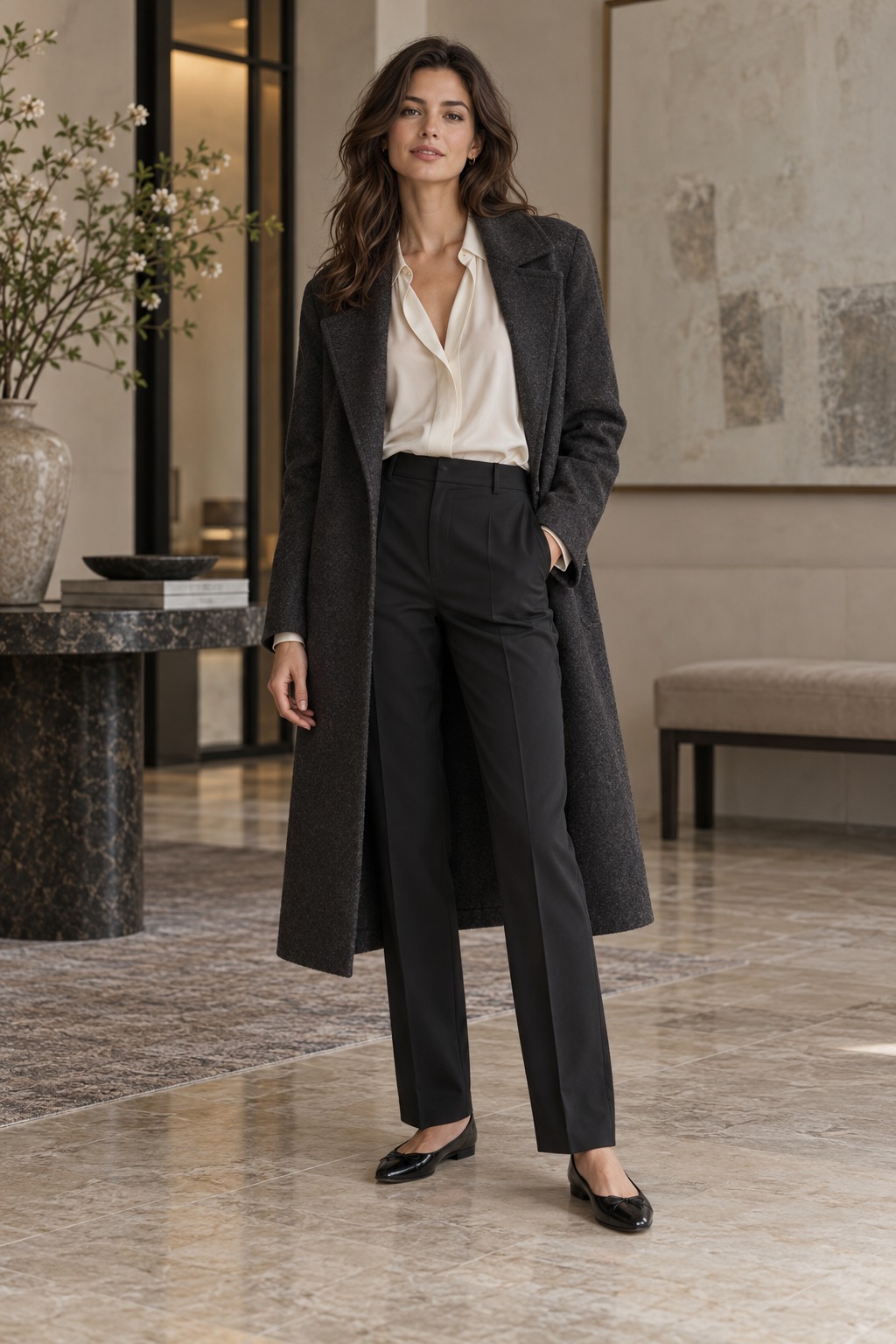
A blouse and tailored trousers already have a polished feel, so a long coat can finish the outfit without adding extra styling steps. Choose a coat that allows the blouse sleeves to sit smoothly and lets you walk freely. A charcoal, camel, or deep navy coat can work with several trouser colors. Closed flats, loafers, or a low boot suit the outfit depending on weather and the formality of your setting.
Let the base remain visible by wearing the coat open when you are indoors or in mild weather. If you button it outside, check the hem and trouser length together so the fabric does not tangle or drag. A blouse does not need to be shiny or delicate; a matte drapey shirt can work just as well. Choose a fabric you can comfortably wear for the hours ahead.
This outfit can suit a workday, dinner, or a meeting where a more tailored look feels right. If the coat feels too formal, swap it for a relaxed cardigan or soft jacket. If your workplace has a specific dress code, follow that guidance and adjust the base and layer accordingly.
Choose a trench for light rain and flexible polish
A crewneck sweater and dark jeans under a lightweight trench
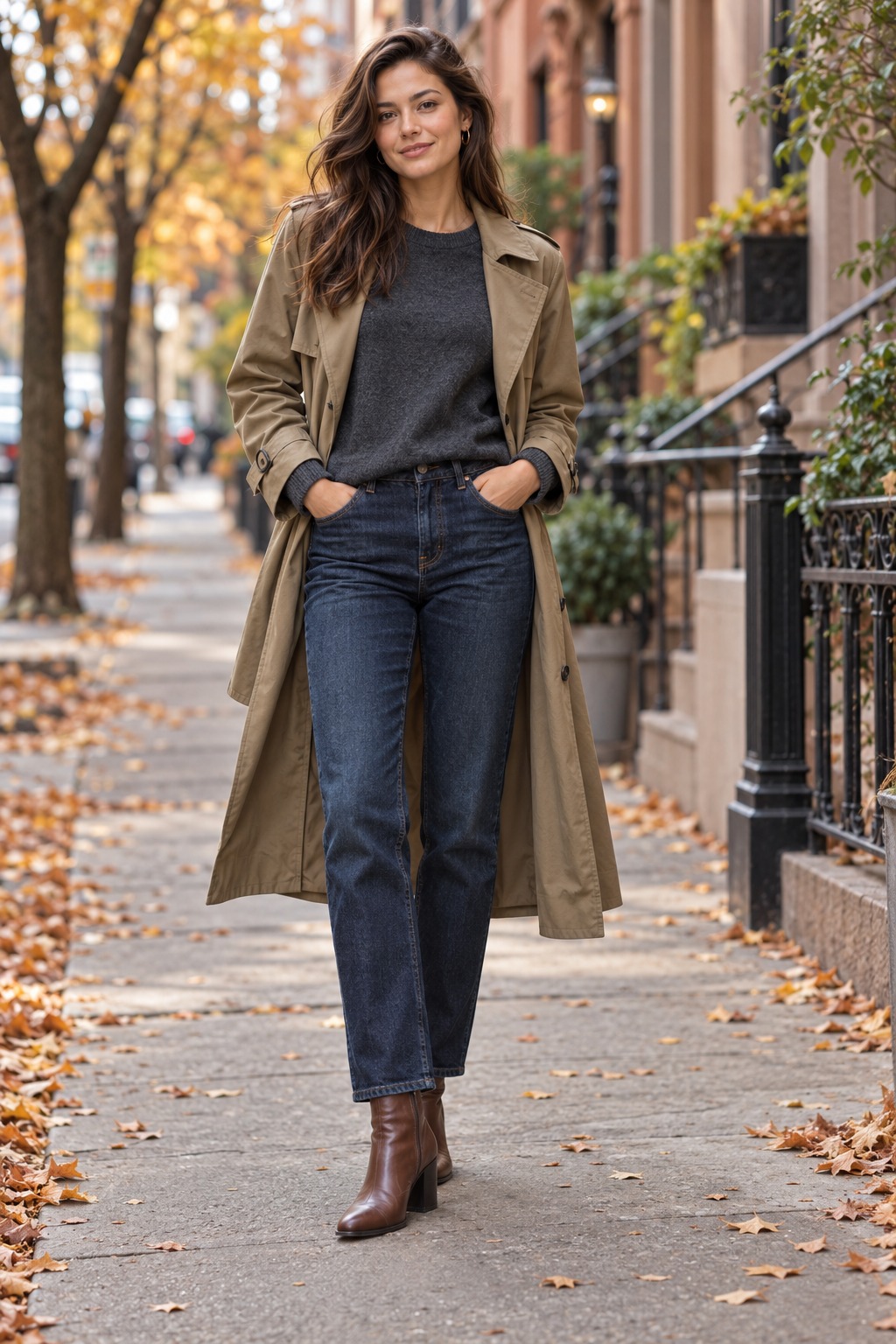
A crewneck sweater and dark jeans create a straightforward base for a day when you want warmth without a complicated outfit. Add a lightweight trench for wind or light weather changes. The trench can be worn open or loosely belted; keep the closure comfortable and avoid pulling the belt too tight. Ankle boots, sneakers, or loafers work depending on your route and the weather.
Consider the sweater’s thickness before adding the trench. A thin merino-style knit or cotton sweater is easier under a tailored coat than a very chunky cable knit. If you prefer a heavier sweater, try a roomier trench or a simple unstructured rain layer. Check the sleeves and back when you move, as multiple fabrics can catch or bunch.
The trench gives a casual base a slightly more considered finish, but it does not have to be a classic beige style. Navy, olive, or a deep brown can feel just as versatile. This is a useful commute outfit because the coat is easy to take off when you reach a warm indoor space.
Simple layer swaps for a different setting
When you need to change the tone of an outfit, replace one outer layer before replacing the whole base. A cardigan can become a blazer for a meeting; a denim jacket can become a trench for wet weather; a long coat can be traded for a lighter overshirt on a warmer day. Keep the base and shoes if they still suit the setting. This makes outfit planning faster and helps you see which pieces actually earn their place in your closet.
- More polished: Choose a clean blazer or tailored coat with comfortable shoulder room.
- More relaxed: Try a cardigan, denim jacket, or soft overshirt.
- More weather-ready: Add a layer that suits the forecast and can be removed indoors.
- Less bulk: Use a thinner base under a structured jacket.
- More color: Let one layer introduce a shade already present in your outfit.
Before leaving, test the complete outfit with your bag and shoes. A strap can pull a jacket backward; a coat can cover a dress hem; trousers can drag with a different shoe. A useful layer should support your real routine, not create another thing to manage.
Common questions about styling with one outer layer
How can I make jeans and a tee look more polished?
Add a structured blazer, refined cardigan, or clean coat that fits well over the base. Simple shoes and one repeated color can help the outfit feel intentional. Choose the version that suits your setting and comfort.
Can I wear a cardigan as outerwear?
Yes, in mild weather or indoors if the knit gives you enough warmth. For rain, strong wind, or colder temperatures, choose outerwear made for those conditions. A cardigan can also work beneath a coat.
How should a jacket fit over a sweater?
It should allow comfortable movement through the shoulders, arms, and back. Try it over the exact sweater, then sit and reach. If it pulls or bunches, use a thinner base or a roomier jacket.
How do I choose between a blazer and a cardigan?
Consider the setting, weather, and impression you want. A blazer often adds structure, while a cardigan feels softer and easier to adjust. Both can work with the same base outfit.
What is the easiest outer layer to carry?
A light cardigan, overshirt, or unlined jacket may fold more easily than a heavy coat, though the best choice depends on temperature and fabric. Pick one you can store without damaging it or crowding your bag.
A small outer-layer rotation to start with
You do not need every jacket type shown here. Choose one layer that handles the settings you visit most often, then add a second only if it fills a genuine gap. For example, a cardigan may be your indoor and mild-weather option, while a trench handles rain and a cooler commute. Keep the pieces together with the base outfits you wear frequently so getting dressed becomes a simple choice instead of a search through your closet.
When you try a new combination, take a quick note of what worked: temperature, hem length, shoe, and whether the layer stayed comfortable over several hours. That small record can make future outfit planning easier. It also helps you notice if you keep reaching for the same item, which is a better guide to what your wardrobe needs than a trend list.
Let the layer do the adapting
You do not need a new base outfit for every setting. Start with pieces that fit and feel good, then use a cardigan, blazer, denim jacket, long coat, or trench to adapt the mood and weather. The examples show how a single outer layer can make familiar clothes feel different. Keep the pieces that suit your day, and let comfort guide the final combination.
Keep these outfit ideas handy.
Save this guide on Pinterest (opens in a new tab)