
12 Summer Capsule Outfits for Heat, Humidity, and Coverage Preferences
Summer outfit advice often assumes one kind of hot day: sunny, dry, and spent mostly outdoors. Real days can be humid, windy, air-conditioned, active, formal, or all of those in a few hours. You might prefer covered shoulders and legs, or you may feel comfortable in sleeveless pieces. A useful capsule does not make you choose between your preferred coverage and an outfit that works for the weather.
The twelve formulas below start with common wardrobe roles—tops, bottoms, dresses, and light layers—and show how to adjust them for your own comfort. Each outfit is a starting point, not a shopping instruction. Use similar pieces from your closet, and pay attention to fabric construction, fit, laundry needs, and how the full look feels in motion.
A summer outfit check before the list
For a warm or humid day, think about how much fabric touches your skin, whether the garment moves away from the body, where it sits under a bag strap, and what will happen indoors. Fabric names alone do not guarantee coolness: weight, weave, lining, finish, color, cut, and personal sensitivity can all affect comfort. Use garments you have worn comfortably before as your reference point, and follow their care labels.
For coverage, decide what you want covered and why. You may prefer sleeves for sun, a longer hem for personal or cultural reasons, or a light layer in air conditioning. You may want coverage only for the commute and then remove the layer. There is no one right amount of skin to show in warm weather. A light overshirt, loose trousers, a breathable dress, or a skirt with an underlayer can all be useful if the combination works for your day.
12 outfit formulas for heat, humidity, and coverage choices
1. The open-shirt layer over a simple base
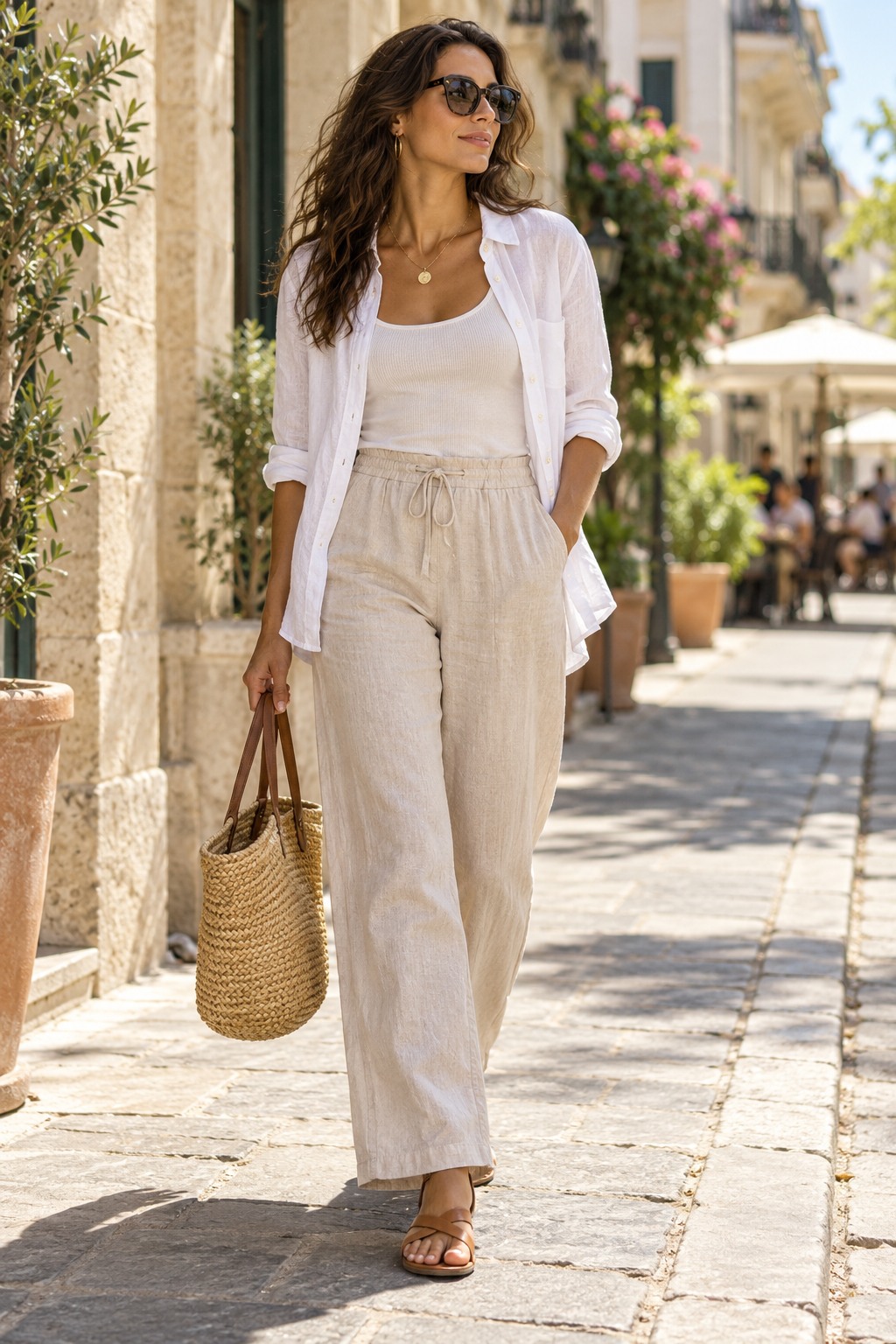
Formula: soft short-sleeve top + relaxed trousers or shorts + open button-front shirt + comfortable walking shoe. Choose the shirt length that gives your preferred coverage and does not catch on your bag.
This formula creates a removable layer for a sunny walk, breezy afternoon, or chilly indoor space. The base can be a tee, tank, or another top you already like; the open shirt can be cotton, linen, a blend, or a light fabric from your closet. Test the combination with the strap of your everyday bag, since repeated rubbing can make a layered outfit feel fussy.
Adapt it: If the day is very humid, remove the outer shirt outdoors if it feels warmer, or choose a looser weave and a lighter base. If you prefer more coverage, keep it on and wear it open, buttoned, or with sleeves rolled to a comfortable point. For an air-conditioned office, keep the shirt nearby rather than carrying a heavier jacket.
2. A midi skirt with a breathable tee
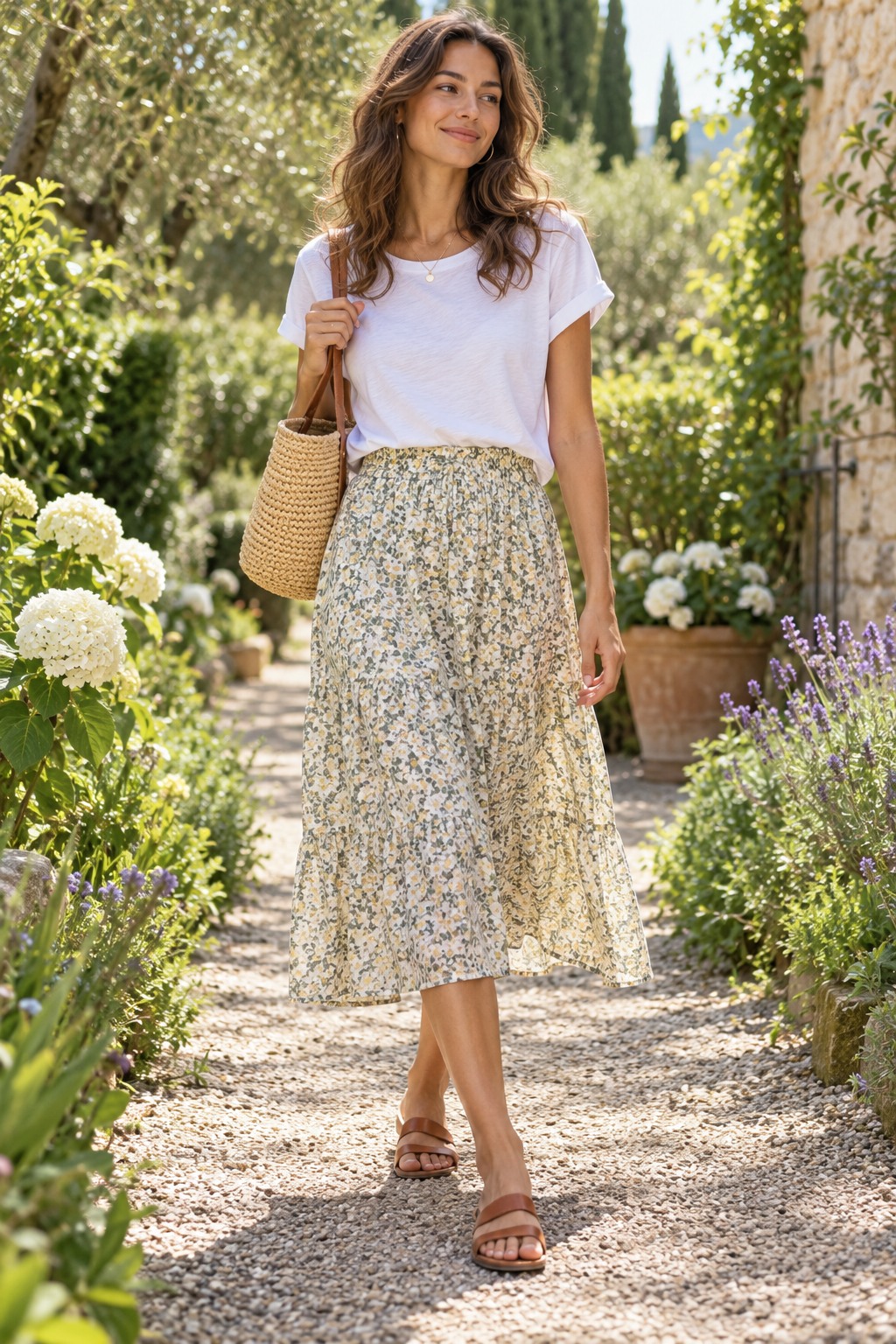
Formula: midi skirt + short-sleeve tee or soft knit top + sandal, flat, or sneaker + optional light cardigan. Add a comfortable underlayer if it helps you move freely.
A skirt can create airflow around the legs, but hem length and movement matter as much as the label. Try sitting, stepping onto a curb, and walking at your usual pace. A wrap, elastic, or fixed waistband may each feel different across a day, so choose the one that works for you. A tucked, half-tucked, or untucked top can all fit the formula.
Adapt it: If you prefer more leg coverage, choose a longer hem or wear a light layer over the skirt. If the hem catches on the shoe or bag, try another length or shoe. On a damp day, a skirt that moves easily and dries within your usual routine may be more useful than a heavier fabric.
3. Relaxed shorts with a long-sleeve lightweight shirt
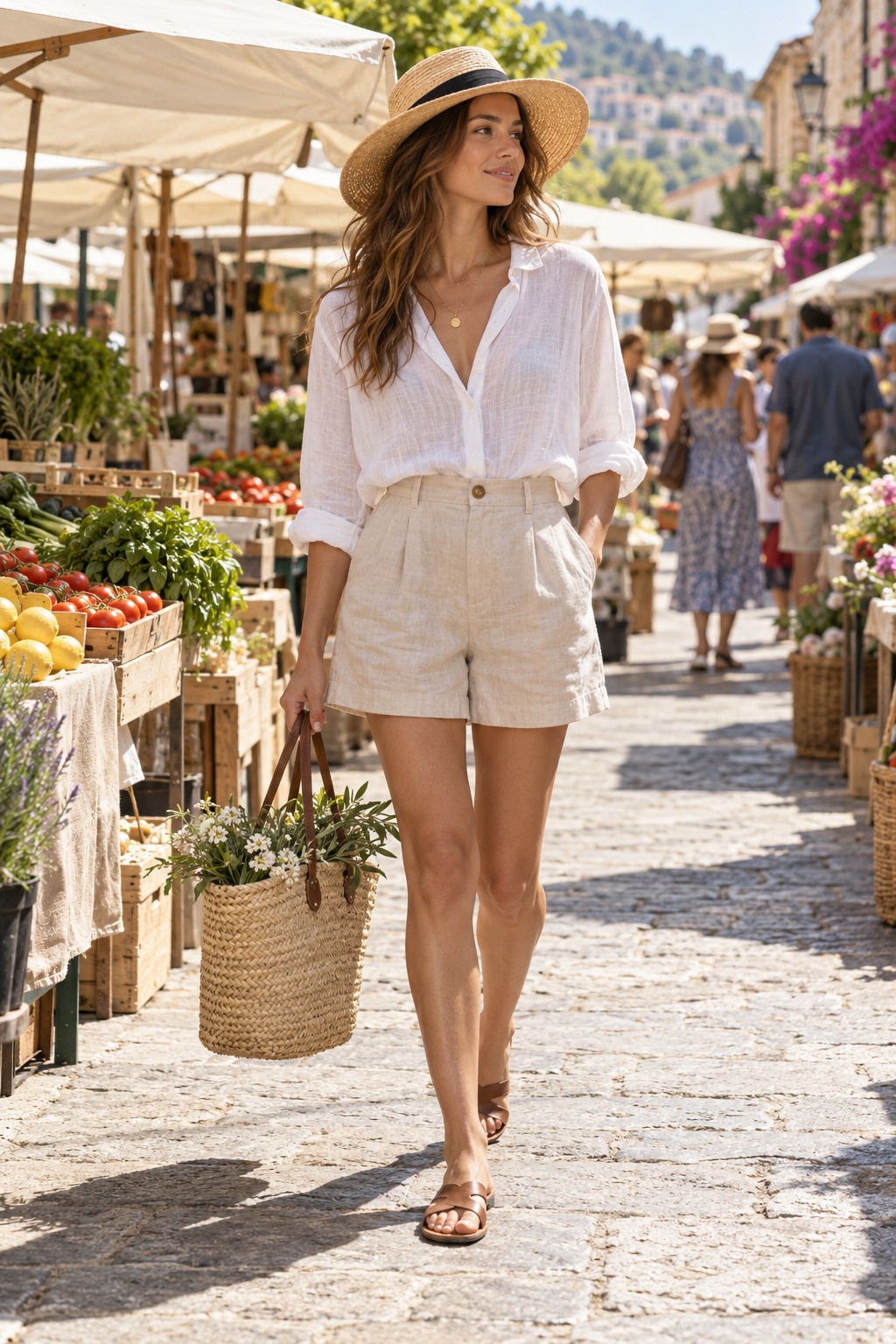
Formula: shorts + airy long-sleeve shirt + comfortable sandals or sneakers + optional cap or sun-accessory. The top can be tucked, open over a base, or worn loose.
This outfit uses shorter bottoms with more arm coverage. It can be useful when you want sleeves but do not want a full-length trouser. Check that the sleeve fabric does not trap heat or bunch at the wrist; a rollable cuff can make the shirt easier to adjust. Choose shorts with a waistband and leg opening that feel comfortable when seated and walking.
Adapt it: If you do not wear shorts, substitute a skirt or lightweight trouser and keep the top. If you prefer shorter sleeves, change the shirt rather than forcing the coverage. For more sun coverage outdoors, use clothing and sun-protection measures appropriate to your exposure; a fashion outfit is not a substitute for sun-safety guidance.
4. Pull-on trousers with a sleeveless or short-sleeve top
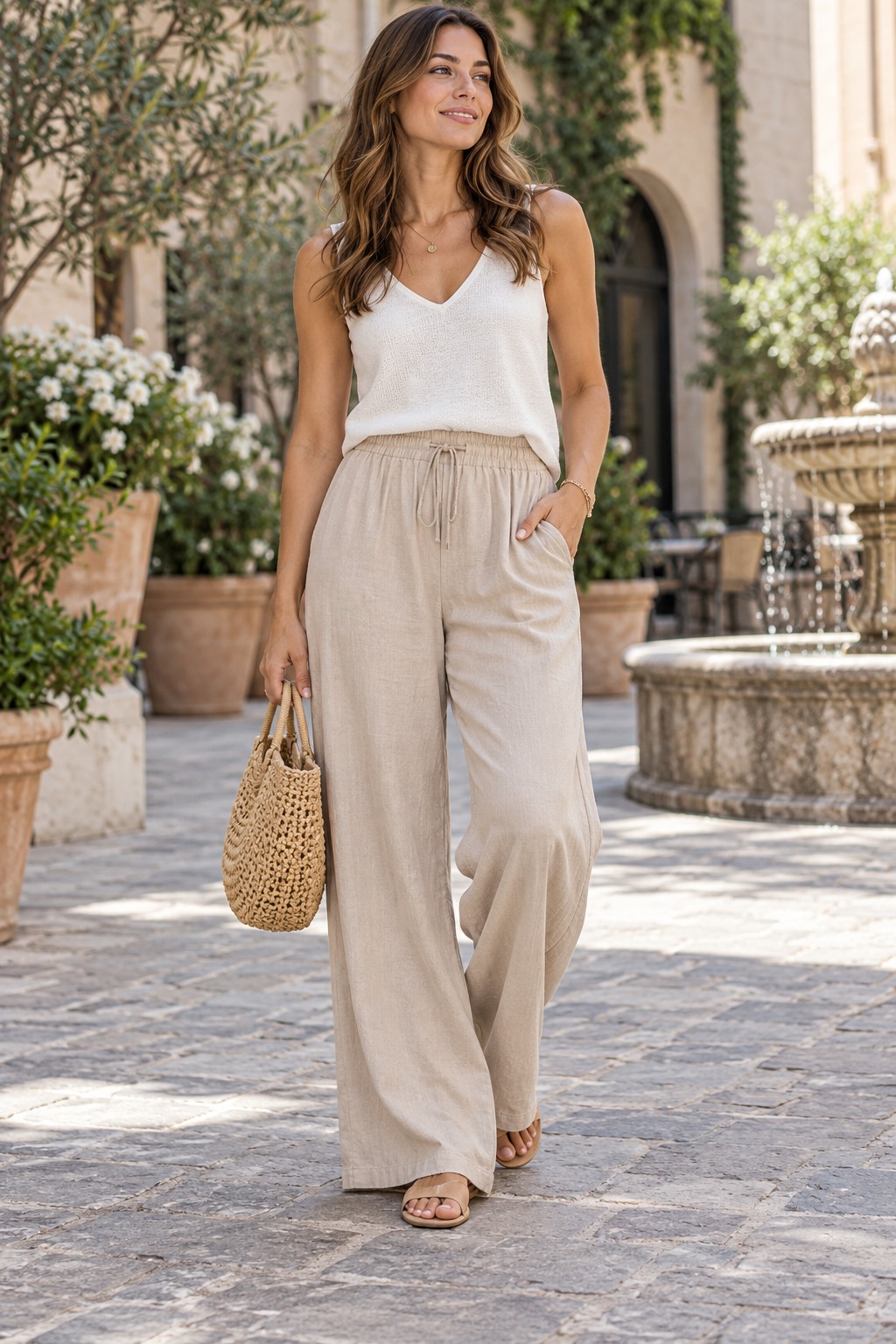
Formula: lightweight pull-on trousers + sleeveless, cap-sleeve, or short-sleeve top + open overshirt for indoor cooling + shoes you can walk in.
The long bottom can provide more leg coverage while a lighter top keeps the outfit simple. “Pull-on” is about the closure, not a specific body type or silhouette; choose a waistband that stays comfortable through sitting and walking. If you want shoulder coverage, use a short-sleeve version or keep the overshirt on. A relaxed trouser can also make an outfit feel less exposed than shorts without adding a heavy layer.
Adapt it: If the trousers feel warm, try a looser cut, shorter length, or lighter fabric you already own. If your destination is cool, bring an easy layer. If you want full arm coverage, wear a loose long-sleeve shirt with the trousers and adjust the fabric weight to the day.
5. A shirt dress with a practical underlayer
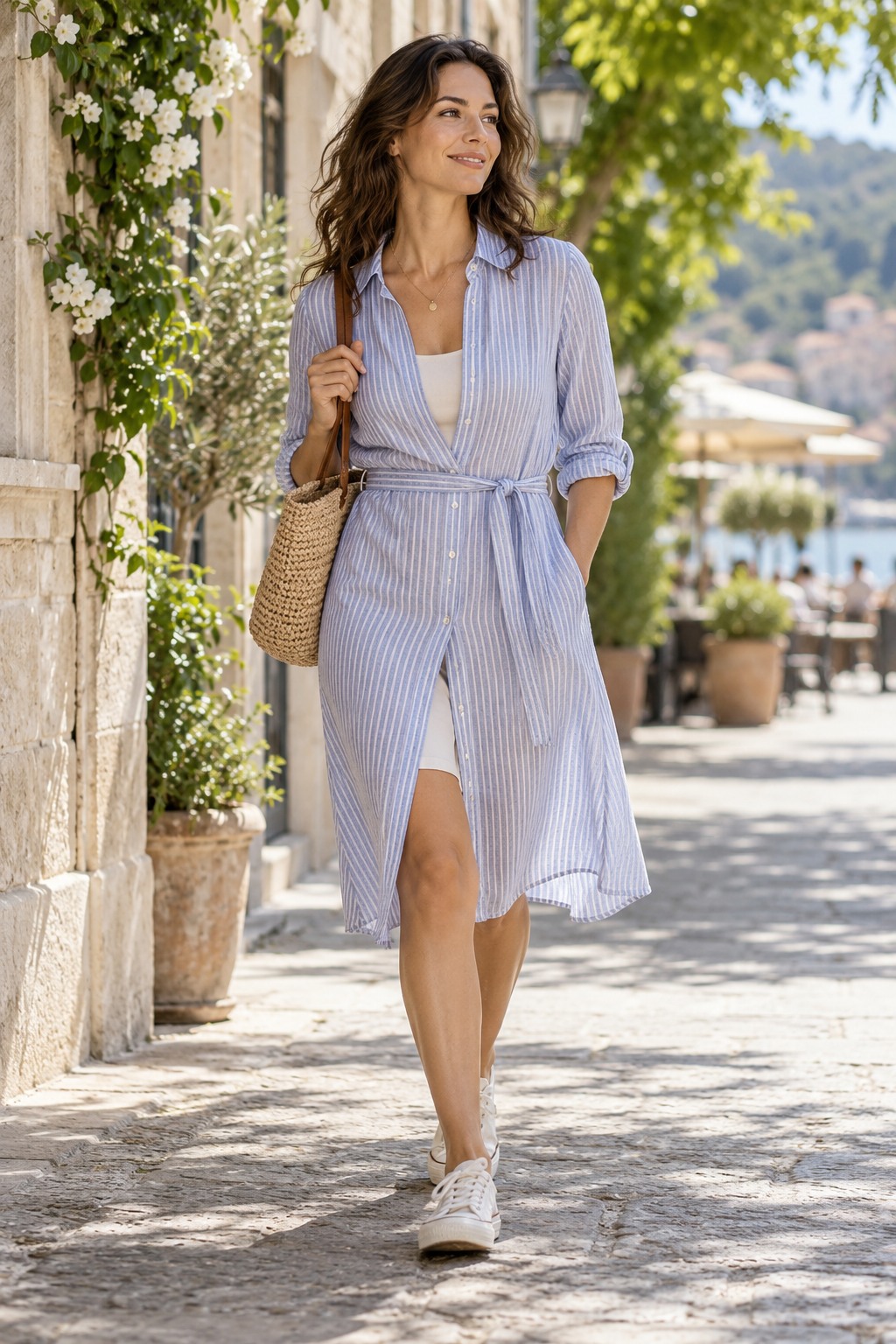
Formula: shirt dress + breathable underlayer or shorts if desired + flat shoe or sneaker + optional belt or open cardigan. Leave the collar open or closed according to preference.
A shirt dress can make one-piece dressing simple, but pay attention to closures and movement. Check that the buttons stay secure while seated, that the hem behaves when walking, and that the fabric is comfortable across the shoulders. If you prefer a belt, use one that does not make sitting uncomfortable; the dress also works without one.
Adapt it: For extra coverage, layer a tee or light slip underneath if the neckline or fabric calls for it. For a warm commute and a cool destination, take a cardigan or overshirt. If the dress wrinkles in a way that bothers you or needs a care process that is difficult to manage, choose another one-piece from your wardrobe.
6. A matching set with a separate wear plan
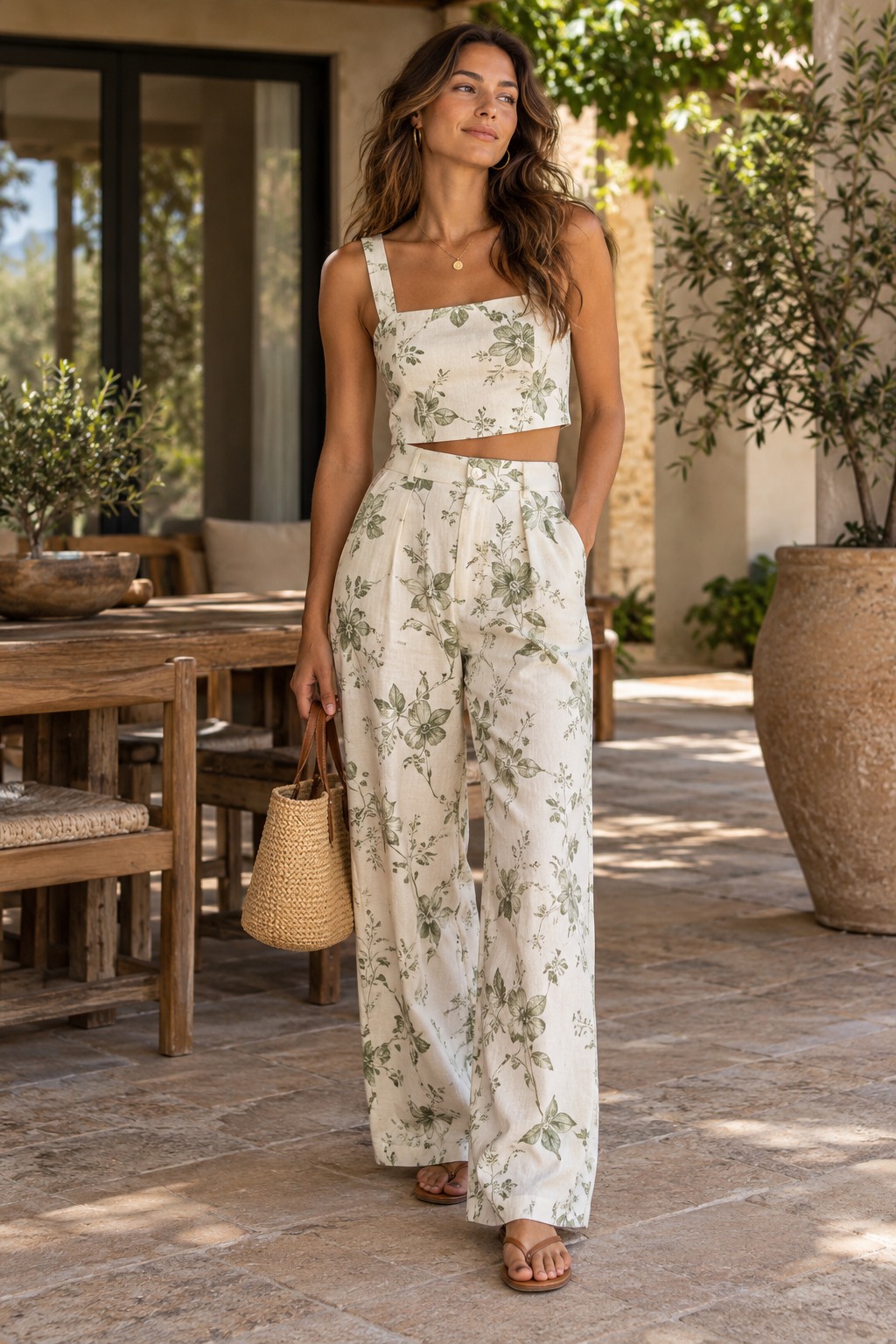
Formula: coordinated top + matching shorts, skirt, or trousers + a neutral shoe. For a second look, wear each half with a simple piece you already own.
A matching set reduces the number of decisions because the top and bottom are designed to be worn together. It earns more capsule value when each piece also works separately. Try the top with your jeans or the bottom with a favorite tee before you decide that it belongs in a small rotation. A set can be colorful, patterned, or neutral; it does not have to be minimal.
Adapt it: If the set feels too coordinated for your style, break it up with a denim jacket, cardigan, or differently colored shoe. If the top and bottom need different laundry treatment, factor that into your week. A set that only works as one outfit may still be worth keeping if you enjoy it; versatility is not the only reason to wear something.
7. A lightweight jumpsuit with an easy-change layer
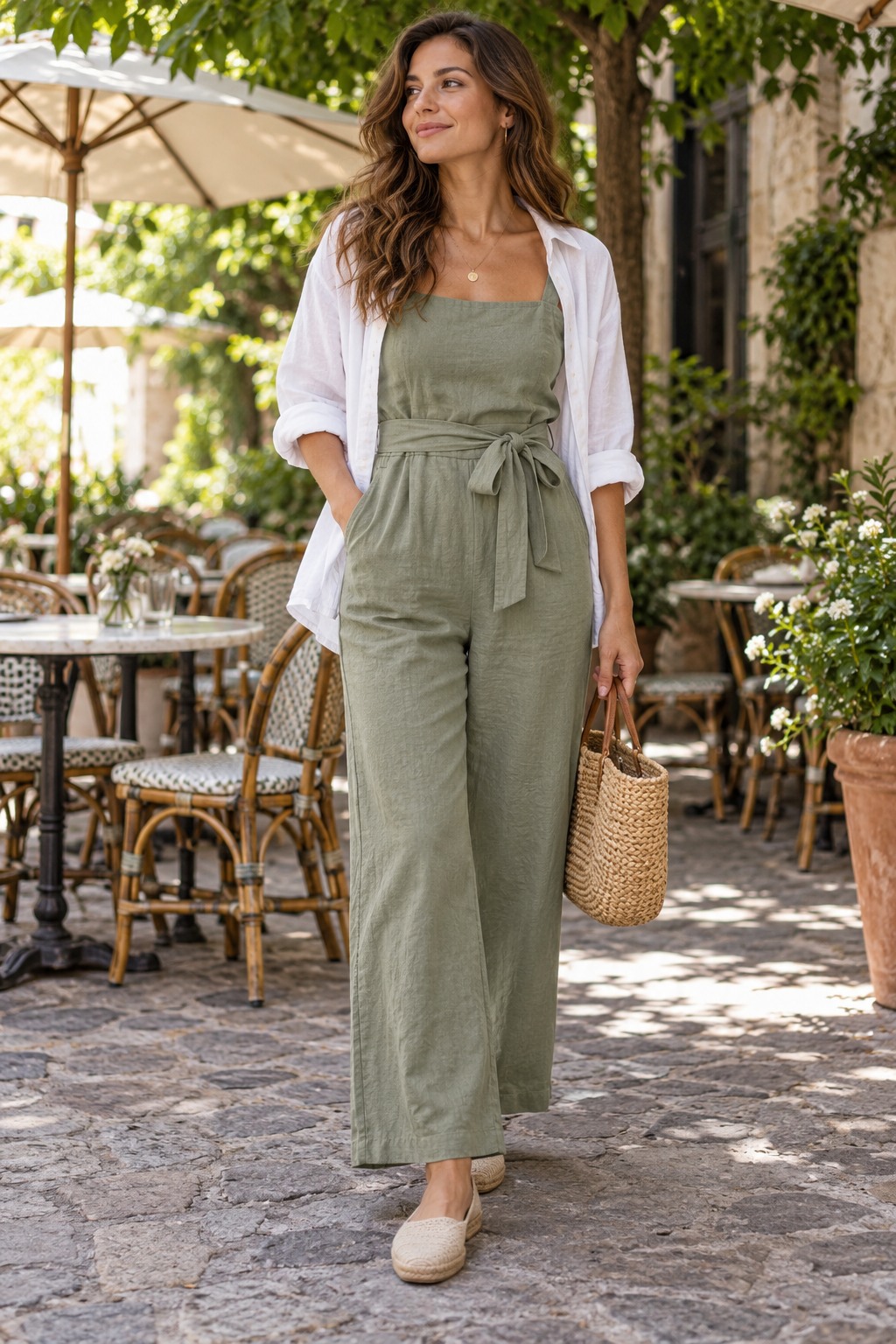
Formula: jumpsuit + sandal or sneaker + open shirt or short cardigan. Choose a closure and rise you can manage comfortably during your usual day.
A jumpsuit can create a complete look with little styling, but bathroom access, adjustability, and heat matter. Test the closure and straps or sleeves before a long day. Make sure you can sit and reach without feeling pulled at the shoulder or waist. Add a layer only if it helps with coverage or indoor cooling; skip it if it makes the outfit feel hot.
Adapt it: A one-piece romper or a top-and-trouser combination can fill the same role if a jumpsuit is not convenient. If the weather is humid, choose a lighter version with room to move. If you need sleeves or a higher neckline, look for those features in the one-piece instead of treating the layer as mandatory.
8. A cotton or knit dress with a sneaker
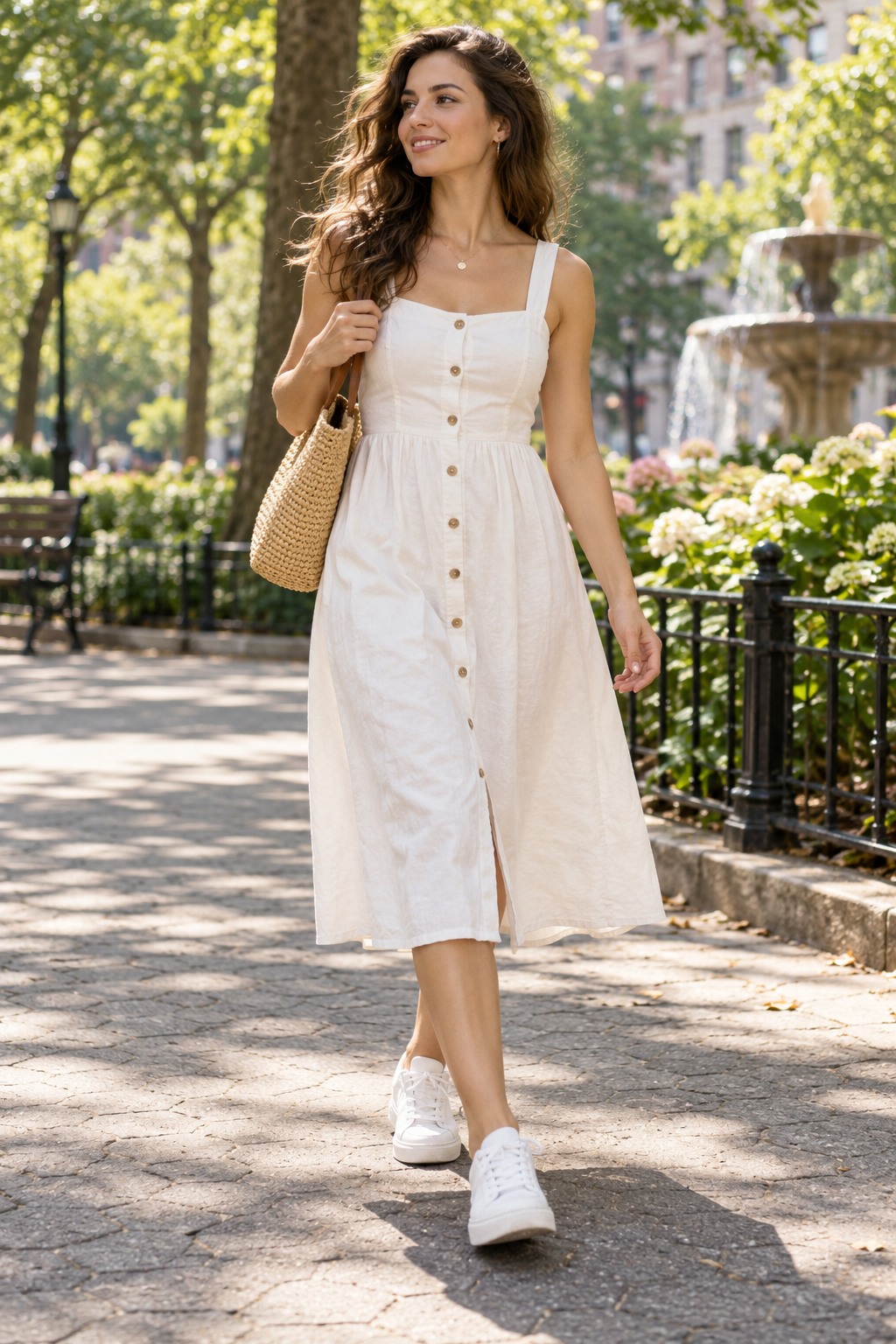
Formula: casual midi or knee-length dress + walking sneaker + crossbody or shoulder bag + optional light shirt. Pick a hem that works with your stride.
A dress and sneaker pairing can cover a day with errands, transit, and a casual meal. The sneaker is useful only if it suits your route and has the fit and support you prefer. Test the hem while walking and sitting; if it rides up, catches, or becomes difficult to manage, try another length or a different dress shape. A layer can add coverage or help in cold interiors.
Adapt it: For more coverage, choose a longer sleeve or pair with a lightweight overshirt. If a dress feels too warm, switch to a tee and trouser formula. If your day is formal, change the shoe and accessories only if the venue and comfort needs support that choice.
9. Culottes with a simple fitted or relaxed top
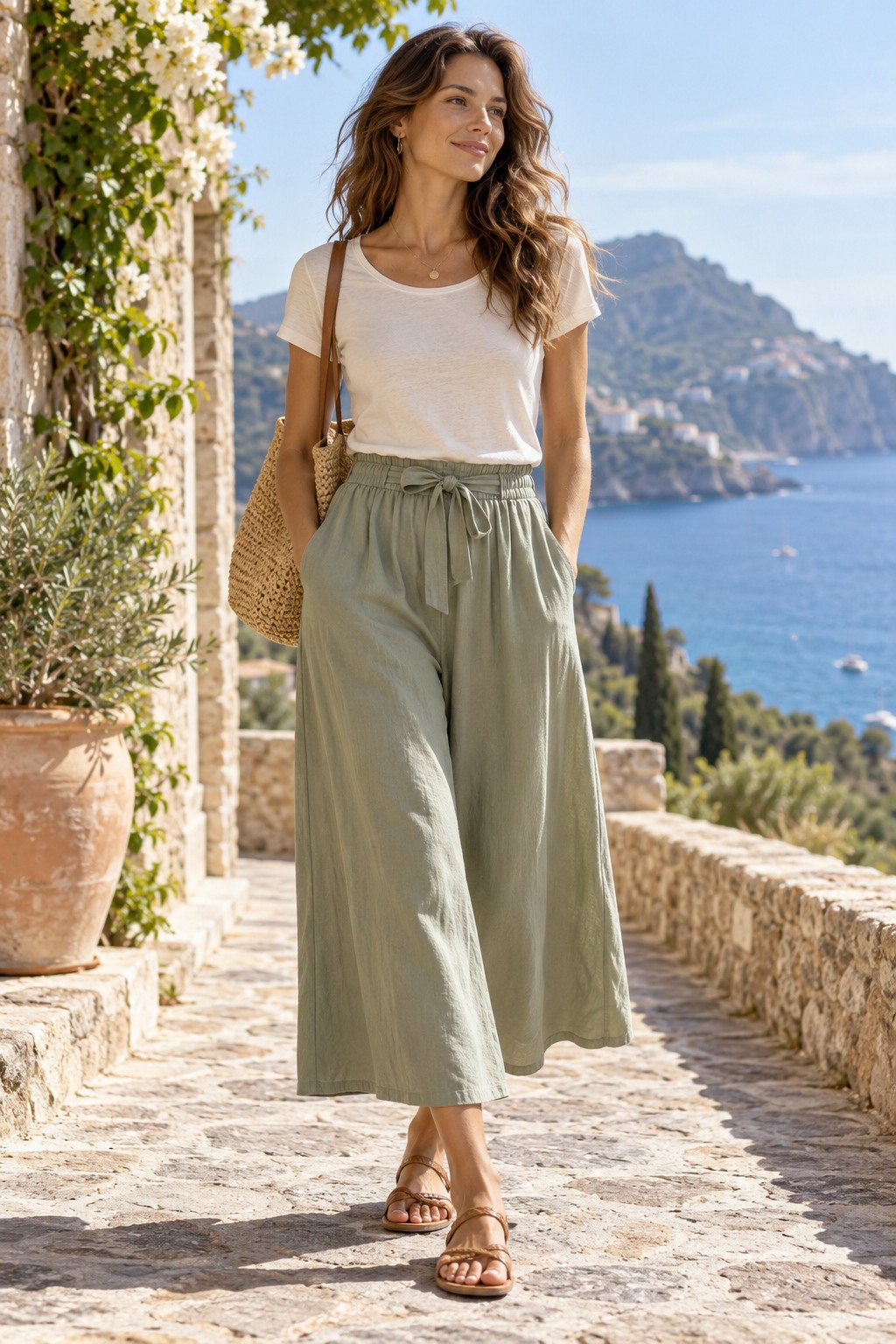
Formula: cropped wide-leg trouser + plain tee or blouse + low-profile shoe + optional vest or open shirt. Choose the hem-to-shoe relationship that feels practical.
Culottes can offer the movement of a wider leg with a shorter hem, which some people find easier in warm or wet weather. The length can also meet the shoe differently, so try several pairs with your actual walking shoes. The top can be tucked, cropped, or loose; none of these is required to “balance” a body. Wear the proportion you find comfortable and useful.
Adapt it: If cropped wide-leg trousers are not your preference, use an ankle-length or full-length relaxed trouser. If you want more coverage at the arms, add a breathable long-sleeve shirt. If a bag strap catches at the hip, try a different bag position or trouser fabric.
10. A long skirt with a short-sleeve blouse
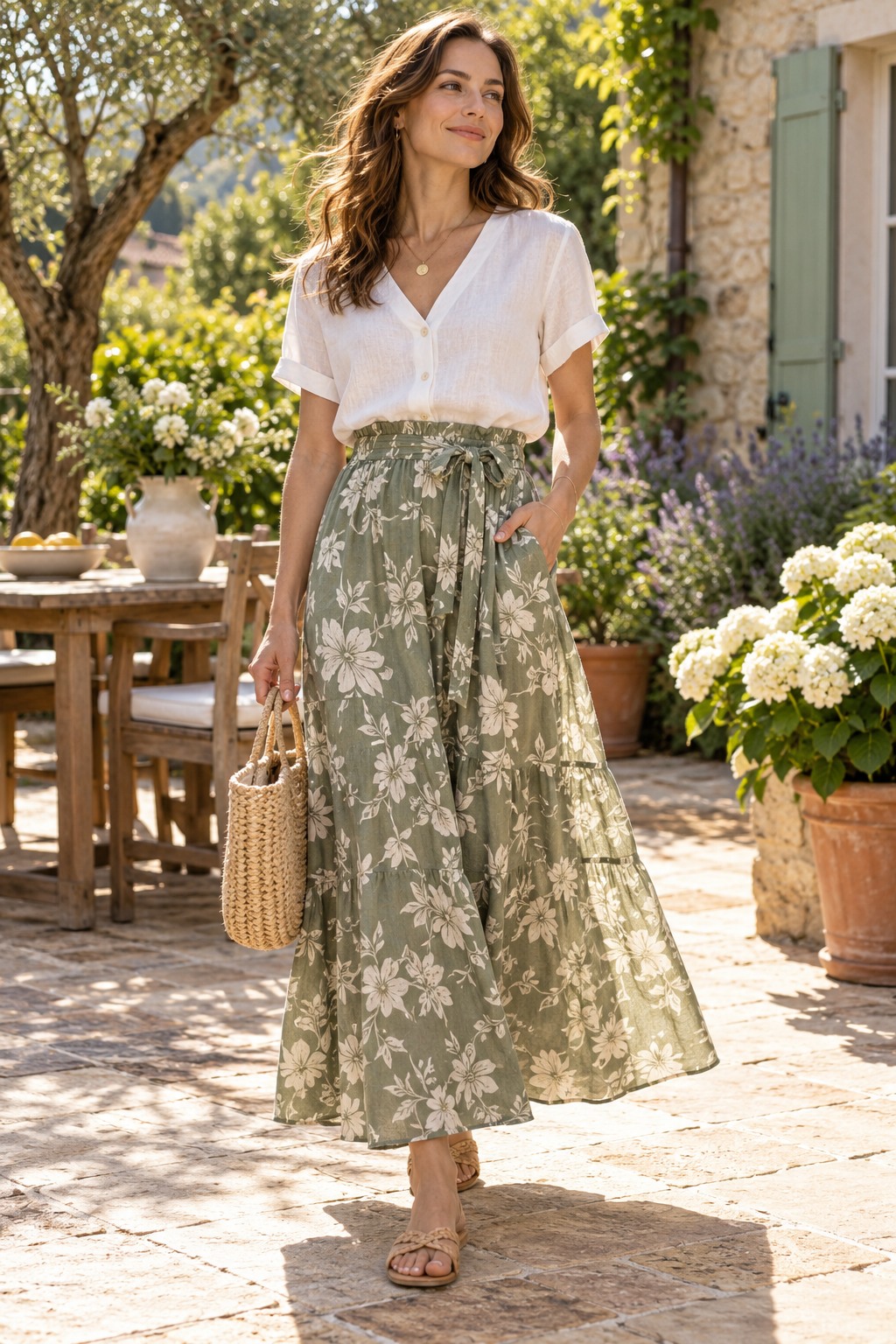
Formula: long skirt + short-sleeve blouse or tee + flat sandal + lightweight open layer for indoor cooling. Choose an underlayer if it supports comfortable movement.
This combination offers more leg coverage while keeping the top half simple. Check fabric opacity in the lighting where you will wear it and decide whether you need a slip or another base. A long hem can drag in wet conditions or catch on stairs, so test the length with your shoes. A tucked, untucked, or knotted top changes the feel without changing the core outfit.
Adapt it: If you prefer more arm coverage, add an airy shirt or use a long-sleeve top in a lighter fabric. If long skirts are impractical for your day, use wide-leg trousers and keep the color or top formula. Choose what lets you move and sit comfortably.
11. Light jeans with a breathable top for a cool evening
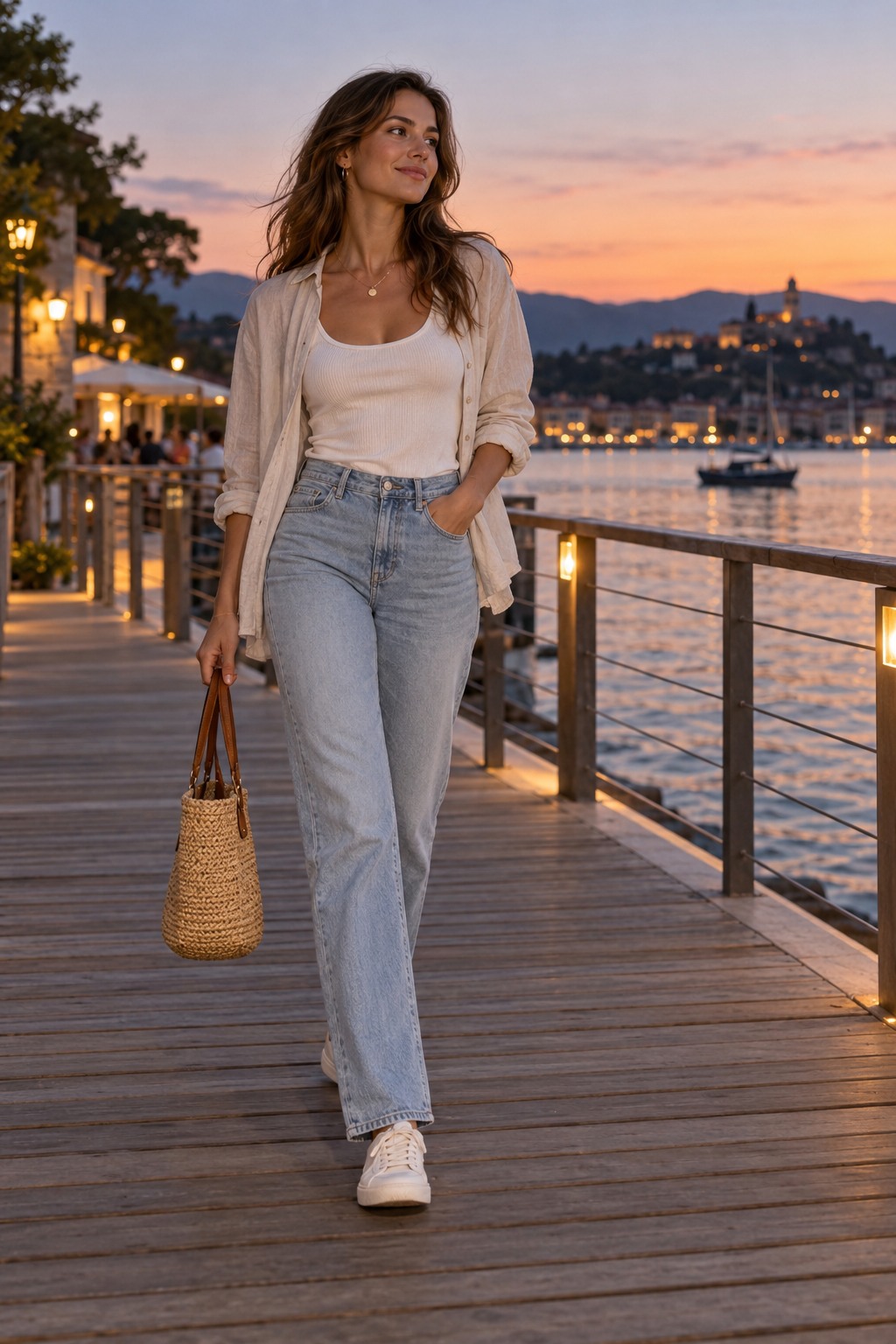
Formula: jeans + cotton or other comfortable tee + open button-front shirt or cardigan + sneaker or flat. Add the layer only when the evening calls for it.
Some summer days end cooler than they begin, or your destination may be air-conditioned. Light or mid-weight jeans can make a useful evening base if they feel comfortable in the heat you experience. Avoid relying on a color name to determine temperature or opacity; try the exact garment. A simpler top keeps the outfit adaptable, and a removable layer handles the temperature change.
Adapt it: If denim feels too warm, use a lighter trouser or skirt. If you need more coverage, choose a long-sleeve top or keep the overshirt closed. If the outfit is for a long walk, prioritize the shoe that works for your route rather than selecting footwear only for the look.
12. A tank or short-sleeve top with a light overskirt or open layer
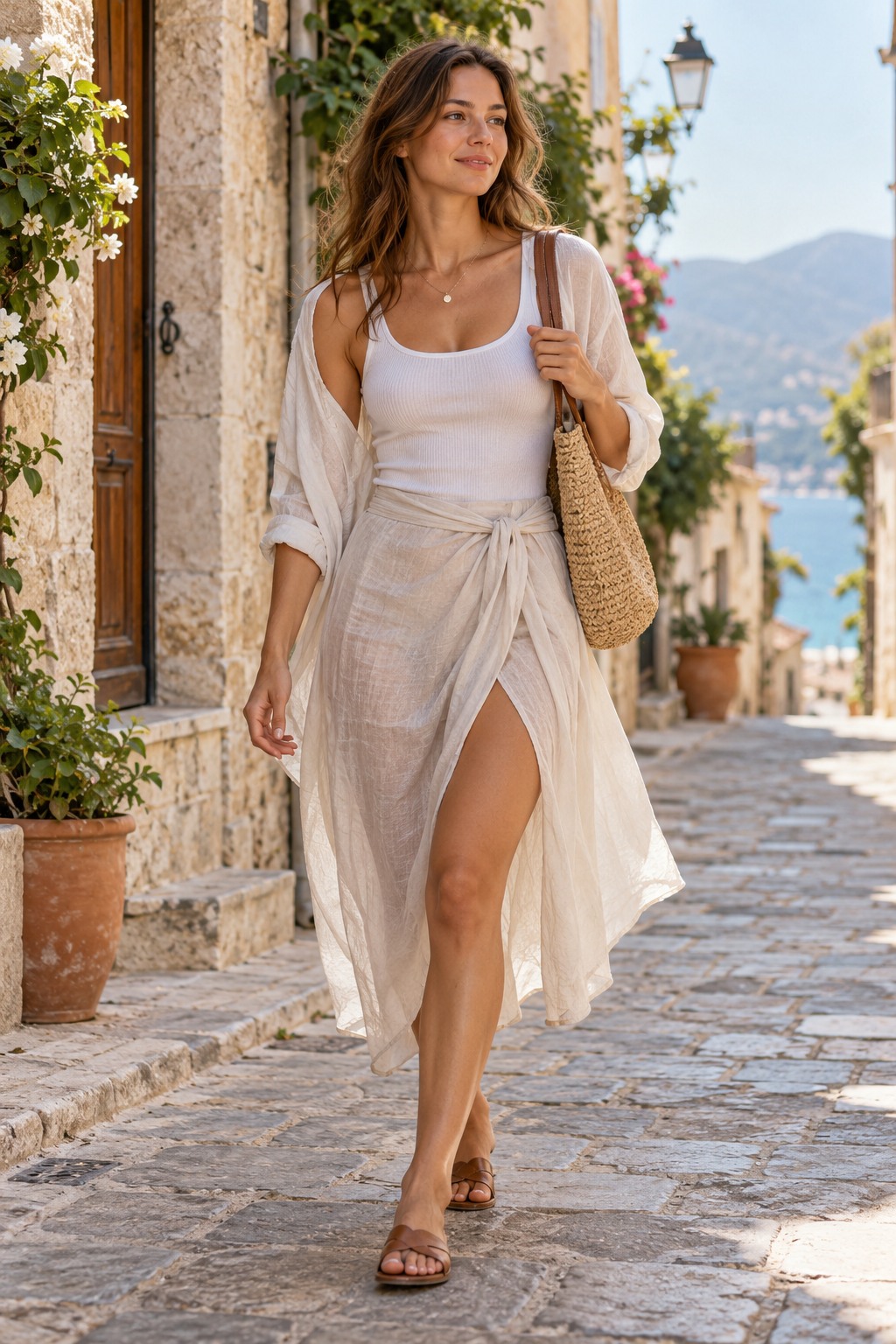
Formula: simple tank or tee + relaxed bottom + long open shirt or lightweight cardigan + comfortable shoe. The layer can be removed or buttoned depending on your coverage preference.
The point is a flexible coverage switch: you can wear the base alone where you are comfortable and add the layer when you want more coverage or enter a cooler space. The open layer can also bring color or pattern to neutral separates. Check that it is not so long that it drags, catches, or interferes with a bag or chair.
Adapt it: If you prefer not to wear a tank, use a short-sleeve tee or a top with sleeves. If the open layer feels too warm, choose a lighter version or another coverage option, such as a longer hem. The formula is about adjustability, not a prescribed exposure level.
Build a three-day summer rotation from your own closet
Choose three upcoming days with different demands: a long outdoor day, a warm commute with cold indoor time, and a day where you want more coverage. Build one outfit for each using pieces you own. Put the whole outfit on, including shoes, bag, and any underlayer. Sit, walk, reach, and test how long you can comfortably keep the layer on. Note what you would change before buying anything.
This small rotation can expose useful gaps. Perhaps you have enough tops but no shoe for a wet route. Perhaps every outfit relies on the same layer, so you need a second option because of laundry. Or perhaps the clothes already work and you only need a new way to combine colors. Record the job a missing piece must do, not just its name.
Common questions about summer capsule outfits
What fabrics are best for humidity?
There is no single best fiber for every person and garment. Construction, weave, garment ease, lining, finish, fit, activity, and care all matter. Use a top or bottom you already know feels comfortable as a comparison point, and check the specific item’s care instructions. If a garment feels clingy or traps heat for you, choose another cut or fabric.
Can I wear long sleeves in hot weather?
Yes, if you want to. A loose, lightweight long sleeve can provide coverage and be removed or rolled up if that suits your day. Choose the fabric, fit, and amount of coverage that feel comfortable for you. Follow relevant sun-safety advice for prolonged outdoor exposure.
How many summer capsule outfits do I need?
Enough for your actual schedule and laundry interval. If you work outdoors, travel, exercise, or need clothing for multiple dress codes, you may want more distinct outfit bases. If you rewear some layers and launder frequently, fewer pieces may be workable. This article gives twelve formulas, not a requirement to own twelve new outfits.
Your next step
Pick one warm day on your calendar and build an outfit around the coverage you actually want. Add a removable layer only if it solves a weather or indoor-temperature problem. Wear the full combination through a movement check and write down one useful adjustment. Repeat with a different base before deciding whether your summer capsule needs any new pieces.
For related examples, browse the site’s modest summer outfit gallery, summer travel outfit guide, clothing-care explainer, and color-combination article. Those pages answer different styling questions; use the one that matches your day.
Sources
Keep these outfit ideas handy.
Save this guide on Pinterest (opens in a new tab)More ideas for your wardrobe
 Capsule Wardrobe SystemsLight Summer Capsule Wardrobe Ideas for Cooler, Airier Outfits
 Capsule Wardrobe SystemsWarm Spring Capsule Wardrobe Ideas for Bright, Wearable Outfits
 Capsule Wardrobe SystemsSoft Summer Capsule Wardrobe Ideas for Gentle, Wearable Outfits
 Capsule Wardrobe SystemsTrue Summer Capsule Wardrobe Ideas for Cool, Balanced Outfits