
8 Train Travel Outfits for Platform Changes, Overhead Bags, and Long Rides
Train travel can ask more of an outfit than the seat itself. You may be lifting a bag, crossing a platform, finding your carriage, sitting for hours, and then stepping into a different temperature at the next stop. A look that works only while standing in front of a mirror can feel awkward once you are reaching overhead or settling in for the ride.
The most useful train outfit has a comfortable base, one easy-to-remove layer, and shoes that suit the station and itinerary. The eight formulas below are starting points, not dress rules. Adapt fabric, coverage, and footwear to the route, forecast, seat arrangement, and your own preferences. Follow your rail operator’s luggage and travel guidance.
Build the outfit around the journey, not just the destination
Before choosing pieces, picture the full sequence: leaving home, moving through the station, boarding, sitting, changing trains if needed, and arriving. A short local trip with one platform may call for something different from an overnight journey with a transfer and a walk at the other end. Check conditions at both ends, especially when the route crosses regions or seasons.
Start with a base that stays comfortable when seated. Waistbands, seams, and stiff fabrics can feel different after several hours than they do during a quick try-on. Sit, bend, and reach in the complete outfit. If a top rides up when you lift your arms or trousers pull at the waist when seated, adjust the fit before travel.
Then choose a layer that opens or comes off quickly. A shirt worn open, cardigan, soft jacket, or light wrap can help when the station, train, and destination feel different. Keep it easy to stow so you are not carrying it in your hands while boarding. Finally, choose shoes you can move in and remove only if you want to; stations and train layouts vary.
8 train travel outfit formulas
1. Soft trousers, a breathable tee, and an open overshirt
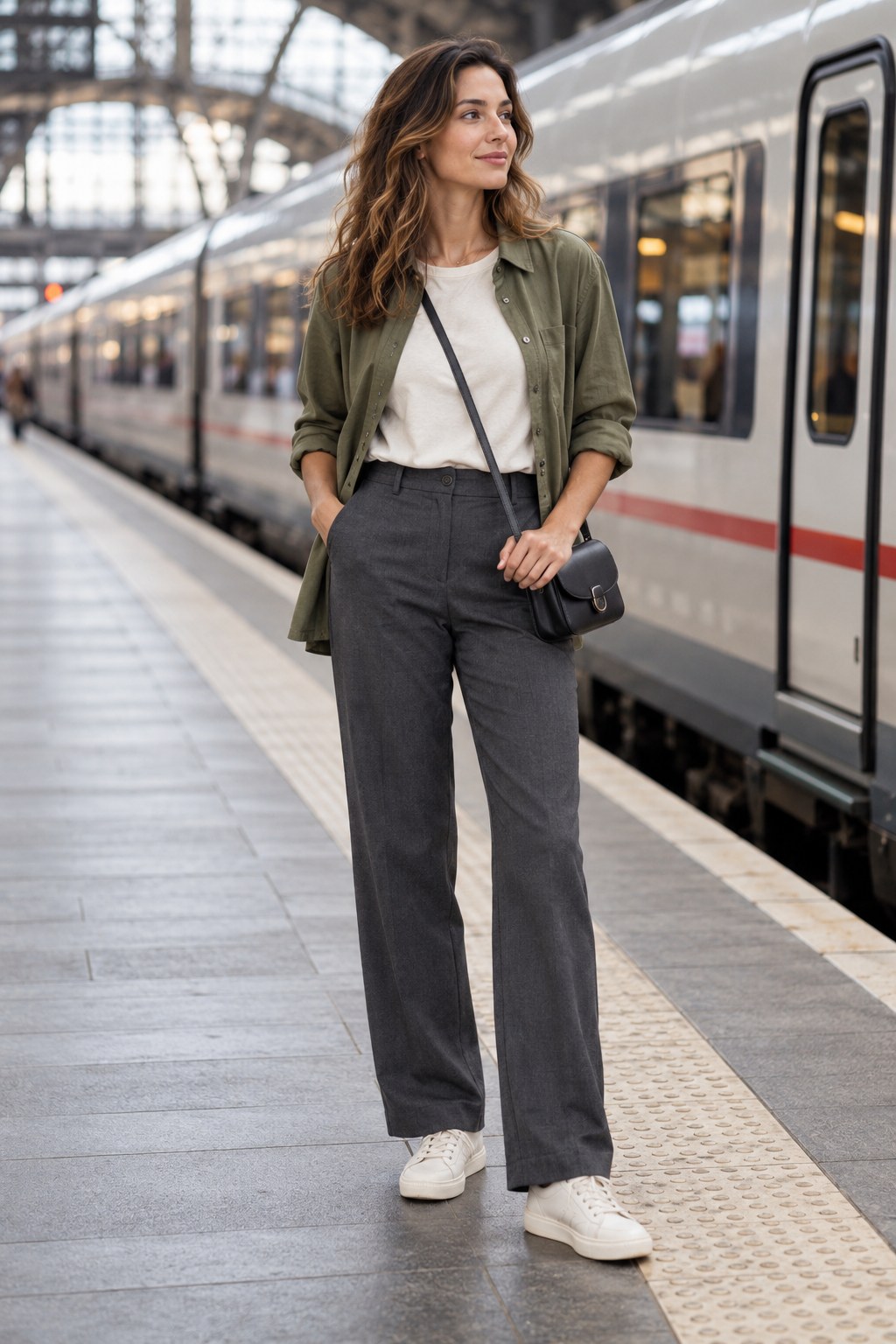
Pair relaxed straight-leg or wide-leg trousers with a tee or fine knit and an overshirt worn open. This gives you an easy base for sitting while the overshirt adds a finished layer for the station. Choose a waistband that stays comfortable when seated and a trouser length that will not trail on steps or platforms. A low-profile sneaker or comfortable flat keeps the look easy to walk in.
For a warm departure and cool carriage, pick a light overshirt that folds into a tote or personal bag. If the train is warm, remove it without changing the entire outfit. A small crossbody or backpack can keep tickets, phone, and essentials accessible. The formula works with denim, twill, or drapey trousers; the exact fabric matters more than a label such as “travel pants.”
2. A knit dress with a soft jacket and walkable shoes
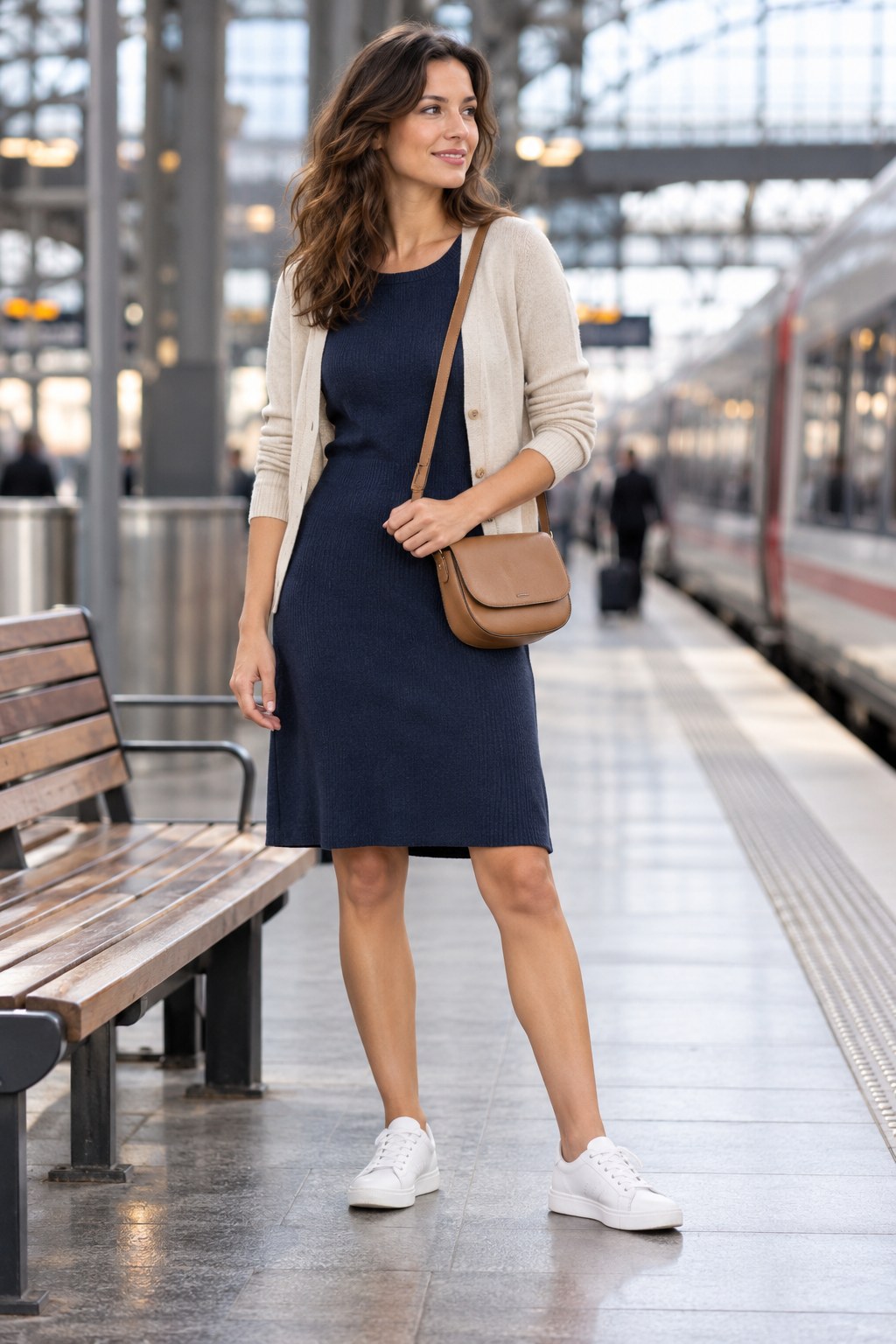
A knit dress can simplify the base because it combines top and bottom in one piece. Choose a length and fit that let you sit, climb steps, and reach for luggage comfortably. Add a soft jacket or cardigan with pockets if you want a layer that can be removed easily. Sneakers, loafers, or supportive flats can shift the look from casual to more polished, depending on your route and style.
Try the dress seated before travel: check whether the hem stays where you want it and whether the fabric bunches or pulls when you bend. If you prefer more coverage or warmth, wear tights or leggings only if they feel comfortable for the trip. A scarf can add warmth, but it should be easy to tuck away rather than trail around luggage or steps.
3. Stretch-woven trousers, a long-sleeve top, and a zip layer
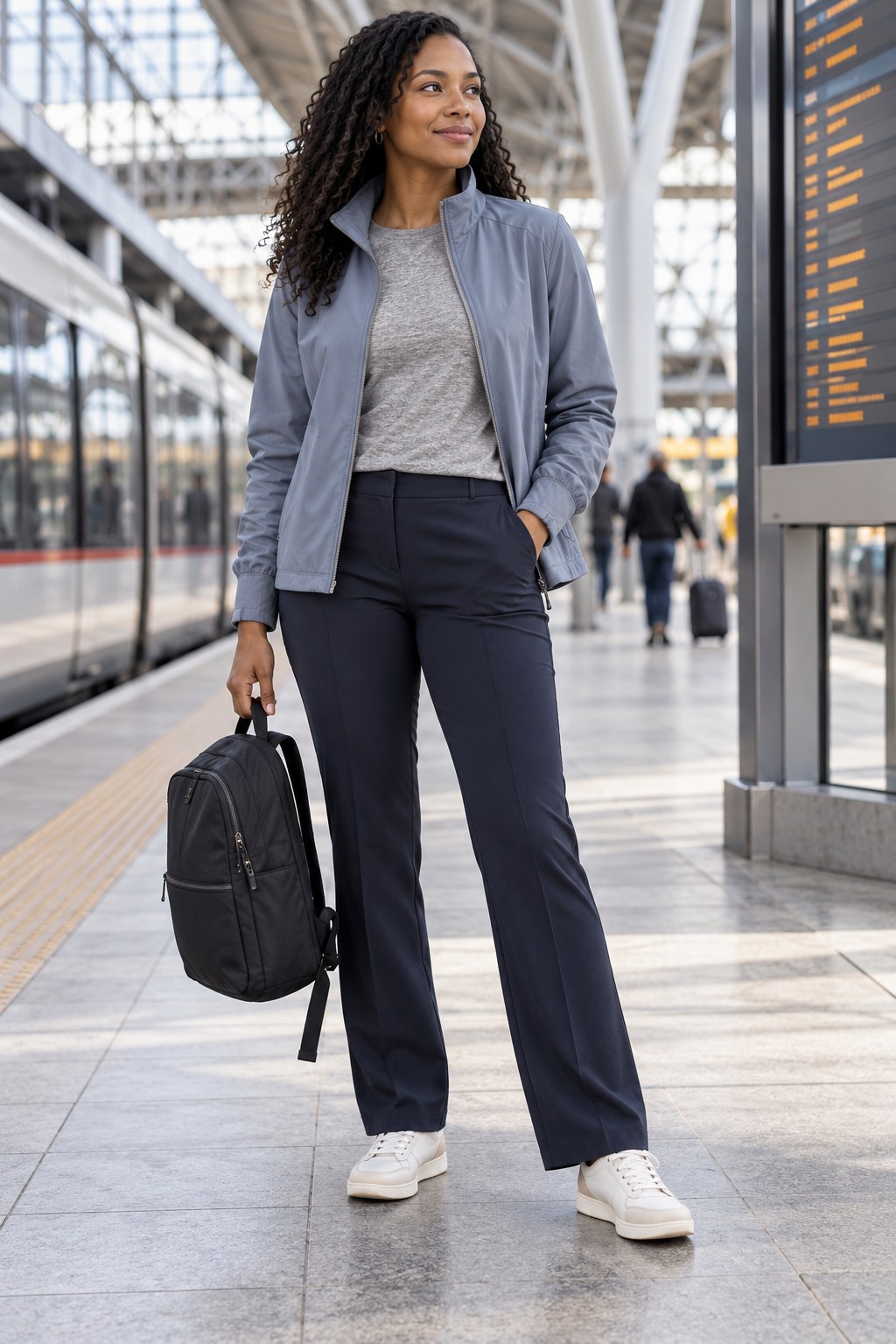
For a longer ride, try trousers with enough ease for seated movement, a soft long-sleeve top, and a light zip layer. The zip makes temperature adjustments quick, and the top remains complete when the outer layer is off. Choose pieces that do not require constant readjustment when you sit back or reach forward. A simple sneaker gives the formula a practical finish for walking between gates or platforms.
“Stretch” does not guarantee comfort; fabric weight, waistband construction, and fit still matter. Check care details and test the complete outfit before the trip. If the route includes a transfer, keep the zip layer somewhere easy to reach rather than packing it beneath heavier luggage. A compact tote or small backpack can hold essentials and a spare pair of socks if those suit your plans.
4. Dark jeans, a relaxed button-down, and an easy shoe
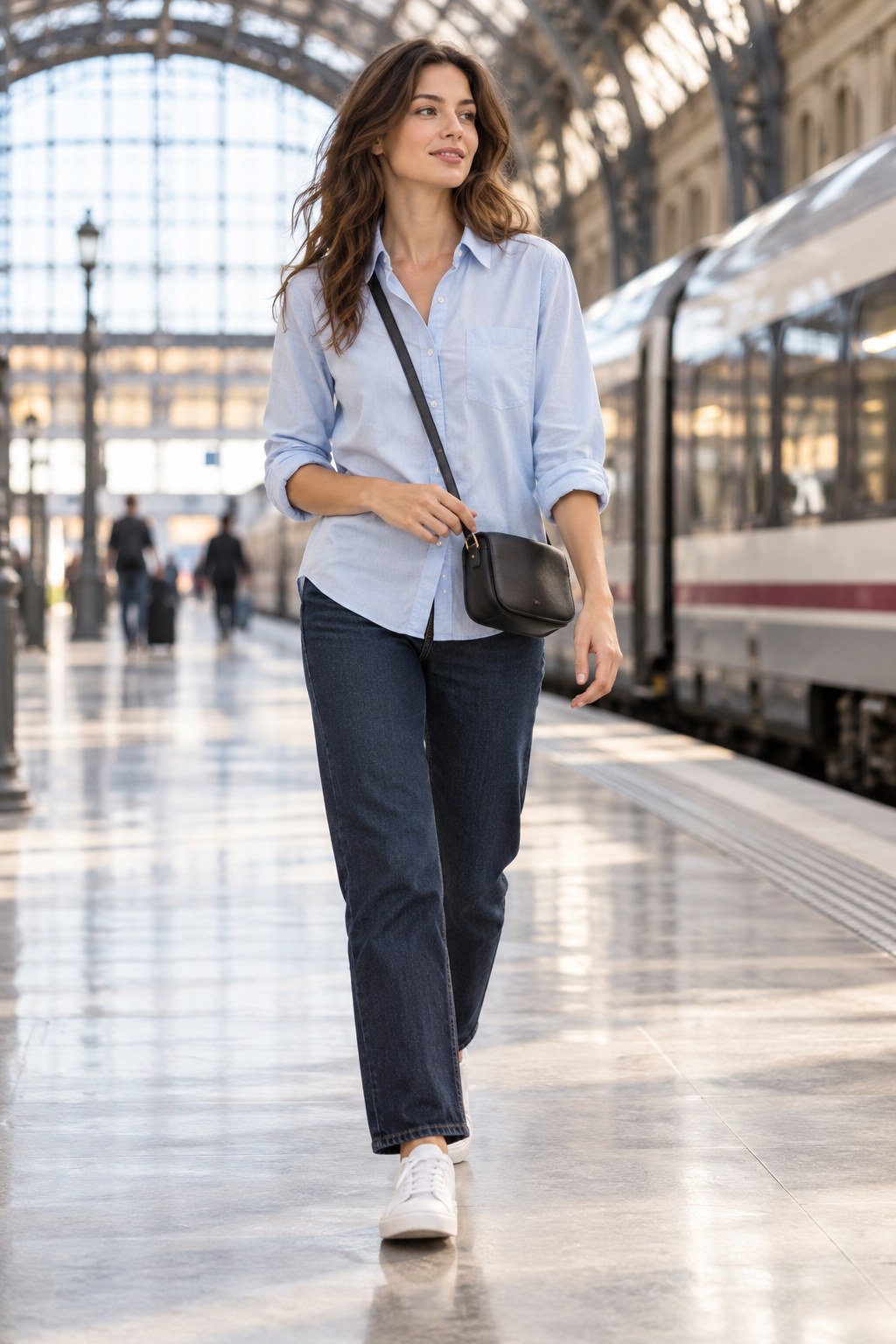
Dark jeans with a relaxed button-down create a familiar outfit that can work for a daytime train ride and a casual plan after arrival. Choose jeans with a rise and waistband that feel comfortable while seated; a rigid pair that feels fine standing may become distracting over a long ride. Wear the shirt tucked, half-tucked, or open over a simple base depending on your preference and how much room the layers take.
Flat shoes or low-profile sneakers keep the outfit manageable through a station. If rain is expected, consider the route surface and choose footwear with a sole you already trust rather than bringing a brand-new pair. A lightweight jacket can go over the shirt when the platform is cool. A structured bag and clean shirt collar may be enough for a sharper arrival; a complete outfit change is not necessary for every trip.
5. A midi skirt, close-fitting top, and cropped cardigan
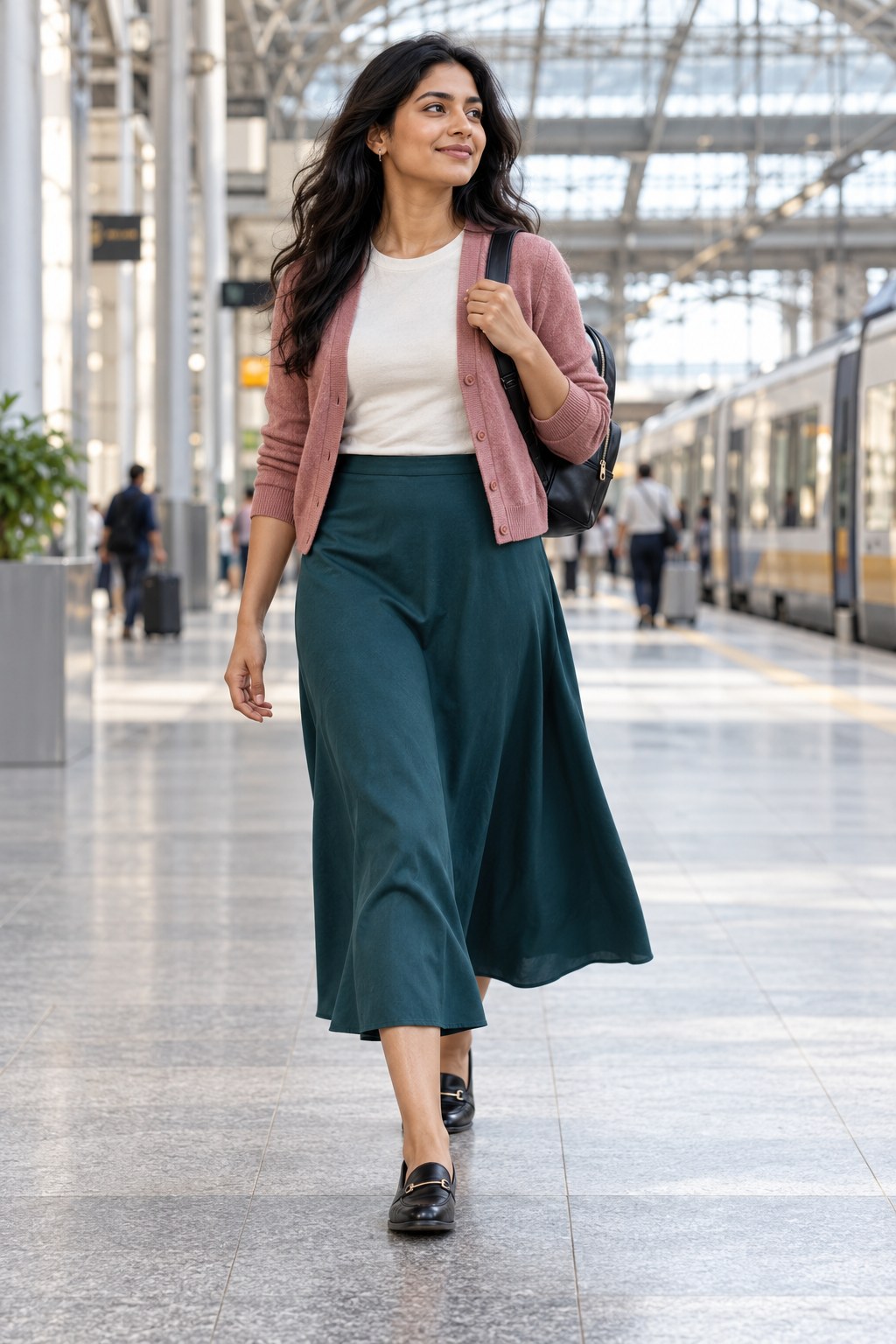
If skirts are part of your everyday wardrobe, a midi skirt with a top that stays comfortably in place can make a practical travel outfit. Add a cropped cardigan or short jacket that is easy to remove. The hem should allow a natural stride on station stairs and should not catch under your shoes when you sit or stand. Flat sneakers or loafers can balance the skirt without requiring a heel.
Check the skirt’s lining, slit, and waistband during a sit-and-stand test. A skirt with very limited stride may be annoying when you are moving quickly through a station. If you carry a larger bag, consider a crossbody or backpack so your hands stay available for a rail, ticket, or luggage handle. Switch the cardigan for a button-down layer, or choose a fuller skirt if you prefer more movement.
6. A matching knit set with a packable outer layer
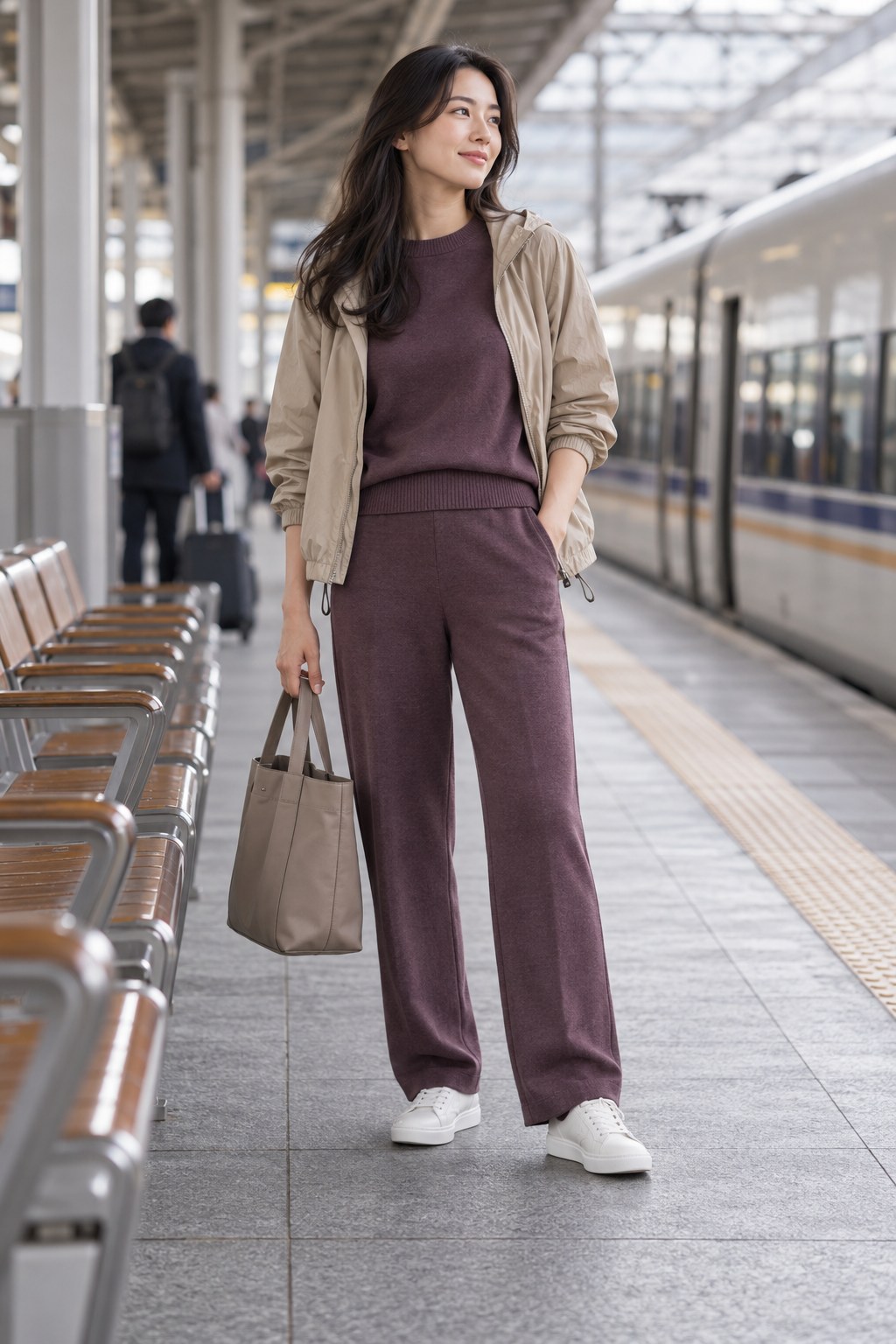
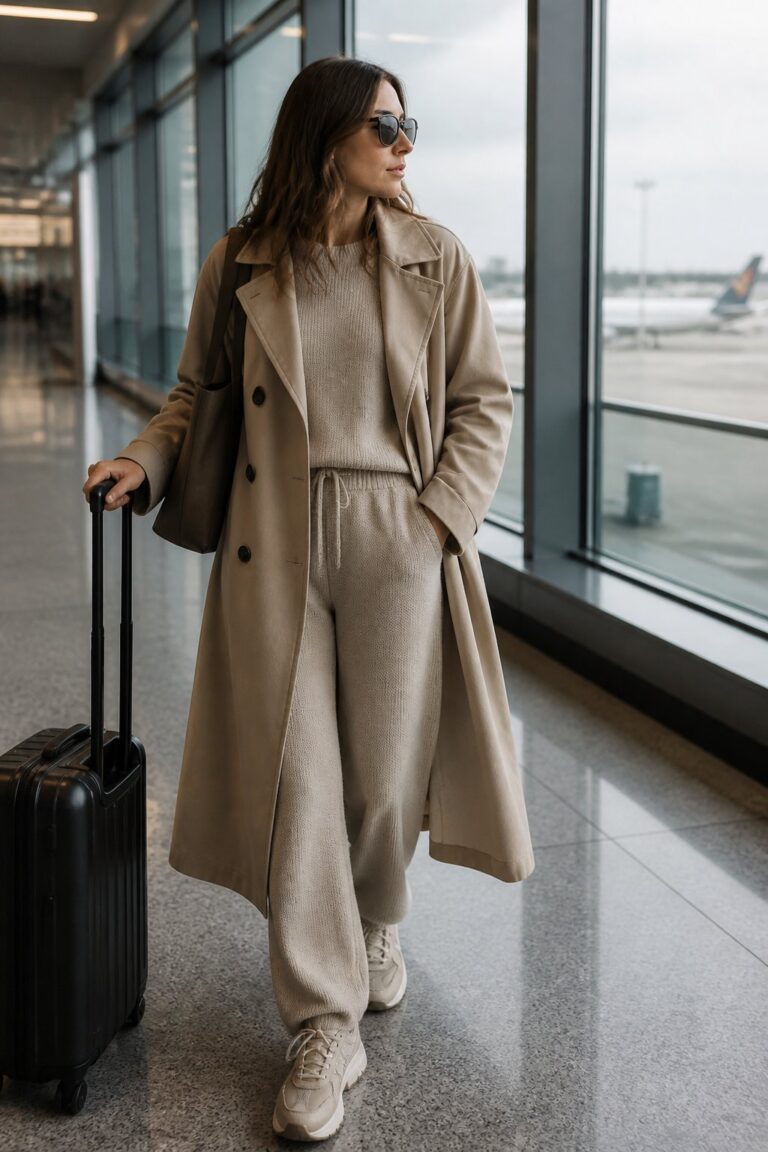
A coordinated knit top and trouser set gives a pulled-together appearance with little coordination on travel morning. Add a packable jacket or cardigan for the station and remove it once you are settled. The two-piece base is useful if you want to reuse the top or trousers separately later in the trip. Choose a set that allows you to sit comfortably and suits the temperatures you expect.
Matching colors are optional; a tonal top and bottom can create a similar effect. If the set is very soft or lounge-like, a clean shoe and an outer layer with structure can make it feel more intentional when you arrive. Check fabric care before packing it for several days of wear, and do not assume every knit will stay crisp after being folded. A small laundry plan may be more helpful than duplicate sets.
7. A relaxed jumpsuit with a layer that opens fully
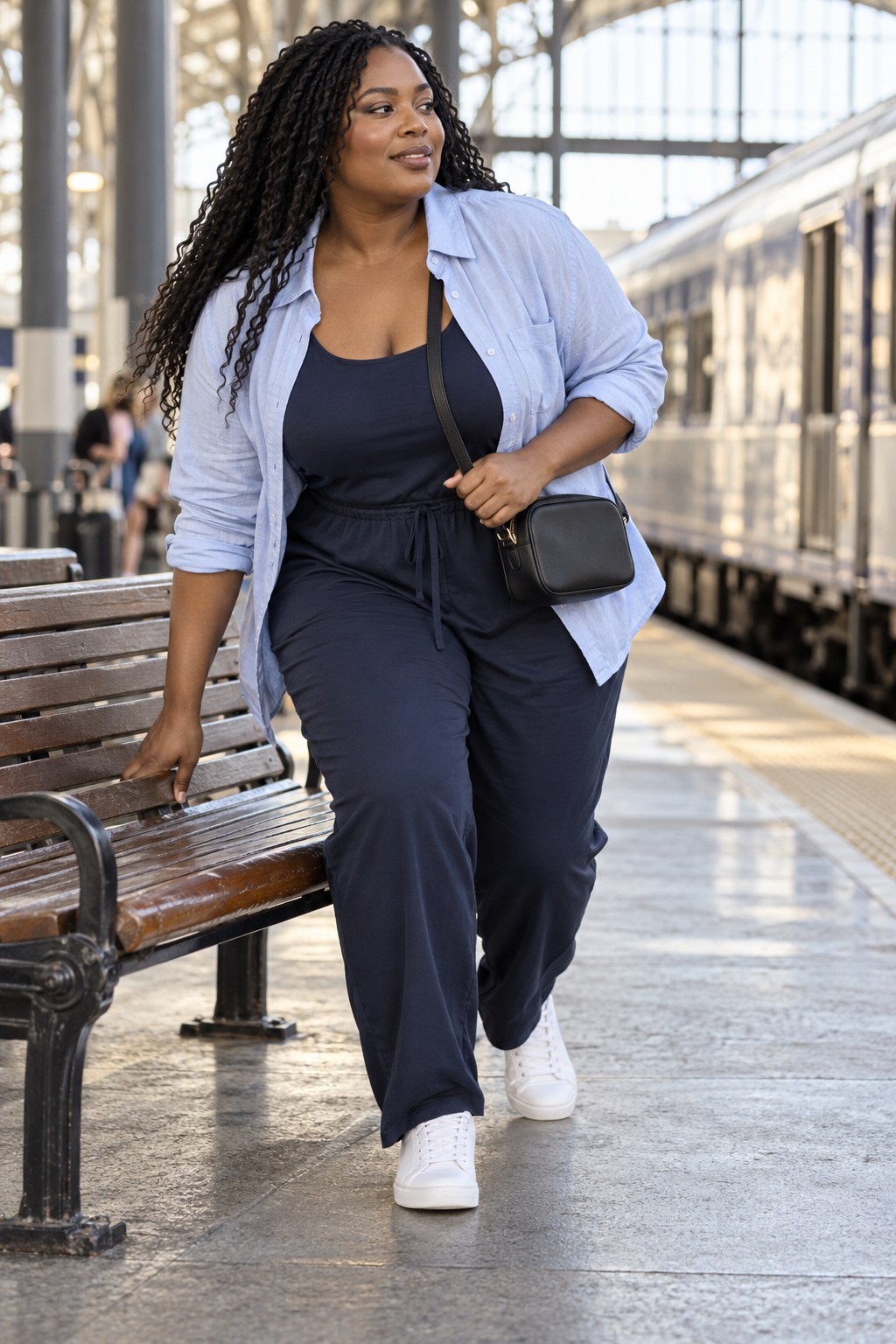
A jumpsuit can be a one-piece base for a direct route, provided it is easy for you to sit in and manage when you need a restroom stop. Try it in the full seated position before travel, including the closure and shoulder fit. Add a button-down shirt worn open or a soft jacket that opens fully; this lets you adjust warmth without tugging at the jumpsuit itself. Choose shoes that make platform walking comfortable for you.
If the jumpsuit has a complicated back closure or a very tight waist, it may not suit a long journey. A two-piece outfit can be easier to adjust, especially on a trip with transfers. Consider your luggage and how quickly you can use facilities along the route. The best choice is the one that feels simple in your actual travel conditions, not only the one that looks streamlined in a photo.
8. Wide-leg trousers, a fine knit, and a compact scarf
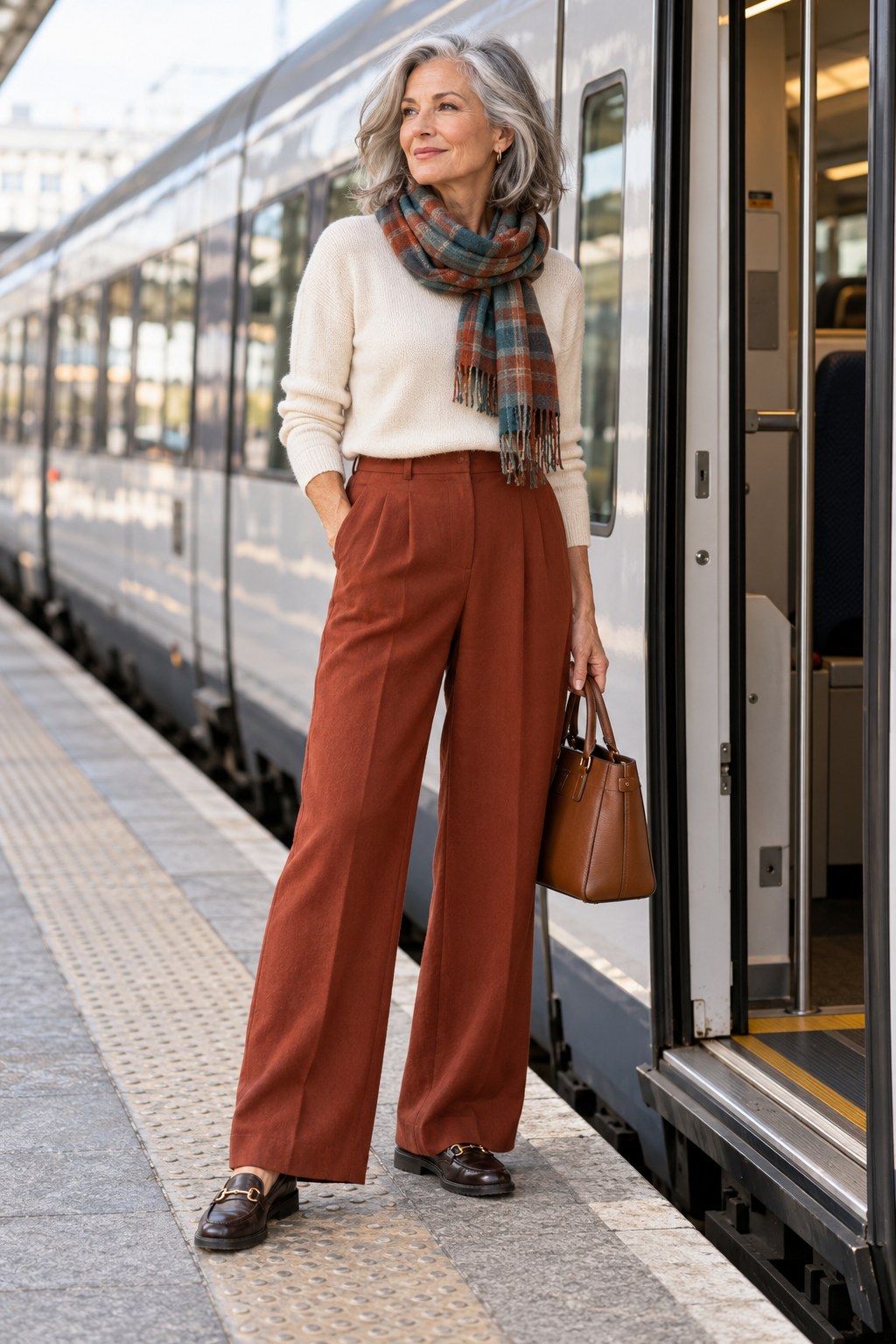
Wide-leg trousers with a fine knit create a comfortable base that can look polished at departure and arrival. Check the hem with the shoes you plan to wear; a length that brushes the platform or floor can collect dirt or catch when you move. A compact scarf can add warmth and color, then fold into a pocket or bag when the train feels warmer. Loafers, sneakers, or flats each give the combination a different finish.
Keep the rest of the layers relatively simple so the trousers have room to move. If your seat is narrow or the itinerary includes several steps, choose a fabric that does not feel cumbersome and make sure the waistband stays comfortable while seated. A slim personal bag helps keep essentials close. Change the knit weight and scarf based on the forecast, then keep the same trousers and shoes.
A quick transfer checklist
For a trip with a connection, make your travel outfit work with your luggage and route. Keep tickets and identification where you can reach them without opening the main suitcase. Wear the layer you may need on the platform instead of tying it around your waist. If you need to carry a drink, umbrella, or charger, make sure there is a secure place for it so your hands are not overloaded while you change platforms.
Check the station map, carriage information, and luggage guidance from the rail operator. Platform changes and boarding arrangements vary, so do not count on a particular elevator, escalator, or storage space unless confirmed. If you have limited mobility, heavy luggage, or a tight connection, plan the route and seek assistance through the operator’s official channels as needed.
What to look for when trying the outfit on
Put on every layer and shoe you plan to wear. Sit in a chair for several minutes, stand, bend, take a few steps, and lift your arms as if placing a bag overhead. Notice whether a waistband digs in, a shirt pulls at the shoulders, or a hem catches underfoot. If something distracts you during this short check, it may be harder to tolerate during a long trip.
Think about the weather at both ends of the route. One removable layer is often more flexible than a heavy single layer, but the right amount depends on season and time outdoors. If the journey crosses a major temperature change, choose a base that works indoors and keep outerwear easy to reach. Pack a complete change only if your itinerary or destination plans make one useful.
Common questions about train travel outfits
What should I wear on a long train ride?
Choose comfortable seated clothing, one layer that is easy to remove, and shoes suitable for the station and route. Test the outfit while seated and walking before travel. The best fabric and fit depend on your preferences, the weather, and the journey length.
Are jeans comfortable for train travel?
They can be, if the waistband and fabric remain comfortable while you sit. Try the exact pair for a longer seated period before the trip. If the fabric feels restrictive, consider soft trousers, a knit set, or another option you already know you can wear comfortably.
Should I wear shoes that are easy to take off?
That depends on your own comfort and the rail service. Choose shoes you can walk in safely and wear comfortably for the full trip. Do not assume you will need to remove shoes; follow specific operator guidance and keep personal preference in mind.
What should I wear for an overnight train?
Plan for the actual sleeping arrangement and facilities. Soft layers and a comfortable base may help, while a clean change of clothes can make arrival easier. Check the operator’s information and route length rather than assuming every overnight service has the same amenities.
A train outfit should make the route easier
Build around the most demanding part of the itinerary: a long seated stretch, a busy transfer, a walk after arrival, or a change in weather. A comfortable base, a removable layer, and shoes you trust make a useful starting point. Use the outfit formulas as flexible options, then adjust them for your route, luggage, and preferences. A practical train look is one you can move through the whole journey without constantly thinking about what you are wearing.
Keep these outfit ideas handy.
Save this guide on Pinterest (opens in a new tab)More ideas for your wardrobe
 Travel Outfit IdeasAirport Outfits for Early Flights That Stay Comfortable and Presentable
 Travel Outfit IdeasSpring Travel Outfits That Pack Light and Handle Changing Weather
 Travel Outfit IdeasPlus Size Travel Outfits That Pack Easily and Stay Comfortable in Transit
 Travel Outfit IdeasSummer Travel Outfits: Cool, Comfortable, and Packing-Friendly