
7 Long-Flight Outfits with a Plan for the Cabin and Arrival
A long-flight outfit has to work in several different places: the airport queue, a narrow seat, a cool cabin, and the first stop after you land. That makes “cute but comfy” too vague to be much help. A better plan starts with the parts you cannot control—the seat, temperature, and how long you will be wearing the same clothes—and builds in small choices that let you adjust without changing completely.
These seven long-flight outfit formulas are designed around movement, easy layers, and a more polished arrival. Each one includes a base, an outer or mid-layer, and shoes that are practical for the traveler who will wear them. They are not medical advice or a guarantee that any garment will feel comfortable for everyone. Fit, fabric, climate, mobility, and personal preferences vary; test your own combination before a long trip.
If your itinerary includes an overnight flight, a connection, or a meeting soon after landing, make the outfit suit the longest stretch first. A lightweight layer can help if the cabin feels cool, while a breathable base gives you an option if it warms up. Keep your most useful small items accessible in your personal bag and follow your airline’s baggage and safety rules. The goal is to arrive feeling like yourself, not to turn the flight into a fashion performance.
What makes an outfit work on a long flight?
Start with the waistband and seams. Clothes that feel fine while standing in front of a mirror can become distracting after hours of sitting. Try the outfit in a chair for at least 20 minutes, then bend your knees, lean forward, and stand again. Notice whether the waistband digs, the fabric pulls, or a seam presses in one place. Stretch can help some people, but a soft fit and enough ease through the hip and thigh matter just as much.
Choose layers that can be removed or put back on without much effort. A zip layer, open cardigan, or light jacket is easier to adjust than several pieces that need to be taken over your head in a tight row. Cabin conditions differ, so a single outfit should offer a little flexibility rather than assuming you will be warm or cold. Keep a compact scarf or wrap only if you actually use one and can store it without crowding your bag.
Think about the shoes you will wear through security, the terminal, and the plane. A secure flat, sneaker, or another familiar shoe can be easier to manage than a new pair or a style that is difficult to remove. If you prefer to change shoes after boarding, pack the second pair where you can reach it and make sure your travel routine respects crew instructions. Avoid a shoe that needs constant fixing or has not been tested for walking.
7 long-flight outfits with a plan for the cabin and arrival
1. Soft wide-leg pull-on trousers, a smooth tee, a zip hoodie, and clean sneakers
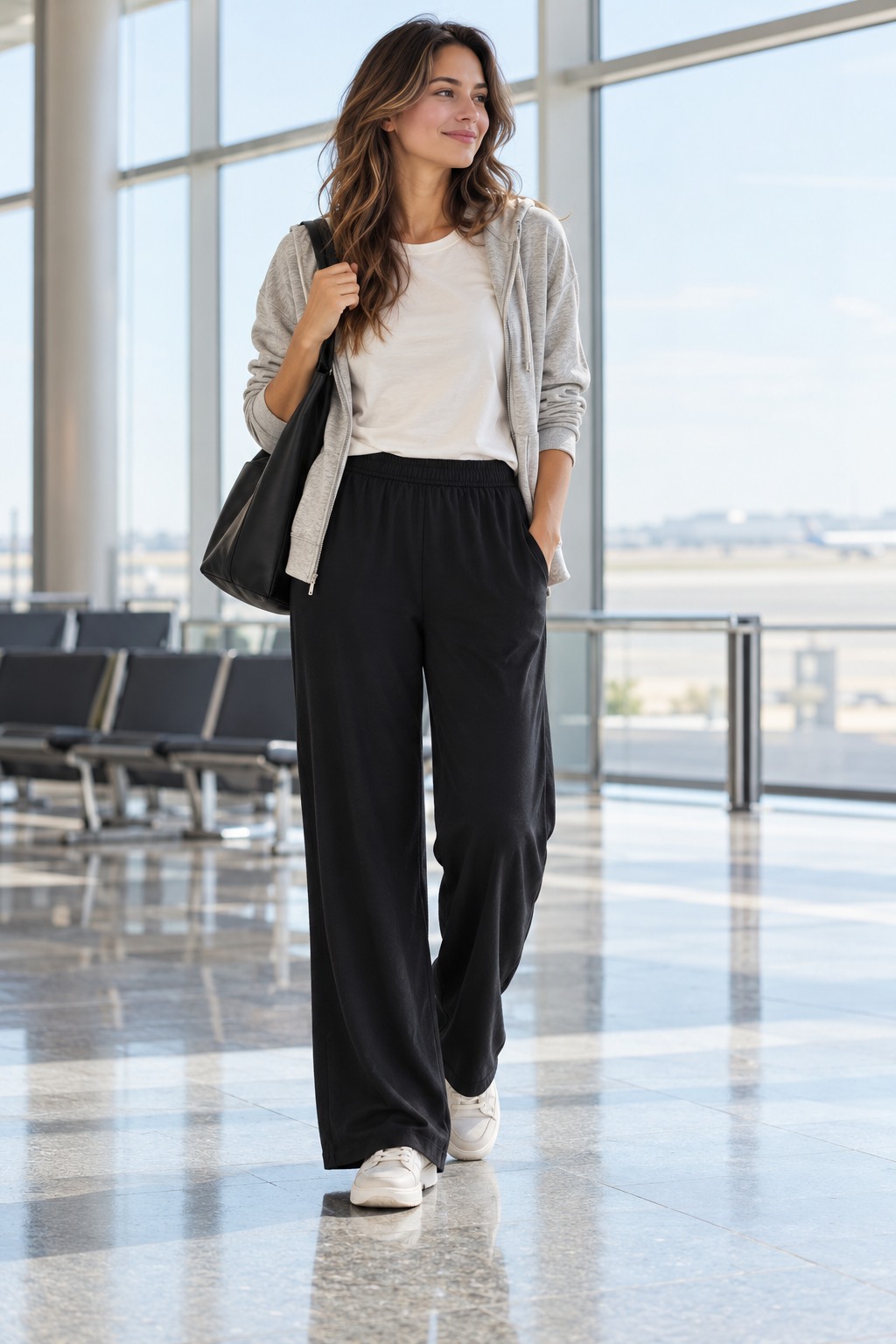
This is a dependable option if you prefer a trouser outfit but do not want the feeling of rigid denim while seated. Choose a soft wide-leg pull-on pant with a waistband that stays comfortable when you sit. Add a smooth tee or long-sleeve base, then bring a lightweight zip hoodie that is easy to remove or put back on. Clean sneakers with a familiar fit can work for a long airport walk and an ordinary arrival day.
Check the pant length with your actual shoes. Too much fabric underfoot can drag through the terminal or fold awkwardly around a seat, while a hem that sits just above the floor is easier to manage. If wide legs feel bulky in a small seat, choose a straighter relaxed cut. The key is the soft hand and a comfortable rise, not a particular silhouette.
For a more pulled-together arrival, choose a tee in a solid neutral and a hoodie with a simple shape. You can add a compact crossbody bag or a structured tote, but keep valuables secured according to your travel routine. If the hoodie is too casual for your destination, replace it with a zip cardigan or light jacket and keep the same easy base.
2. A breathable knit set, a light jacket, and slip-on sneakers
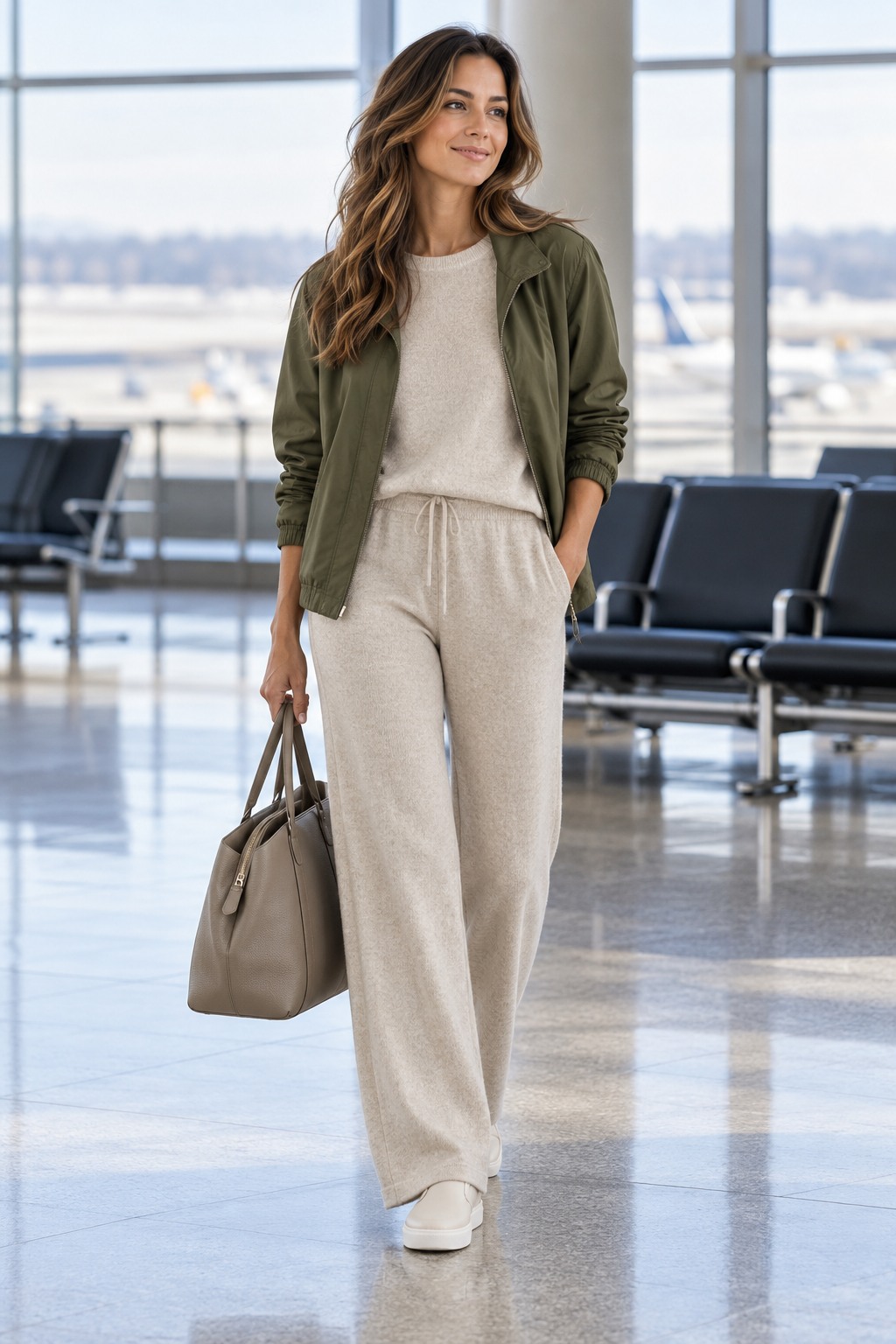
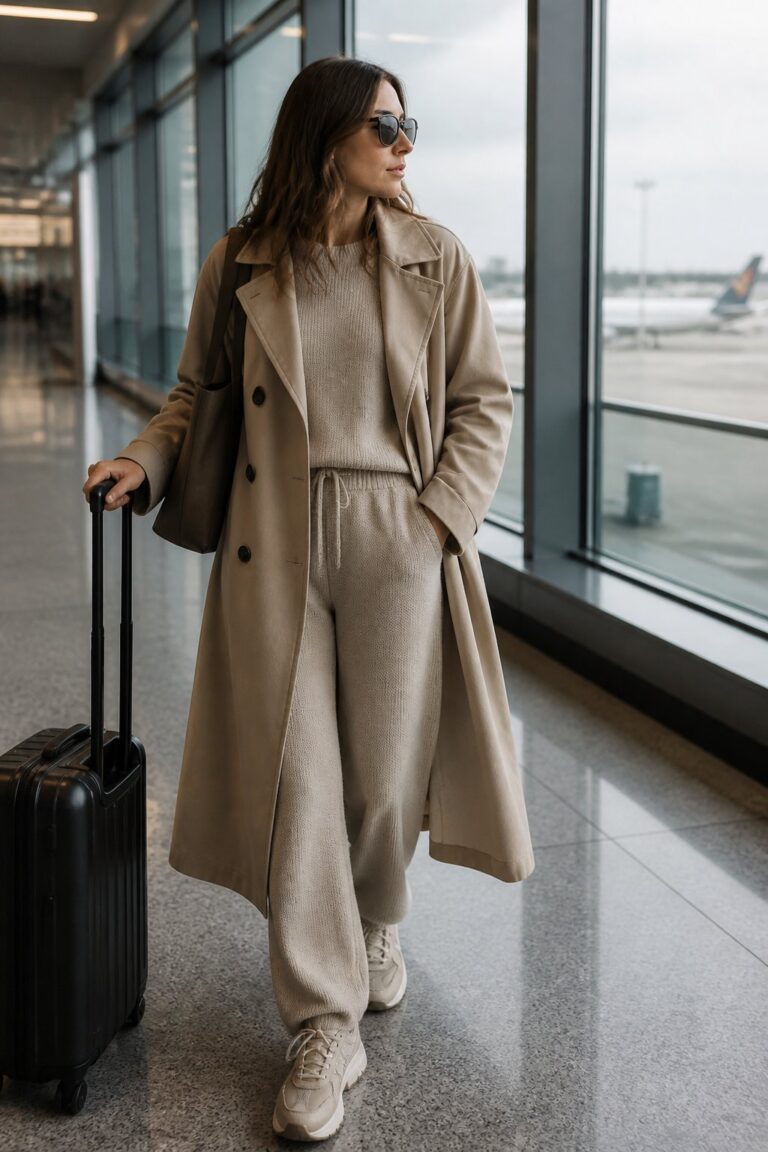
A matching knit set can make getting dressed simple when you want a soft outfit that still looks coordinated. Choose relaxed straight-leg pants and a top that does not cling or bunch when you sit. Add a light jacket with a zipper or buttons so you can adjust as needed. Slip-on sneakers or another secure shoe you already know can simplify airport transitions without requiring a new pair just for travel.
Matching does not have to mean thick or warm. Look at the fabric weight and whether it breathes enough for the weather where you are leaving and landing. If the set is very soft, give it one structured companion, such as a simple jacket or tidy bag, so the look still feels like daywear. Avoid drawstrings or bulky pockets that press uncomfortably against your waist when seated.
On arrival, you can keep the set as is or change the top in a restroom if your plans require something different. Put a spare top or underlayer in your carry-on only if you have room and know you will use it. A small practical backup can be more helpful than packing a second complete outfit that adds weight.
3. Stretch ponte trousers, a breathable button-front shirt, and a soft blazer cardigan
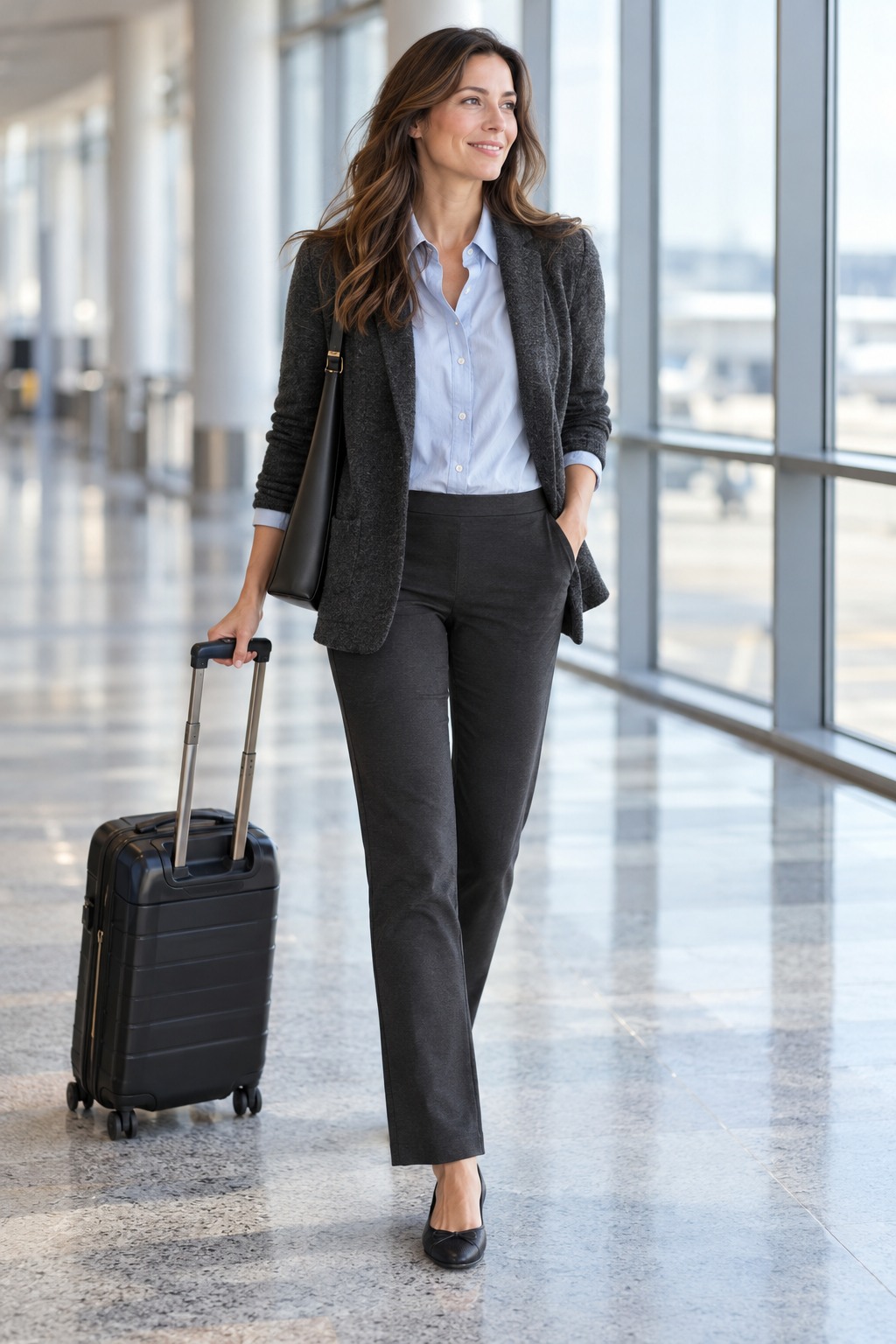
If you are heading straight to a dinner, workday, or family event, a slightly more polished base can help you arrive ready without wearing formal clothes on the plane. Choose stretch ponte trousers or another soft tailored-looking pant and a breathable button-front shirt. Add a knit blazer cardigan or soft jacket that looks structured but still lets you move. Closed flats or another familiar, secure shoe finish the outfit.
Keep the shirt comfortable across the shoulders and waist. If you know you dislike sitting in a tucked shirt, choose a length that stays neat untucked or wear a soft base layer beneath it. A cardigan-style blazer is useful because it can be removed without feeling like you have taken off half the outfit. If your arrival plan changes, you can leave the outer layer in your bag and still have a complete look.
Try the full combination seated before travel. A tailored-looking pant can still have a firm waistband, and a button-front shirt can pull when you lean. If any piece feels distracting after a short test, replace it with one you already trust. You can create a polished impression with comfortable fabrics; it does not have to come from a conventional suit.
4. A simple knit midi dress, leggings, a zip cardigan, and comfortable low-profile shoes
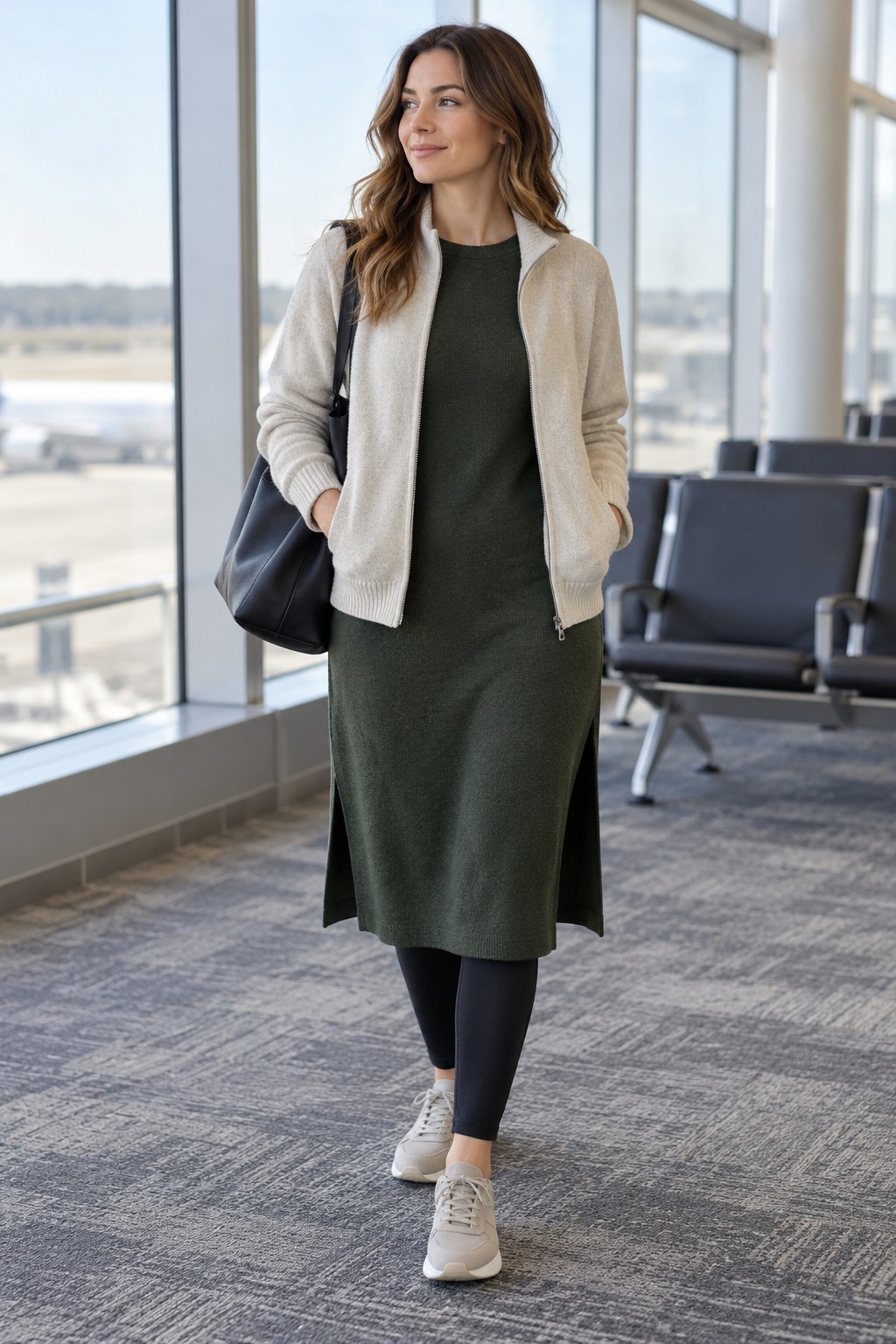
A knit midi dress can be a one-piece option for travelers who like dresses, especially when its fabric has enough ease for sitting. Add leggings or another familiar base layer if that makes the dress more comfortable for your travel routine, and bring a zip cardigan that can be removed without taking the whole outfit apart. Low-profile shoes should be secure and easy for you to walk in.
Choose a hem that stays clear of the floor and is not so narrow that it restricts a full step. A dress that rides up or twists when you sit will likely become distracting over time. Test it in a chair and on a short walk before packing it for a long itinerary. If you prefer a tunic-length top and leggings instead of a dress, that is an equally practical substitution.
Use a simple color and minimal accessories so you can move through security and boarding without fuss. If you expect the cabin to feel cool, the cardigan gives you an extra layer; if the flight is warm, it can come off quickly. This formula is flexible, but the dress should still feel like something you are comfortable wearing in public for many hours.
5. Stretch dark jeans, a soft sweater, a removable trench-style layer, and easy flats
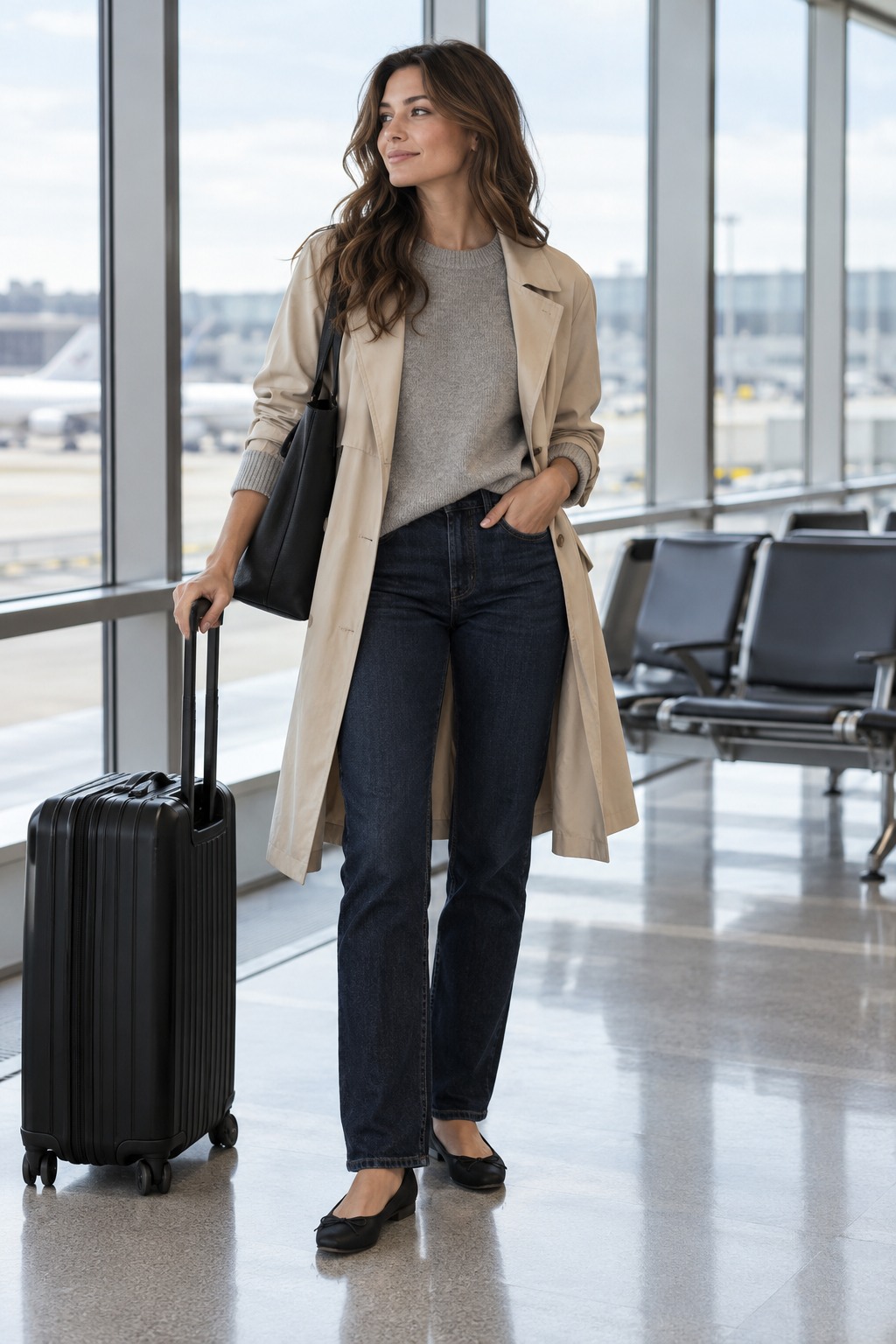
Some travelers feel most like themselves in jeans, and a stretchy dark pair can work if you know it remains comfortable while seated. Choose a soft sweater or smooth long-sleeve top, then add a light trench-style layer that can be removed and folded away. Easy flats, loafers, or familiar sneakers are a better choice than a new shoe you have not tested. This outfit can move from the terminal to a casual arrival plan with very little adjustment.
Denim is not automatically a good choice for a long flight. If a waistband or seam starts to press after a short car ride, pick one of the softer trouser formulas instead. If your jeans feel good, test them in the actual position you will sit in and check that the top layer does not bunch under your back. The goal is to wear what works for you, not to prove that every item can travel.
Keep the trench light and uncomplicated. A heavy coat is harder to store and may take up space you want for other essentials. If your destination is warm, swap the trench for a thin cardigan or leave the extra layer in your bag until you need it. The travel outfit should respond to the route and weather rather than requiring you to keep every layer on from gate to curb.
6. A soft matching top and pull-on trousers with a thin scarf or wrap
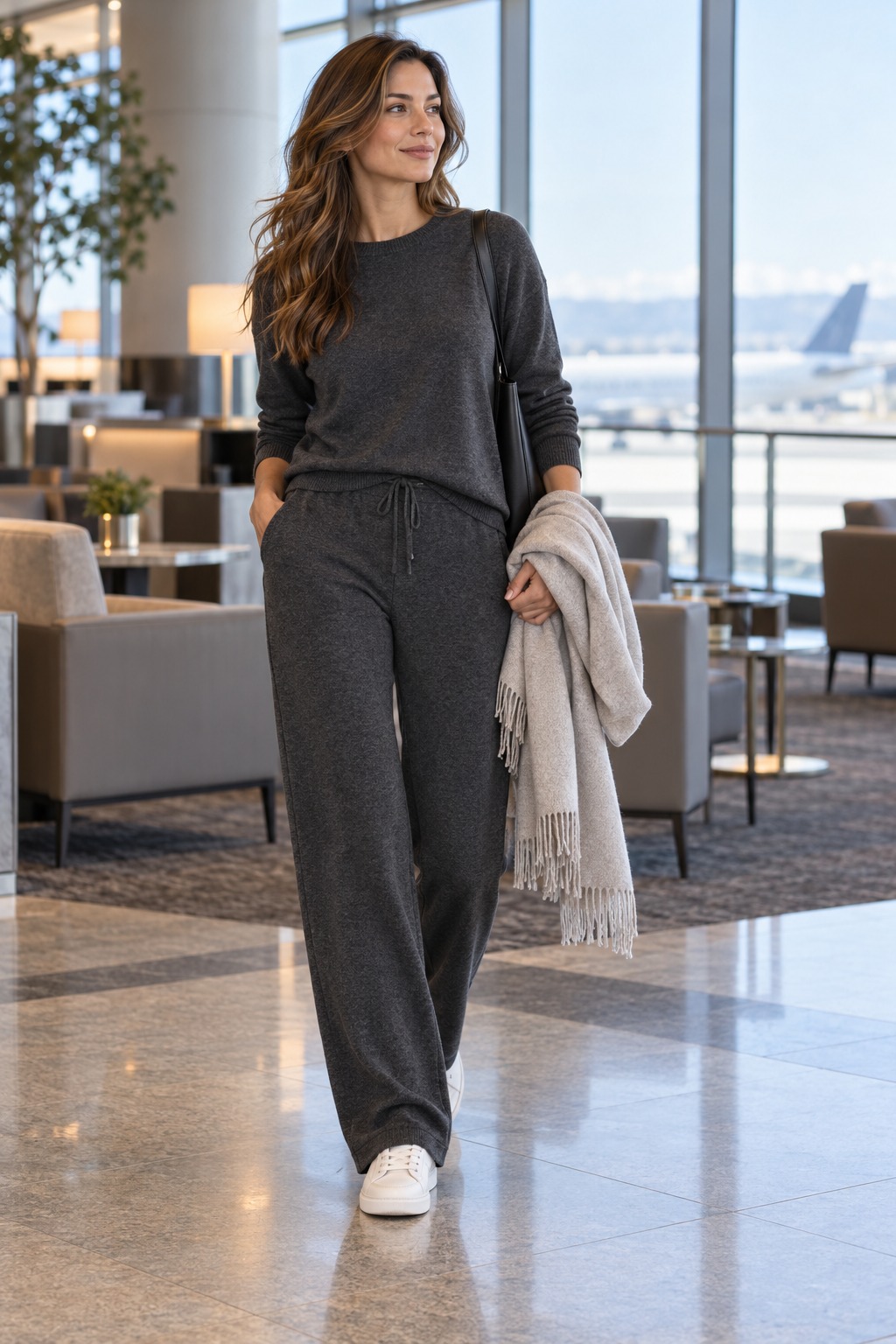
For an overnight or especially long flight, a soft matching set can make dressing simple while still looking intentional. Choose a breathable knit top and pull-on trousers with a waistband that stays comfortable while seated. Carry a thin scarf or wrap that can serve as an extra layer when the cabin feels cool. Keep the fabric easy to wash and avoid bulky accessories that become awkward in a seat.
Try the full outfit at home in a seated position. Check whether the waistband rolls, the top rides up, or the trousers bunch at the knees. Slip-on shoes can help during security, but choose a pair that stays secure while walking through a large terminal. A soft set can look polished with clean sneakers and a compact crossbody, without relying on restrictive tailoring.
7. Lightweight straight-leg trousers, a breathable shirt, and a compact overshirt
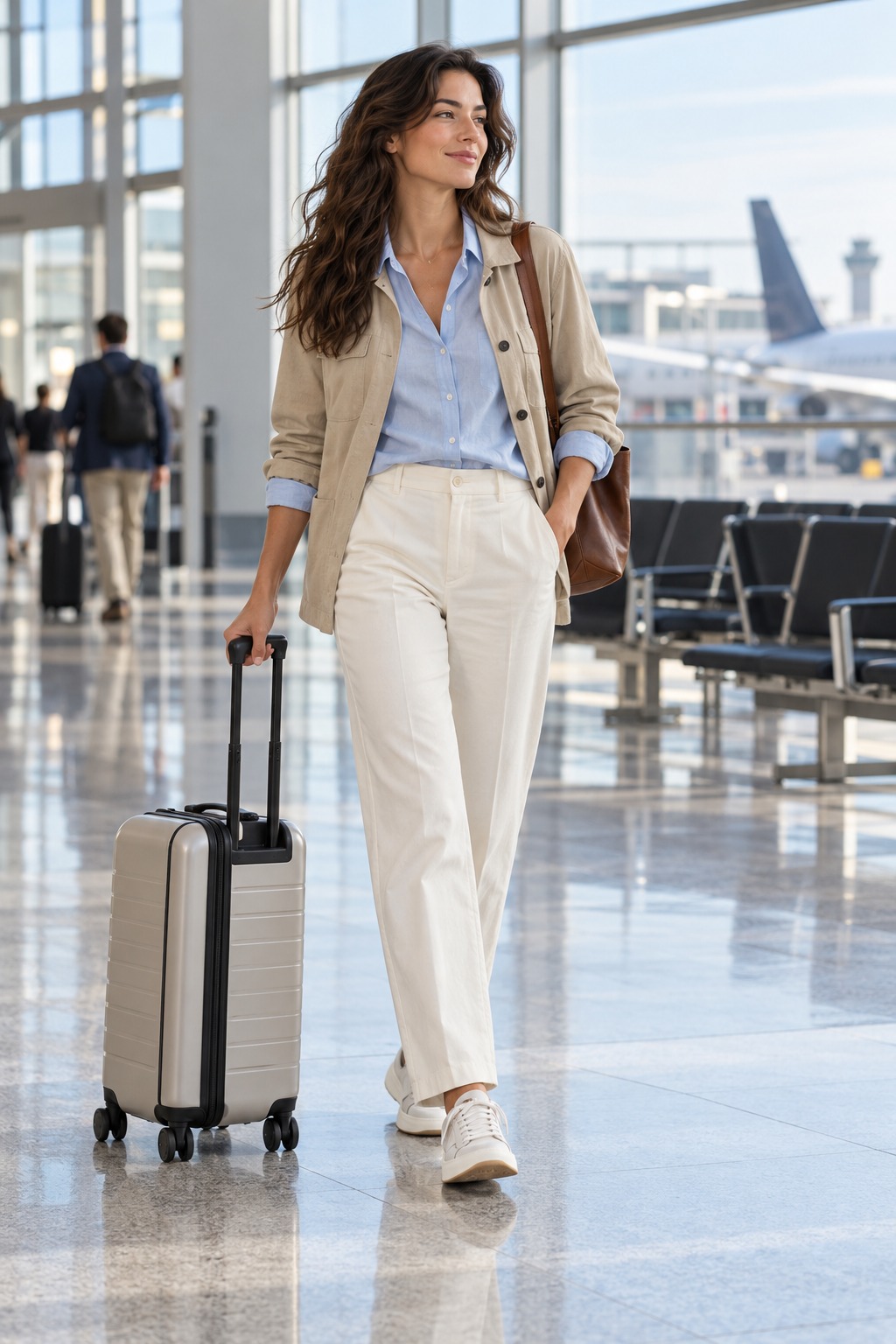
If you expect to go directly from the airport to a meal or an easy sightseeing stop, select separates that look finished after a long sit. Lightweight straight-leg trousers and a breathable shirt create a clean base; a compact overshirt adds polish and can be folded or worn when the temperature changes. Choose fabrics that release wrinkles reasonably well and do not require fussy adjustments.
Plan the bag and shoes for what comes next. A comfortable walking shoe is usually more useful than a delicate option if you have a long terminal transfer or uneven pavements at arrival. If you want a more formal destination outfit, pack that change separately and use this formula for the journey. Travel clothing can support the first part of the trip without needing to serve every occasion.
A small comfort checklist before a long flight
Try the complete outfit at home and sit in it long enough to notice pressure points. Walk in your shoes and practice taking off the outer layer without needing much room. Make sure your bag can hold any layer you remove and that the items you need during the flight are easy to reach. No outfit can control the cabin, so aim for a comfortable base and one straightforward adjustment rather than packing many pieces you may not use.
- Seated fit: Does the waistband remain comfortable when you sit and lean forward?
- Layer access: Can you add or remove the outer piece without a struggle?
- Walking: Are your shoes familiar, secure, and suitable for your route?
- Arrival: Will the outfit still feel appropriate for your first planned stop?
- Bag space: Can your carry-on hold the layer or small change you actually plan to bring?
Pack only what supports the trip. A spare top can be sensible for some itineraries, but it should not become a default extra if you will not use it. Check your airline’s current baggage guidance and keep any required items accessible. Clothing advice is personal, and travel rules can change, so use the airline’s own information for baggage and follow crew directions during the flight.
Common questions about long-flight outfits
What should I wear on a long flight if I want to look put together?
Start with a comfortable base that stays neat while seated, then add one layer with a clear shape, such as a cardigan, light jacket, or soft blazer-style knit. A coordinated color palette can help the outfit feel intentional without requiring uncomfortable pieces. Your comfort and itinerary should guide the final choice.
Are jeans comfortable enough for a long flight?
They can be for some people, especially if the pair has comfortable stretch and a waistband that does not press while sitting. Try them seated before travel. If they feel tight after a short test, choose a softer trouser instead.
How many layers should I wear on a plane?
There is no fixed number because cabin temperature and personal comfort vary. A breathable base and one easy-to-remove layer gives you a simple adjustment option. Add a small wrap only if you already know you use one and can store it comfortably.
What shoes are easiest for airport travel?
Choose a secure, familiar shoe that is comfortable for your walking and easy for you to manage during airport procedures. Slip-on styles suit some travelers, while others prefer lace-up sneakers or flats. Airport screening procedures can differ, so follow posted instructions and choose what works for you.
How can I dress for a flight and still be ready after landing?
Wear a complete base outfit that you would be comfortable arriving in, then use one removable layer to change the overall polish. If your first stop has a specific dress expectation, pack a small change only if it fits your bag and routine. A polished travel outfit should not depend on carrying a second wardrobe.
Build a flight outfit around your actual trip
The most useful long-flight outfit is the one you have already tested in a seated position and can adjust without effort. Choose fabrics and shoes you trust, bring one layer that fits your route, and consider what you will do after landing. Use these seven formulas as starting points, then keep the pieces that feel like you. A little planning helps you move through the trip with fewer outfit worries and more attention for the travel itself.
Keep these outfit ideas handy.
Save this guide on Pinterest (opens in a new tab)More ideas for your wardrobe
 Travel Outfit Ideas8 Train Travel Outfits for Platform Changes, Overhead Bags, and Long Rides
 Travel Outfit IdeasAirport Outfits for Early Flights That Stay Comfortable and Presentable
 Travel Outfit IdeasSpring Travel Outfits That Pack Light and Handle Changing Weather
 Travel Outfit IdeasPlus Size Travel Outfits That Pack Easily and Stay Comfortable in Transit