9 Monochrome Outfits That Use Texture to Add Depth
A monochrome outfit does not have to be a perfectly matched set. The most interesting versions use one color family and let texture, fabric weight, and silhouette create the contrast. A smooth knit beside denim, a ribbed top with tailored trousers, or a soft coat over a satin-finish skirt can keep a single palette from looking flat. The colors stay related while the materials make each piece visible.
These nine monochrome outfit formulas use black, cream, navy, brown, olive, gray, caramel, plum, and denim blue as starting points. You can shift each palette toward shades you already own, and there is no need for every item to match exactly. A tonal difference—such as warm cream with ivory or deep brown with cocoa—often adds more depth than a head-to-toe set in one identical shade.
When building a monochrome look, check the outfit in natural light. Similar colors can read differently under indoor lighting, and textures may become more or less noticeable depending on the fabric. Choose pieces that fit comfortably and work for the day. Monochrome is a styling option, not a rule that requires buying a full matching wardrobe.
How to add texture to a monochrome outfit
Begin with a color you like wearing, then choose two or three different surfaces. Ribbing, denim, brushed knits, smooth cotton, leather-look material, linen, and satin-finish fabrics can create contrast even when the colors are close. Texture is easier to see when the pieces are not all the same weight, so pair a lightweight top with a more structured trouser or a soft knit with a crisp jacket.
Use a change in shape as well as fabric. A relaxed top with straight trousers creates a different line from a fitted knit and wide-leg pants. If the outfit feels like one block of color, an open jacket, defined waist, or visible neckline can separate the pieces. You can also use shoes and a bag in a nearby shade to finish the palette without introducing a strong contrast.
Check that the fabrics suit the weather and care routine. A heavy knit and lined coat may be too warm indoors, while a fine top may need a layer outdoors. Before buying anything, see whether you can create the same effect with a texture you already own. A single tonal outfit can come from everyday separates, not necessarily a matching collection.
9 monochrome outfits that use texture to add depth
1. Black ribbed knit, smooth trousers, and a soft blazer
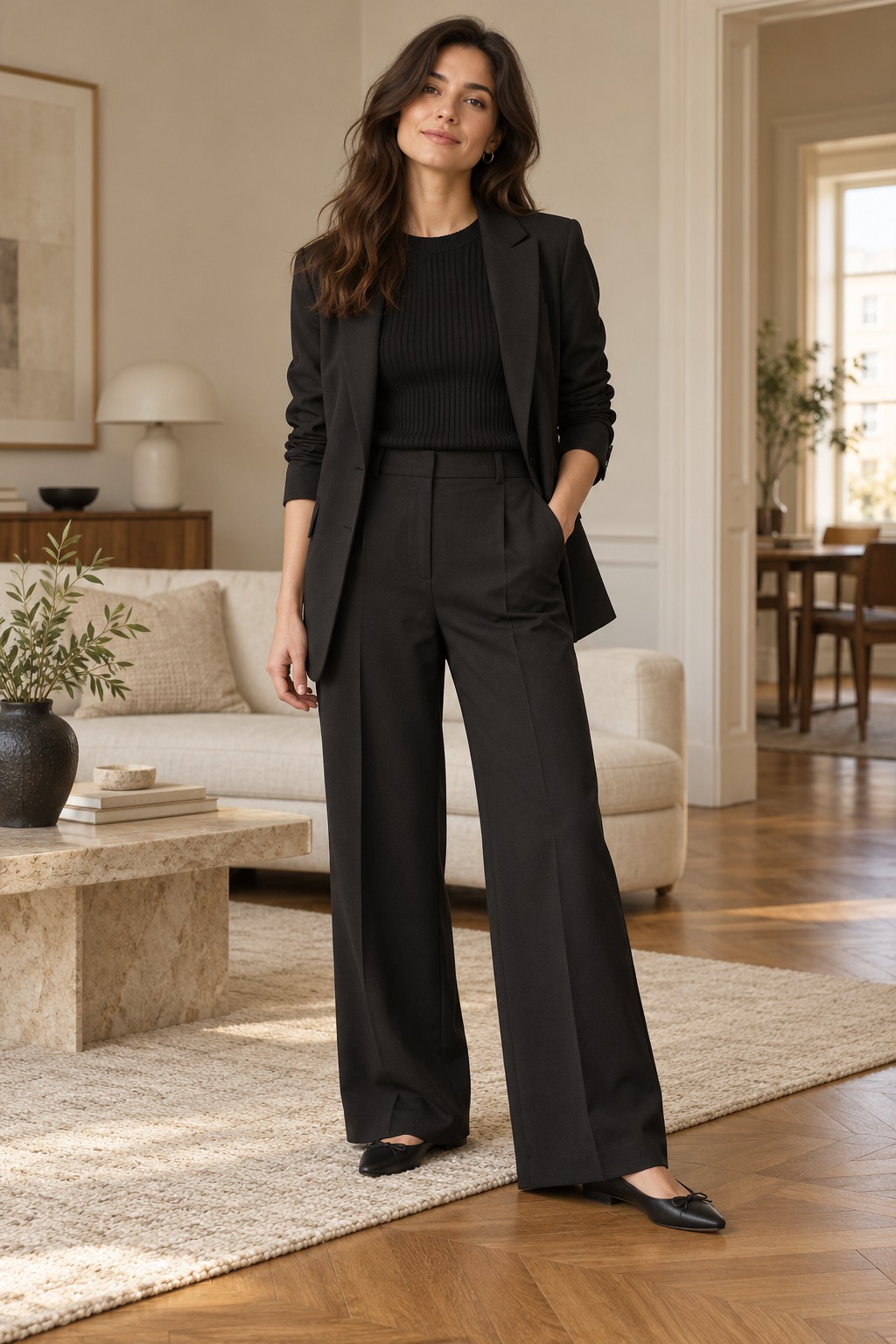
Combine a black ribbed knit with smooth straight or wide-leg trousers, then add a soft blazer or structured cardigan in a nearby black shade. The ribbing gives the top visible texture, while the trousers create a cleaner line. Choose a shoe with a different finish—matte flats, a subtle patent detail, or a clean sneaker—to add another small variation without breaking the palette.
If all-black outfits feel too severe to you, choose charcoal for the blazer or a softer black-wash trouser. A silver or gold accessory can provide a small highlight, but it is optional. Keep the fit comfortable through the shoulders and waist, especially if you will sit for much of the day. A blazer worn open shows the different pieces more clearly and is easier to adjust indoors.
This formula works for a smart casual office, dinner, or a day when you want an outfit that is easy to assemble. To make it less formal, replace the blazer with a denim jacket in black or wear the knit untucked over straight jeans. The texture contrast remains even as the setting changes.
2. Cream linen trousers, a fine knit, and a textured cardigan
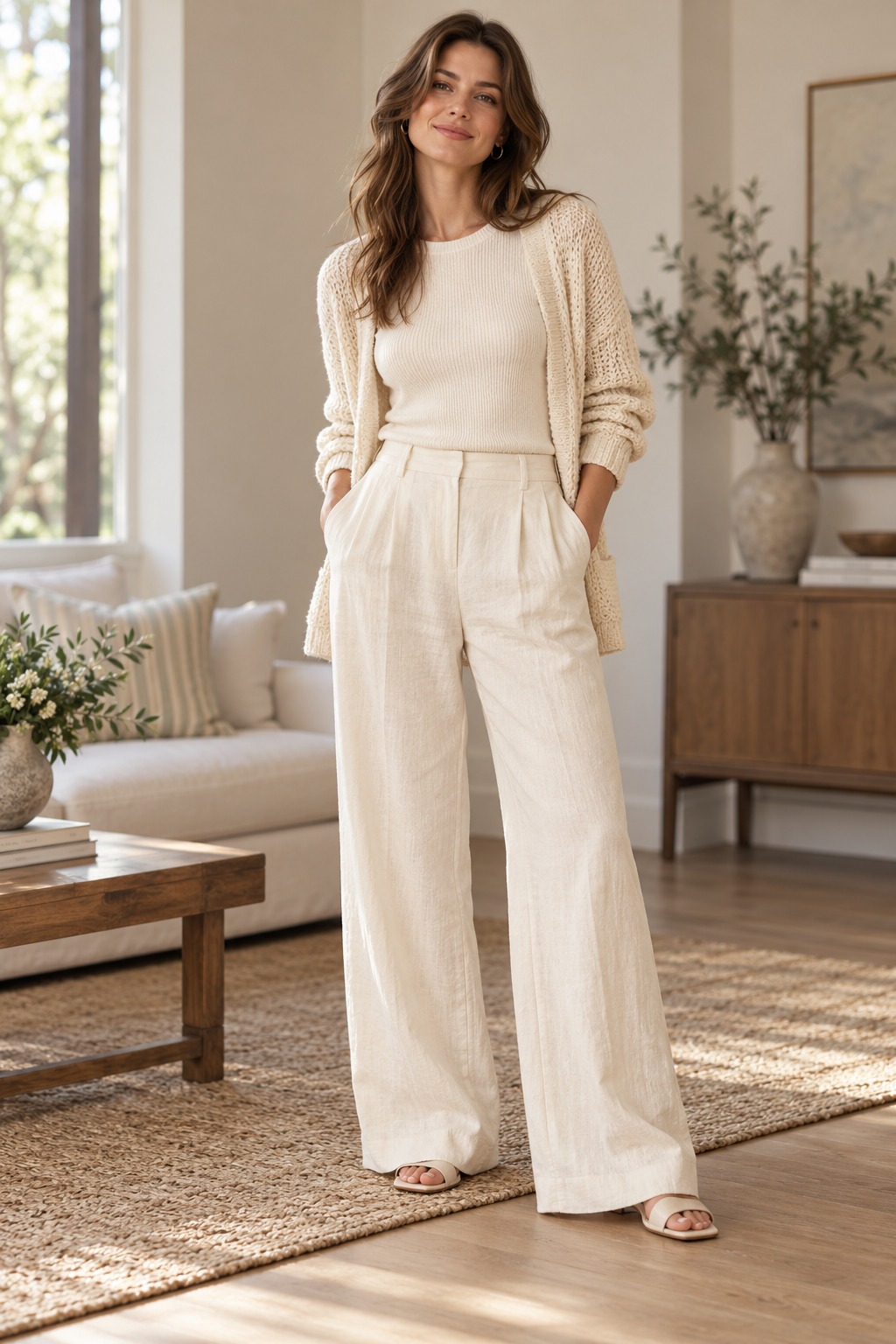
Choose cream or ivory wide-leg trousers and pair them with a fine knit top. Add a textured cardigan, such as a seed-stitch or ribbed layer, in a slightly warmer or cooler neutral. The gentle difference between the shades keeps the outfit from looking like a uniform. Flat sandals, loafers, or a low boot can finish it depending on season and setting.
Light colors make opacity and lining worth checking. Look at the outfit in daylight and wear the underlayers you plan to use. A slightly darker cream shoe or woven bag can add a grounding detail while keeping the palette tonal. If the trousers are loose, a neat top or partial tuck can show where one piece ends and another begins; choose whatever feels comfortable.
This is an easy outfit for a lunch, an office with relaxed dress expectations, or a warm-weather event. A blazer or linen overshirt can replace the cardigan if you want more structure. Avoid heavy layers when the weather is hot; the point is to use fabric and color to add depth, not to add unnecessary warmth.
3. Navy denim, a smooth blue shirt, and a soft knit layer
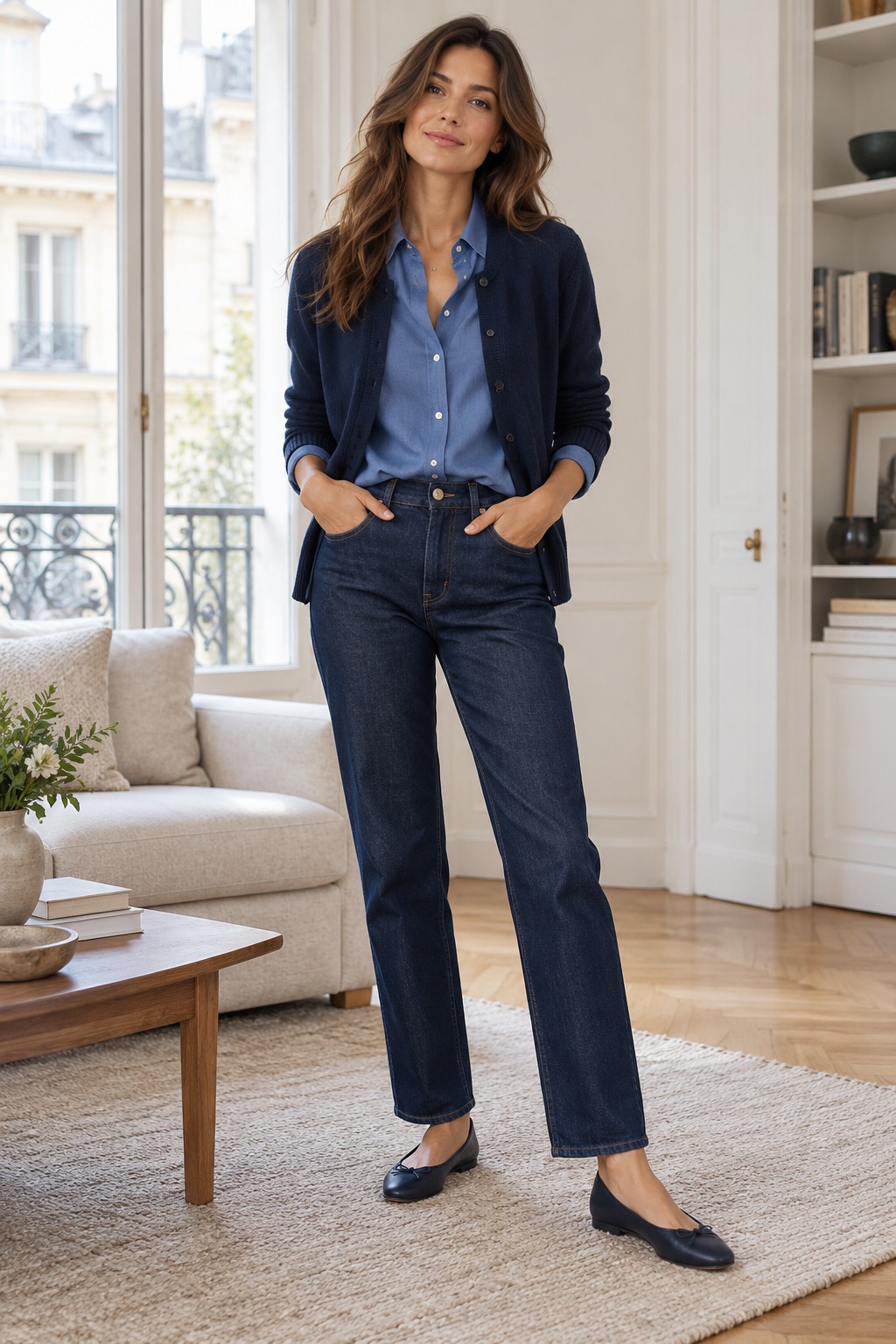
Navy can be a useful alternative to black for a tonal outfit. Pair dark denim with a smooth blue button-front shirt and add a soft navy cardigan or jacket. The slight shift between denim and woven fabric makes each piece distinct. Loafers, sneakers, or simple ankle boots can follow the formality of your plans.
Look for contrast in wash and texture rather than trying to match every blue exactly. A slightly faded jean with a deeper shirt often feels more natural than three identical navy pieces. If the shirt is long, try a small front tuck or wear it open over a base tee. A knit layer can be carried easily for cool interiors and added when needed.
For a more casual version, wear a denim shirt with dark jeans and a soft cardigan. For a sharper look, replace the denim with navy tailored trousers and add a structured jacket. This palette can work through several seasons because its layers are easy to change without losing the tonal effect.
4. Chocolate trousers, a cocoa knit, and a suede-look jacket
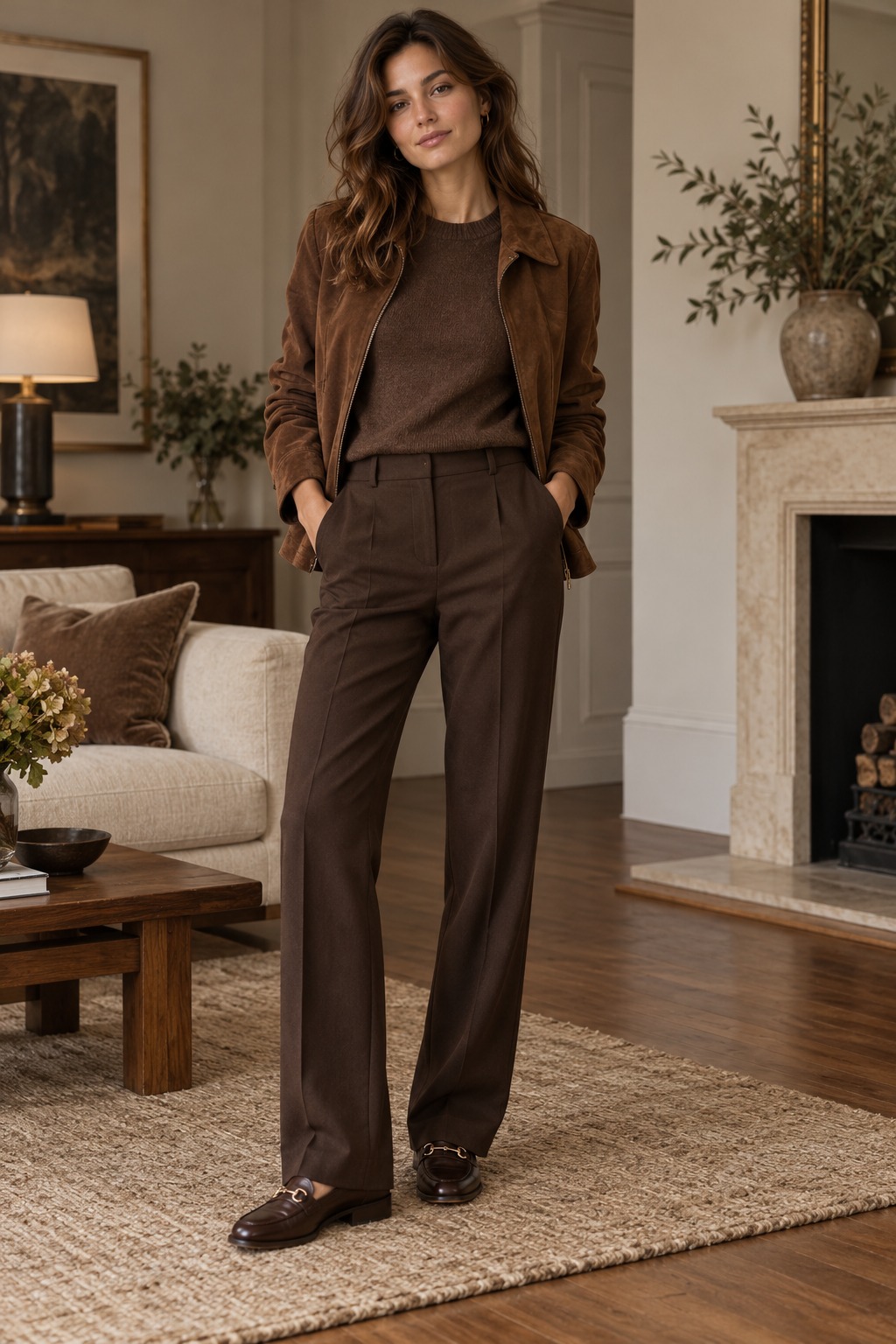
Build a warm monochrome look from chocolate, cocoa, and tan. Start with brown trousers and a fine cocoa knit, then add a suede-look jacket or brushed overshirt in a nearby shade. The mix of smooth knit, tailored fabric, and soft outer texture adds interest without relying on print. Brown boots or loafers complete the outfit naturally.
Keep the shades related but not identical. A lighter tan jacket can frame the darker base, while deep chocolate shoes can anchor a lighter top and trouser. If you prefer a more casual outfit, switch tailored trousers for brown denim or corduroy. Corduroy adds texture on its own, so a smooth top can keep the full look balanced.
This formula is especially useful for fall, but lighter fabrics make it wearable in milder weather. If the jacket feels bulky, try an open cardigan or a thin shirt-jacket. Choose materials that can handle your plans and check care labels before pairing delicate fabrics with a textured outer layer.
5. Olive wide-leg pants, a soft green top, and a utility jacket
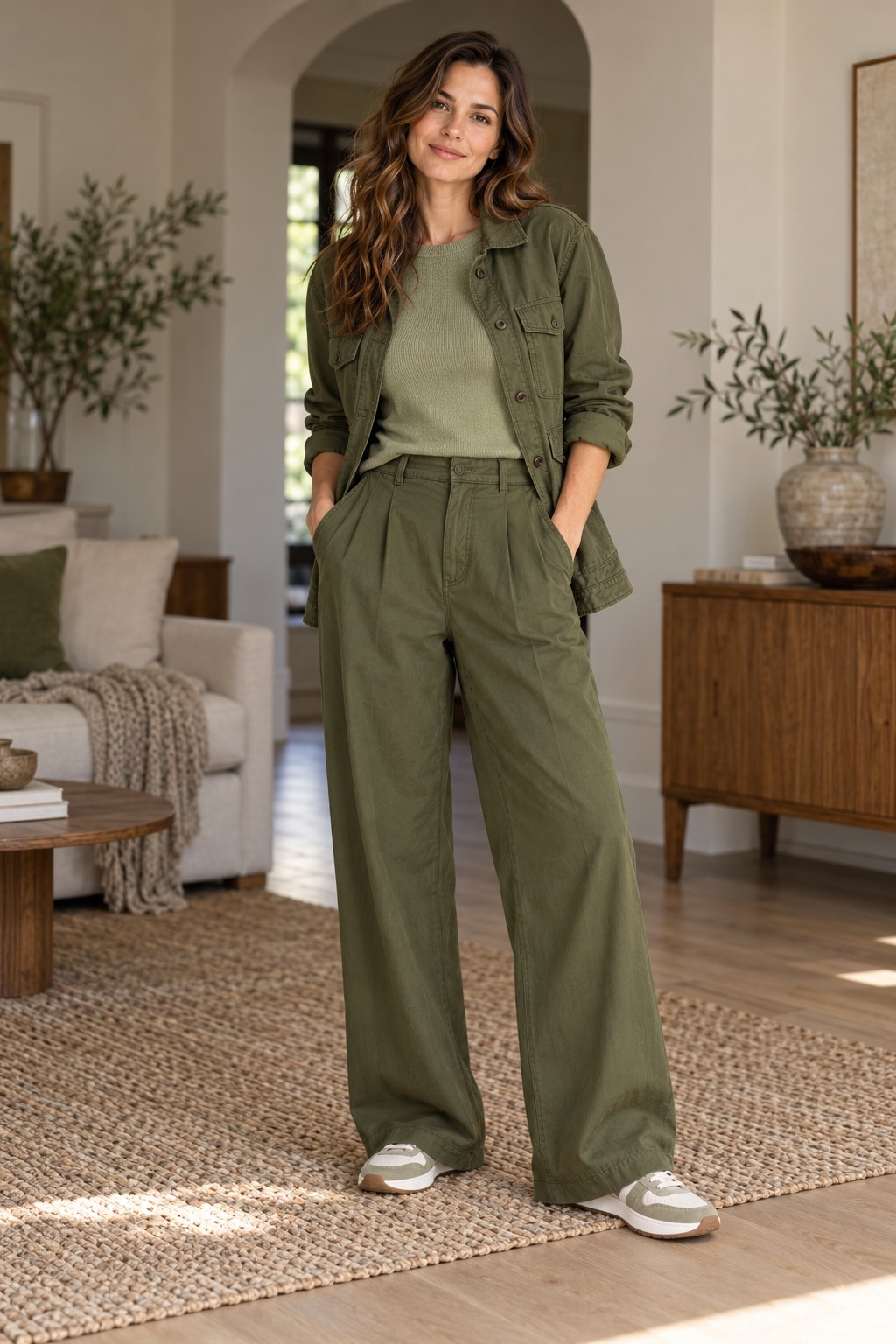
Combine olive wide-leg trousers with a soft sage or muted green top, then add a utility jacket in a deeper green. The color family stays cohesive while the jacket’s pockets and matte texture add structure. A simple sneaker, flat boot, or casual loafer can finish the outfit depending on weather and walking needs.
Use a lighter top or slightly different green to keep the pieces from blending together. If the jacket has a lot of detail, keep the top simple. Wear it open for a clear vertical line, or button it if the fit feels comfortable when you move. You can substitute cargo trousers or an olive skirt if those pieces suit your style better.
This is a practical tonal option for errands, casual workdays, or travel. A cream bag or shoe can add a small neutral break if you want one, but the outfit remains monochrome when the main clothing pieces stay in the green family. Let your preference decide how close the shades should be.
6. Steel-gray trousers, a silver-gray knit, and a brushed cardigan
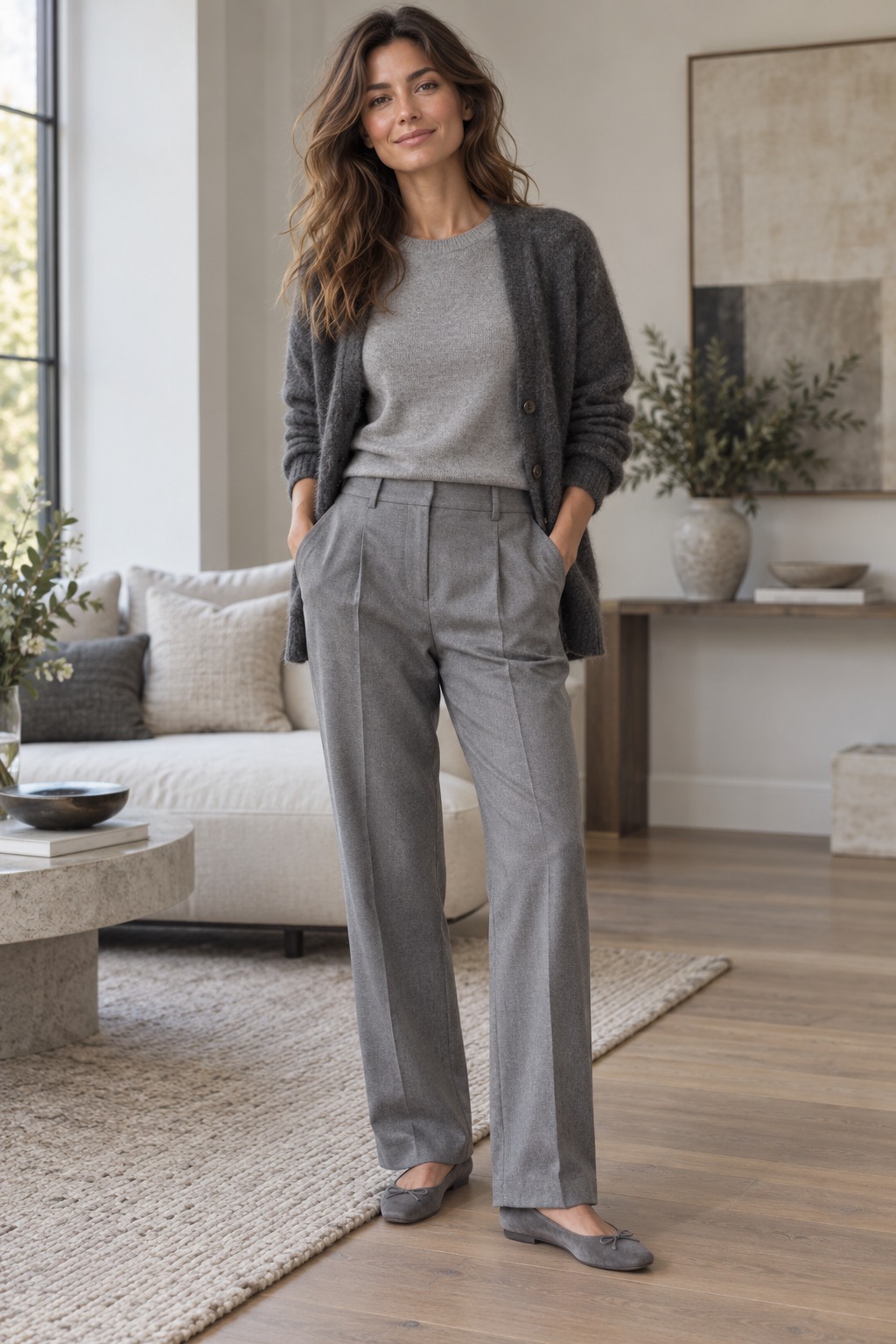
Use steel, silver, and charcoal-gray pieces to create a cooler tonal outfit. Pair tailored gray trousers with a lightweight silver-gray knit, then add a brushed cardigan in a deeper shade. The smoother trouser and soft knit make a useful texture contrast, while the cardigan gives the outfit a layer that can come off indoors. Keep the silhouette simple if the cardigan has a pronounced weave or fuzzy surface.
Gray can shift noticeably between warm and cool undertones. Lay the pieces together in daylight and look for a shared cast rather than insisting that every shade match. A charcoal shoe can anchor pale layers, or a lighter gray sneaker can keep a casual version relaxed. This combination suits a creative office, a campus day, or an easy dinner when you want a polished neutral without defaulting to black.
7. Caramel jeans, a cinnamon top, and a textured brown jacket
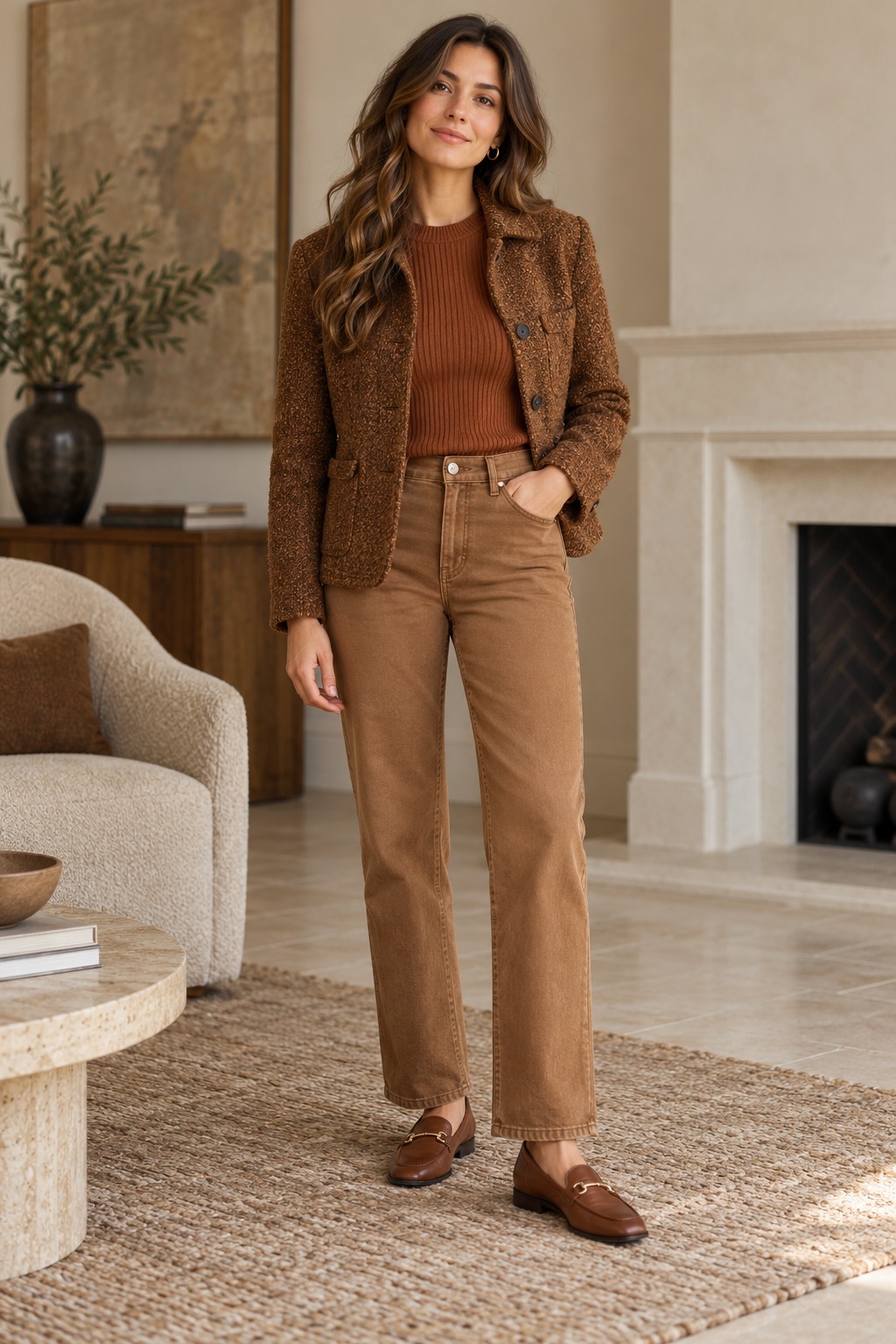
Build a warm brown outfit from caramel, cinnamon, and tobacco shades. Start with brown jeans or trousers, add a cinnamon-colored knit top, and finish with a textured jacket in a nearby hue. A corduroy or brushed cotton jacket creates a tactile top layer; if you use corduroy bottoms instead, choose a smoother jacket to avoid making the whole look feel heavy. The pieces can be close in color while still showing clear changes in surface and weight.
For a softer version, replace the jacket with a light cardigan and choose a cream-brown top. For a sharper look, use tailored trousers and a structured overshirt. Shoes in cognac, dark chocolate, or a related neutral can complete the outfit. Try the combination with the pieces you own before shopping; brown basics often vary enough to give you a tonal palette already.
8. Plum skirt, berry knit, and a softly textured jacket
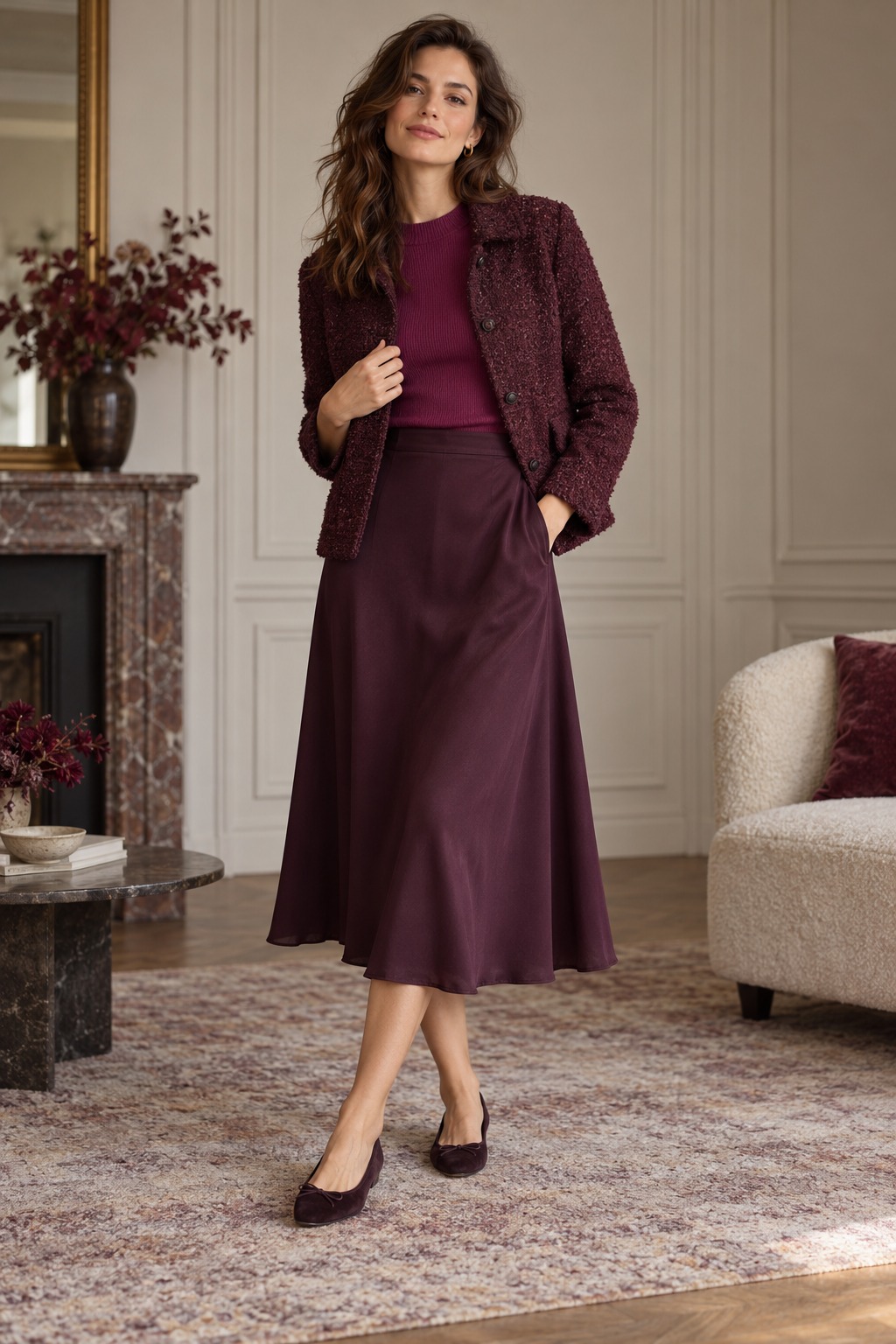
A monochrome outfit can use a saturated color family rather than a neutral. Pair a deep plum or aubergine skirt with a berry knit top and add a jacket in a related wine shade. A matte knit against a fluid skirt creates movement; a softly textured jacket adds another surface without introducing a print. If the shades vary, repeat the main color family in the shoes or bag so the outfit still feels connected.
Keep the layers appropriate for the setting and season. A lighter berry blouse can make the formula suitable for a celebration, while a simple sweater and flat shoes make it easier for a regular day. If you are unsure about the shades, take a quick daylight photo and see whether the colors look related. You do not need exact color matching for the look to read as tonal.
9. Blue jeans, a chambray shirt, and a textured denim jacket
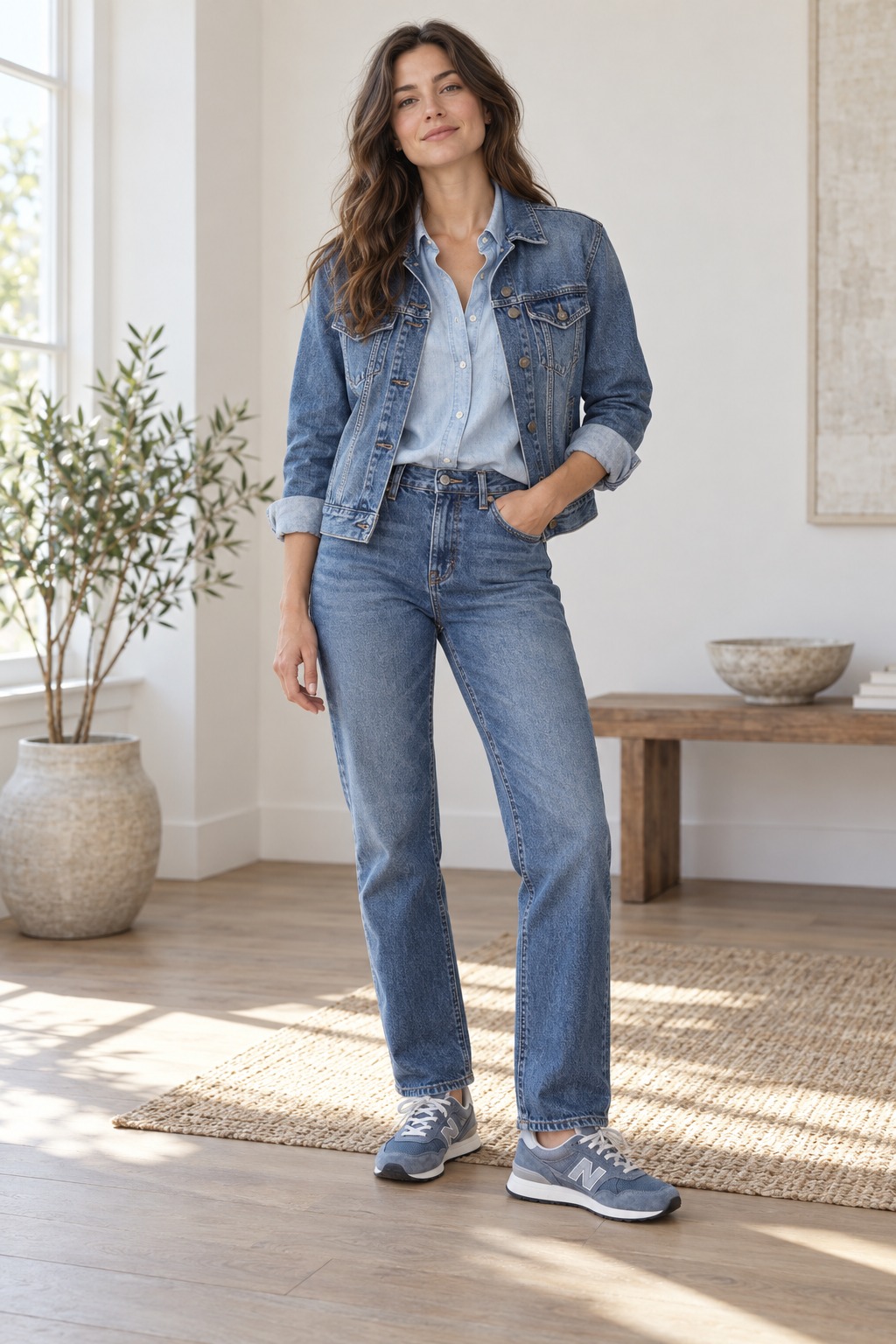
Use denim and chambray as a practical blue-on-blue combination. Pair straight-leg jeans with a chambray shirt and add a denim jacket in a clearly different wash. The shifts in color and fabric weight keep the layers distinct. If denim-on-denim feels too uniform, make the shirt lighter than the jeans or choose a jacket with a softer, more worn-in finish. A simple blue sneaker or a neutral shoe can finish the outfit without distracting from the tonal idea.
For warm weather, wear the shirt open over a blue tank or tee and carry the jacket for a cool evening. For a neater casual look, tuck the shirt partially and use a belt in a related brown. Check that the jacket and shirt sit comfortably together through the shoulders. This is a useful formula because many wardrobes already contain a pair of jeans and at least one blue shirt.
Quick checks before wearing a tonal look
Take a moment to assess the outfit in the light where you will wear it. Make sure different fabrics are visible and that the shades feel intentional together. Sit down and move your arms to check for pulling or bunching. If the clothes feel good, there is no need to add accessories simply to prove that the outfit is styled.
- Mix surfaces: Pair at least two distinct textures, such as knit and denim.
- Vary the shade: Small differences can separate pieces while keeping one palette.
- Balance weight: Avoid stacking heavy fabrics unless the weather calls for them.
- Check in daylight: Especially useful with cream, white, and close shades of black or navy.
- Use what you own: A tonal outfit does not require a matching set.
A monochrome outfit can be calm, expressive, polished, or casual depending on its pieces. Use the palette as a guide, not a strict boundary. If one accessory in another color makes the outfit feel more like you, include it.
Questions about monochrome outfits
Do monochrome clothes have to be the exact same shade?
No. Related shades often create more dimension than an exact match. Choose colors that look harmonious together in the light where you will wear them.
How do I keep an all-black outfit from looking flat?
Mix textures such as ribbed knit, smooth trousers, denim, or a soft blazer. A small change in shape or finish can also help the pieces stand apart.
Can I wear different shades of white together?
Yes. Cream, ivory, and soft white can work together. Check the fabrics in daylight and consider opacity, lining, and undertone.
What shoes work with a monochrome outfit?
Choose footwear that suits the occasion and your comfort. A shoe in the same color family keeps the look tonal, while a neutral nearby shade can add a quiet variation.
Is a matching set the only way to dress monochromatically?
No. Everyday separates in one color family can create the same effect. Different fabrics, shades, and silhouettes help the outfit look personal rather than overly uniform.
Make the palette work for your closet
Monochrome dressing is a simple way to make familiar pieces feel connected. Start with one color family, add texture through different fabrics, and keep the fit and weather in mind. These nine formulas can help you try neutrals, rich colors, and denim blue without needing a matching set. Use the colors you already like, change the proportions to suit your day, and let comfort finish the outfit.
Keep these outfit ideas handy.
Save this guide on Pinterest (opens in a new tab)