15 Fall Outfits for 50-to-70-Degree Days That Adapt as the Weather Shifts
Fall dressing gets complicated when the forecast says 68°F at lunch but your morning walk begins near 50°F. The answer is not automatically a heavy coat or a pile of layers. A useful outfit for this temperature range starts with a comfortable base, adds one layer you can remove without ruining the proportions, and finishes with shoes that suit the day’s walking and weather.
These 15 fall outfits are built around that simple adjustment: each look has a clear base, a removable layer, and a practical way to change the feel of the outfit. Use them as formulas rather than shopping lists. A similar piece you already own can work just as well if it performs the same job. Fabric weight, wind, sunshine, humidity, activity, and personal temperature comfort all change what 50–70°F feels like, so treat the temperature notes as starting points rather than guarantees.
Before choosing a look, check the coldest part of your day, not only the afternoon high. If you will be outside early, choose a layer that can close at the neck or add a thin base layer underneath. If most of the day is indoors, favor a light layer that will not feel bulky over a chair. The best transitional outfit is one you can adjust in a minute and still feel like yourself.
How to dress for a 50-to-70-degree fall day
Think in three parts: the next-to-skin layer, the warmth layer, and the weather layer. The base may be a tee, shirt, fine-gauge knit, or dress. The warmth layer could be a cardigan, blazer, vest, or overshirt. A weather layer earns its place when wind or rain matters; it should be easy to remove or carry once the day warms up. You do not need all three every day. At a sunny 68°F, a shirt and light jacket may be enough. Near 50°F in shade, a knit plus a wind-blocking outer layer can feel more comfortable.
Use the “open, close, remove” test before leaving. Can the outer layer close if the wind picks up? Can it be removed without leaving an awkward or unfinished-looking outfit? Is there a place to carry it, or can it tie or fold without dragging? If a sweater is too warm to wear and too bulky to carry, it may not be the right layer for a day with a wide temperature swing. A lightweight scarf or a thin long-sleeve base can sometimes add useful warmth with less bulk.
These are outfit ideas, not rules about what a person should wear at a particular temperature. A windy coastal afternoon can feel colder than a still, sunny one. A person who walks briskly may prefer a lighter layer than someone waiting at a bus stop. Adjust the formula for your route, mobility, sensory preferences, dress code, and the clothes you already feel good in.
15 fall outfits for 50-to-70-degree days
1. Trench coat, rust sweater, white shirt, dark jeans, and ankle boots
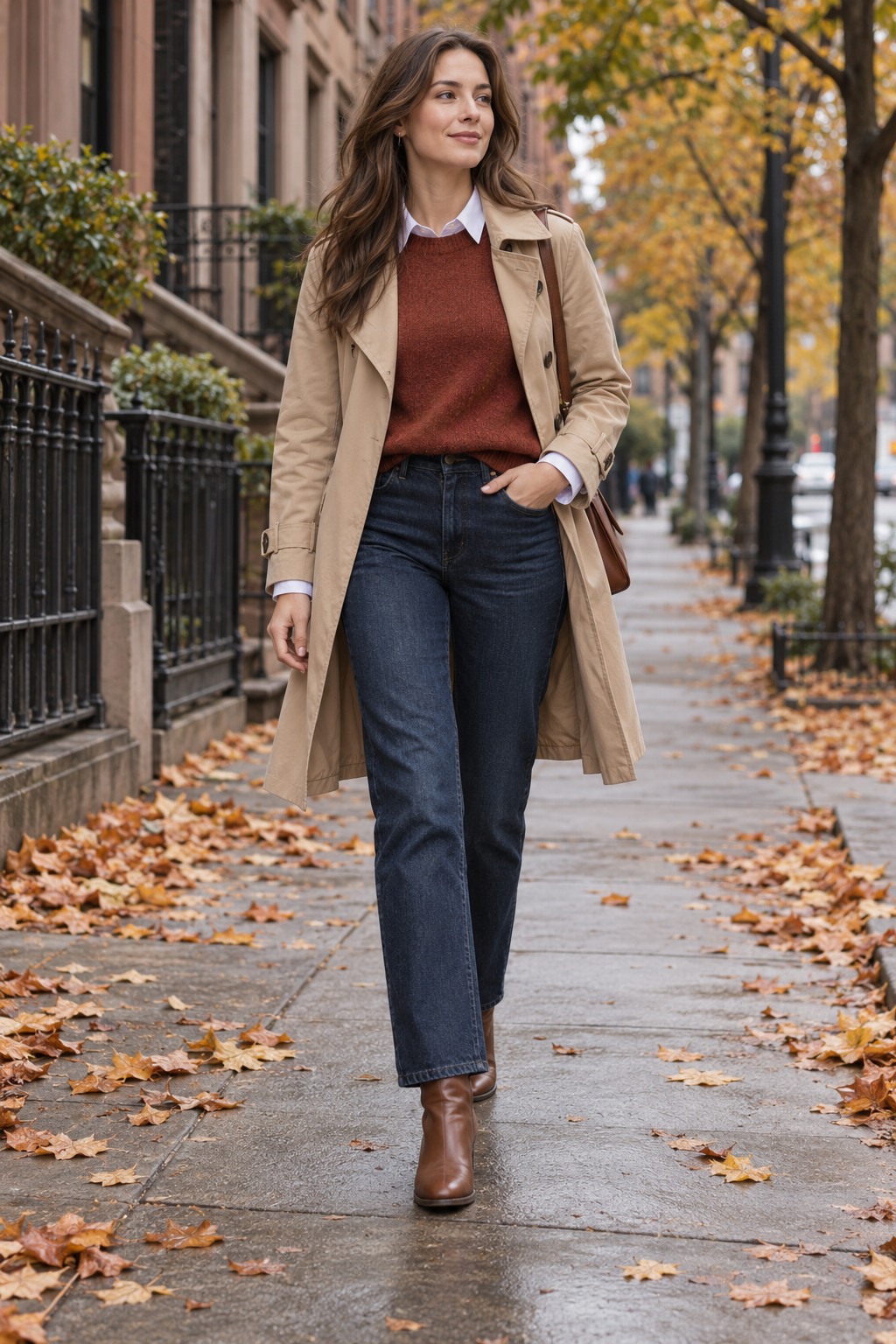
This is the most adjustable look in the set. Wear a crisp shirt under a medium-weight rust knit, then add dark straight-leg jeans, ankle boots, and a lightweight trench. The shirt collar and hem create a visible layer without adding much warmth; the trench handles wind on a cool morning and can be left open later. The rust knit gives the neutral coat a seasonal color accent without requiring a full autumn palette.
For a warmer afternoon, remove the trench and push the sweater sleeves up. If your commute is wet, choose a coat with a secure closure and shoes that can handle damp sidewalks. A long trench can catch at the heel on stairs, so check the hem while walking. If you do not like layered collars, swap the shirt for a smooth crew-neck tee.
2. Navy blazer, ivory knit, straight jeans, and loafers
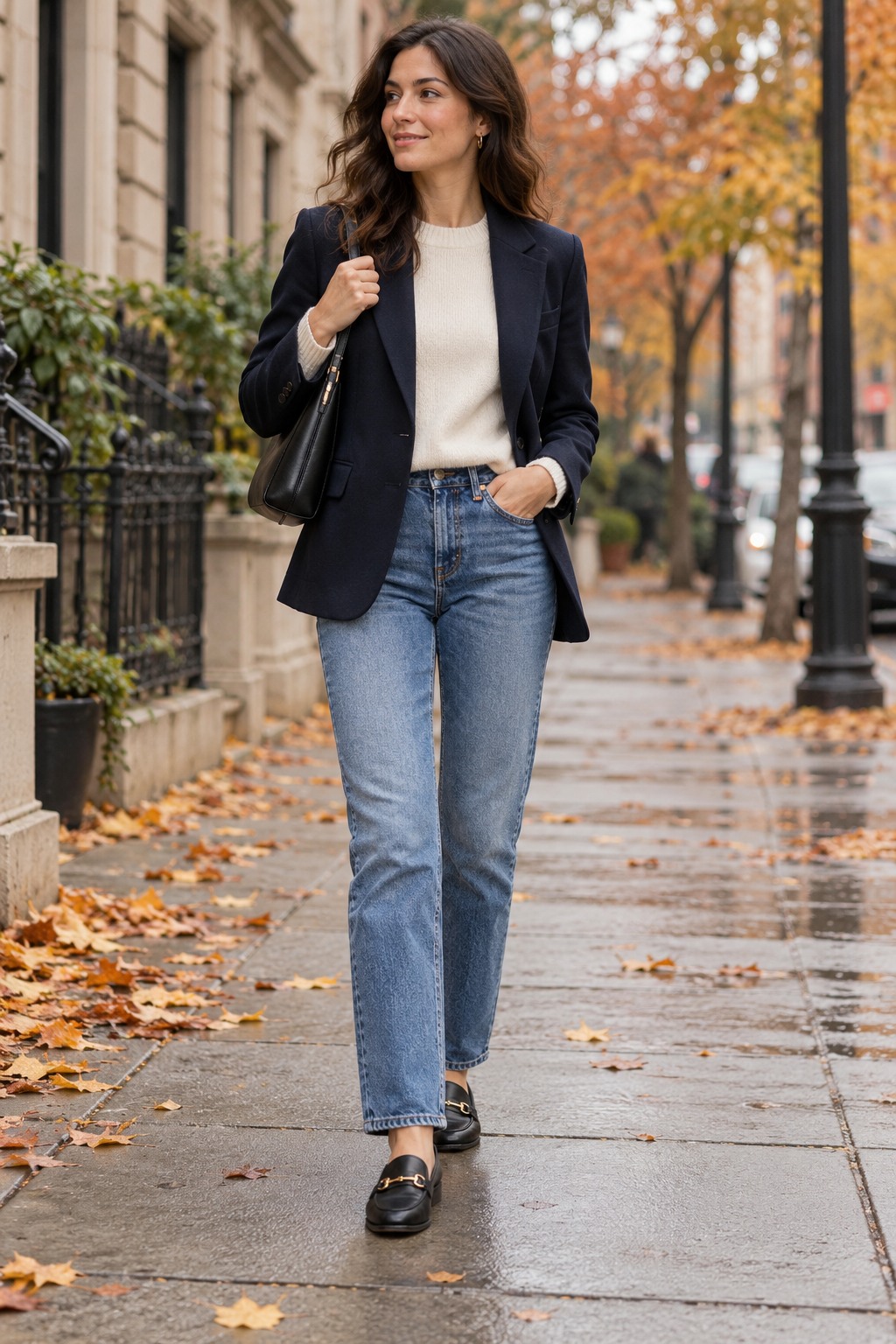
Pair a fine ivory knit with straight-leg jeans, a navy blazer, and loafers for a look that can move between a casual office, lunch, and errands. The fine knit is less likely to bunch under the blazer than a thick cable sweater, while the blazer gives the outfit structure when the temperature is mild. Choose jeans without distressing if you want the combination to read a little more polished.
At the cooler end of the range, add a thin base layer under the knit or choose a blazer with enough room for comfortable movement. At 68–70°F, wear the blazer open or carry it. Loafers work best when the route is mostly dry and the shoe stays secure on your foot; swap to a supportive flat or sneaker if you will walk farther than usual.
3. Striped tee, olive utility jacket, ankle trousers, and sneakers
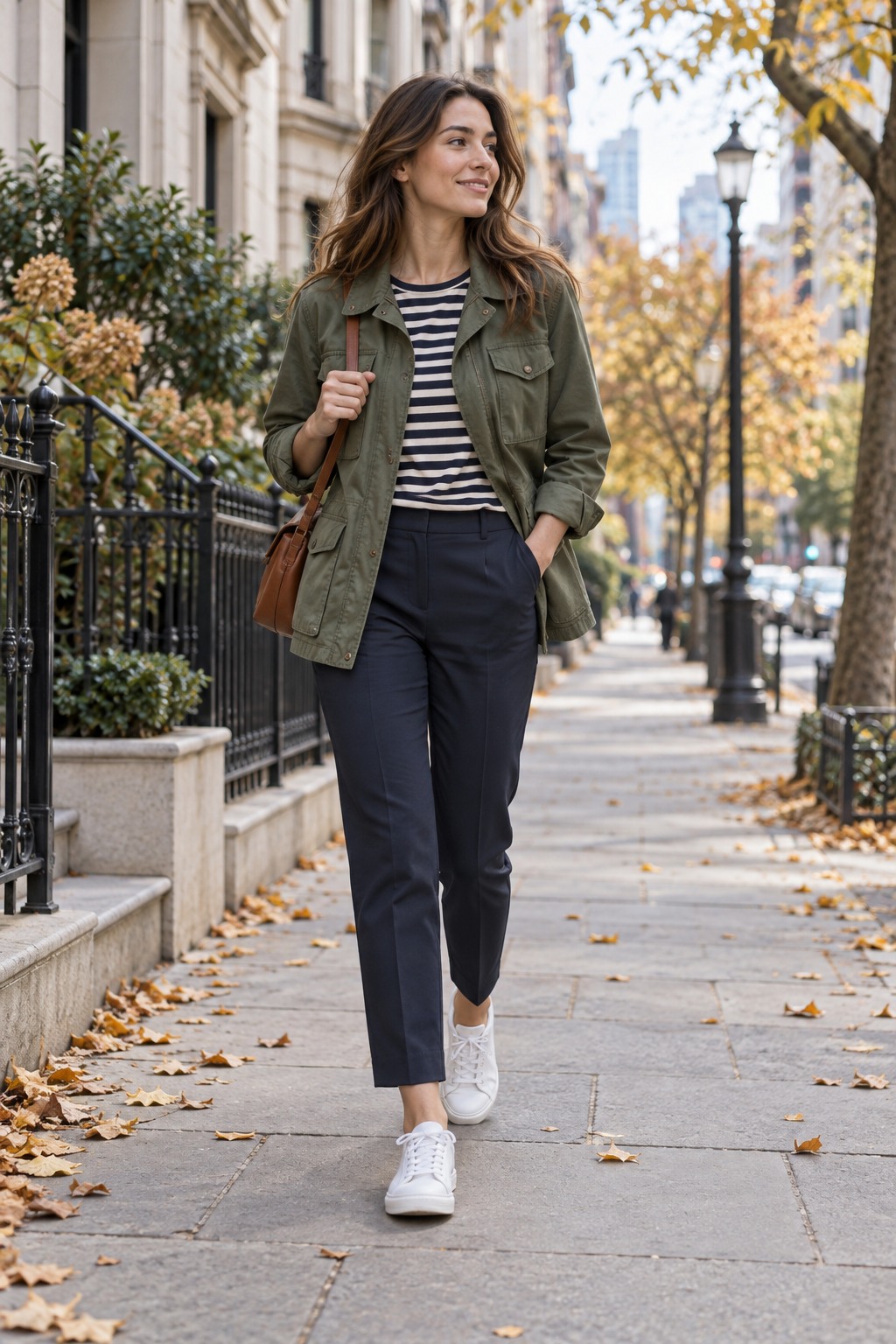
A striped tee and ankle trousers make a breathable base; an olive utility jacket adds pockets and a little protection from a breeze. Finish with clean sneakers for a day that includes walking. This outfit is useful when you want a casual look that still has a clear shape: the jacket supplies structure, while the stripe gives the base enough visual interest to stand on its own when the jacket comes off.
Check the jacket’s shoulder and sleeve fit over the tee so it does not pull when you reach forward. If the afternoon is warm, roll the cuffs and remove the jacket. If the morning is cool, a thin long-sleeve top can replace the tee without changing the rest of the formula. For a more office-friendly version, choose tailored ankle trousers and simple leather sneakers, subject to your workplace dress code.
4. Camel cardigan, dark top, printed midi skirt, tights, and ankle boots
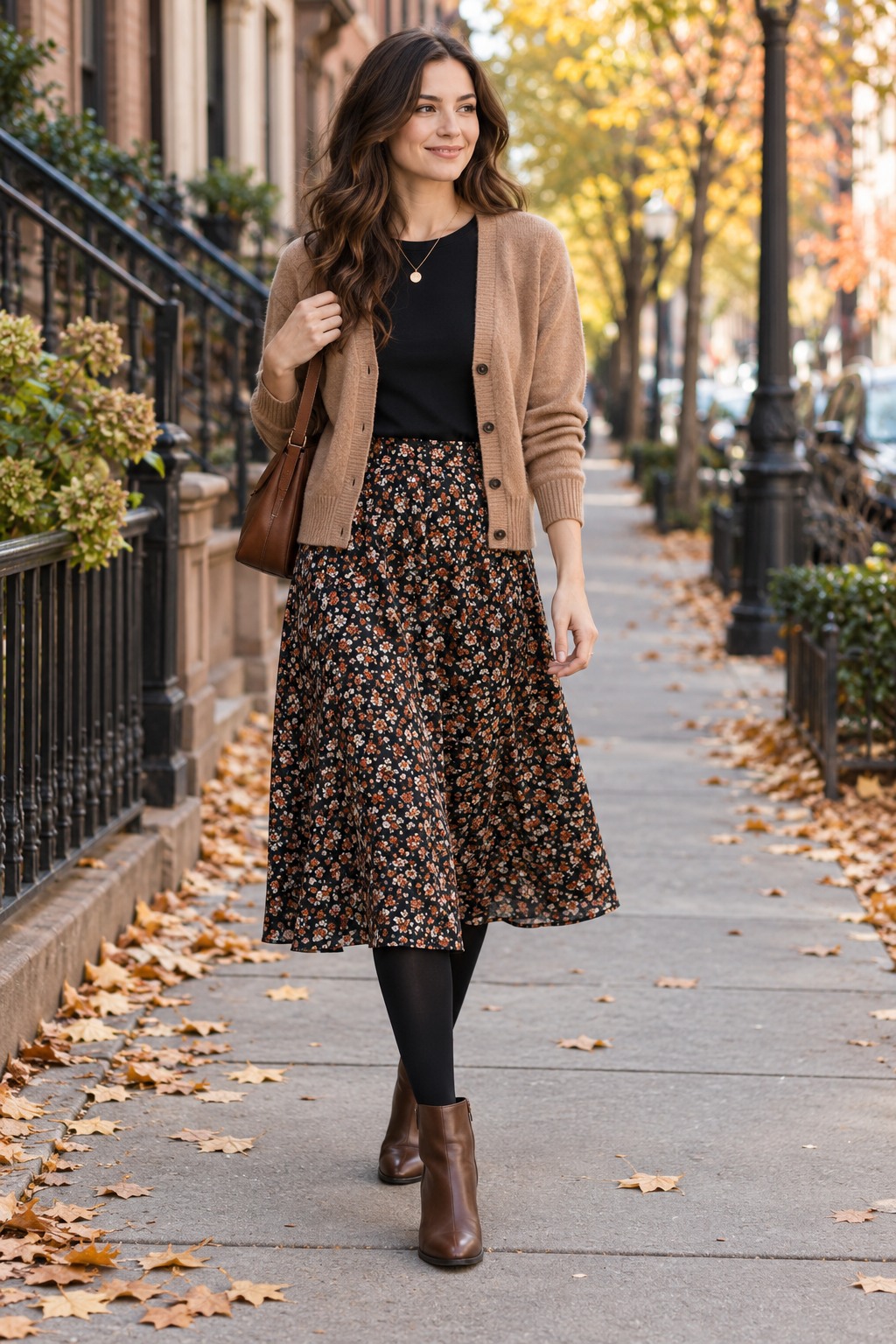
A midi skirt can work across a mild fall day when the top half has an easy layer. Start with a dark, close-fitting top, add a printed skirt, and wear a camel cardigan that can be buttoned or left open. Opaque tights and ankle boots add coverage on a cool morning. Keeping the top relatively simple lets the print carry the outfit, and the cardigan can be swapped for a shorter jacket if you prefer a sharper waistline.
At the warmer end of the range, use lighter tights or skip them if that feels comfortable and appropriate for your plans. Check that the skirt moves easily when you sit and climb stairs; a slit, lining, or slightly fuller cut can affect comfort. If wind is likely, a skirt that stays close to the body and a secure outer layer may be easier than a very floaty fabric.
5. Knit midi dress, denim jacket, and comfortable flats
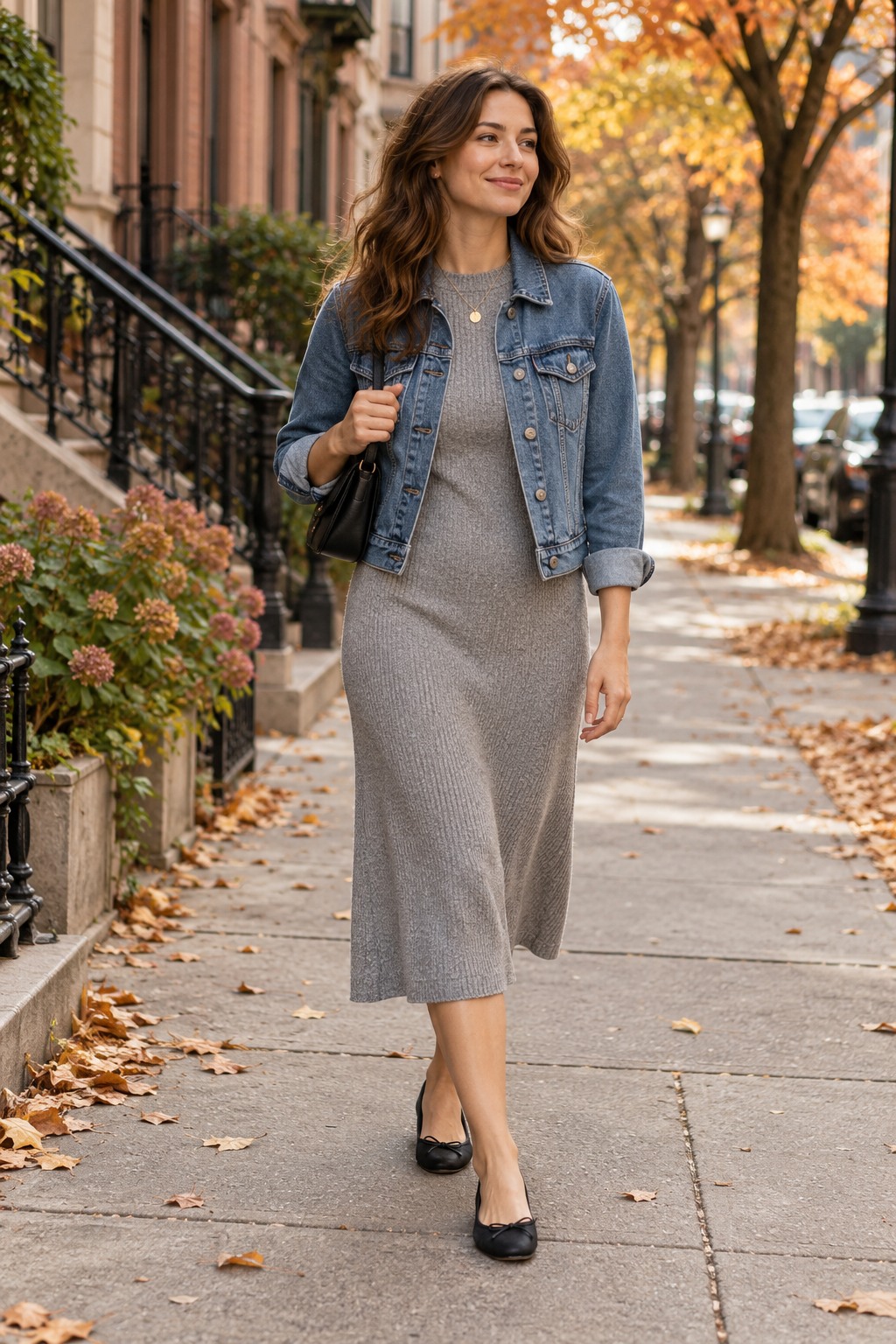
A knit midi dress is a one-piece base that makes getting dressed simple. Add a denim jacket for a removable layer and comfortable flats for an indoor-heavy day. The contrast between the soft dress and the more structured jacket keeps the combination from feeling like loungewear. A belt is optional; use one only if it improves comfort and the dress fabric sits smoothly under it.
For a cool morning, choose a dress with sleeves or add a thin long-sleeve layer underneath. As the temperature rises, the jacket can come off without changing the outfit. If you will walk on uneven pavement, select flats with a secure fit and cushioning rather than choosing a shoe only for appearance. A longer dress should clear the ground and not catch under the heel.
6. Quilted vest, long-sleeve tee, dark jeans, and walking shoes
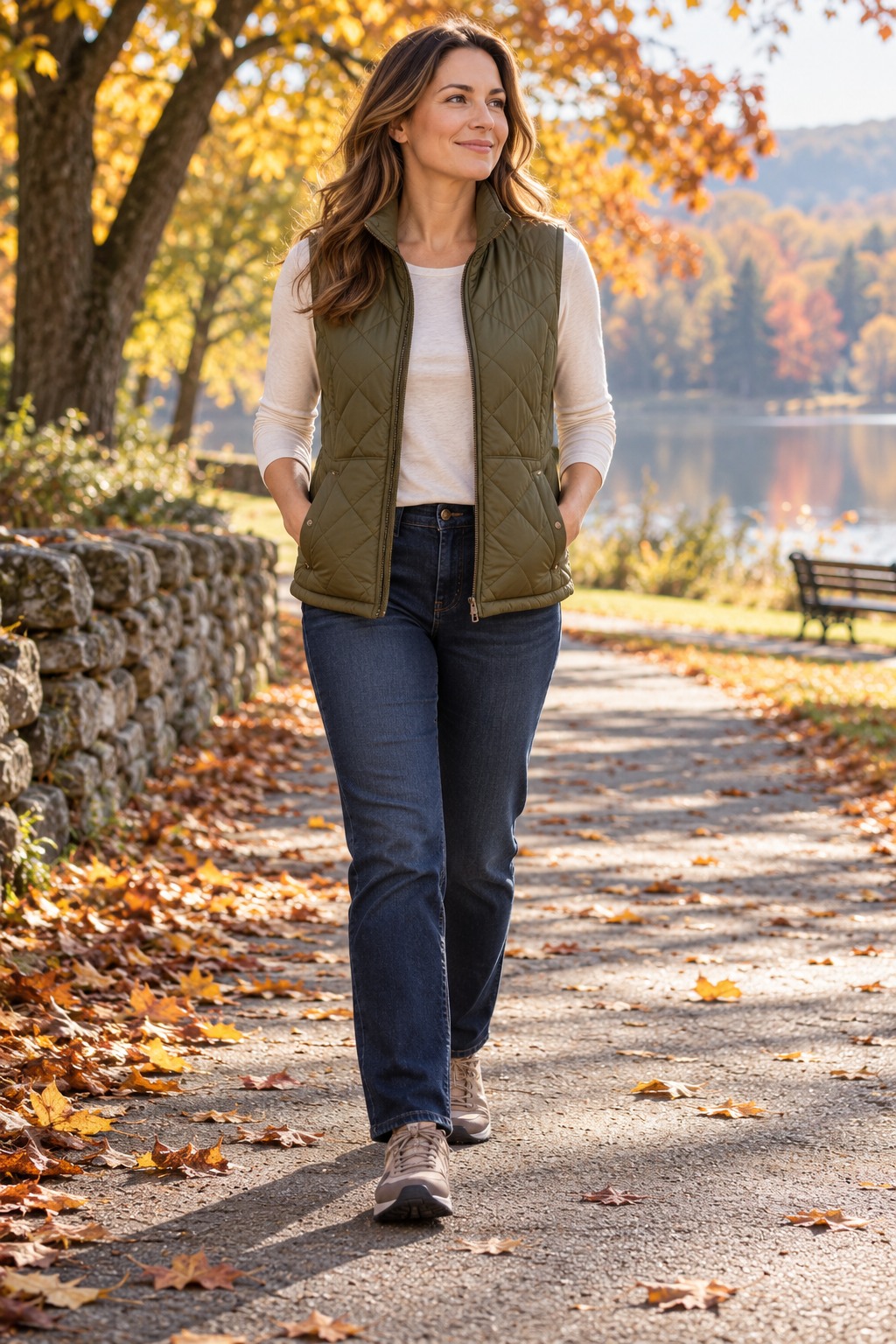
A quilted vest is a useful alternative to a full jacket when your core gets cold but your arms warm quickly. Layer it over a long-sleeve tee or thin knit, then add dark jeans and supportive walking shoes. This formula works for a park walk, weekend errands, or an outdoor market because the vest leaves room for arm movement and is easier to carry than a bulky coat.
Look for a vest that closes comfortably without pulling across the chest or hips. At 68–70°F, the vest may be unnecessary; keep the long-sleeve top as the main look and bring the vest only if the forecast calls for shade or wind. A hooded layer underneath can add warmth, but avoid too many bulky neck layers if you need the outfit to sit comfortably under a backpack strap.
7. Soft brown jacket, thin turtleneck, straight trousers, and ankle boots
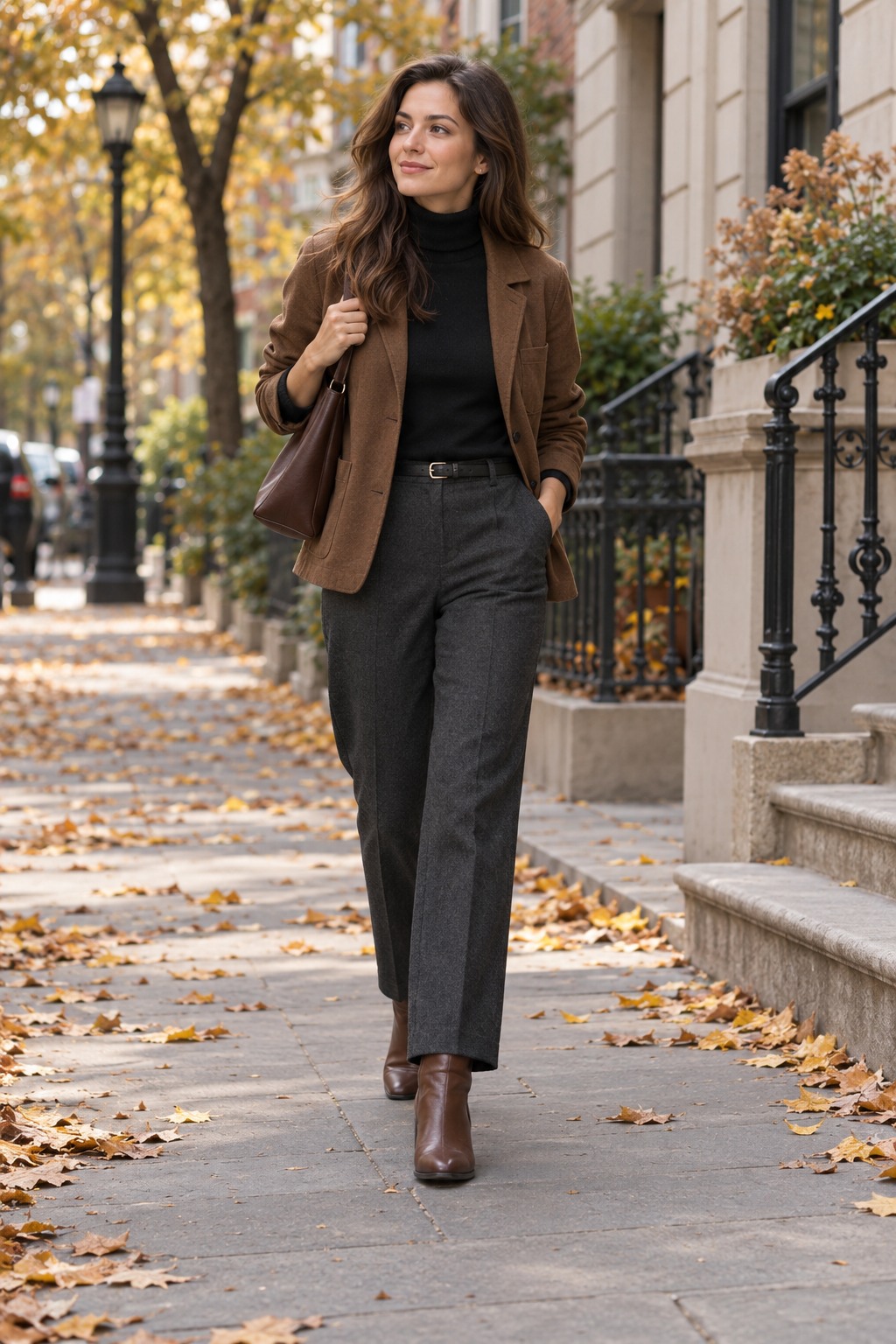
A thin turtleneck under a soft brown jacket creates a neat line and provides a little extra neck coverage when the morning feels cold. Straight trousers and ankle boots keep the shape balanced. Choose a fine knit rather than a heavy roll-neck so the jacket can close without strain. This is a smart casual formula for an appointment or workday when you want a layer that looks intentional indoors as well as outside.
If you tend to overheat indoors, use a breathable base and a jacket with a smooth lining so it is easy to remove. A crew-neck top can replace the turtleneck if neck coverage is uncomfortable. The right trouser length depends on the boot shaft and your preferred break; check that the hem does not bunch around the ankle or drag on wet pavement.
8. Chore jacket, white tee, wide-leg pants, and loafers
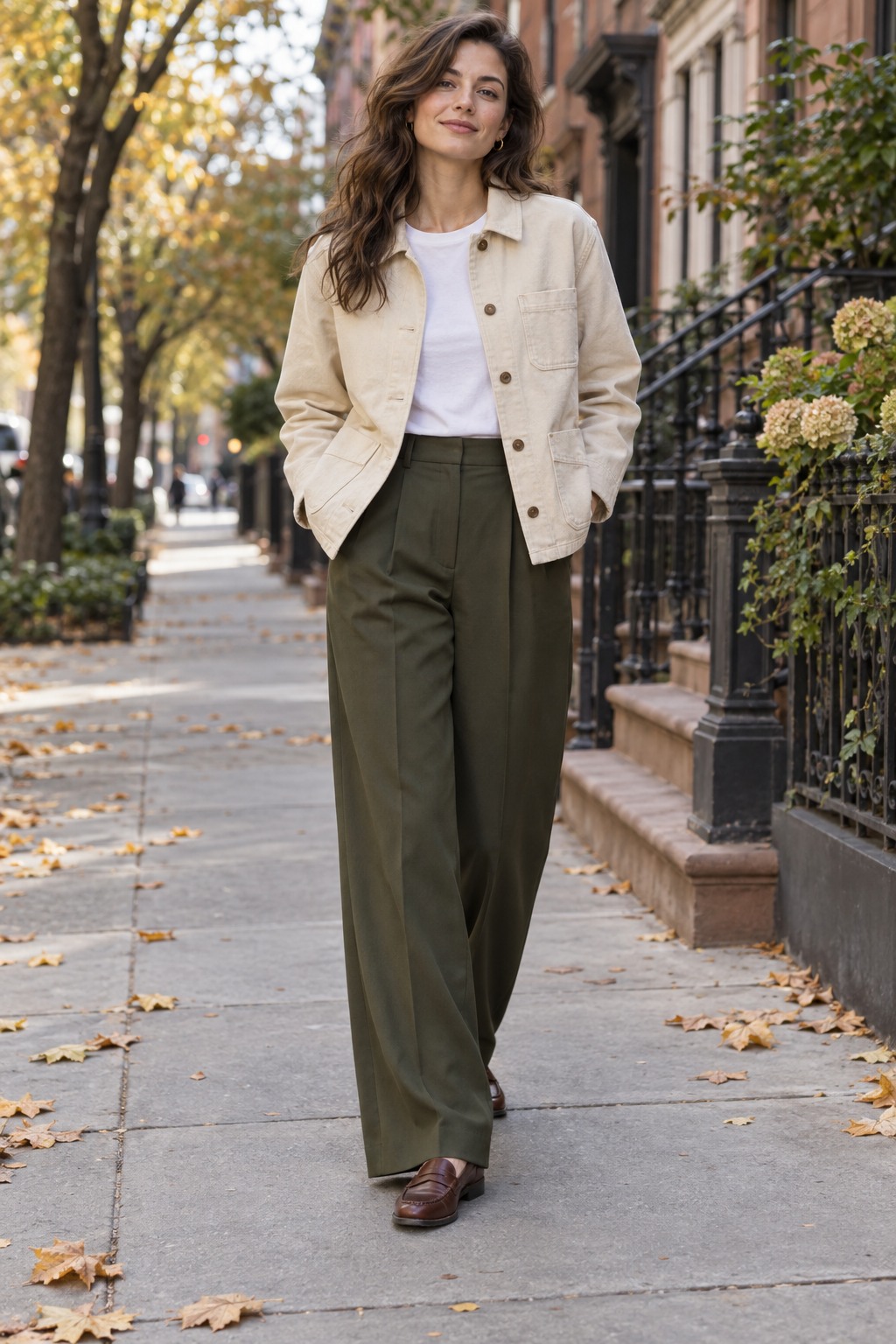
Use a white tee and wide-leg trousers as the base, then add a chore jacket in canvas, twill, or another midweight fabric. Loafers make the outfit feel considered without requiring a heel. The jacket’s pockets are practical, but the main styling benefit is its clear shape: a straight shoulder and easy body balance the movement of a wider trouser leg.
Make sure the jacket hem and trouser rise work together when you sit. If both pieces are long and relaxed, a tucked or half-tucked tee can show where the outfit begins and keep fabric from gathering. On a warm afternoon, remove the jacket and add a belt or simple necklace only if you want a small finish detail. For rain, canvas may not be enough; use a water-resistant outer layer instead.
9. Lightweight moto jacket, mock-neck top, dark jeans, and clean sneakers
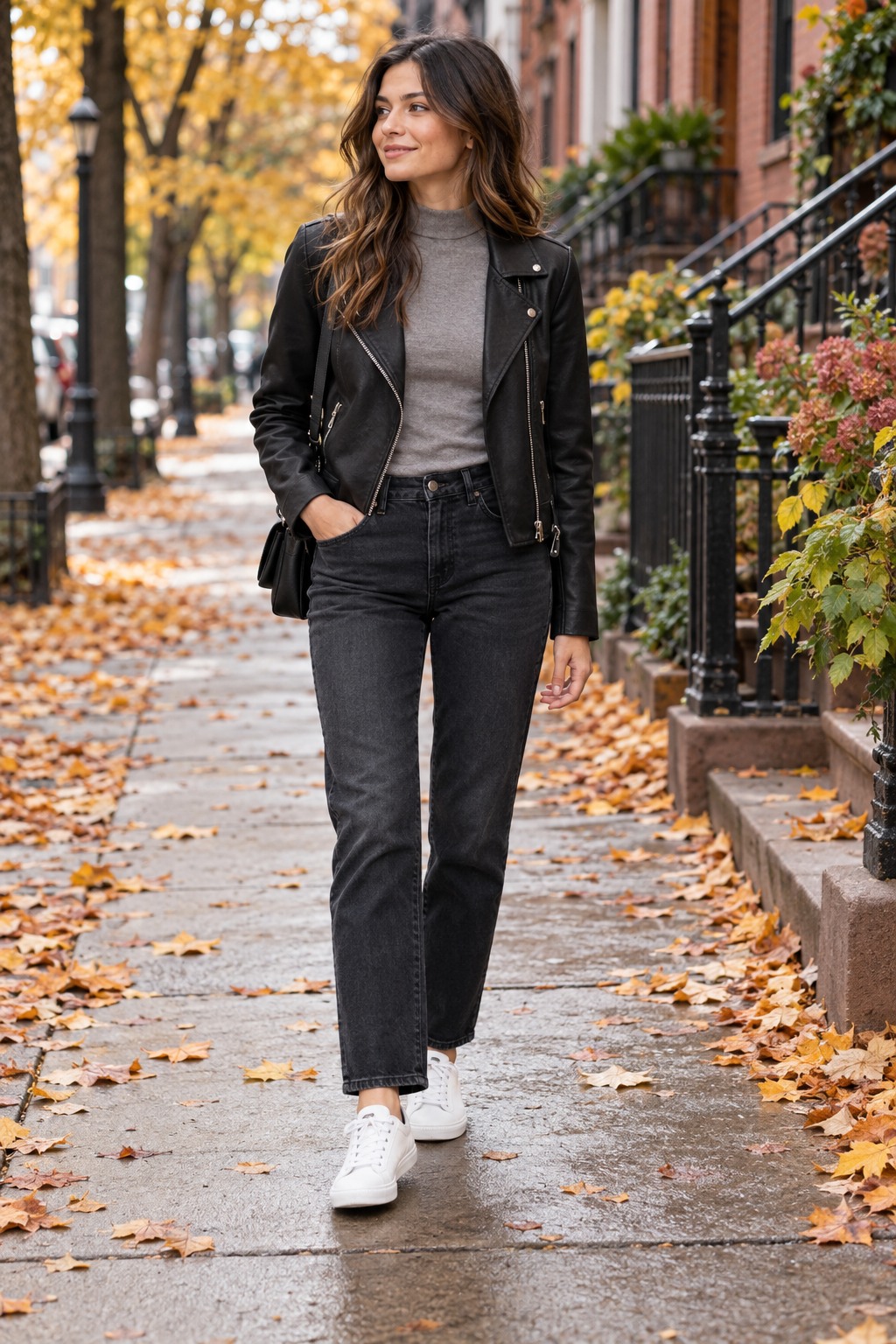
A lightweight moto-style jacket creates a stronger silhouette than a cardigan while remaining easier to remove than a heavy leather coat. Wear it over a smooth mock-neck top with dark jeans and clean sneakers. Keep the other pieces uncomplicated so the jacket remains the focal point. A fabric or lighter-weight faux-leather version can be more comfortable for a broad temperature range than a thick, insulated style.
Check the jacket’s weight and flexibility before building a day around it. Some coated materials feel warm quickly in direct sun, while a soft knit or cotton layer may breathe better. If the jacket has a strong shine or hardware, keep accessories simple. At the upper end of the temperature range, switch to a denim or cotton overshirt to keep the same casual mood with less insulation.
10. Water-resistant shell, merino top, cropped trousers, and weather-ready shoes
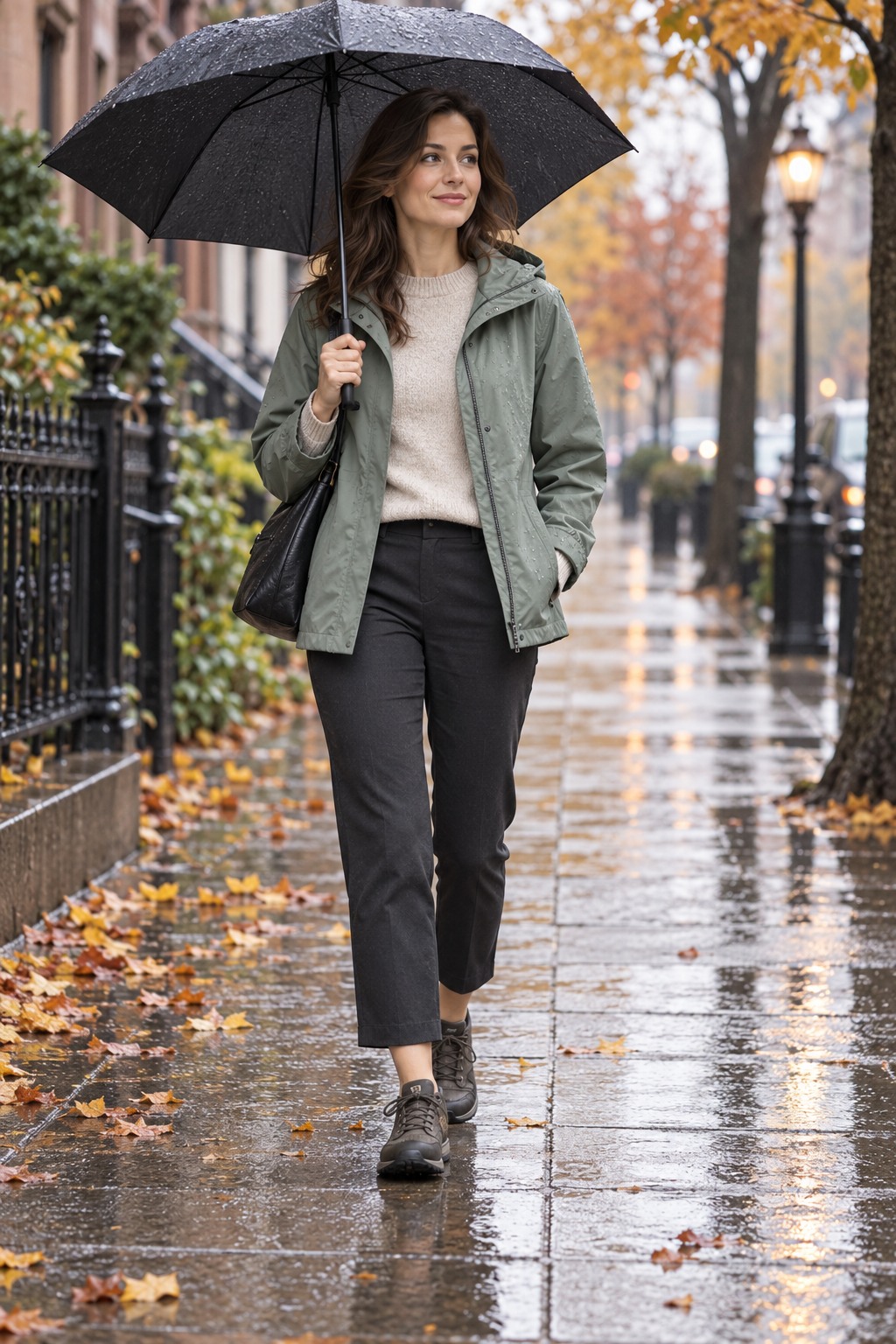
When the day is mild but wet, prioritize a light water-resistant shell over a heavier fashion coat. A fine knit or long-sleeve top, cropped trousers, and closed-toe shoes create a simple base that is less likely to drag through puddles. This outfit is about keeping the weather layer functional and the indoor layer comfortable, rather than relying on an umbrella alone.
Water resistance is not the same as waterproof construction, and performance varies by garment and condition. Check the manufacturer’s care and weather guidance for a specific jacket. Choose a trouser hem that clears wet ground and footwear with enough grip for the route. If the rain stops and the temperature rises, open or remove the shell; a breathable base helps prevent the outfit from feeling too warm indoors.
11. Fine sweater vest over an oxford shirt, jeans, and loafers
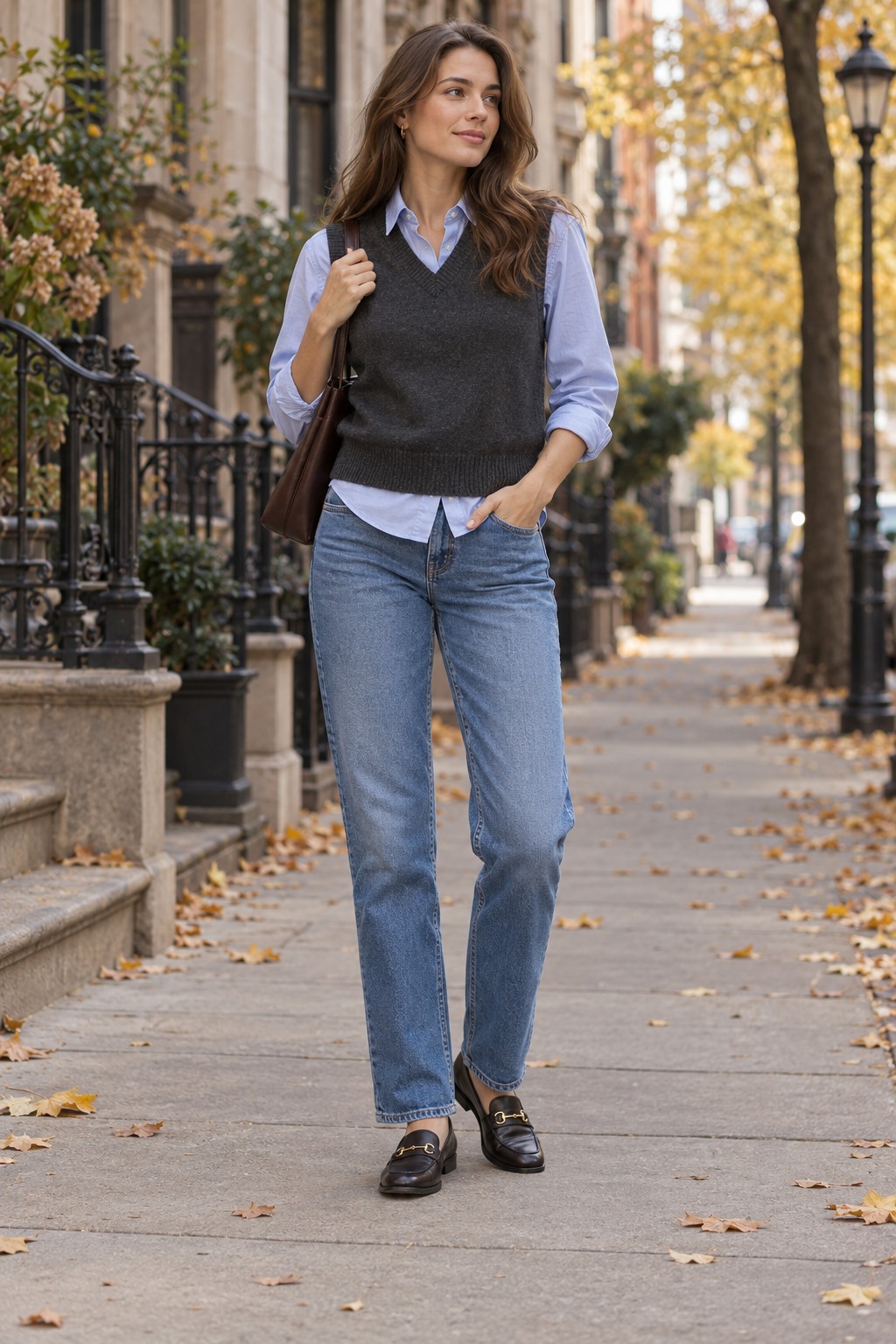
A fine sweater vest over an oxford shirt gives a classic layered look without the arm bulk of a cardigan. Wear it with straight jeans and loafers for a casual office or daytime plan. The shirt keeps the outfit crisp, while the vest adds warmth through the torso. Choose a vest that lies flat over the shirt and does not pull at the armholes when you reach.
If the shirt is long, tuck it fully or use a controlled half-tuck so the layers look deliberate. At 50°F, add a light coat outdoors; at 70°F, the shirt alone may be comfortable. This formula can read preppy, so soften it with a relaxed jean or a less formal shoe if that better fits your style. A simple crew-neck knit can replace the vest for a less layered look.
12. Corduroy trousers, simple tee, and an open overshirt
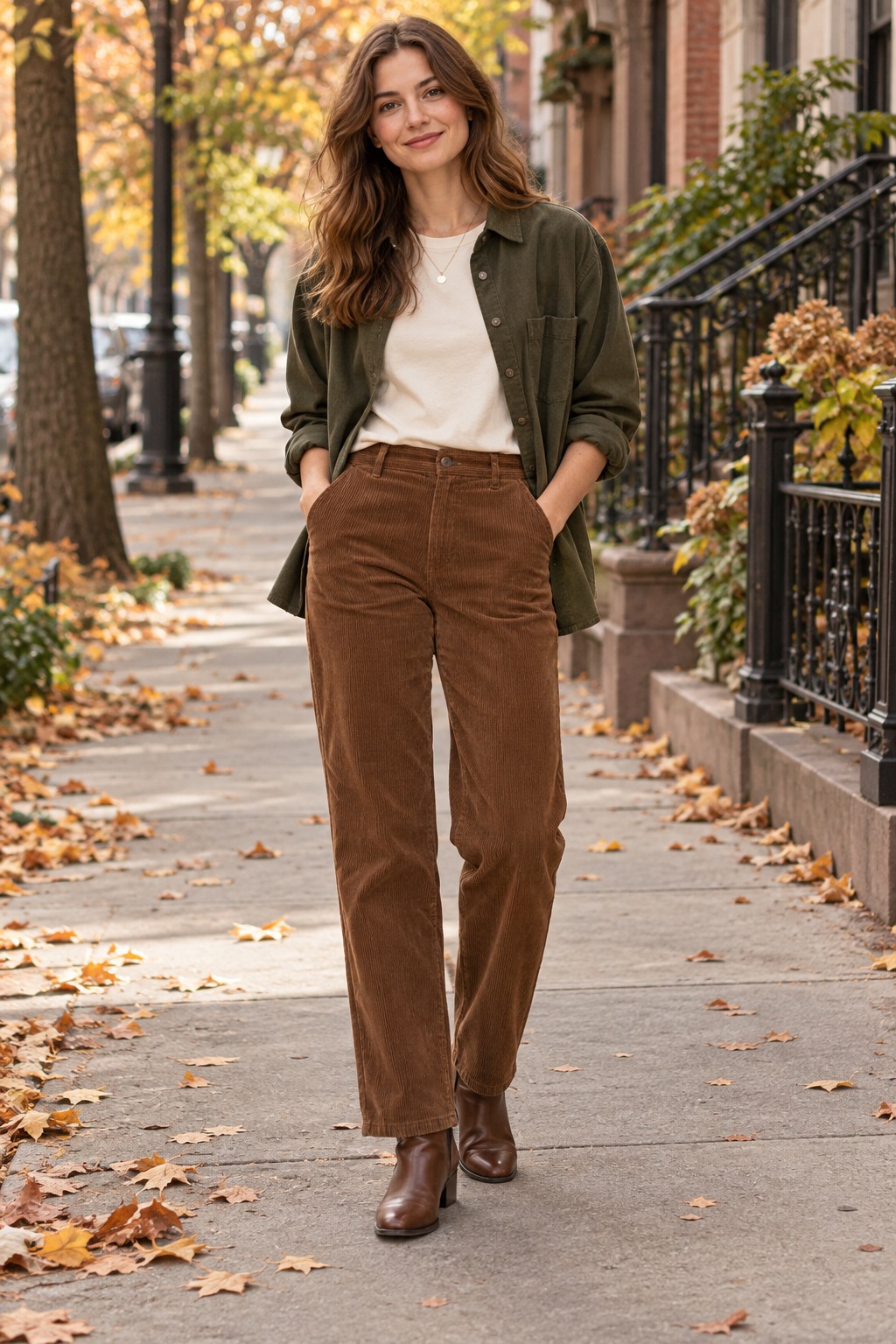
Corduroy trousers add texture, so keep the base simple: a solid tee, an open overshirt, and a comfortable boot or sneaker. The overshirt is easy to remove when you step into a warm room and easy to button when a breeze picks up. Choose a lighter wale or softer fabric if you find traditional corduroy too warm for the upper end of the range.
Because corduroy has visible texture, color and fit can change the outfit’s formality. A neutral pair with a straight leg can work with a neat knit or shirt; a looser pair feels more casual. Check how the fabric behaves at the knees and seat when you sit. A smoother trouser can substitute if you want the same palette without the heavier texture.
13. Lightweight sweater, pleated trousers, and a short jacket
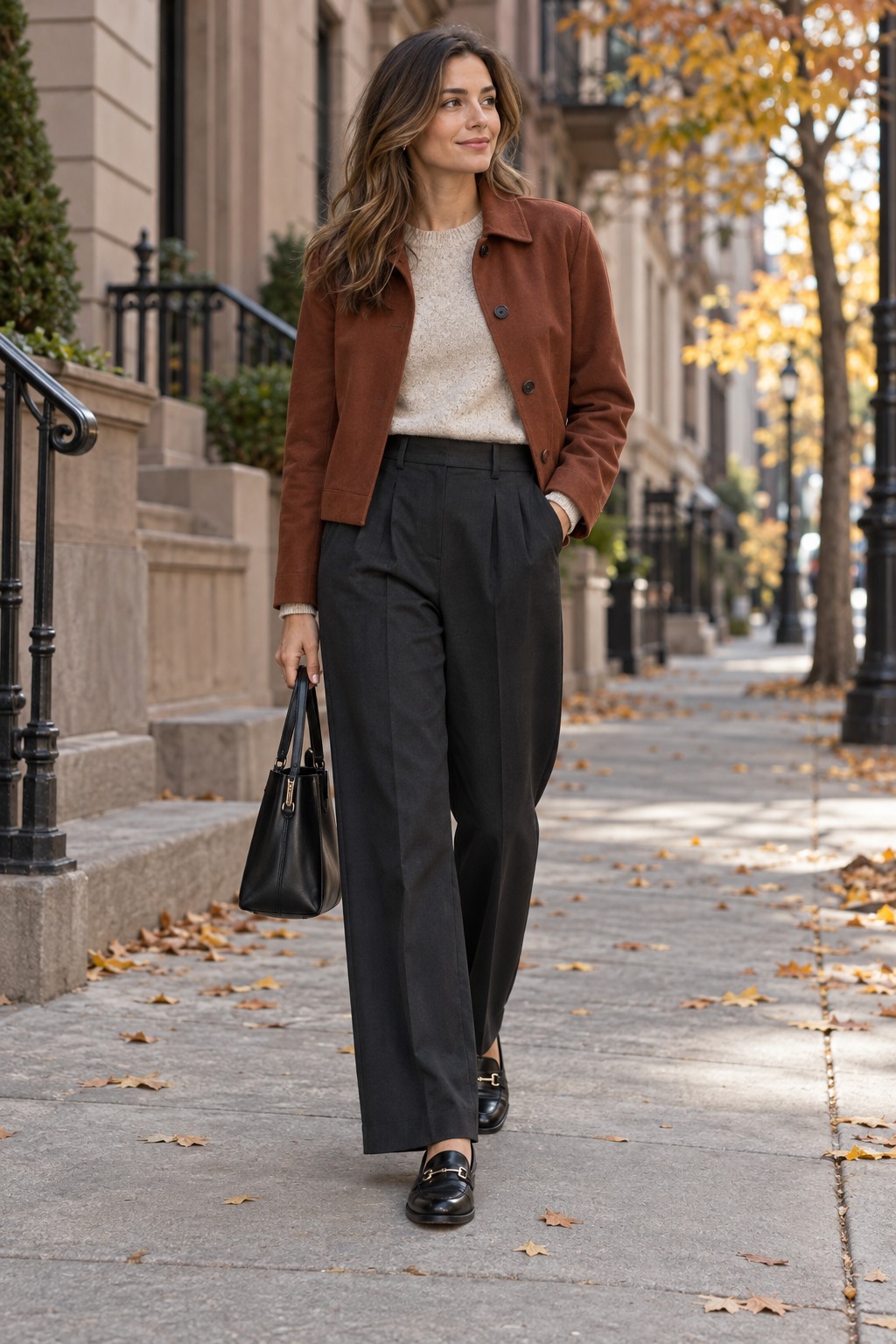
For a polished but easy silhouette, pair a lightweight sweater with pleated trousers and a short jacket. The jacket ends near the waist or high hip, which can keep the outfit from feeling weighed down when the trousers have extra volume. A low-profile shoe—loafers, a flat, or a clean sneaker—keeps the look grounded for everyday wear.
Try the combination seated and standing: pleats should open naturally rather than strain, and the jacket should not ride up when you reach. If the morning is chilly, add a thin undershirt or carry a scarf that can be removed indoors. At the warm end, wear the sweater without the jacket. Choose a trouser fabric that suits your climate; heavier wool blends may be too warm for a sunny afternoon.
14. Long-sleeve tee, sleeveless midi dress, and a light cardigan
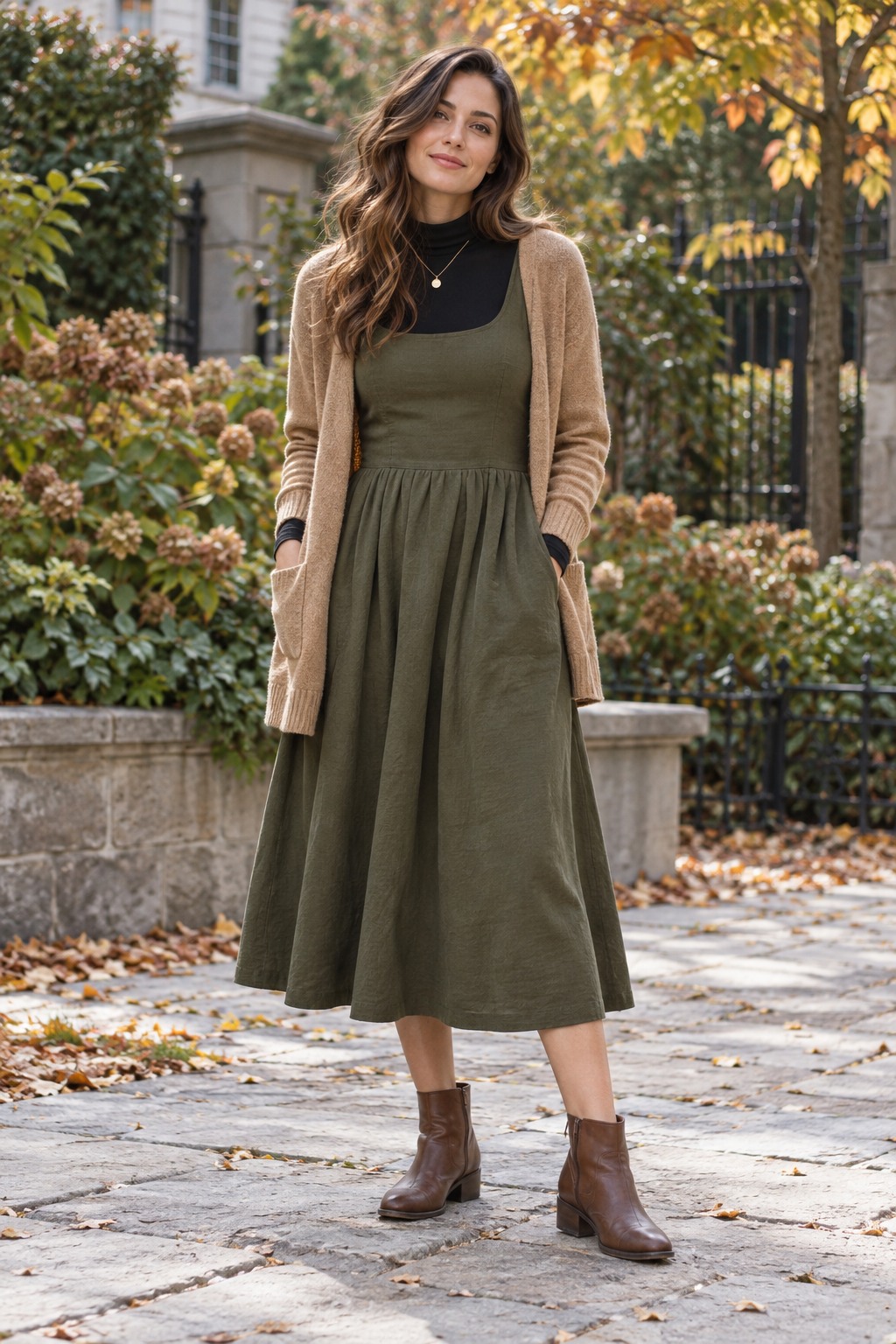
A sleeveless midi dress can move into fall with a fitted long-sleeve layer underneath and a light cardigan over it. This gives you two adjustments: remove the cardigan if the day warms, or keep the underlayer for coverage and warmth. Pick a smooth top that does not bunch at the armholes, and consider a dress fabric that is comfortable over a long-sleeve base.
Try the layers together before wearing them out, especially if the dress has a close armhole or a slippery lining. A thin knit underneath can feel easier than a crisp shirt. If the cardigan makes the outfit too soft for your taste, switch to a cropped jacket. Opaque tights and ankle boots are optional additions for colder mornings, not automatic requirements at every temperature in the range.
15. Hooded sweatshirt, tailored coat, straight jeans, and sturdy sneakers
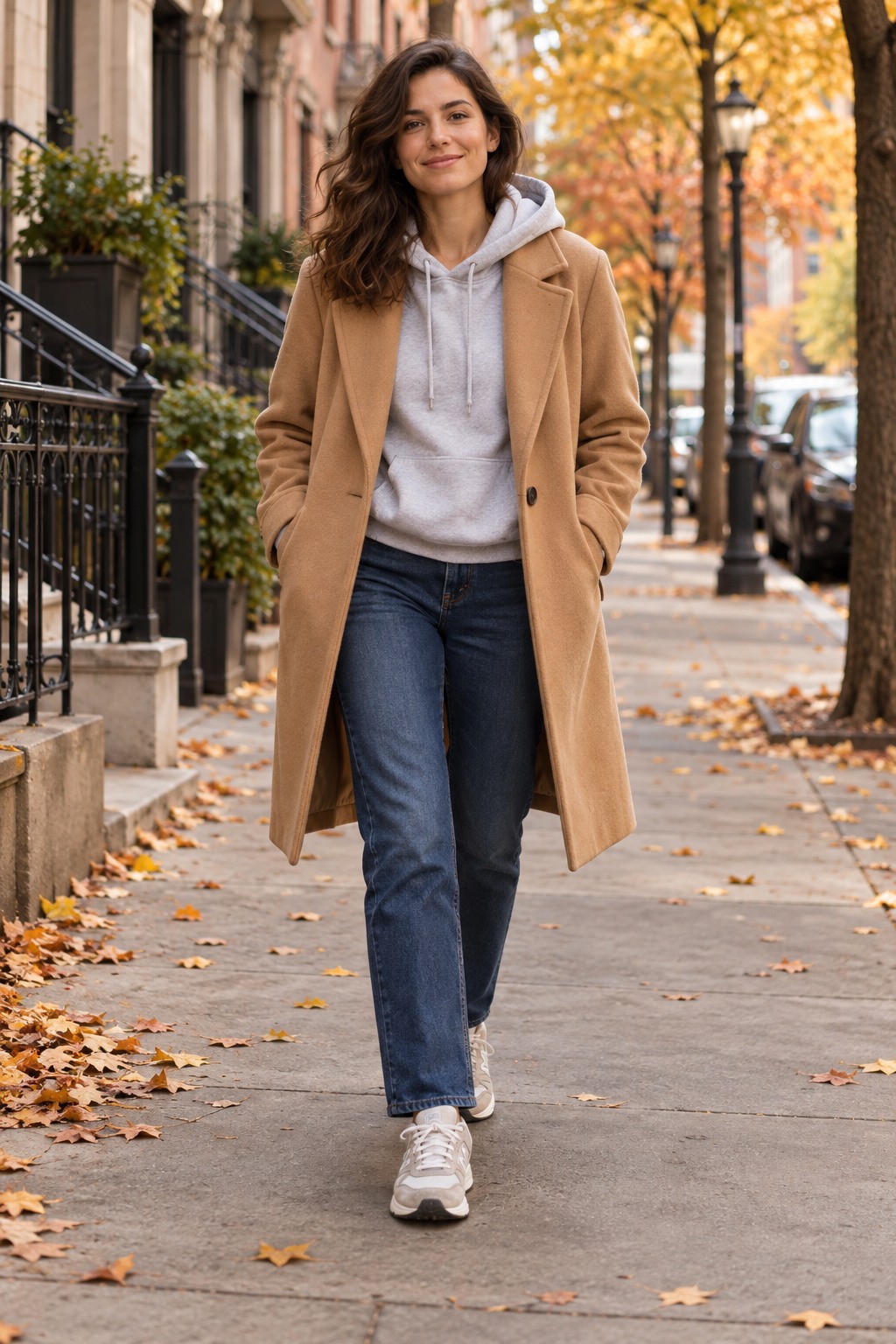
For an off-duty day, layer a lightweight hooded sweatshirt under a relaxed tailored coat, then add straight jeans and sturdy sneakers. The coat sharpens the base while the hoodie brings soft warmth on a cool morning. Keep both layers light enough that the hood and shoulders do not feel crowded. A simple neutral sweatshirt makes the outfit easy to repeat with different jeans or shoes.
This works best with a coat that has room through the upper back and sleeves. If the hoodie bunches or pulls, choose a thinner sweatshirt or replace the coat with an overshirt. At 70°F, you may need only the sweatshirt; at 50°F with wind, a warmer coat may be more comfortable. Use this as a flexible weekend formula rather than a universal layering rule.
A quick way to build your own 50-to-70-degree outfit
Start with the activity and the coldest outdoor moment. A long walk needs secure shoes and layers that move; a mostly indoor workday may call for a light blazer or cardigan that fits over the base. Next, choose one piece that controls warmth—a knit, vest, overshirt, or jacket—and make sure it is comfortable both open and closed. Finally, check the forecast for wind and rain, which can matter more than a small change in the temperature number.
- For 50–55°F: consider a warmer base or a closable outer layer, especially in shade or wind.
- For 56–63°F: a light knit plus a removable jacket is often a flexible starting point.
- For 64–70°F: try a shirt, tee, or fine knit with one light layer to carry or leave open.
These ranges are shorthand, not medical or climate guidance. Sun exposure, humidity, wind, pace, and personal comfort can change what feels right. When in doubt, use a layer you can remove without needing to change the entire outfit.
Common questions about fall outfits for 50-to-70-degree weather
Is 60°F cold enough for a coat?
It depends on wind, sun, activity, and personal comfort. A light jacket or cardigan may be enough for a short walk on a sunny day, while a wind-blocking layer can feel useful in shade or during a long wait outside. Choose the layer based on the coldest part of the day and whether you can carry it later.
Can I wear a skirt or dress in this temperature range?
Yes. A dress or skirt can work with a removable cardigan or jacket. Tights, socks, and boots are options for cooler conditions, but they are not mandatory. Consider how much time you will spend outside, whether the fabric moves comfortably, and if the hem is practical for your route and weather.
What shoes work best for transitional fall weather?
There is no single best shoe. Loafers, flats, sneakers, and ankle boots can all suit a mild day. Match the shoe to the walking distance, surface, rain, and dress code. Prioritize a secure fit and enough traction for the conditions; a delicate sole may be uncomfortable on a wet or uneven commute.
How can I avoid overheating when the afternoon is warmer?
Use a lighter base and one removable outer layer instead of wearing multiple heavy pieces. Fine knits, long-sleeve tees, and unlined jackets are easier to adjust than thick sweaters. If you tend to feel warm, pick breathable layers and plan where the outer layer will go once removed.
Make the formula work with what you own
You do not need 15 new outfits to use these ideas. Choose a base you already reach for, then add one layer that solves a real problem—morning chill, wind, indoor air conditioning, or a dress-code shift. Repeat the same jeans, shoes, or knit across several combinations, and change only the piece that changes the outfit’s warmth or purpose. That is what makes transitional dressing useful: fewer difficult decisions, a more comfortable day, and clothes that can move with the forecast.
Keep these outfit ideas handy.
Save this guide on Pinterest (opens in a new tab)