
Teacher-Friendly Shoes: Comfortable Options That Still Look Polished
Teacher-friendly shoes are shoes that can handle classroom life without looking out of place in a professional school setting. They should help you get through standing, walking, moving, and changing pace during the day while still fitting the way teachers are expected to look.
The best pair is not always the most stylish pair, and it is not always the softest pair either. The point is to find shoes that work with your school day, your dress code, your climate, and the outfit formulas you actually wear.
What makes a shoe teacher-friendly?
A teacher-friendly shoe does a few jobs at once. It should feel workable for a full day, fit the tone of your school, and support repeated wear without becoming awkward to style.
A useful teacher shoe usually has some combination of these qualities:
- it stays comfortable enough for long stretches of standing or walking
- it feels stable enough for classroom movement and routine tasks
- it looks polished enough for your school environment
- it fits the season and weather where you teach
- it works with more than one outfit formula
- it does not need constant adjustment during the day
That does not mean every teacher needs the same kind of shoe. A kindergarten classroom, a high-school campus, a private school, and a casual district can all call for slightly different choices. The right shoe is the one that matches the reality of your day.
Shoe roles a teacher capsule wardrobe may need
Instead of searching for one perfect pair, it helps to think in roles. Most teacher wardrobes work better when shoes are chosen by job, not by trend.
| Shoe role | What it does | When it helps |
|---|---|---|
| Everyday classroom shoe | Handles the bulk of normal school days | When you want one reliable pair you can reach for often |
| Polished meeting shoe | Reads a little sharper for parent meetings or more formal days | When the outfit needs to look more finished |
| Movement-heavy day shoe | Supports a day with more walking, more transitions, or more standing | When the schedule is especially active |
| Weather or season shoe | Helps you adapt to cold, rain, heat, or commute conditions | When climate affects what is practical |
| Backup shoe | Gives you another option when one pair is resting, wet, or not the right fit for the day | When you want a second choice that still works |
A beginner-friendly shoe setup does not need every role at once. A simple starting point is three to five roles, with the exact number shaped by your dress code, weather, and how often you repeat outfits.
Comfort and style factors to compare
Teacher-friendly shoes are easiest to choose when you compare comfort and style at the same time instead of treating them as separate questions.
Comfort factors to think about:
- toe room: enough space so the front of the shoe does not feel cramped
- heel height: low enough for you to move through the day the way you want to move
- sole grip: a sole that feels steady on the surfaces you walk on
- weight: a shoe that does not feel unnecessarily heavy for a long day
- break-in time: a shoe that becomes usable without a long or frustrating adjustment period
- closure and fit: a design that stays on your foot without constant re-tightening or slipping
- structure: enough support or shape to feel dependable in regular use
Style factors to think about:
- silhouette: does it read polished, casual, or somewhere in between?
- toe shape: does the shape fit the tone of your wardrobe?
- finish: does it look simple, refined, sporty, or dressy?
- color: will it work with your usual teacher outfits?
- overall profile: does the shoe look balanced with skirts, trousers, dresses, or jeans if your school allows them?
You do not need to chase every feature at once. The goal is to choose a shoe that feels steady and looks like it belongs in the outfits you already wear.
Shoe categories teachers may consider
Different shoe categories can fill different roles in a teacher wardrobe. What matters most is whether the category matches your school and your day-to-day routine.
Flats
Flats can work well when you want a simple, polished everyday option. They may suit teachers who want a cleaner look without a heel.
Good for:
- everyday classroom wear
- meeting days when the dress code leans polished
- outfits that need a simple finishing touch
Loafers
Loafers often sit in a useful middle ground between professional and practical. They can read structured without feeling overly formal.
Good for:
- school days that need a polished but comfortable look
- outfits built from trousers, straight-leg bottoms, or simple dresses
- teachers who want a shoe that feels more finished than a casual flat
Sneakers where allowed
Some schools allow sneakers, at least on certain days. In those settings, sneakers can cover movement-heavy or long-walk days.
Good for:
- active school days
- commute-heavy routines
- outfits that need a more casual, practical shoe choice
If sneakers are allowed in your school, the question is not just whether they are comfortable. It is whether they still fit the tone of your dress code and the outfits you wear most often.
Low boots
Low boots can help when weather starts to matter more. They may be useful in colder or wetter seasons, or when you want a shoe that gives a little more coverage.
Good for:
- cooler months
- rainy or changeable weather
- outfits that need a bit more visual weight
Clogs or mules where appropriate
Clogs or mules can be practical in some teacher wardrobes, especially when the school environment and the dress code support them. They can offer an easy slip-on option.
Good for:
- days when ease of wear matters a lot
- outfits that benefit from a simple, structured shoe shape
- climates or schools where this style feels acceptable
Low heels if comfortable
A low heel can work if it feels stable and fits your real routine. The key is not the heel itself, but whether the shoe can still support your day.
Good for:
- meeting days
- more formal school environments
- outfits that need a slightly sharper finish
How to choose shoes for your school day
The best teacher shoes are shaped by the school day you actually live, not by a generic idea of what teachers should wear.
Start with dress code
First, check the dress code or the unspoken style norm at your school. Some schools are more relaxed. Others expect a clearly polished look. Some allow sneakers on certain days, and some do not.
Your shoe choice should work with those expectations instead of fighting them.
Then think about season and weather
Weather can change what counts as practical.
- warm weather may call for breathable, lighter-feeling options
- cold weather may call for more coverage
- wet weather may make traction and coverage more important
- transitional seasons may favor shoes that work across changing conditions
If one shoe only works in a narrow weather window, it may still be useful, but it should probably fill a seasonal role instead of pretending to be your all-purpose pair.
Then decide which role you are filling
The easiest way to shop or choose is to ask what job the shoe is supposed to do.
- Is this your everyday classroom shoe?
- Is this the polished shoe for meetings or presentation days?
- Is this the movement-heavy shoe?
- Is this the weather shoe?
- Is this the backup pair?
That question keeps you from buying a pair that looks good in theory but does not solve a real need.
How shoes support teacher outfit formulas
Shoes are part of the formula, not an afterthought. A teacher outfit formula only works if the shoe supports the pace and tone of the whole outfit.
For example, the same outfit structure can feel very different depending on the shoe role:
- a simple top-and-bottom formula can look more polished with a loafer or low heel
- the same formula can feel more movement-ready with an allowed sneaker
- a dress formula can feel more practical with a low boot in the right season
- a trousers-and-layer formula can shift from casual to polished depending on the shoe finish
If you want to see how shoes fit into the bigger wardrobe picture, Teacher Capsule Wardrobe: Comfortable, Professional, Repeatable shows the broader wardrobe structure, while Teacher Outfit Formulas: Easy Classroom Looks for Real School Days shows how repeatable looks are built from it. Capsule Wardrobe Staples: The Pieces That Make the System Work is useful if you want to see how shoes sit inside the full staple mix, and Weekly Outfit Planner for Busy Women can help you plan which shoe role you will wear on which day.
What to avoid in teacher shoes
Some shoes are a poor fit for teacher life, even if they look nice in a photo.
Look twice at shoes that:
- require so much adjustment that they distract you during the day
- feel too casual for your school setting when you need polish
- feel too formal or too fragile for regular classroom movement
- only work with one outfit and nothing else in your wardrobe
- ignore the season or weather you actually face
- seem appealing for inspiration but do not match your daily routine
- look like they belong to a different dress code than the one you live in
The point is not to reject style. The point is to avoid shoes that look good in theory but do not solve the actual classroom problem.
Beginner-friendly shoe role framework
If you are starting from scratch, do not try to solve every shoe scenario at once. Start with roles.
A simple beginner framework might look like this:
- one dependable everyday classroom shoe
- one slightly more polished shoe for meetings or more formal days
- one weather or season shoe if your climate requires it
- one backup pair that still fits your dress code
- one movement-heavy option only if your routine really needs it
That is a framework, not a rule. A teacher with a relaxed dress code and mild weather may need fewer roles. A teacher who walks a lot, stands most of the day, or works in a more formal environment may need more.
If you are also deciding what else belongs in the wardrobe, Capsule Wardrobe Staples: The Pieces That Make the System Work can help you think about the rest of the closet in role-based terms.
FAQ
What are teacher-friendly shoes?
Teacher-friendly shoes are shoes that fit classroom life. They are practical enough for standing, walking, and movement, and polished enough for the expectations of the school setting.
Are sneakers acceptable for teachers?
Sometimes. It depends on the school dress code and the culture of the building. If sneakers are allowed, the question becomes whether they still feel polished enough for the setting.
How many shoe roles do I need?
There is no universal number. A useful starting point is a small set of roles: an everyday pair, a polished pair, a weather pair, and a backup pair, with movement-heavy shoes added when needed.
What should I look for before buying?
Look at fit, comfort, polish, dress code fit, weather fit, and whether the shoe fills a real role in your wardrobe.
Do teacher shoes have to be neutral?
No. Neutral shoes are often easier to repeat, but a shoe can still be teacher-friendly if its color or finish fits your outfits and your school environment.
Conclusion
Teacher-friendly shoes are not about picking the prettiest pair or the most comfortable pair in isolation. They are about choosing shoes that can move through your school day, fit your dress code, and support the outfit formulas you actually wear.
Start with one role you need most right now. If you want the larger wardrobe context, go back to Teacher Capsule Wardrobe: Comfortable, Professional, Repeatable. If you want to see how shoes support repeatable outfits, move next to Teacher Outfit Formulas: Easy Classroom Looks for Real School Days. If you are still sorting the rest of the closet, Capsule Wardrobe Staples: The Pieces That Make the System Work and Weekly Outfit Planner for Busy Women are the most useful follow-up pages.
Related guide: if you want the wider teacher system around these shoes, read teacher capsule wardrobe next. If you need the day-to-day outfit structure too, teacher outfit formulas and teacher outfit ideas keep the shoes in context.
Keep these outfit ideas handy.
Save this guide on Pinterest (opens in a new tab)More ideas for your wardrobe
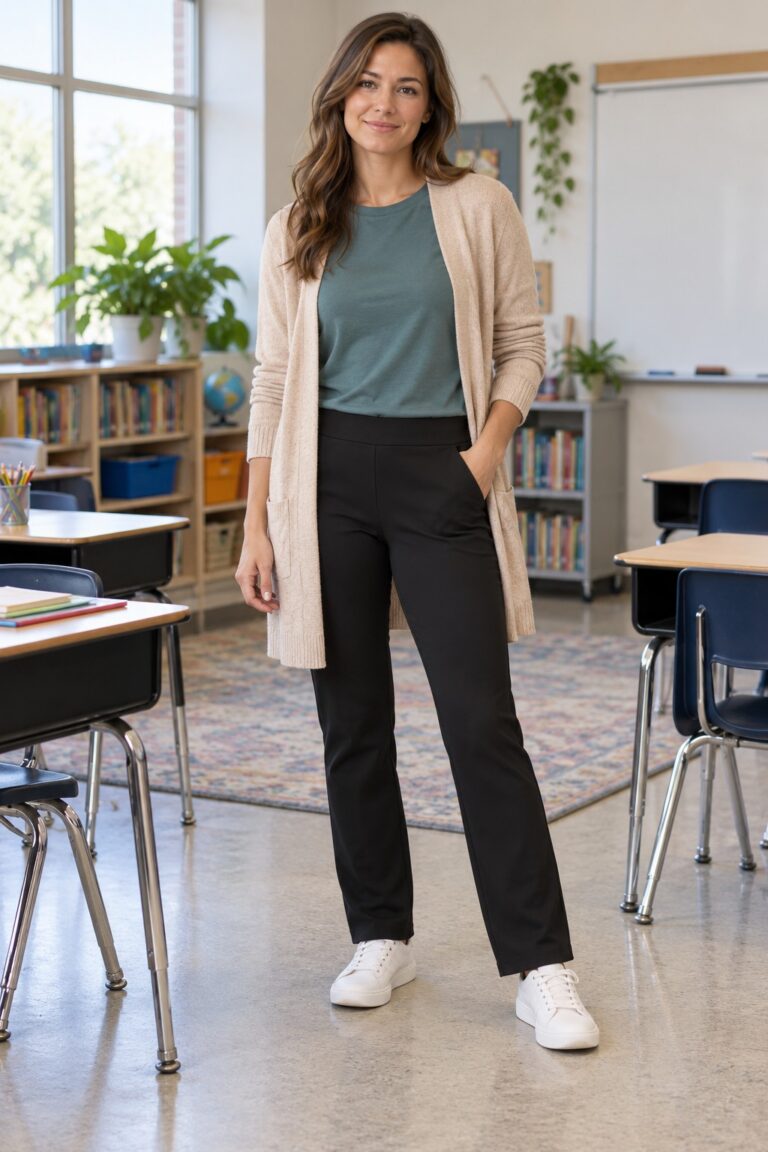 Teacher Outfit Ideas9 Elementary Teacher Outfits for Floor Time and Hallway Duty
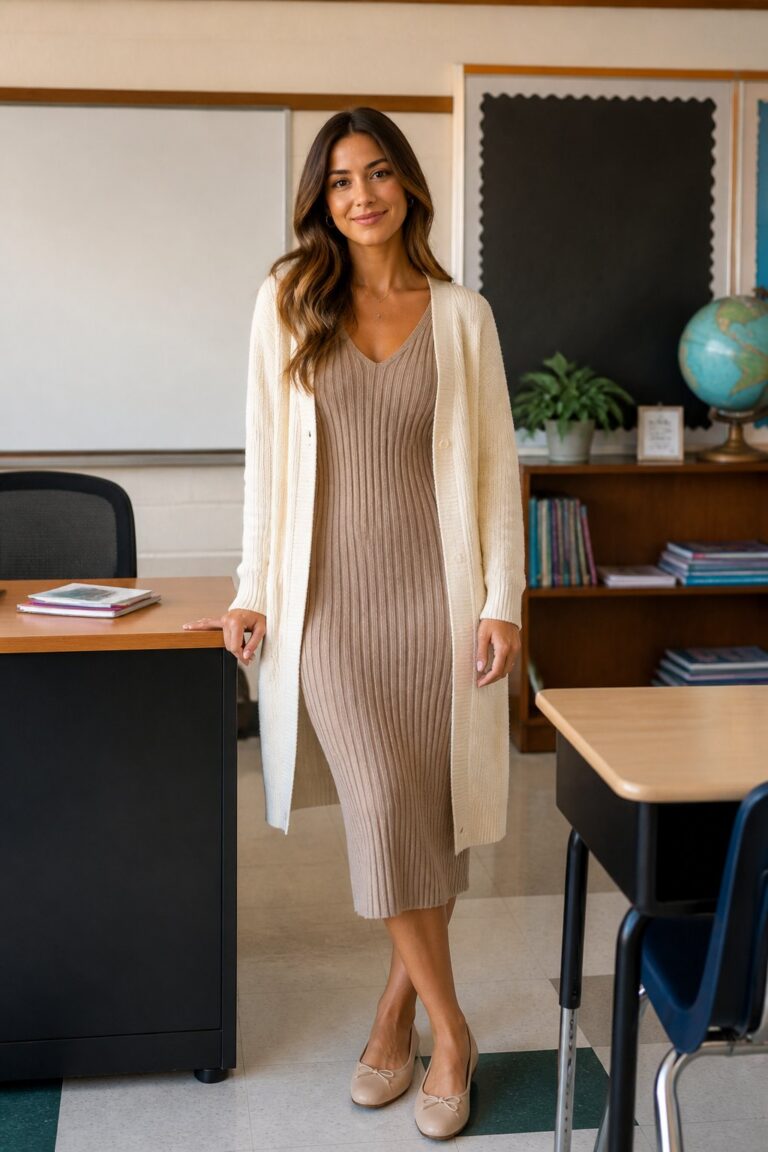 Teacher Outfit IdeasBack-to-school teacher outfits for a fresh first week
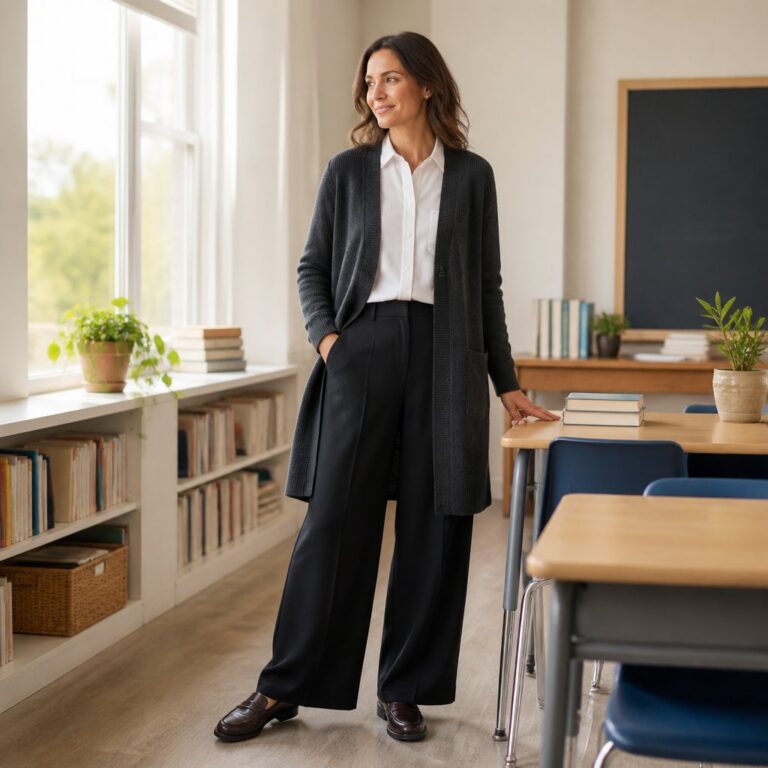 Teacher Outfit IdeasModest Teacher Outfits That Feel Polished, Covered, and Easy to Wear
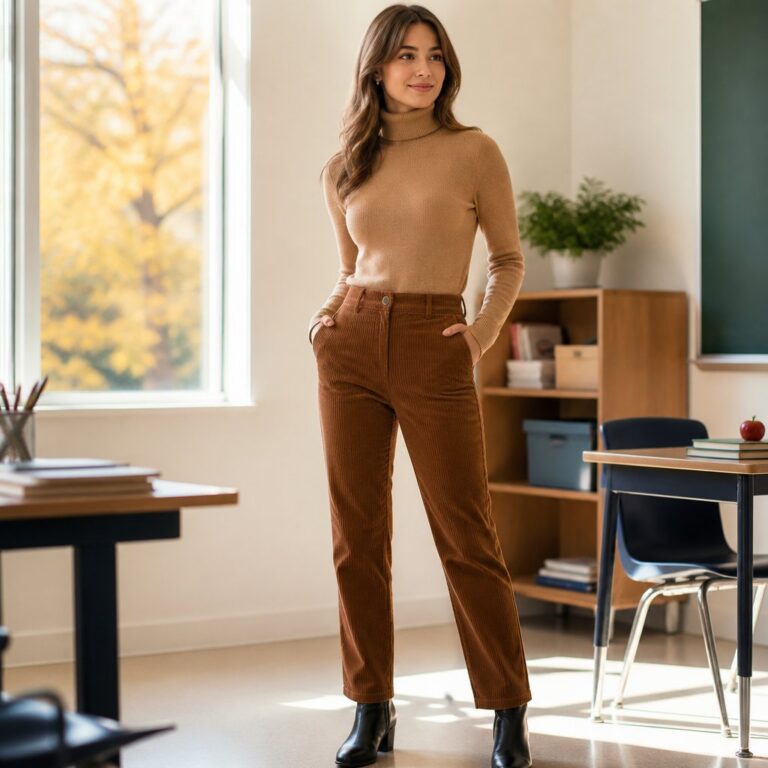 Teacher Outfit IdeasFall Teacher Outfits That Feel Polished, Comfortable, and Classroom-Ready