
7 Leather Jacket Outfits That Still Work When You Take the Jacket Off
A leather jacket can make the first five minutes of an outfit look finished. The more useful question is what happens when you arrive, hang it over a chair, and spend the next three hours indoors. A good combination should still feel like something you meant to wear.
These seven leather jacket outfits start with the base: a top and bottom, or a dress, that already works with the shoes. The jacket adds contrast, shape or a little more coverage. It does not have to rescue an unfinished look. Use a jacket you own, including a leather-look version, rather than shopping for a particular label.
The examples are styling ideas, not weather protection claims. Real leather, coated fabrics and synthetic alternatives have different care needs. Check your garment label and the forecast, then choose separate rain or cold-weather protection if the day requires it.
1. Black biker jacket, striped tee and straight jeans
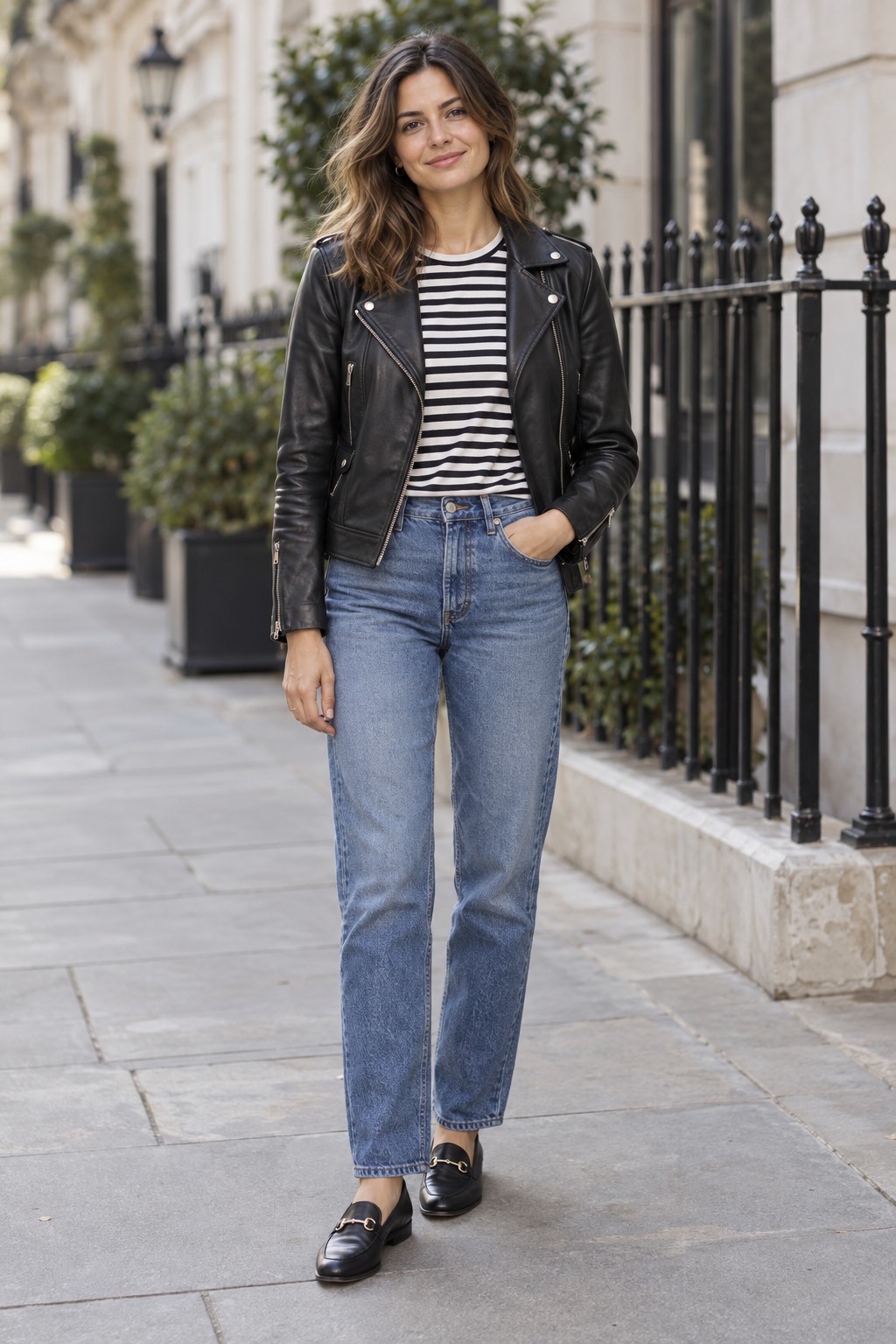
Build the indoor outfit from a striped tee, straight blue jeans and black loafers. The stripe supplies a deliberate pattern even after the jacket comes off, while the shoes repeat its dark color. A plain tee is equally usable; in that version, let the belt or a small bag provide the repeated dark detail if you want one.
Wear the biker jacket open first. Its lapels already create several strong lines, so there is no need to add a scarf or necklace simply to fill the neckline. If the tee bunches above the waistband, try a shorter tee or wear it untucked before assuming that a tight tuck is necessary.
The practical check is the seat of the jeans and the shoulder of the jacket. Sit with the jacket on, reach forward, then repeat without it. A relaxed-looking outfit can still restrict movement. Avoid loading the jacket pockets with everything you own; a phone and keys can change how the front hangs. For an indoor lunch, place the jacket where its hardware will not scrape the chair and enjoy the complete striped base.
2. Brown zip jacket over a navy knit dress
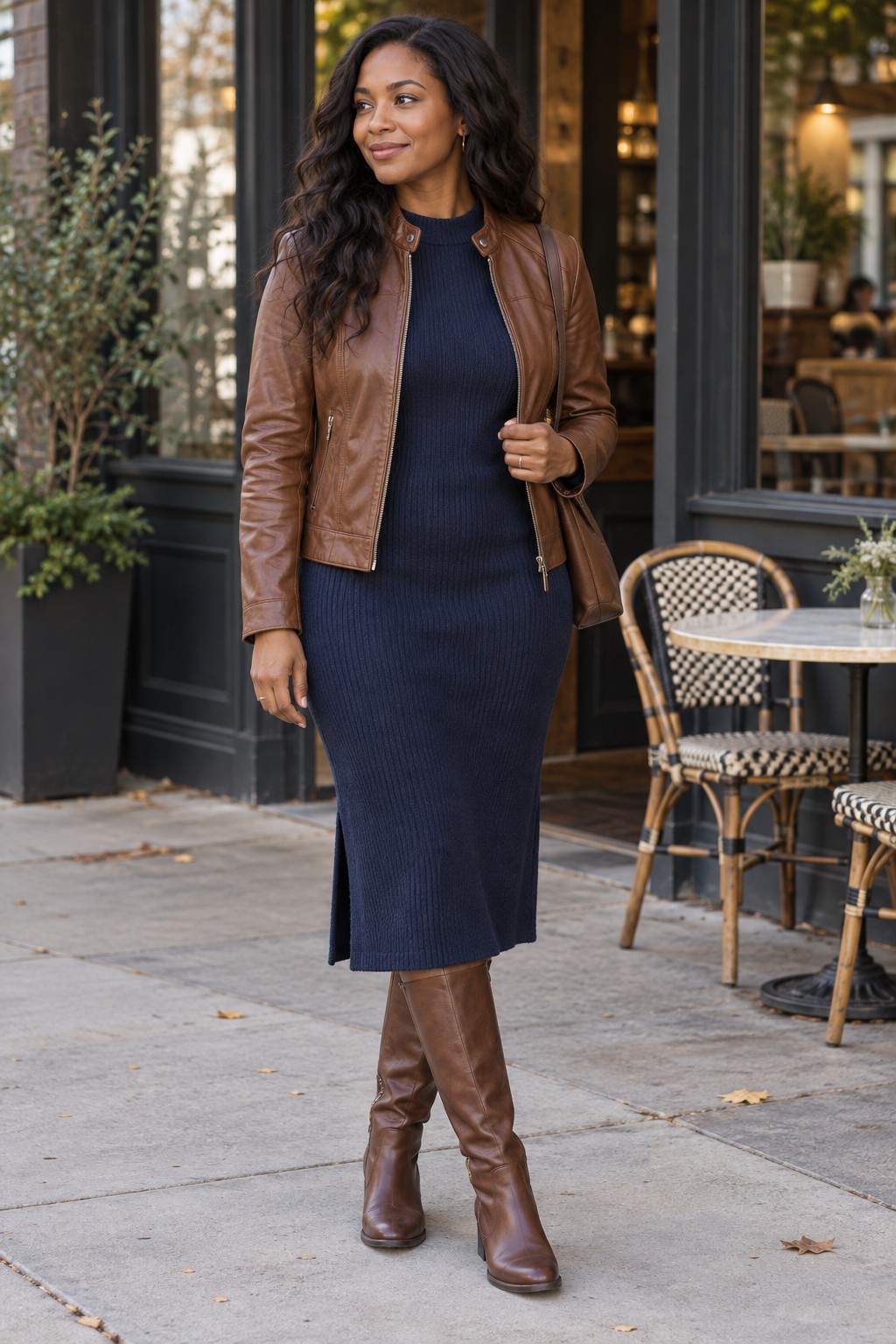
A navy knit midi dress gives a brown zip jacket a quiet backdrop. Flat brown boots bring the warm color down to the shoes without requiring an exact match. If your boots are black, keep them and see whether their darker weight works with the navy before buying a brown pair for one outfit.
Choose the dress for how it behaves by itself. Check whether the neckline feels complete, whether the sleeves sit comfortably and whether the skirt allows your normal stride. The jacket should not be the only thing making you comfortable with the dress. If it is, select a different base or plan a second indoor layer.
A slightly shorter jacket can leave the dress line visible, while a longer one gives a more continuous outer shape. Neither is a rule about height or body type. Compare the two endings in a mirror, then walk rather than judging only a still pose. For a café or casual evening venue, keep the bag simple and accessible. The main relationship is already clear: soft navy knit, brown jacket and practical boots. Add an outdoor coat separately if this combination is not warm enough for the route.
3. Collarless jacket, fine knit and tailored trousers
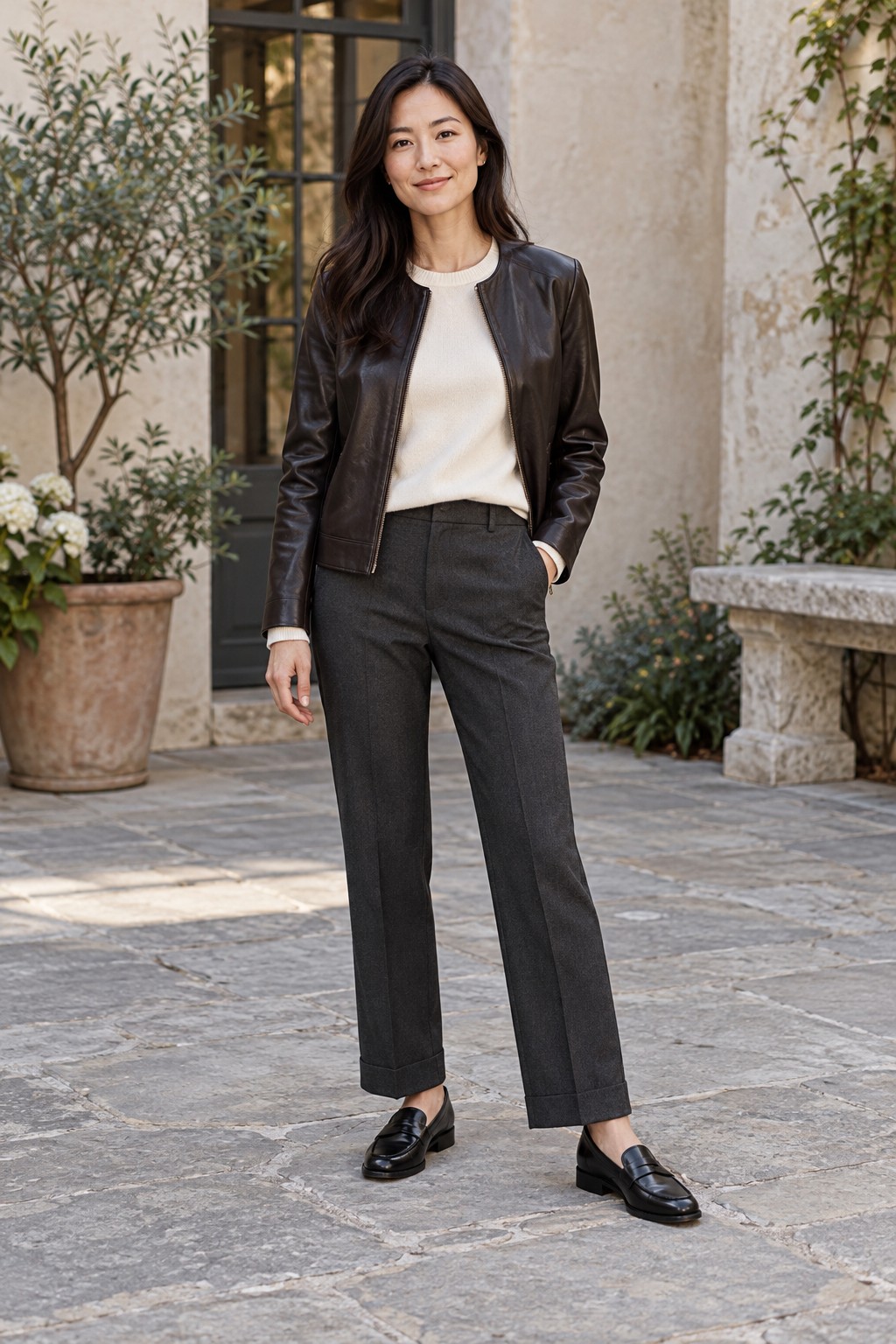
A collarless dark jacket can sit over a fine cream knit and charcoal trousers without competing with a shirt collar. The base has a clear light-to-dark contrast, so it remains composed at a desk or restaurant table. Black loafers keep the outfit grounded; choose a pair you have already worn comfortably for the expected walking.
This is a polished everyday combination, but workplace acceptance depends on the actual dress code. A leather jacket does not automatically replace a blazer in a conservative setting. If you are unsure, use this for a relaxed office day or a non-work plan, and ask about the policy rather than relying on an aesthetic label.
Check the knit underneath the closed jacket. Thin fabric can still gather at the armholes if the two pieces have different sleeve shapes. If the jacket needs to remain open to feel comfortable, make that a conscious styling choice and consider whether the weather allows it. The trousers also need their own hem check with the chosen shoes. Before leaving, remove the jacket and look at the cream knit, trousers and loafers together. If that is an outfit you would willingly wear alone, the outer layer is doing a useful extra job.
4. Burgundy jacket with a pale shirt and dark denim
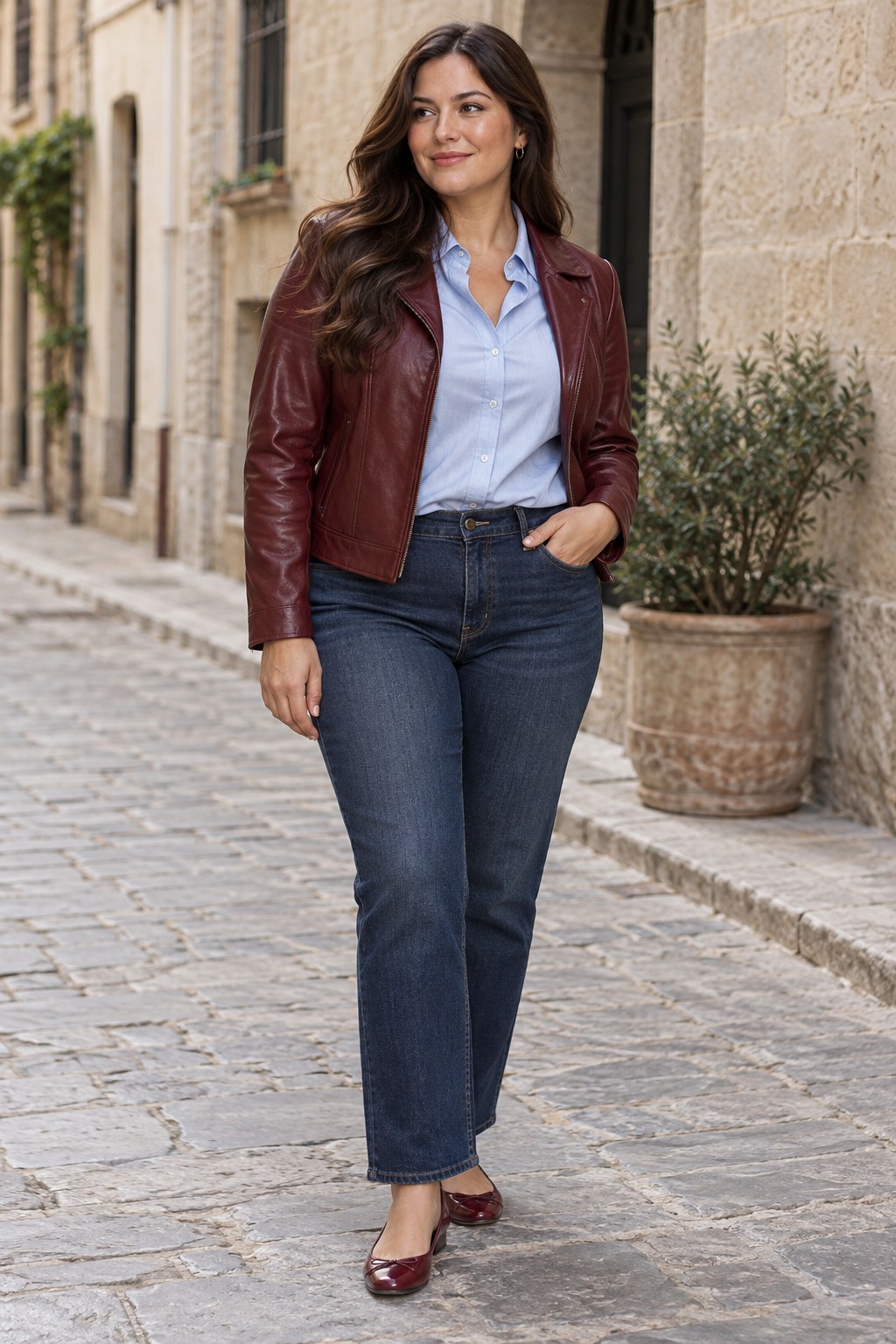
Use a burgundy jacket as the color accent over a pale blue shirt and dark denim. Burgundy flats can echo it, but black shoes work if you prefer a less coordinated result. The pale shirt creates enough contrast that the indoor outfit does not become a block of dark fabric when the jacket is removed.
Decide whether the shirt will be tucked before adding the jacket. A partial tuck may look appealing standing up and then pull unevenly when you sit. An untucked shirt with a clean hem can be simpler, especially if you expect to take the outer layer on and off. There is no requirement to expose the waistband.
Pay attention to cuffs. If the shirt sleeve extends below the jacket, make the amount comfortable and reasonably consistent rather than repeatedly pushing both sleeves back. Try bending your elbows and washing your hands in the full combination. For a day with indoor stops, choose a shirt you are happy to reveal, not one reserved for hidden layering. The useful styling lesson is portable: one rich jacket color can sit over a lighter everyday base. You can apply it to green, tan or navy without rebuilding the rest of the wardrobe.
5. Relaxed leather blazer with a tee and midi skirt
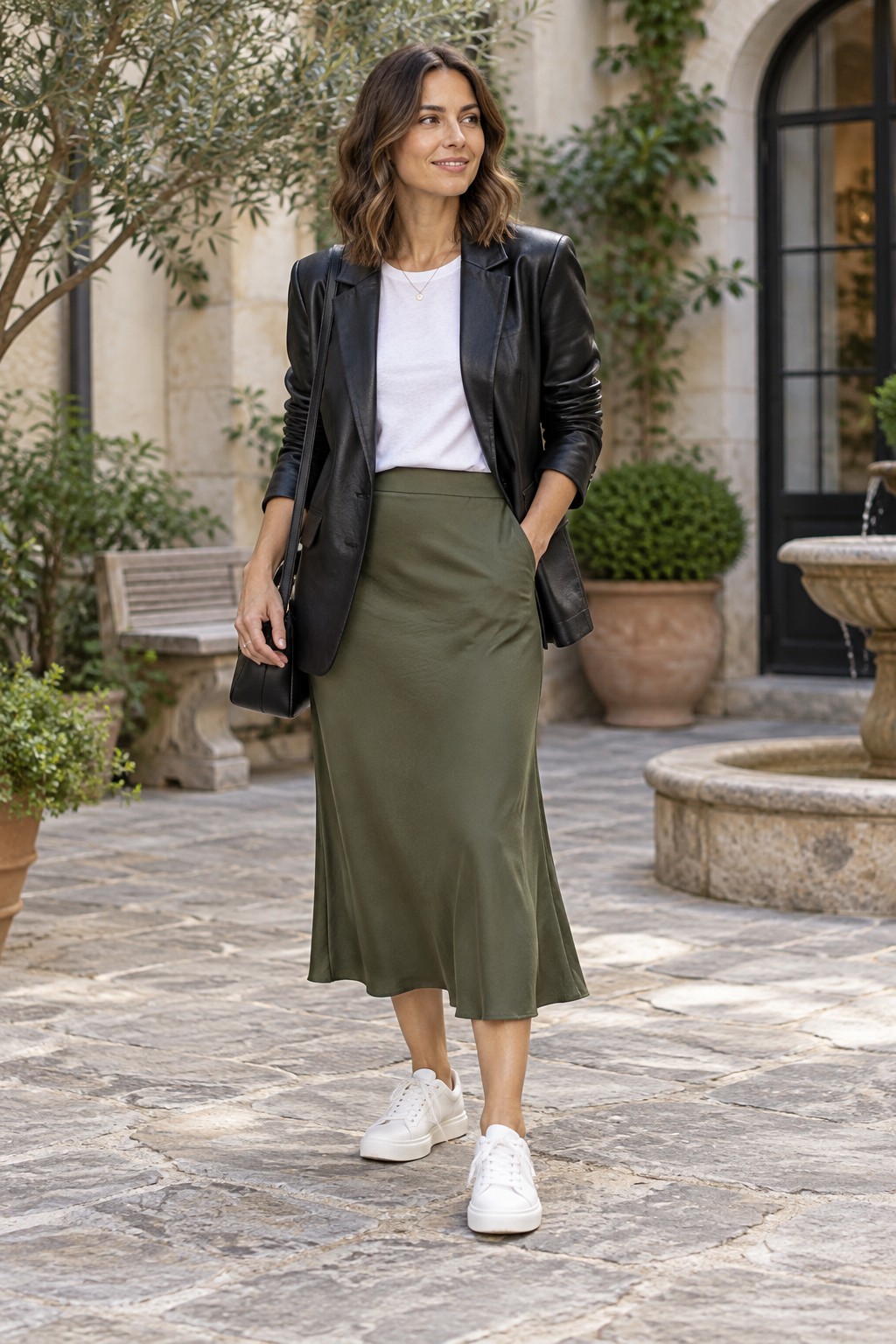
A relaxed leather blazer changes the outline of a white tee and olive midi skirt without making the outfit formal. White sneakers connect with the tee and keep the base casual. Choose the skirt for a full walking stride and seated ease, especially if it is narrow or has a back vent.
The blazer and skirt create two visible lengths. Look at them together with the blazer open, then check the base without it. You might prefer a tee that stops near the waistband, a loose untucked tee or a full tuck. The aim is a combination you like and can move in, not a prescribed ratio between your torso and legs.
Because a leather blazer can be substantial, avoid adding a bulky bag strap under one shoulder and then wondering why the jacket sits unevenly. Test the actual bag over it. If the blazer feels too heavy for the day, the tee-and-skirt outfit should still be ready to leave the house. For an indoor appointment, place the jacket rather than wearing it through a warm room simply to preserve the look. That is the advantage of making the base first: the outfit adapts to the day without becoming a styling project at every stop.
6. Cropped jacket over a small-print dress
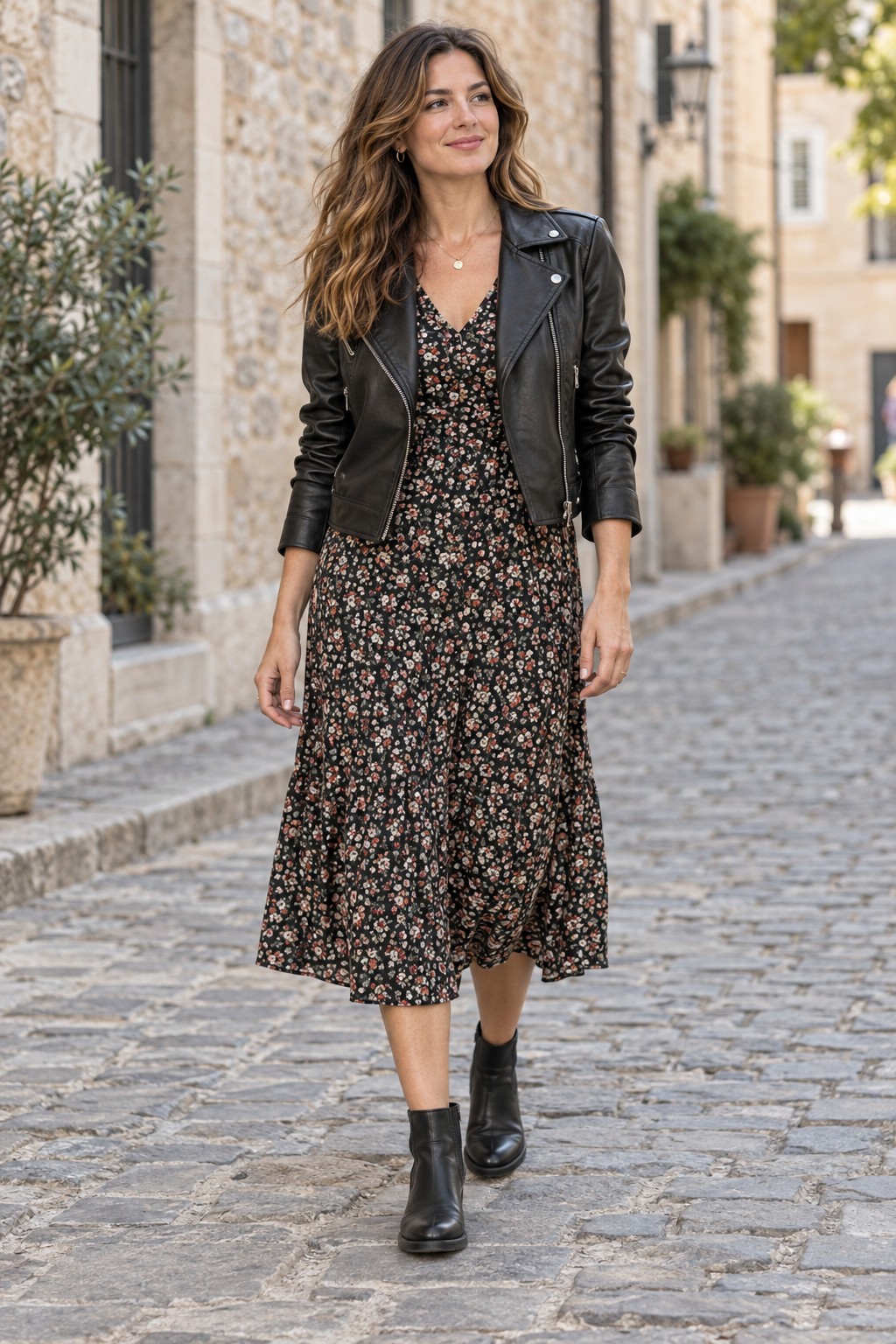
A small-print midi dress can carry the visual interest while a cropped black jacket provides a stronger outer edge. Flat ankle boots keep the combination usable for ordinary plans. The print does not need to include black, although a small dark detail can make the connection feel easy.
Check the dress under indoor light as well as daylight. The jacket should not conceal a neckline, closure or coverage issue that will worry you once it is removed. If the dress needs a slip or another underlayer, settle that before building the rest of the outfit. A cropped jacket is a styling option, not a substitute for the base layers you actually want.
Walk in the boots and note how their shafts meet the moving hem. A dress that catches against a boot or limits a stair step needs a different pairing or a different garment. You do not have to force it because the colors look good. This formula suits the reader who likes a softer base and a firmer outer layer. It can work with abstract print, dots or a floral you already own. Keep jewelry modest if you want the print to lead, or leave it out entirely.
7. Tan shirt jacket with a knit polo and black trousers
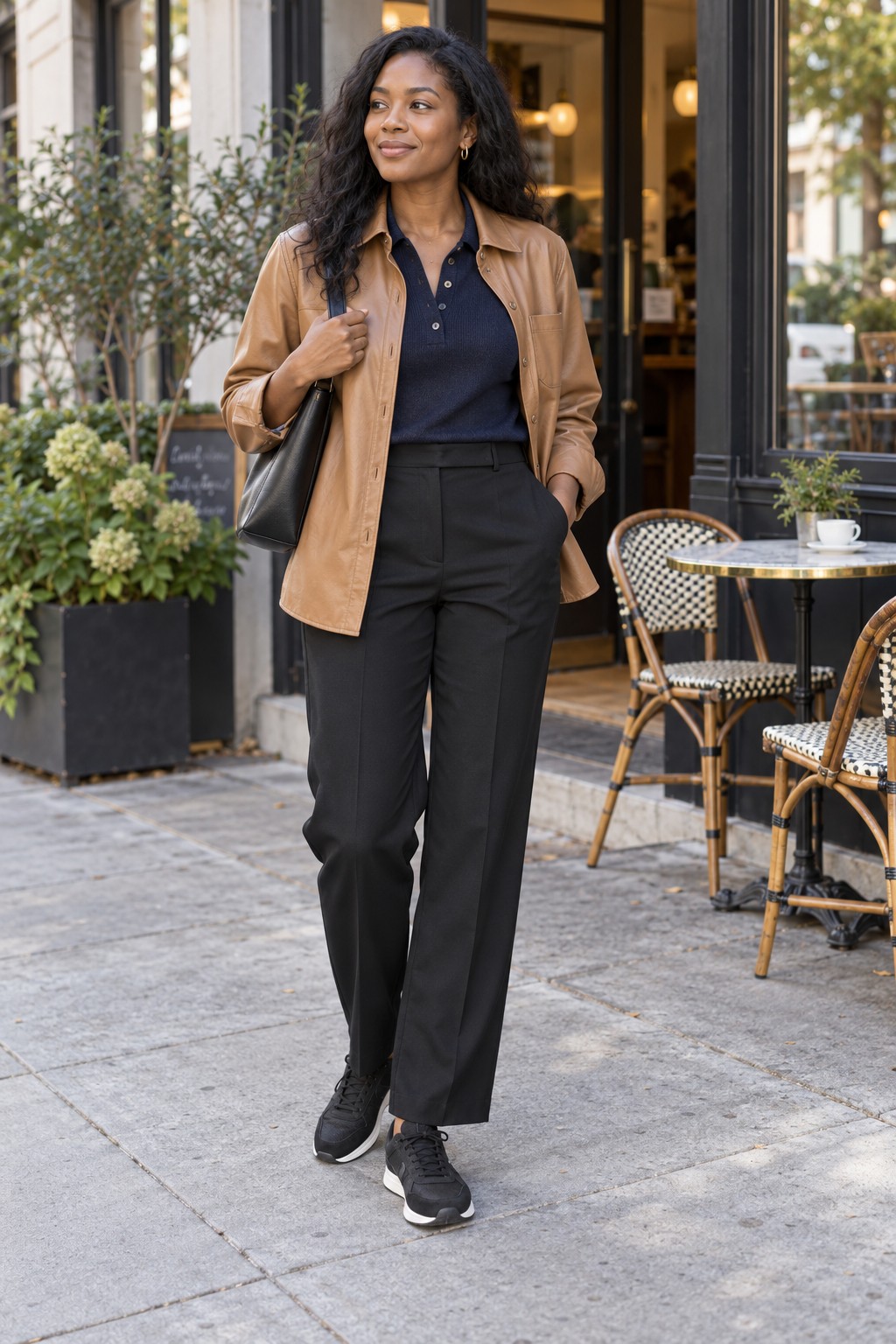
A tan leather shirt jacket gives a navy knit polo and black trousers a warmer frame. Black sneakers keep the outfit casual; dark loafers can shift it toward a more polished plan if the trousers and venue support that choice. Start with the polo collar lying comfortably before adding the jacket collar over it.
Two collars are manageable when they have enough room. If they repeatedly fold into each other, try opening another jacket button or choosing a crewneck base instead. There is no benefit in preserving a styling idea that needs constant adjustment. Check the same area with your bag strap in place, because a shoulder bag can move both collars.
The shirt-jacket shape often invites generous layering, but actual room varies. Test the upper arms and back rather than relying on the size label or the word oversized. For a day moving between shops and a café, carry the jacket over an arm only if that is practical; otherwise plan a bag or a place to hang it. The navy polo and trousers already form a complete base. The tan layer adds a distinct color and texture, so removing it changes the mood without undoing the outfit.
Choose the base before choosing the jacket
Lay out the outfit without the leather layer: top, bottom or dress, shoes and the bag you will actually carry. Ask whether you would wear that combination indoors for the full plan. If the answer is no, identify the reason. You may need a different neckline, a warmer indoor layer, a more comfortable waistband or simply a color pairing you prefer.
Then add the jacket and name its job. Is it providing a sharper outline, contrast against a soft dress, an accent color or a convenient extra layer? One clear answer is enough. If you need it for warmth, check that separately from appearance. A jacket can look substantial while leaving you too cold in wind, and a heavy lining can be uncomfortable inside.
This approach follows the logic of an outfit formula: use a repeatable relationship, then adapt the actual pieces to your day. You do not need to reproduce every garment in a photograph. A striped base with a dark layer is a usable idea even when your jeans, shoes and jacket cut differ.
A three-stop arrival check
First, check the journey. Close the jacket if you expect to wear it closed, carry your normal bag and walk a short route. Notice whether the zipper, collar or shoulder becomes irritating. A mirror cannot tell you how a loaded bag changes the fit.
Second, check the room. Remove the jacket and sit at a table. Make sure the base gives you the coverage, temperature comfort and formality you want. If you need another light layer indoors, decide how you will carry both rather than hoping the room will be warm enough.
Third, check the return trip. You may leave later in cooler or wetter conditions. Choose weather protection from the forecast and garment instructions. Do not assume that a leather or leather-look finish is rainproof. Care decisions should follow the actual garment, including its lining and trims.
Record the combination that worked in your weekly outfit planner. A short note such as “striped tee works alone; jacket pockets stay empty” is more helpful than saving another picture with no explanation. Next time, you can repeat the useful relationship and change only what the day requires.
Use what is already compatible
Before buying a different jacket, try the one you own with two complete bases. A change in shirt length or shoe weight may solve the styling problem more directly than a new outer layer. Equally, an uncomfortable jacket does not become useful because it completes a photograph. Keep fit and preference visible in the decision.
If none of the seven combinations suits your life, take just the method: build an indoor outfit, add the jacket for a named purpose, and test the transition. That gives you a repeatable way to use a distinctive piece without making every plan depend on keeping it on.
Keep these outfit ideas handy.
Save this guide on Pinterest (opens in a new tab)More ideas for your wardrobe
 Capsule Wardrobe Systems9 Romantic Outfits with Practical Shoes and a Complete Layer Plan
 Capsule Wardrobe Systems7 Western-Inspired City Outfits with a Clear Starting Detail
 Capsule Wardrobe Systems10 Vintage-Inspired Outfits Built Around One Familiar Detail
 Capsule Wardrobe Systems8 Everyday Boho Outfits with One Clear Statement Element