7 Western-Inspired City Outfits with a Clear Starting Detail
You may like a Western-style boot or a shaped shirt yoke without wanting to wear every familiar reference at once. For a city day, start with the detail that appeals to you, then build the rest of the outfit around the route, temperature, and places you will visit.
Western-inspired here refers to a styling direction using details such as cowboy-style boots, shaped yokes, a decorative buckle, or fringe. It does not establish a garment’s origin, authenticity, or suitability for riding and work. The photographs are outfit illustrations, and the actual footwear and clothes need their own fit and use checks.
These seven combinations move from a small accessory cue to a stronger boot-and-shirt pairing. You can stop at the level you enjoy. A hat, a particular bag, or an exact denim wash is not compulsory. Keep the useful clothes you already own and change one visible detail before deciding you need a new collection.
1. Cowboy-Style Ankle Boots with Straight Jeans
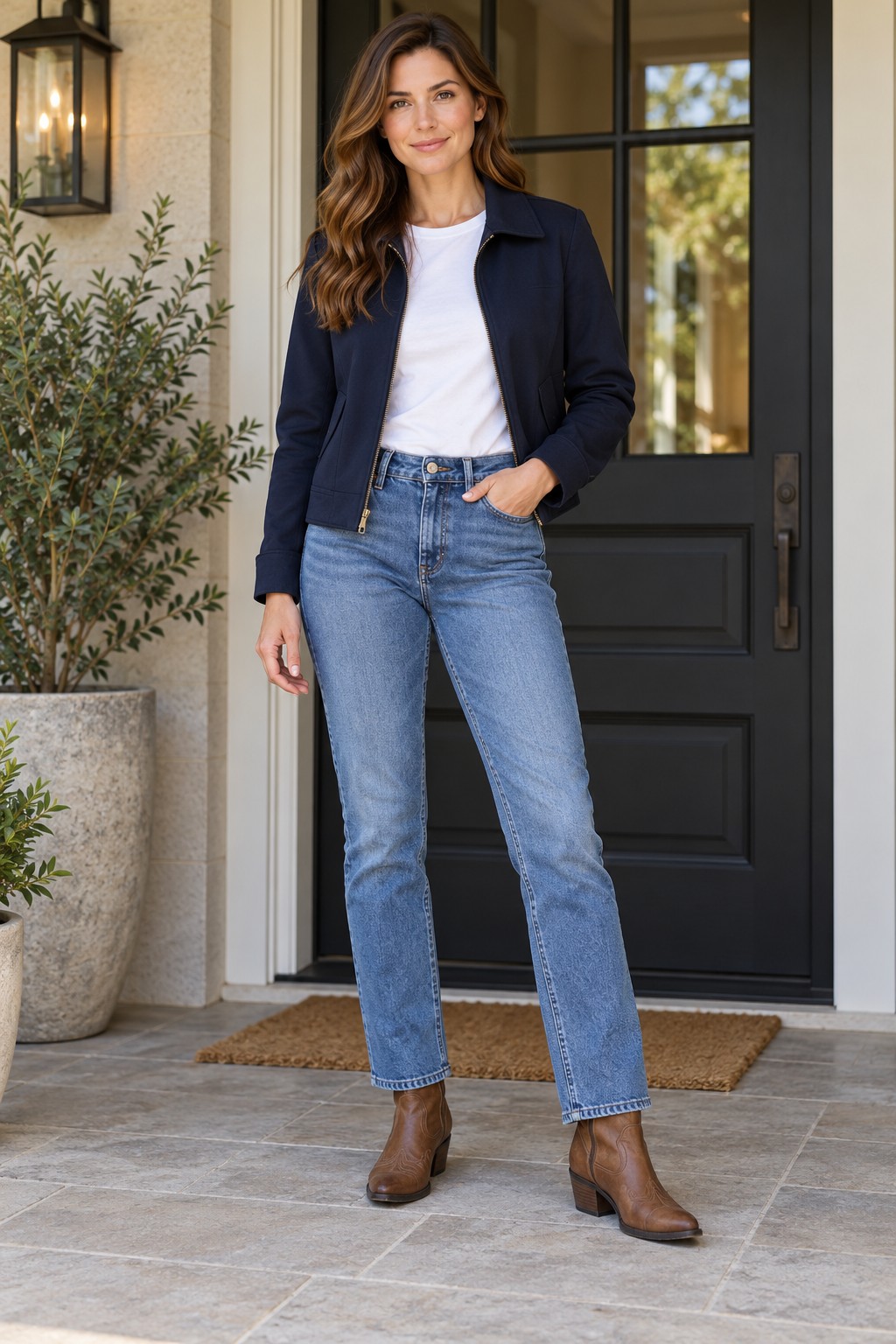
Start with straight blue jeans, a white tee, a plain navy jacket, and brown cowboy-style ankle boots. The boots carry the reference while the upper half stays familiar. This is a useful first experiment if you want one distinct shoe shape without changing the rest of your day-to-day clothes.
Put the boots on before judging the jean hem. The opening needs room to move over or sit above the shaft as you prefer. Walk and sit, then check whether the jeans catch high on the boot when you stand. A small gap and an overlapping hem create different effects; choose from the actual garments.
Use footwear you have assessed for your own route. The pointed toe, angled heel, or decorative stitching does not establish comfort, grip, or weather suitability. If your familiar walking shoes serve the day better, save the boot version for another plan and keep the base.
A plain bag lets the boots remain the main detail, but it should still carry what you need. Before leaving, look at the back trouser hem and the jacket sleeves in motion. The successful outfit has a practical base and one shoe choice you enjoy, rather than several extra references added to make the boots seem legitimate.
2. A Yoke-Detail Shirt with Plain Trousers
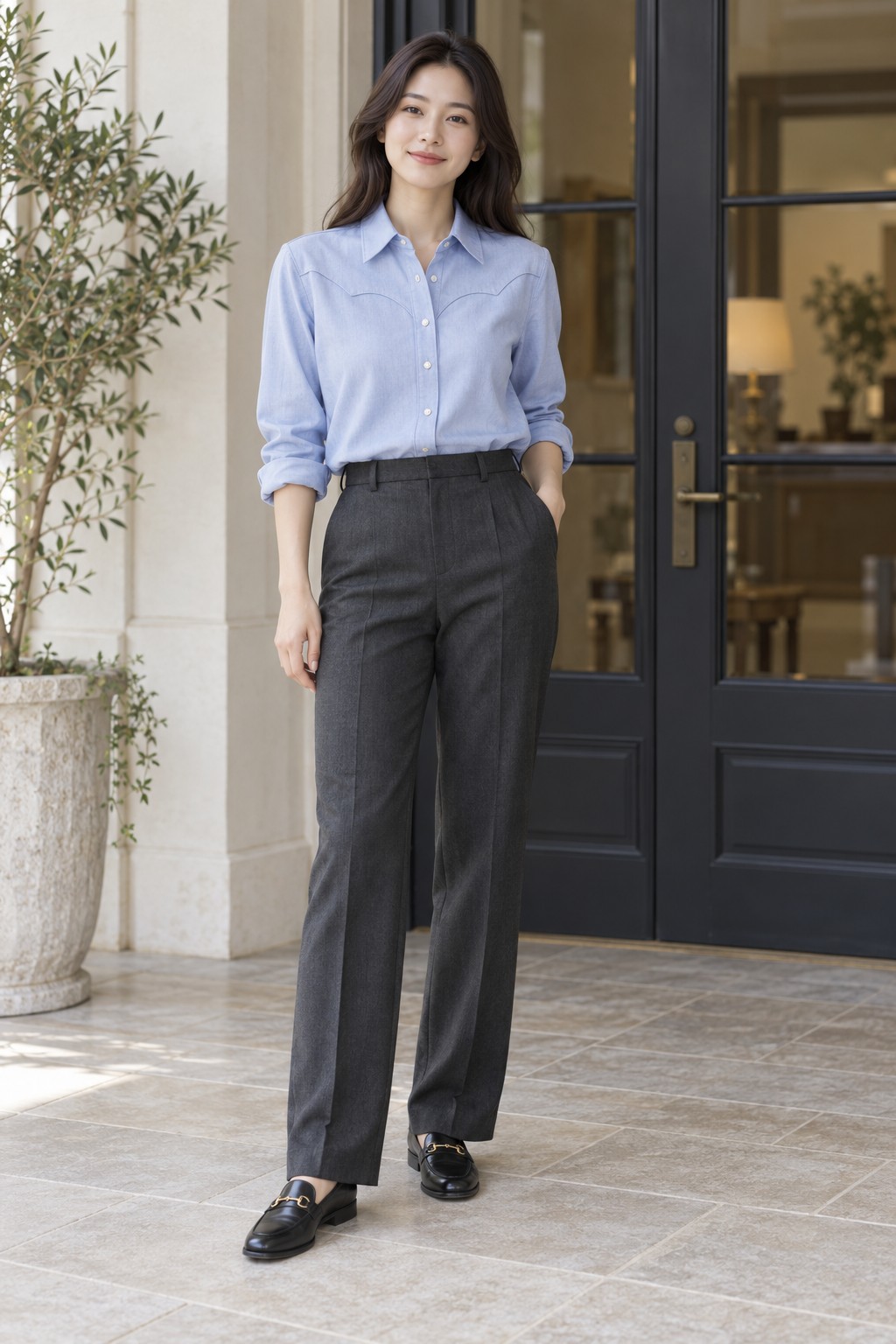
Choose a pale blue shirt with a shaped yoke, charcoal straight trousers, and black loafers. The shirt detail provides the reference, so the footwear can remain an ordinary pair you already wear.
Inspect the shirt’s actual fastening and collar. Some designs have snaps, some buttons, and some other closures. Arrange them as intended and check the front while seated and reaching. A decorative yoke does not change how much room you need across the shoulders or chest.
Try the shirt tucked and untucked. A long curved hem may look deliberate over the trousers, while a shorter finish may be easier for your plan. Avoid forcing a heavy tuck into a close waistband simply to make the detail look more defined.
For an office or meeting, check the complete outfit against the real dress expectations. A plain trouser does not make every decorative shirt suitable for every workplace. For a casual lunch, you may have more freedom to let the yoke lead. Keep the first bag and accessory choices simple, then decide whether you want another cue. This formula is especially useful when you like the shirt construction but do not want the outfit to depend on boots.
3. A Decorative Buckle on a Familiar Jeans Outfit
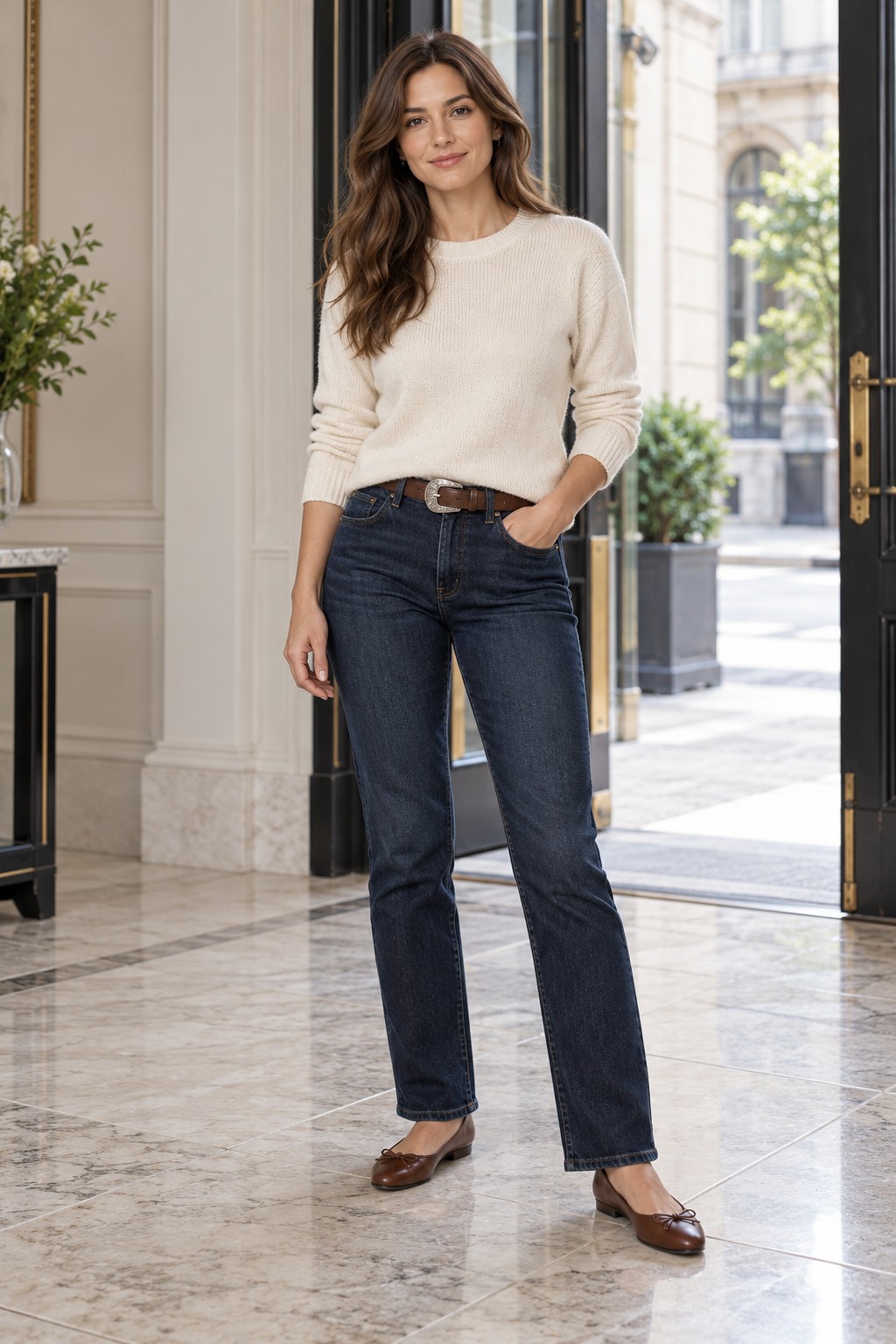
Use dark jeans, a plain cream knit, brown flats, and a belt with a decorative silver-tone buckle. The buckle supplies a small focal point. Choose one whose size and placement feel comfortable when you sit rather than judging it only in a standing photograph.
Check whether the belt has a practical job. It may help the jeans stay where you want them, or it may be a decorative choice. Either can be valid, but tightening it until the waistband becomes uncomfortable is not necessary for the outfit to work.
The top needs to show the buckle only if that is the effect you want. Try a light tuck, a shorter knit, or an untucked version with the buckle partly visible. Compare what remains after you sit and stand. A detail that disappears naturally for part of the day does not need constant correction.
Keep other metal details optional. You do not need to match every zipper and earring exactly. Use the bag and jewelry you already like, then look at the whole outfit from an ordinary distance. If the buckle feels too prominent, choose a smaller one or return to a plain belt. The base remains useful either way.
4. A Fringe Jacket over a Quiet Dress
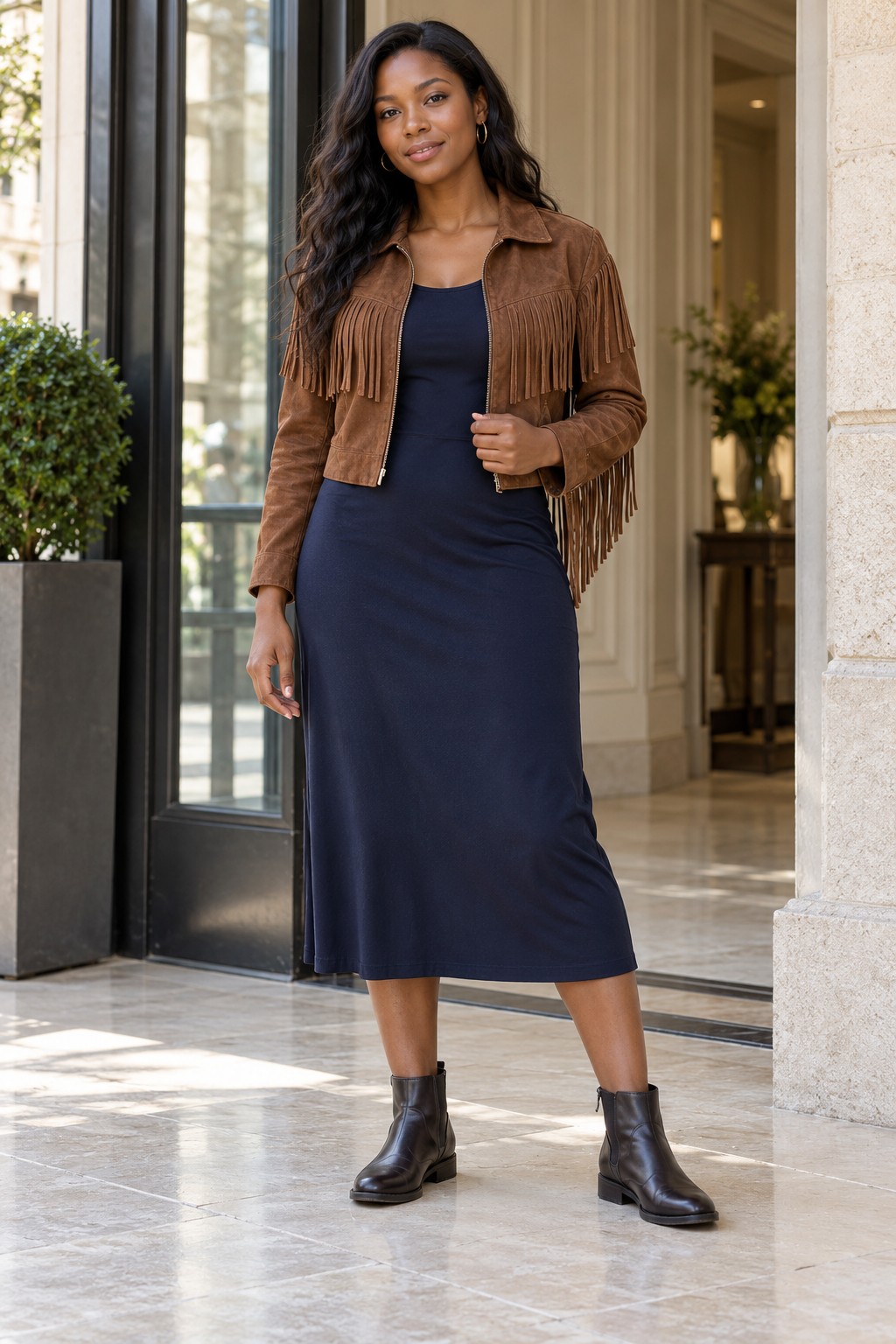
Try a brown short fringe jacket over a plain navy midi dress with dark flat ankle boots. The jacket makes the strongest detail in this combination. Keep the dress simple enough that you can judge the fringe movement without another busy print competing nearby.
Move in the jacket before deciding where to wear it. Notice the sleeve fringe, how it sits against a bag strap, and whether it catches on a chair. For tasks where loose details are inconvenient, choose another layer rather than spending the day holding them out of the way.
Remove the jacket once. The dress and boots should still suit the indoor part of the plan. If the dress needs a separate coverage layer, solve that before treating the fringe jacket as a complete answer.
Check the jacket’s material and care information instead of inferring them from its appearance. A suede-like surface in a photograph does not establish composition or weather performance. Choose the outer layer for the conditions as well as the look. For a short social plan, this may be the detail you enjoy most; for a crowded commute, another version may be easier. The formula gives you a choice rather than a requirement to make fringe work everywhere.
5. A Denim Shirt with a Plain Midi Skirt
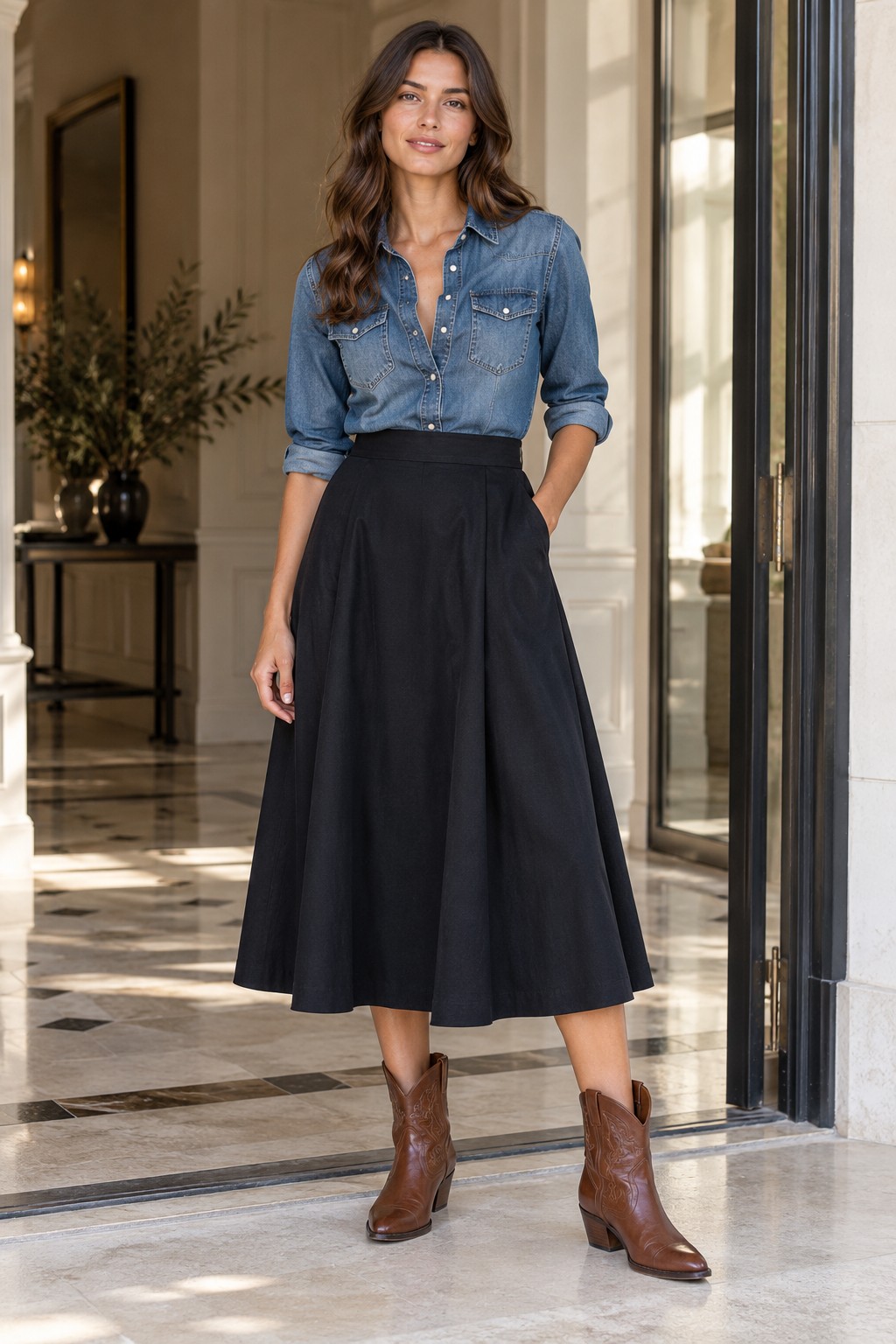
Pair a blue denim shirt with a plain dark A-line midi skirt and brown cowboy-style ankle boots. The shirt and boots create a stronger reference than the first two formulas, while the quiet skirt keeps the combination grounded in familiar clothes.
Start with the shirt and skirt before adding the boots. Choose the shirt finish from the waistband and fabric weight. A substantial denim shirt may feel bulky tucked in; a shorter untucked cut or a lighter shirt can be another way to make the pairing comfortable.
Then check the skirt hem with the boot shaft while walking. The skirt may swing above the shaft or overlap it, depending on length. Make sure the fabric does not catch repeatedly. Use the boots only when they suit the route and the amount of walking you expect.
A plain bag can be enough. You do not need a decorative belt if the waistband is already comfortable and the outfit has the detail you want. If the combined shirt and boot reference feels stronger than your preference, swap the boots for familiar flats. The denim-and-skirt base can remain useful without preserving every element of the starting example.
6. A Small Neck Scarf with a Plain Shirt
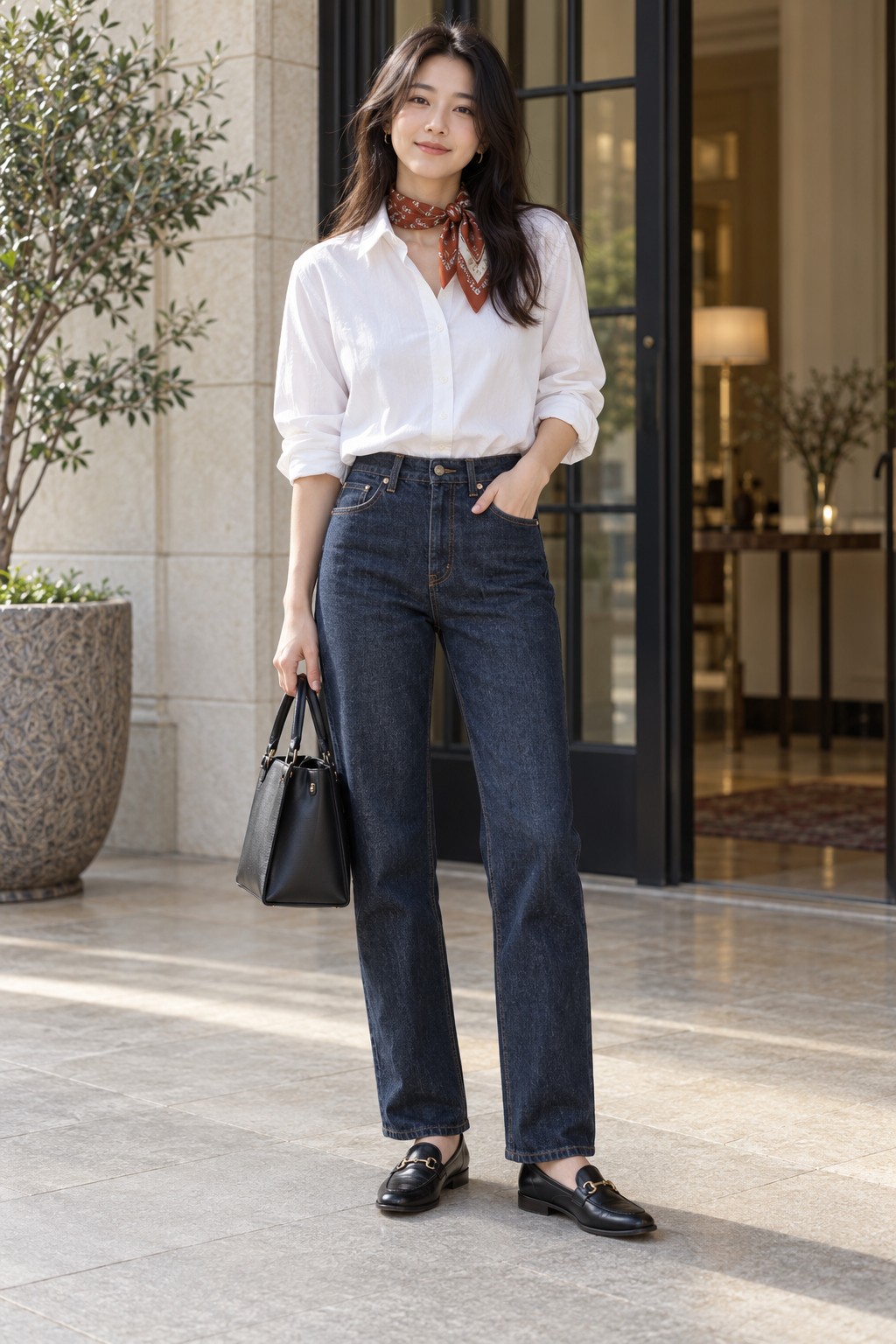
Use a plain white shirt, dark straight jeans, black loafers, and a small rust printed scarf at the neck. The scarf gives you a concentrated accent without requiring a new garment shape.
Try the scarf with the shirt collar arranged in the way you will actually wear it. A loose knot, a simple fold, or another placement each changes the relationship. Keep the ends manageable for the day’s tasks and choose another arrangement if they become inconvenient.
The print should be something you understand and enjoy. Do not assume every small patterned scarf has the same origin or meaning because it appears in a Western-inspired reference. Look at the actual item rather than treating the fashion label as its complete story.
Wear the outfit for a short familiar plan before deciding whether you want a stronger styling direction. If you remove the scarf indoors, the shirt-and-jeans base remains complete. Keep a place for it in the bag. This is an easy formula to compare with a plain version: take the scarf off, look at the outfit again, and decide which state you prefer for the occasion. Neither needs additional accessories to count as finished.
7. A Suede-Look Jacket with Tailored Trousers
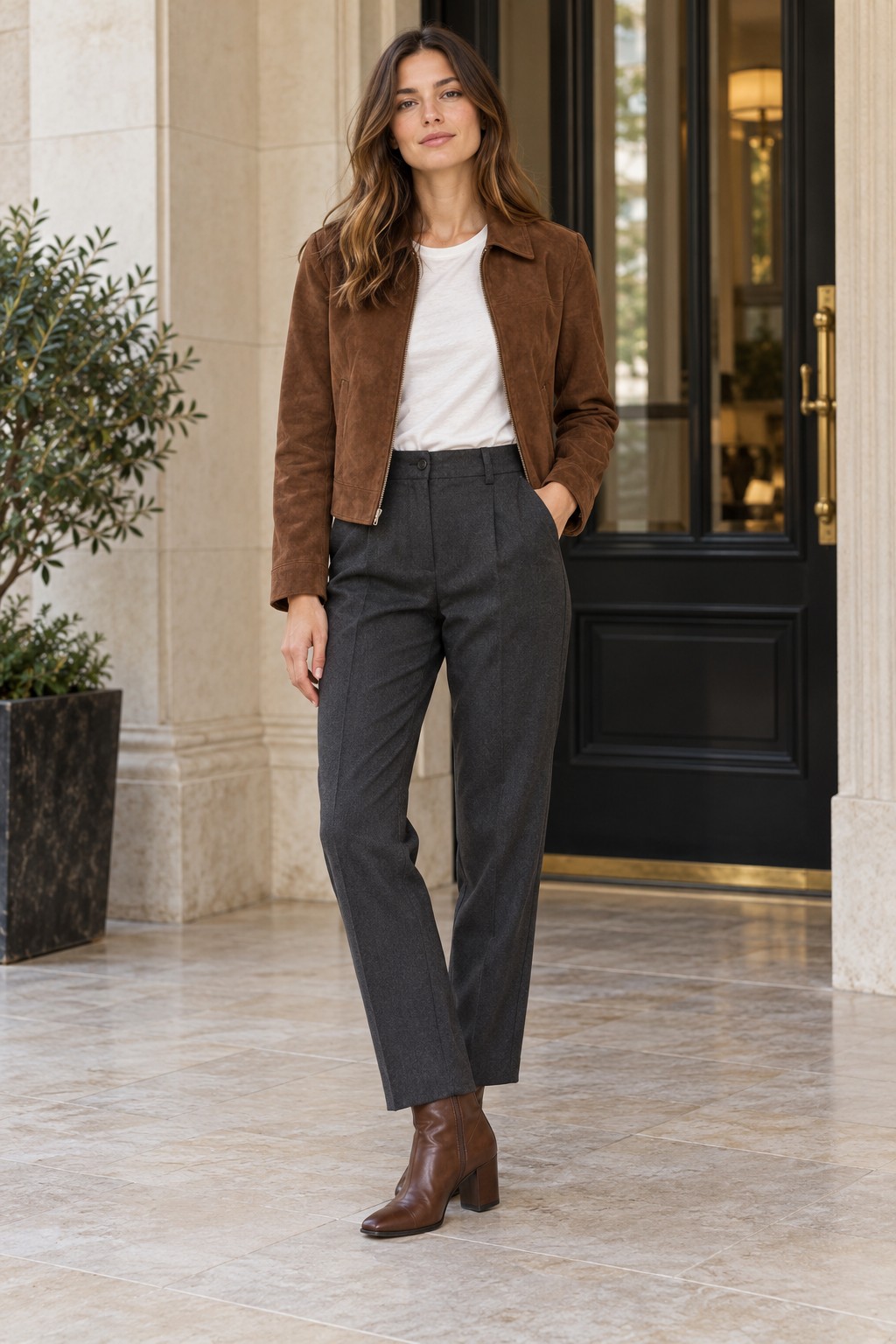
Finish with a brown suede-look short jacket, ivory tee, charcoal tailored trousers, and brown ankle boots. The jacket surface and boot shape create a restrained reference while the trousers introduce a clearer tailored line.
Read the actual material description and care guidance. Suede-look is a visual description here, not a claim about composition. Do not assume the jacket tolerates rain or can be cleaned in a particular way from its appearance.
Check sleeve room over the tee and look at the two hems together. If the tee extends below the jacket, decide whether you like that edge. A shorter tee or another finish may make the relationship clearer, but an exposed layer is not automatically a mistake.
Put the boots on and check the trouser length from the back as well as the front. A tailored hem needs to work with the chosen heel and sole. For a dinner or relaxed meeting, keep the bag chosen for the actual plan. If you remove the jacket indoors, the ivory-and-charcoal base should still feel complete. Record this as a combination of specific pieces rather than assuming every brown textured jacket will behave the same way.
Choose Your Starting Detail and Your Stopping Point
Begin with the piece you want to wear: boots, a yoke shirt, a buckle, a scarf, or a textured jacket. Build a complete practical base around it, then decide whether another reference would add anything you enjoy. A single detail can be enough. A stronger combination is also valid when it fits the setting and your preference.
Use the outfit formula method to save the useful structure. Name the exact shoes, hem relationship, and removable layer. Add the tested version to your weekly outfit planner for a day with similar demands.
A helpful comparison keeps the base fixed. Try the jeans and white tee with your ordinary shoes, then with the Western-style boots. Keep the same jacket and bag. Notice which version suits the route and whether the boot change affects the hem. This gives you a practical reason to choose one version instead of relying only on a style label.
If you enjoy the reference but one item is inconvenient, change that item. You can keep the yoke shirt and wear loafers, or use the textured jacket over a dress you already own. There is no need to preserve an awkward piece to prove the outfit belongs to an aesthetic. The best stopping point is the one that gives you the detail you wanted and a combination you can wear normally.
After the first wear, note what worked and what needed adjustment. A boot that stayed comfortable for your own route, a cuff that remained manageable, or a bag strap that avoided the fringe is useful information for the next day. Those specific observations help the outfit become repeatable rather than merely recognizable.
A Simple Rebuild for a Mixed City Day
Suppose your day includes a short train ride, a café stop, and an evening meal. Start with straight jeans, a plain shirt, and the shoes you already know suit the walking involved. If your preferred Western-style boots work for that route, try them and check the jean opening. If they do not, keep the familiar shoes and use the yoke-detail shirt or a small buckle instead.
Choose the outer layer after that decision. A jacket that is useful outdoors and easy to remove indoors earns its place independently of the style reference. Put your normal essentials in the bag and check the strap with the shirt or jacket. You now have an outfit chosen from the actual sequence of the day. The reference is visible, while the practical decisions still come from your own needs.
Keep these outfit ideas handy.
Save this guide on Pinterest (opens in a new tab)More ideas for your wardrobe
 Capsule Wardrobe Systems7 Leather Jacket Outfits That Still Work When You Take the Jacket Off
 Capsule Wardrobe Systems9 Romantic Outfits with Practical Shoes and a Complete Layer Plan
 Capsule Wardrobe Systems10 Vintage-Inspired Outfits Built Around One Familiar Detail
 Capsule Wardrobe Systems8 Everyday Boho Outfits with One Clear Statement Element