Modest Work Outfits for Women That Stay Professional and Comfortable
Modest workwear is easiest to repeat when you decide what must stay covered before choosing the outfit. Start with the parts of a look that can shift during a real workday: a neckline when you lean forward, a hem when you sit, a sleeve when you reach, or a layer when the room warms up. The formulas below use familiar office pieces, with a practical check for each combination so you can adapt it to your own dress code and comfort.
These are styling options, not rules about how much coverage anyone should choose. A higher neckline, longer hem, or extra layer can be changed to suit personal preference, climate, and workplace expectations. Before wearing a new combination, check it in daylight and in the movements your day actually requires.
Four checks that make a covered outfit work better
- Sit: sit and stand once to see whether the hem rides up or a waistband digs in.
- Reach: lift both arms and reach forward; a top should not pull open or expose a gap you want covered.
- Layer: remove the cardigan or blazer if the room gets warm. The base outfit should still feel intentional.
- Light: check pale fabrics near a window. If a layer is sheer, add a lining or a smooth base in a compatible shade.
Think of these as quick fit checks rather than a universal modesty standard. If one formula needs constant adjusting, change the fabric, length, or fastening before adding more pieces.
Ten modest work outfit formulas to adapt
Longline blazer, wide-leg trousers, and pointed flats
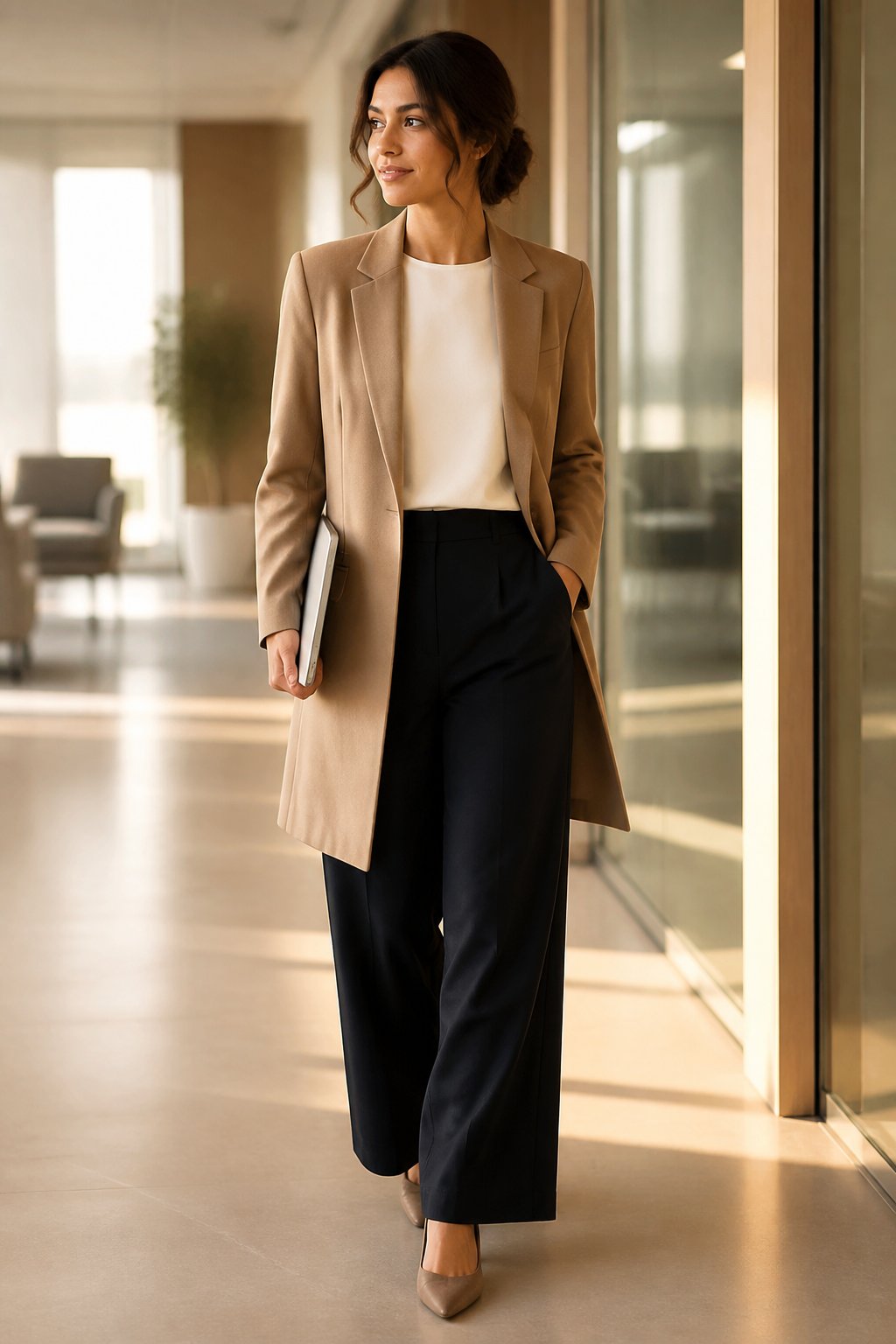
A blazer that ends below the hip creates a longer line; wide-leg trousers balance that length without clinging. Choose a top with a neckline you are comfortable wearing when the blazer is open. For a softer office, use a knit blazer and simple flats. Check that the jacket does not pull across the back when you reach for a shelf.
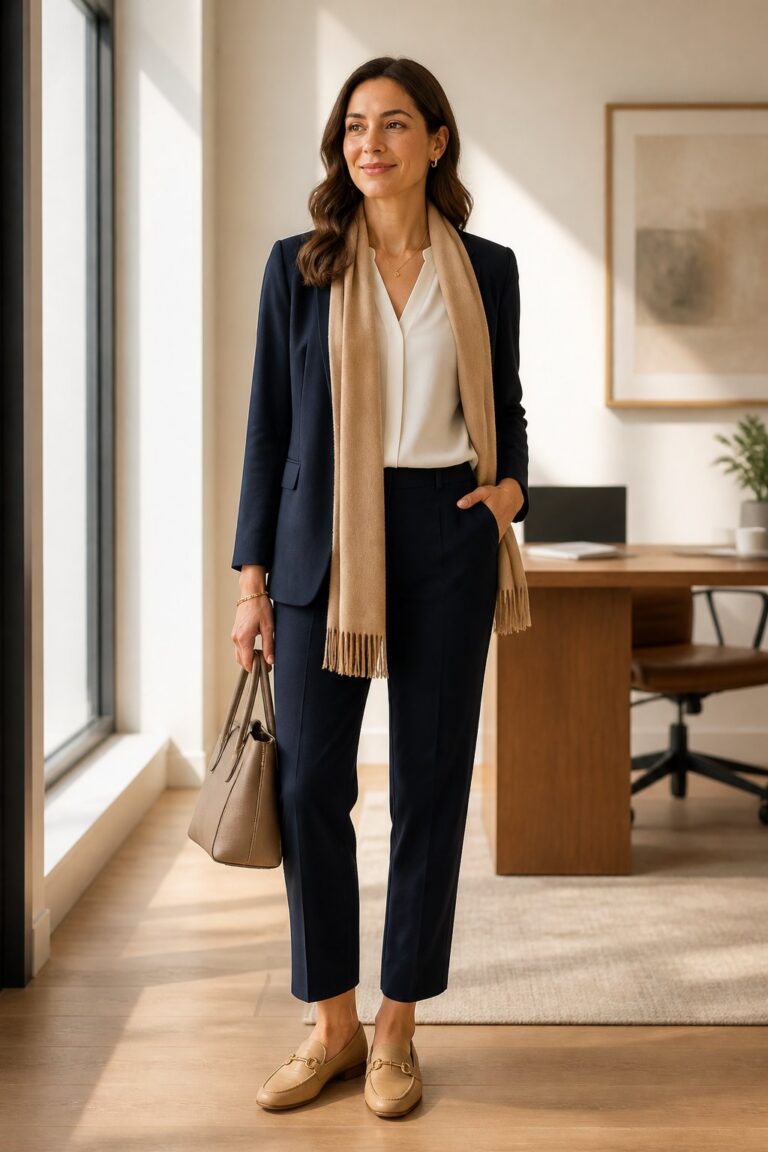
High-neck blouse, straight trousers, and loafers
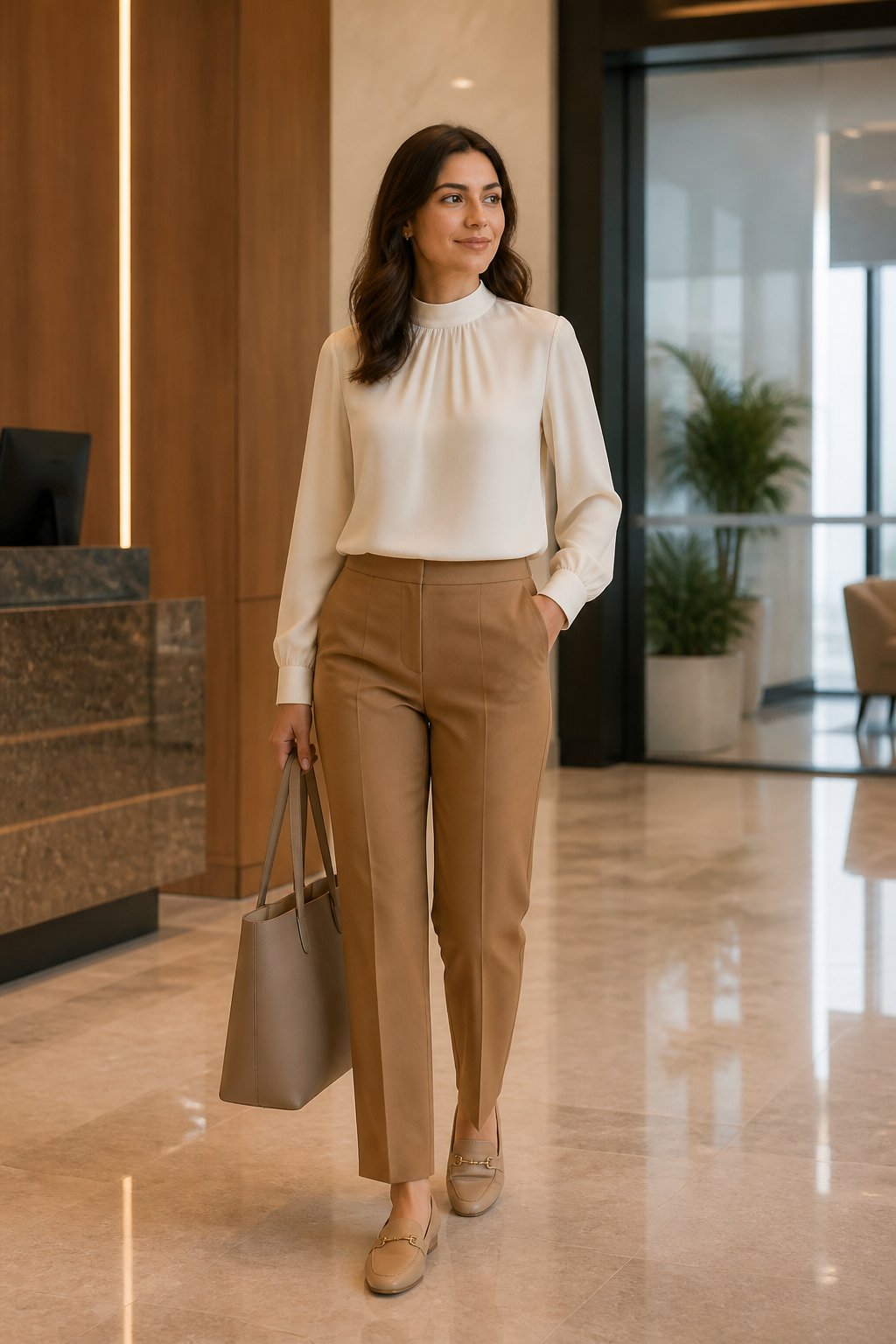
This is a useful warm-office formula because the blouse provides the main coverage without an extra layer. A fluid blouse with a covered button placket reduces pulling at the chest; straight trousers keep the shape neat. If the top is lightweight, check it in daylight and add a lined camisole when needed. Leave enough ease through the shoulders for typing and reaching.
Sleeved midi dress, light cardigan, and ankle boots
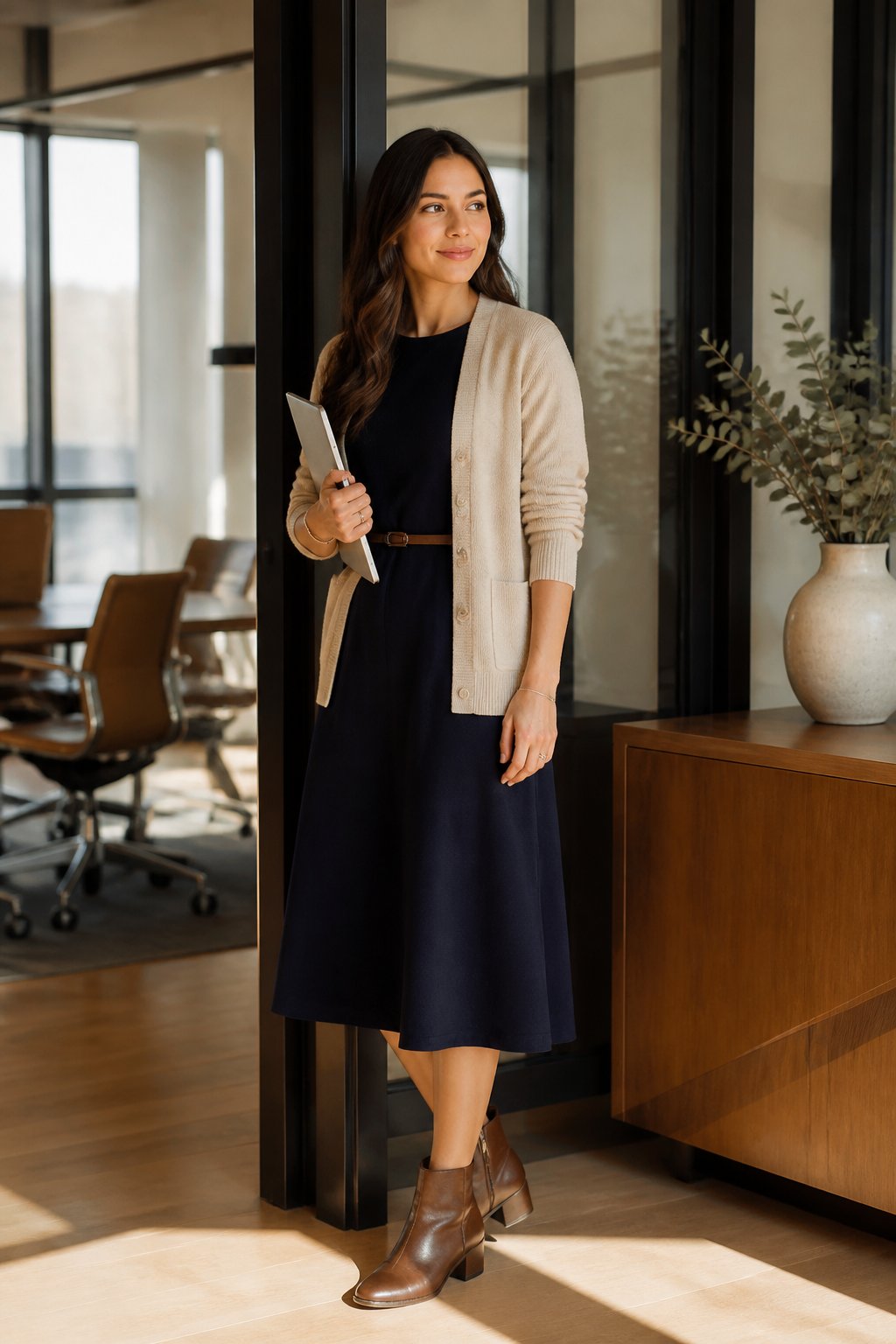
A dress with sleeves and a comfortable neckline can work on its own, while a cardigan adds warmth in a cold office. Pick a hem that remains where you want it when seated, and make sure the cardigan does not catch on the dress fabric. Low boots suit cooler weather; in a warmer season, swap them for loafers or closed-toe flats.
Tunic shirt, tapered trousers, and ballet flats
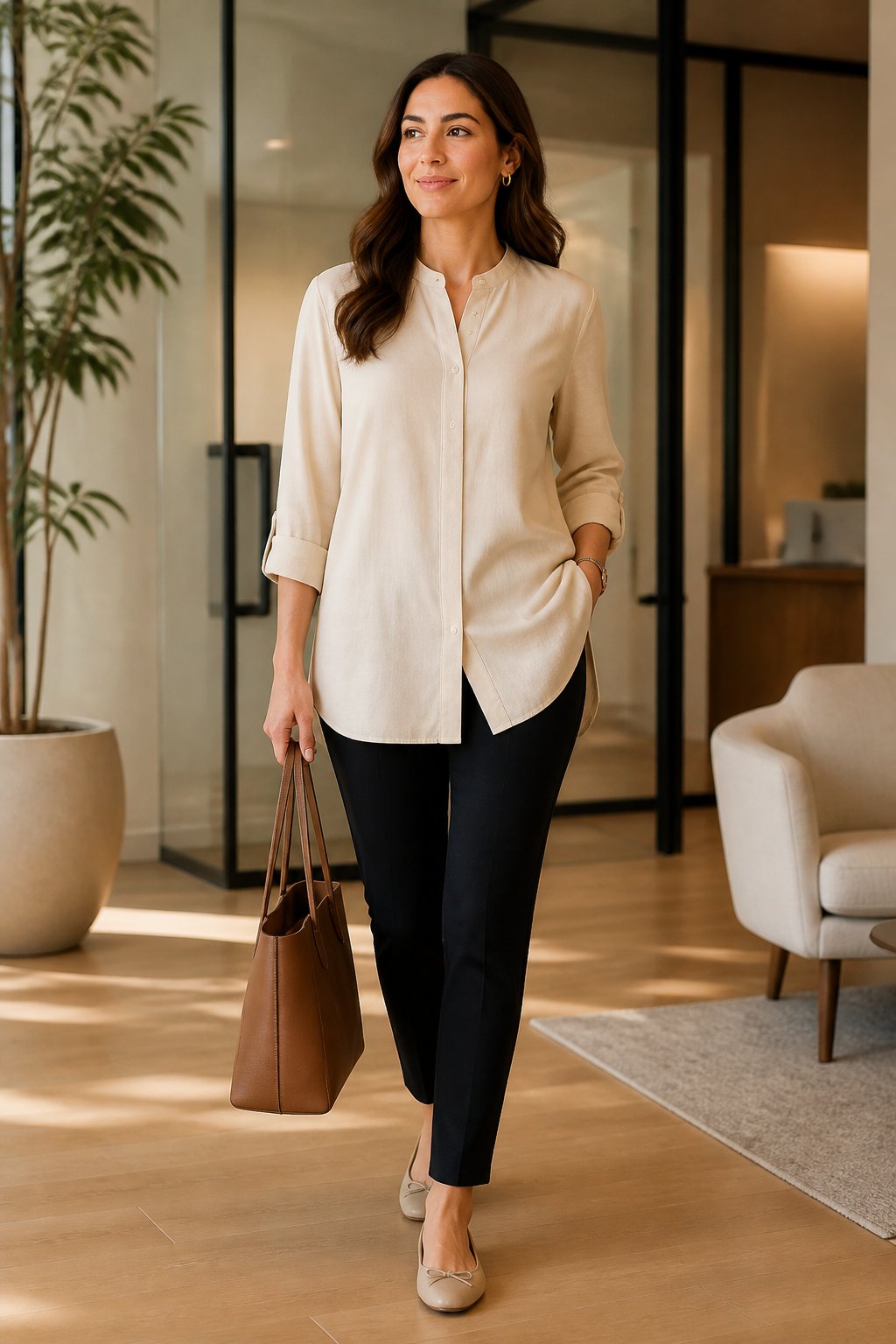
The longer shirt covers the hip while the narrower trouser shape keeps the outfit from feeling oversized. Look for side vents that allow a full stride and a fabric that does not cling when layered. If you tuck the front, check the side and back coverage while standing and sitting. A structured flat adds polish without making the outfit feel formal.
Knit polo, A-line midi skirt, and low heels
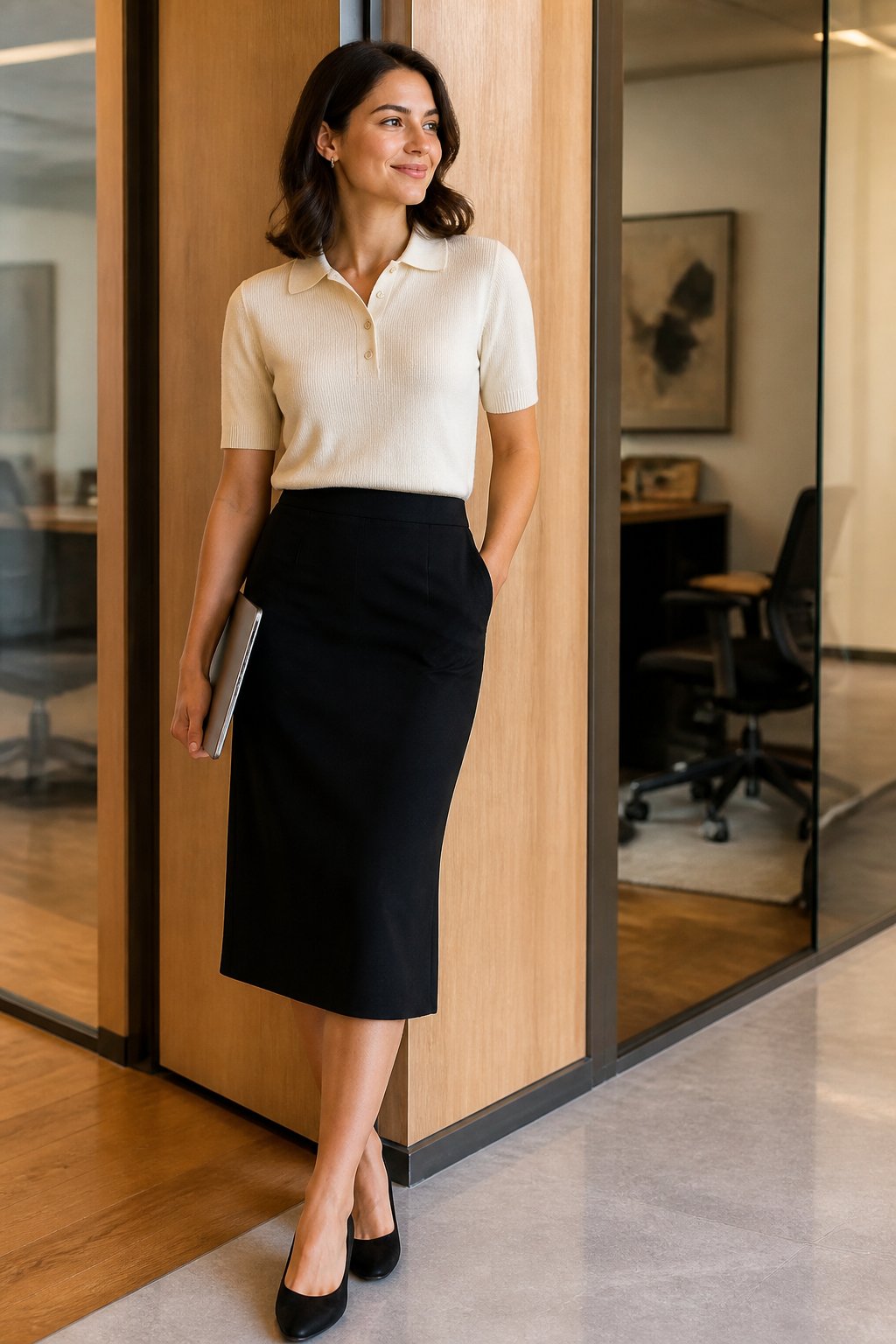
A knit polo adds a collar without the stiffness of a button-down, and an A-line skirt allows more movement than a narrow pencil shape. Choose a skirt lining or fabric weight that feels comfortable in bright light. When sitting, smooth the skirt before standing so pleats or panels fall back into place. Low heels or loafers keep the combination practical.
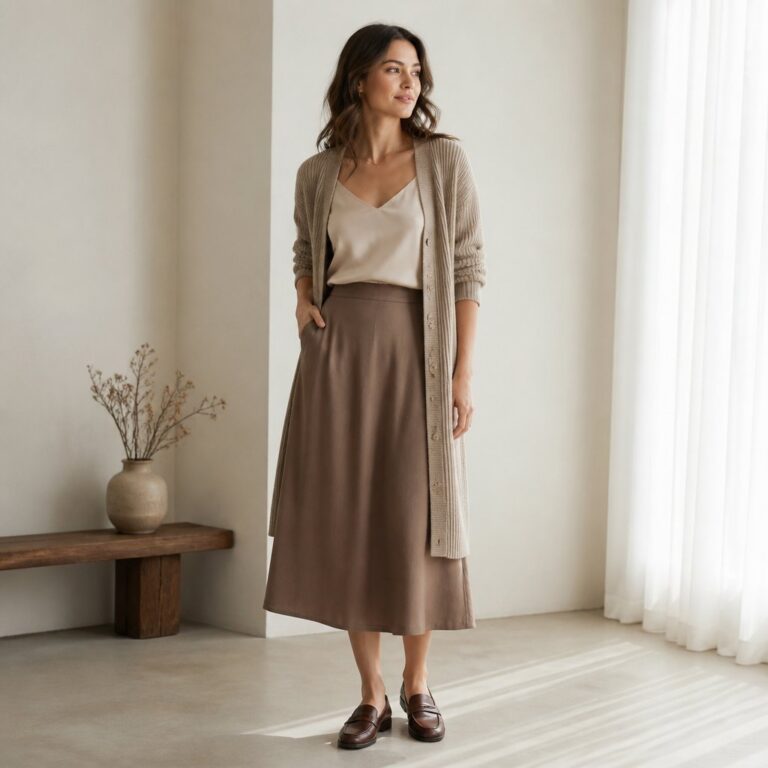
Shell top, button cardigan, and tailored pants
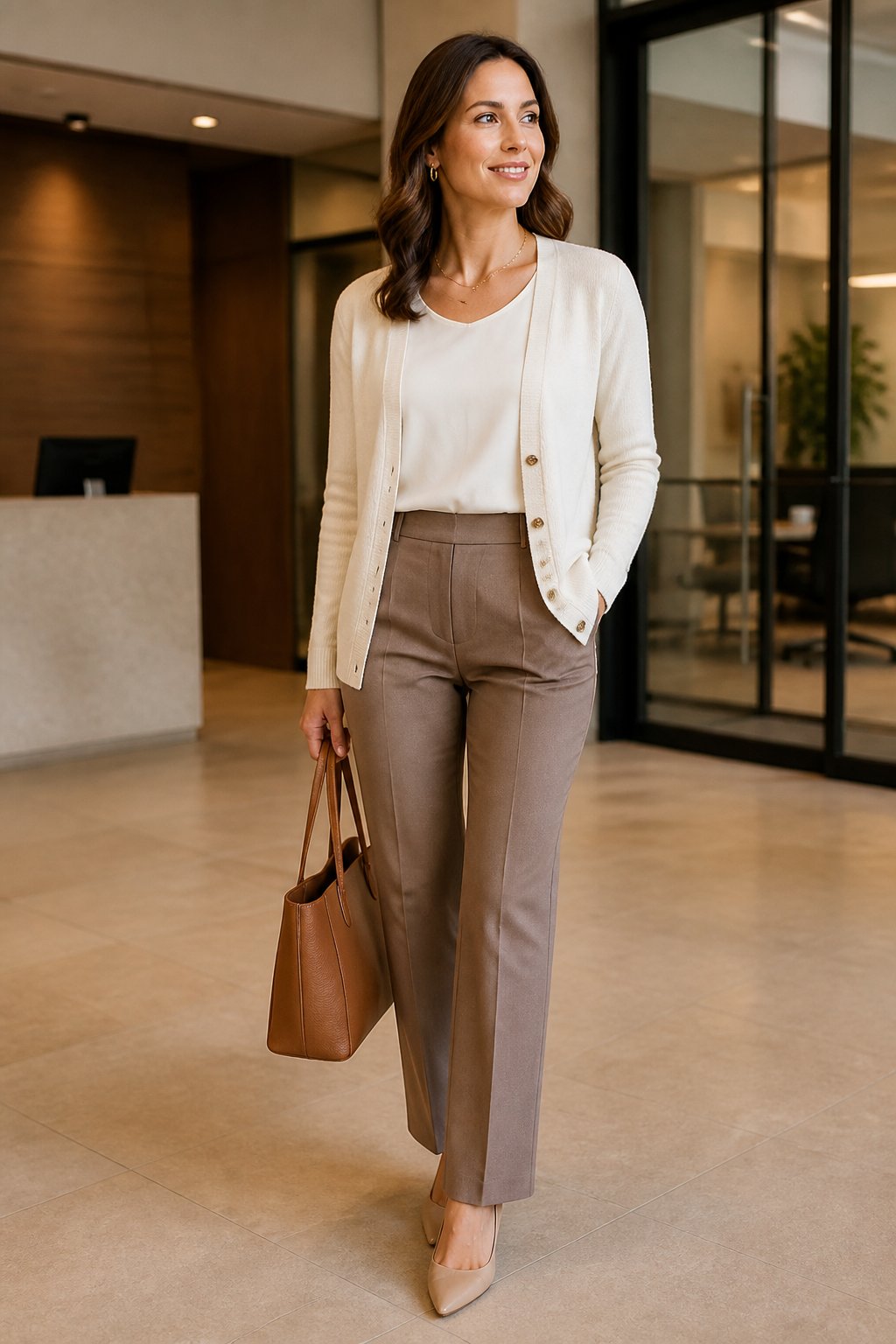
Use the cardigan as an adjustable layer: button it where you want more coverage, or wear it open when the base top already feels secure. Tailored pants keep the look office-ready, while a smooth shell prevents bunching under the knit. Test the cardigan buttons with a seated reach; if they gap, size up or choose a more relaxed cut.
Sleeved wrap dress, opaque tights, and a structured tote
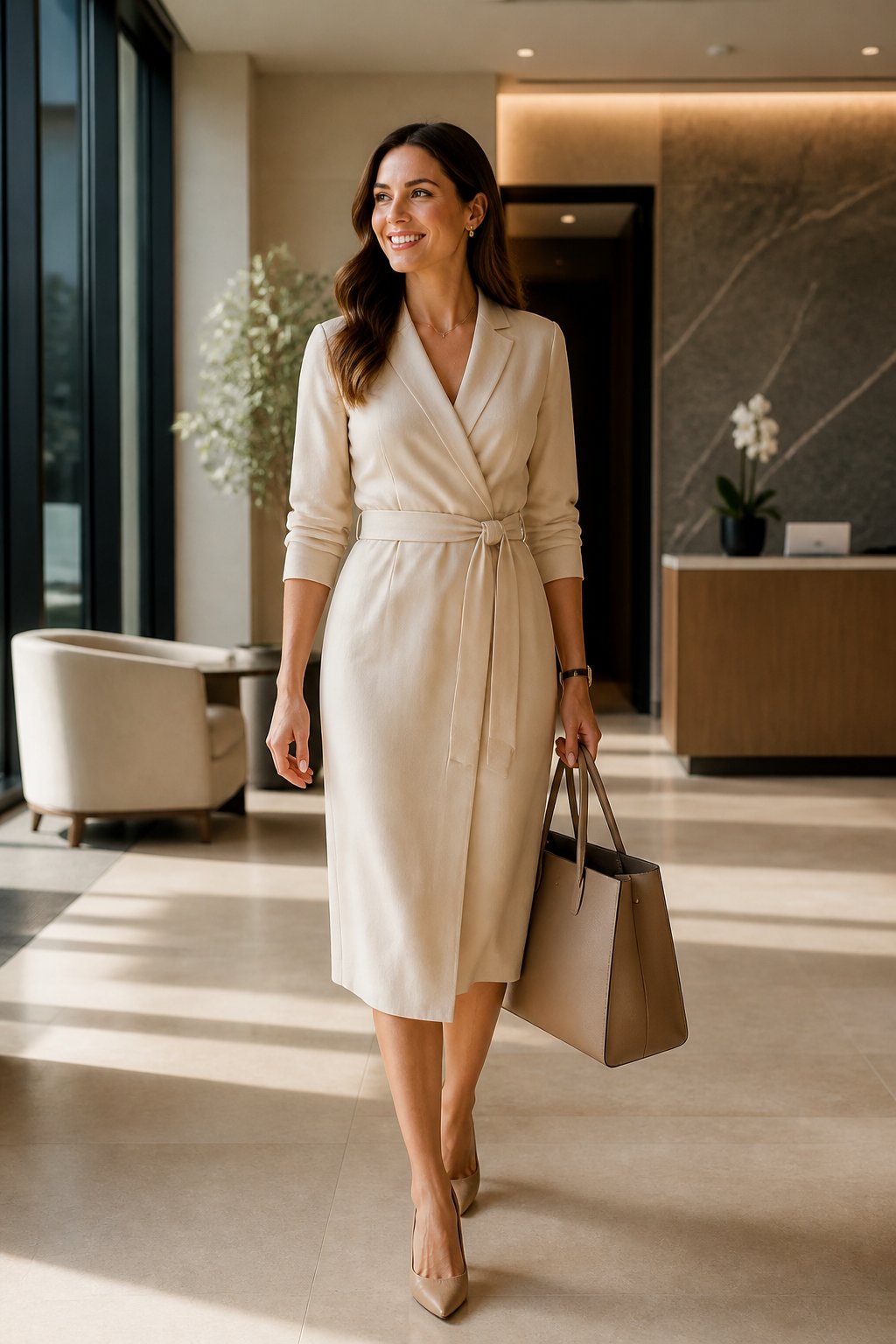
A wrap dress can be comfortable and shaped without relying on a tight fit. Check the overlap at the neckline and hem as you move; a small hidden snap or a camisole can make the front feel more secure if you prefer. Opaque tights add warmth in cooler weather. The tote gives the outfit a defined work finish and carries the day’s essentials.
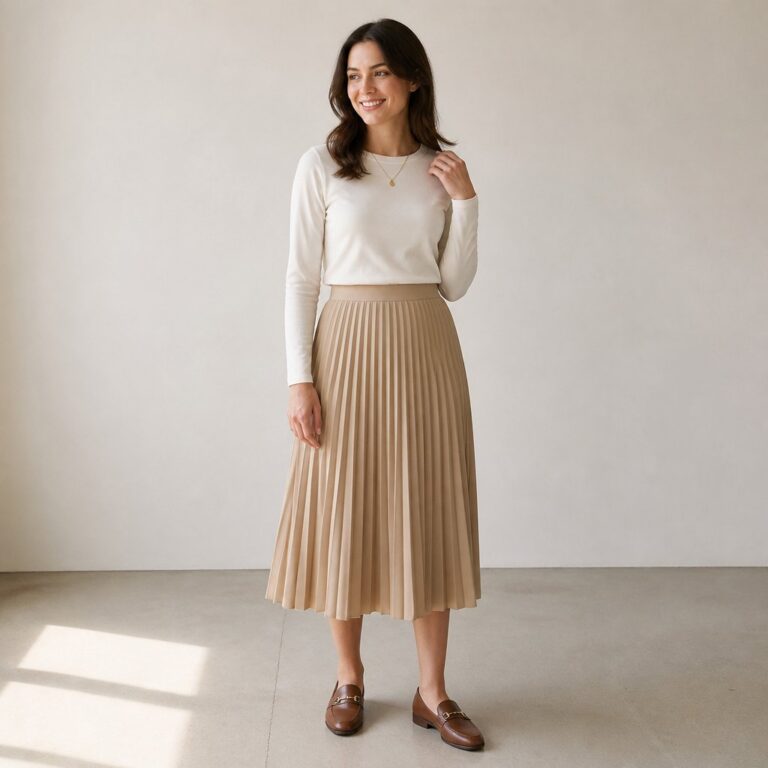
Pleated midi skirt, fine-gauge sweater, and loafers
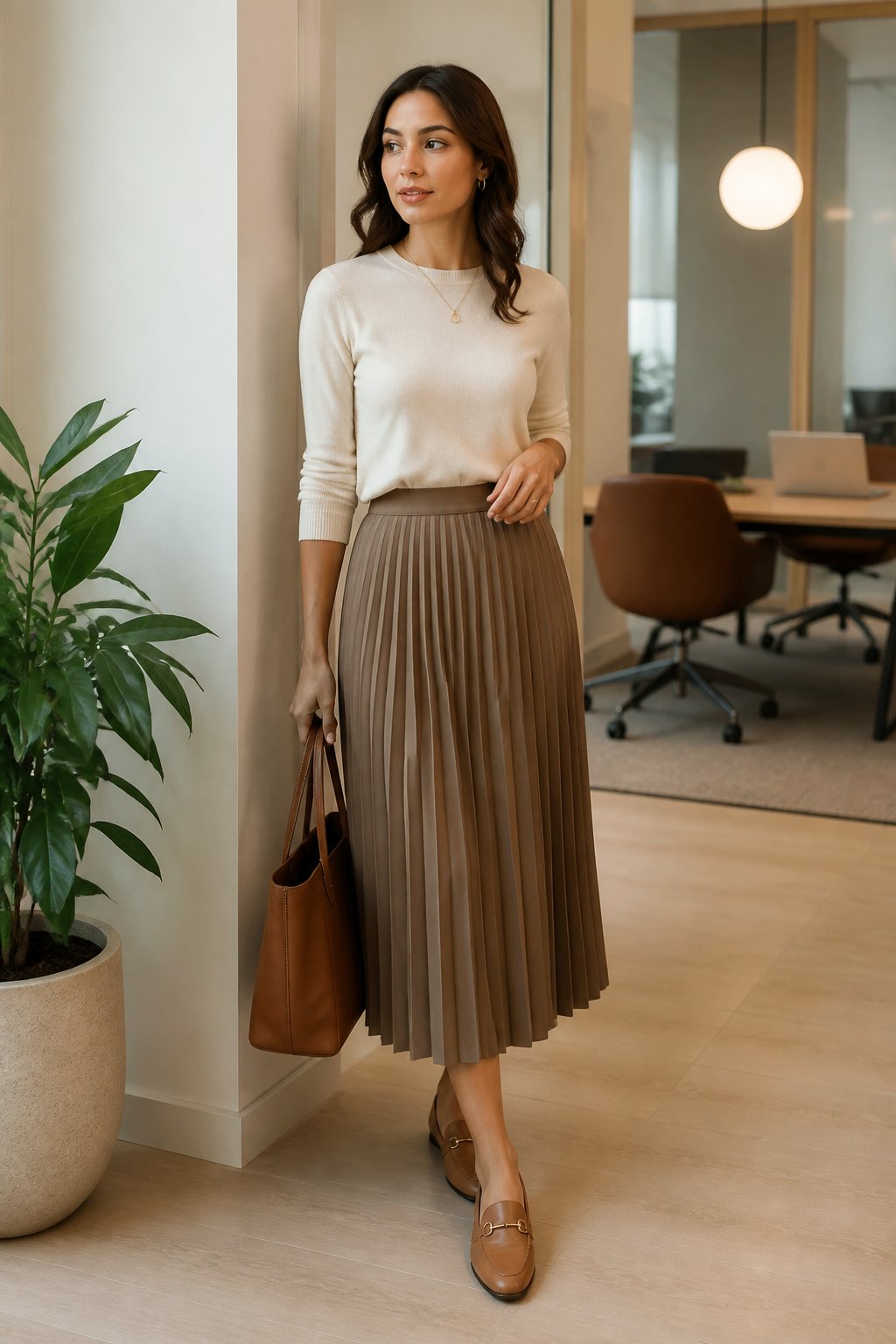
The skirt supplies movement and the sweater keeps the top half simple. A fine knit is less bulky under a coat than a chunky one, and a waistband that sits flat will be more comfortable after lunch. Try the skirt with both loafers and ankle boots to see which shoe works with the hem length you own.
Shirt dress, slim belt, and soft-shoulder blazer
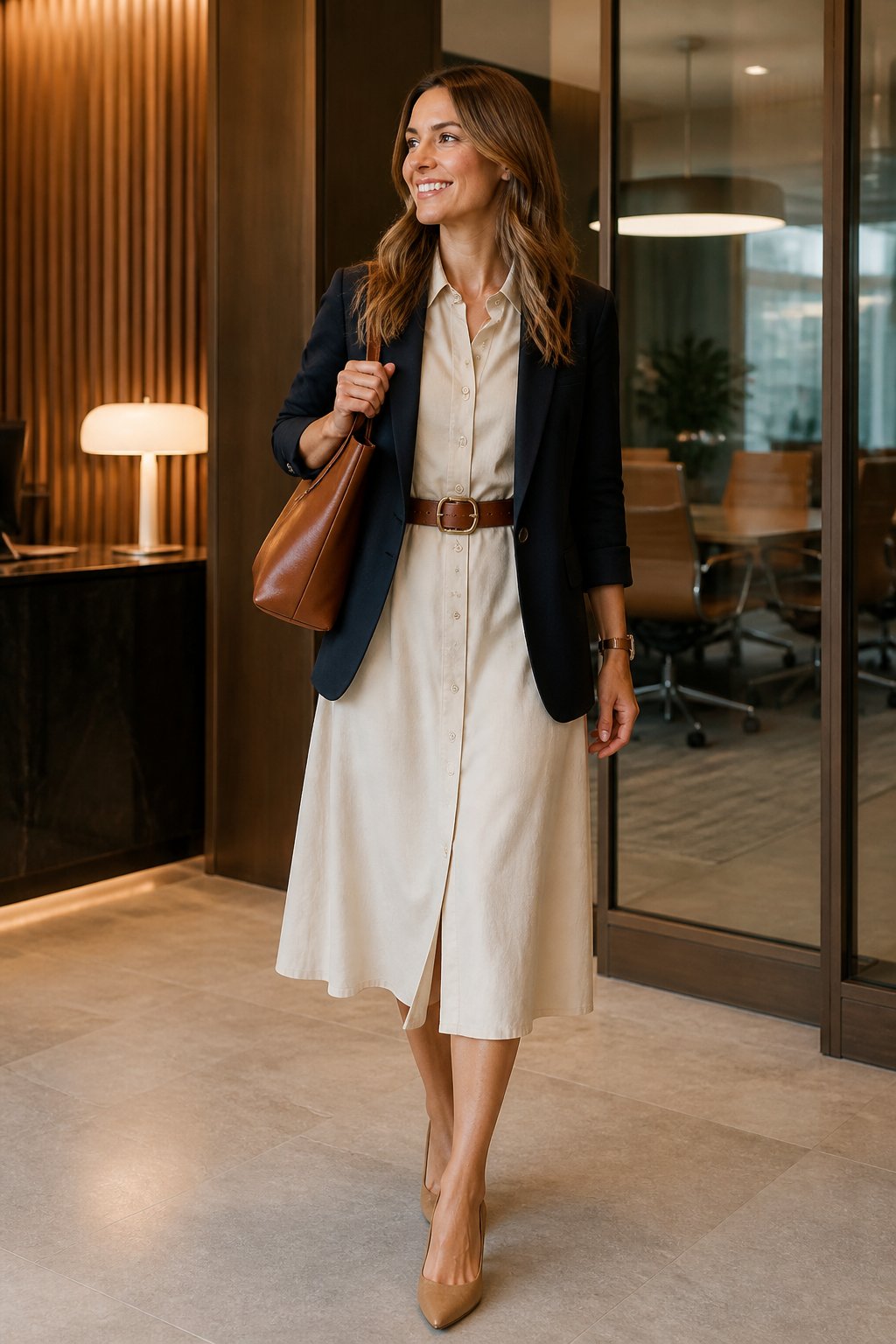
A shirt dress is a one-piece base; a belt can add shape, while a blazer makes the outfit feel more formal. Keep the belt comfortable when seated and let the blazer hang open if it hides the dress shape. If the dress buttons spread when you sit or walk, add a discreet fastener or wear it open over trousers instead.
Long-sleeve top, sleeveless vest, and relaxed trousers
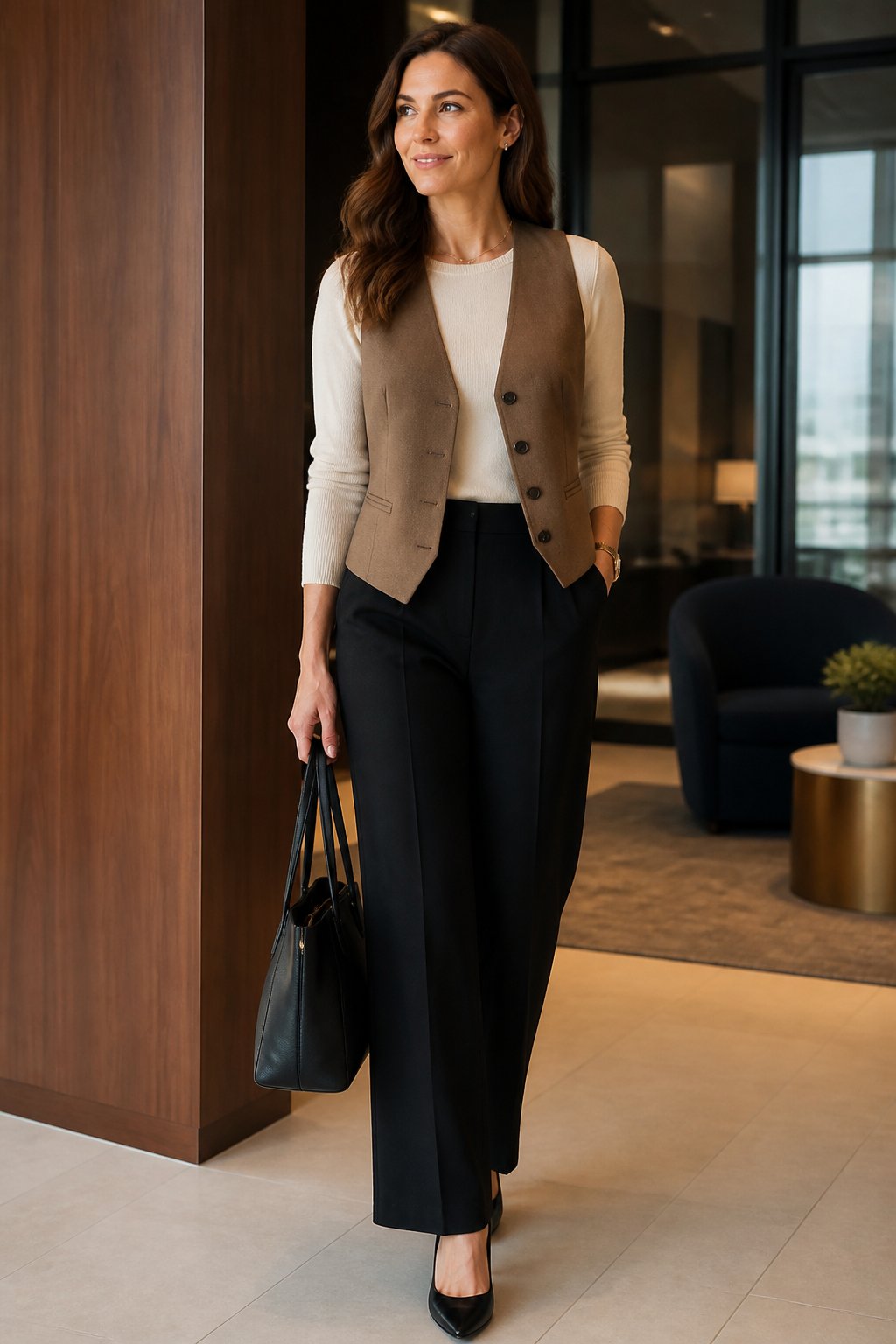
The long sleeve handles arm coverage and the vest adds structure without the warmth of a full jacket. Choose a smooth base layer so fabric does not bunch at the armholes. Relaxed trousers make the look comfortable for a long day; a pressed crease or clean shoe can sharpen the finish when the workplace is more formal.
Choose the formula for the day you have
For a presentation or client meeting, use a structured blazer, pressed trousers, and a shoe that feels stable while standing. For a warm commute, start with a breathable top and keep a light layer in your bag. On a day with more walking, favor a flexible waistband, a skirt or trouser hem that clears your stride, and shoes you can wear for the full commute. If your office has a specific dress code, let that guide fabric, footwear, and formality; the same silhouette can be relaxed or sharpened with small changes.
Build a small repeatable workwear rotation
Pick two bottoms, three tops, and one or two layers that already work with your schedule. Repeat the combinations that pass your sit, reach, light, and layer checks, then vary color or shoes to keep them from feeling identical. When you shop, note the specific problem a new piece would solve: a top that stays put, a lining that removes sheerness, or a layer that works in a cold meeting room. That keeps a modest work wardrobe useful instead of simply larger.
Plan the next step
For more relaxed covered combinations, browse modest outfit ideas. If your work wardrobe needs clearer mix-and-match bases, use work outfit formulas and our guide to business casual versus smart casual. The weekly outfit planner can help you map layers and shoes to the days you actually have.
Keep these outfit ideas handy.
Save this guide on Pinterest (opens in a new tab)More ideas for your wardrobe
 Modest Outfit IdeasModest Corporate Outfits That Look Polished Without Sacrificing Coverage
 Modest Outfit IdeasModest Office Outfits That Feel Modern Without Being Fussy
 Modest Outfit IdeasA Modest Capsule Wardrobe Built On Real Outfits
 Modest Outfit IdeasModest Layering Formulas for Easy Coverage and Less Bulk