
Work Travel Outfits That Transition From the Flight to the Meeting
A work trip becomes easier to pack when you plan around the schedule rather than a list of “travel fabrics.” Write down the flight, meeting, dinner, and weather needs first, then choose pieces that can serve more than one slot. Fabrics, linings, and care needs vary, so check each garment and do not assume a material resists wrinkles or stays comfortable all day.
A small shoe plan can save space, but there is no universal three-pair rule. Count the walking, dress code, and weather, then select shoes that can cover the actual itinerary. Wear a pair you have already tested, and keep a practical alternative if your route, venue, or forecast makes the dressier option unsuitable.
The flight-ready blazer: ponte pants, silk shell, loafers
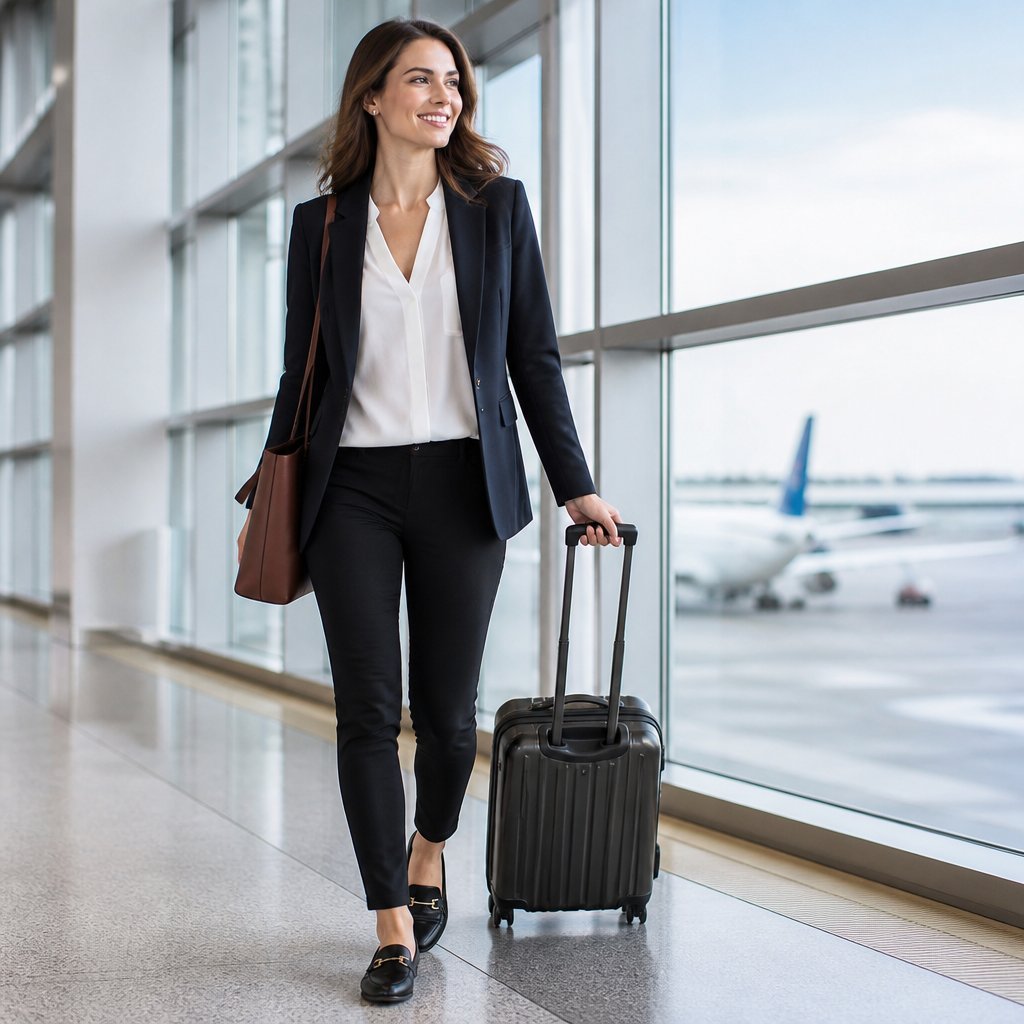
For the flight and first meeting, combine a comfortable trouser, simple top, and removable layer. Sit through a meal and reach into an overhead bin in the outfit to check the waistband, sleeves, and shoe security. A blazer in the tote is optional if the meeting calls for it; do not pack one just because the formula says so.
Make the base pieces earn space by pairing the trouser with at least one other top and the shell with a different bottom. Check sheerness and care instructions for the actual garments. If security or transit includes a lot of walking, use shoes that are already comfortable rather than relying on a new leather pair.
The all-day conference: sheath dress, cardigan, pointed flats
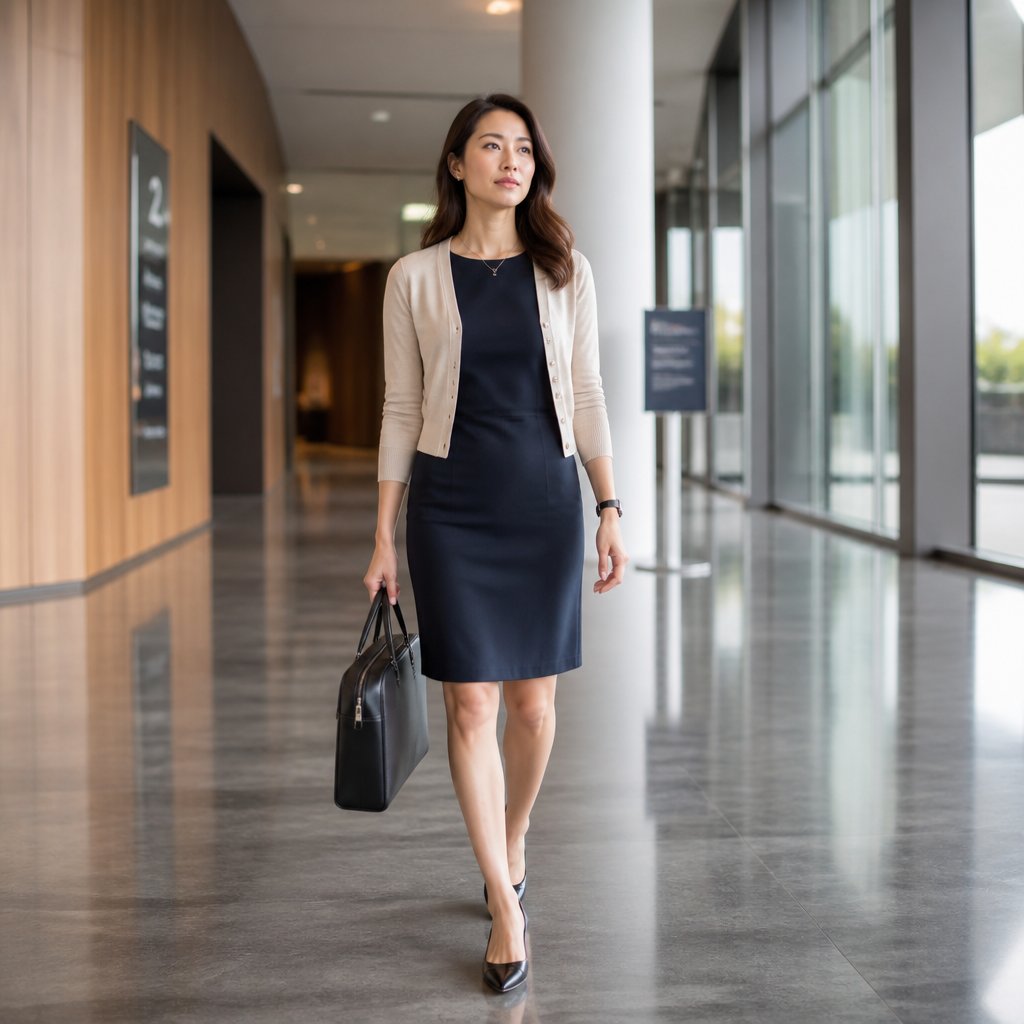
For a conference day, a dress and cardigan create two levels of coverage with few pieces. Check neckline, hem movement, and room to sit for sessions. Keep a removable layer only if indoor temperatures or the event setting make it useful; confirm the dress works on its own for breaks or after the meeting.
Compare the dress with a trouser outfit before packing both. If both solve the same event and weather need, choose the one that combines better with your shoes and existing layers. A pointed flat is only one option; consider the walking distance and the time you expect to stand.
The client dinner: wide-leg crepe pants, cashmere turtleneck, block heels

For a client dinner, use a bottom and top that are comfortable after a full workday and suit the restaurant’s dress expectations. Try the pieces seated, and check whether the layer still fits over the top. Choose a heel only if it works for your route; a polished flat can be easier to use across more settings.
A fine knit may layer neatly under a jacket, but warmth and bulk vary by garment. Check the care label and what the restaurant temperature may be; avoid packing a delicate piece if the trip’s laundry or storage conditions do not suit it. A repeat shoe is useful only if it works for the rest of the itinerary.
The airport-to-office: crepe jumpsuit, leather sneakers, tote
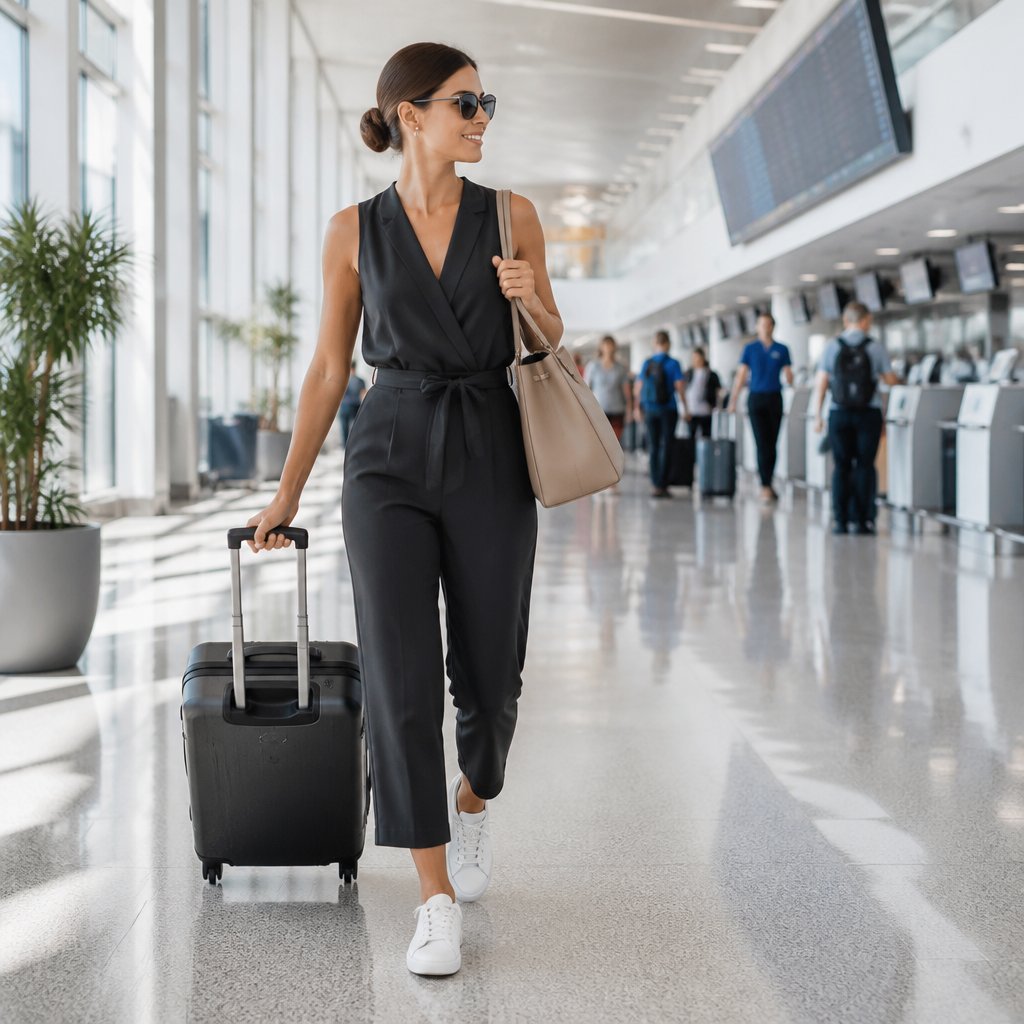
A jumpsuit can reduce the number of separate pieces, but test fastening, sitting, and restroom access before assigning it to a long travel day. Check the fabric, hem, and layer against the destination’s weather. Court sneakers are one casual choice if the meeting allows them and the pair is comfortable.
A tote can hold a laptop and a light layer, but check its dimensions and weight against your work essentials and airline rules. Pack the jumpsuit only if it works with another shoe or layer, or if its one-event use is worth the space. No garment is automatically an efficient travel piece.
The multi-day capsule: ponte trousers, button-down, knit blazer
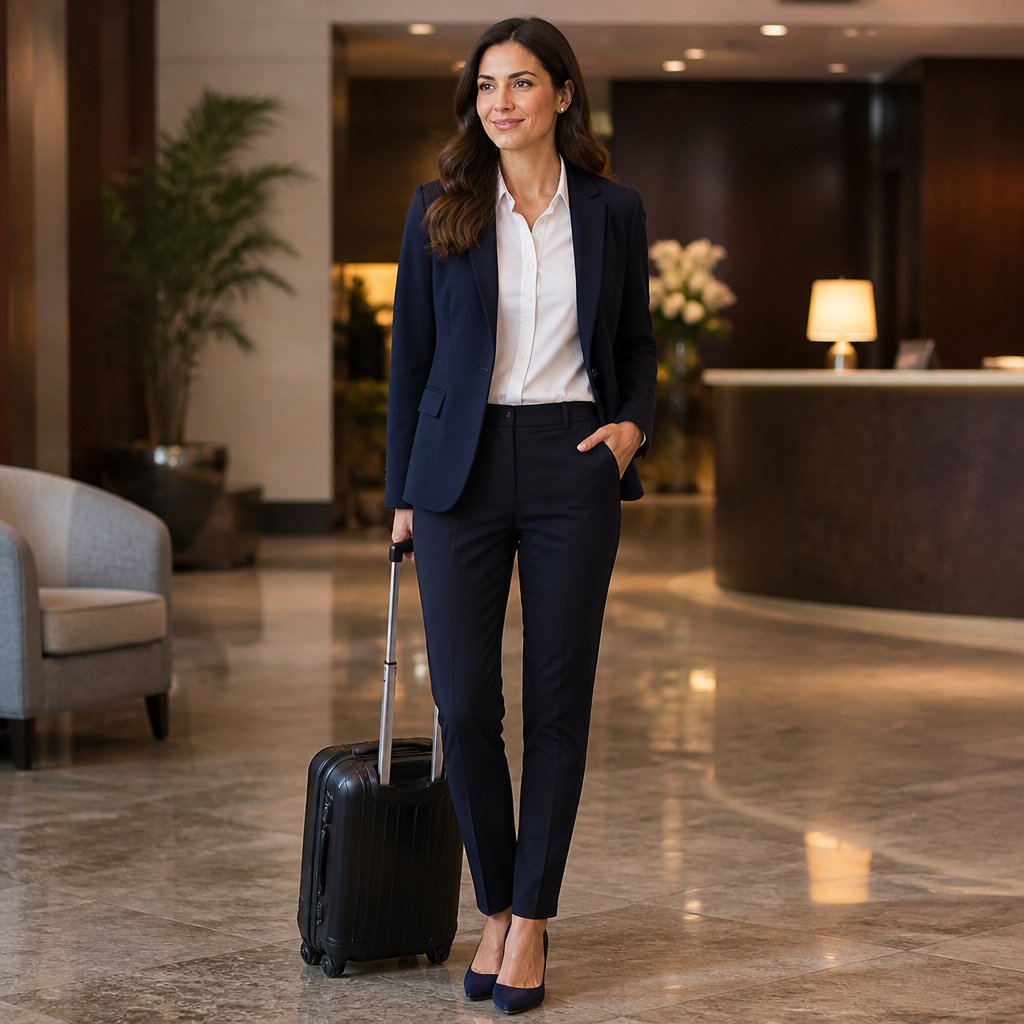
For several meeting days, choose one bottom that works with multiple tops and layers. Lay out each combination before packing and mark which item repeats. Check care instructions and plan for laundry rather than assuming a pair of trousers can be worn for several days without washing.
A button-down may need ironing or steaming depending on its fabric and finish; inspect the label and your own tolerance for wrinkles. A knit blazer can be a lighter alternative for some trips, but confirm that it meets the event’s dress code. Remove any piece that duplicates another without adding a useful combination.
The evening networking: midi skirt, shell, structured jacket
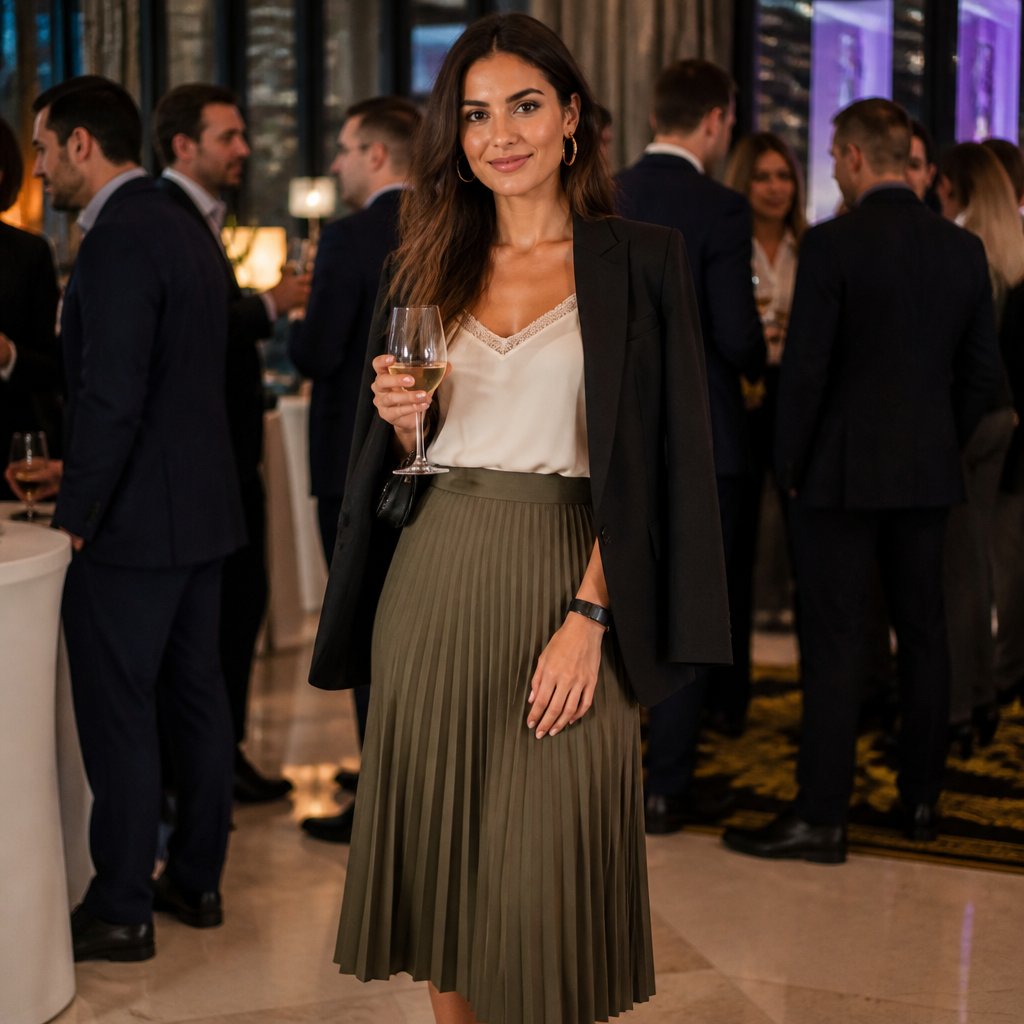
For an evening networking event, reuse a jacket or shoe already in the bag and change one element, such as the skirt or top. Test the outfit sitting and standing, and make sure the skirt allows comfortable movement. The venue and event formality should decide the combination, not a generic “networking” formula.
A structured layer can change the outfit’s formality, but lapels and buttons do not guarantee a polished result if the fit is uncomfortable. Check the shell for coverage when the jacket is open. Try the shoes on the full route, including the walk back to transport or hotel.
The hybrid workday: dark denim, cashmere crewneck, loafers
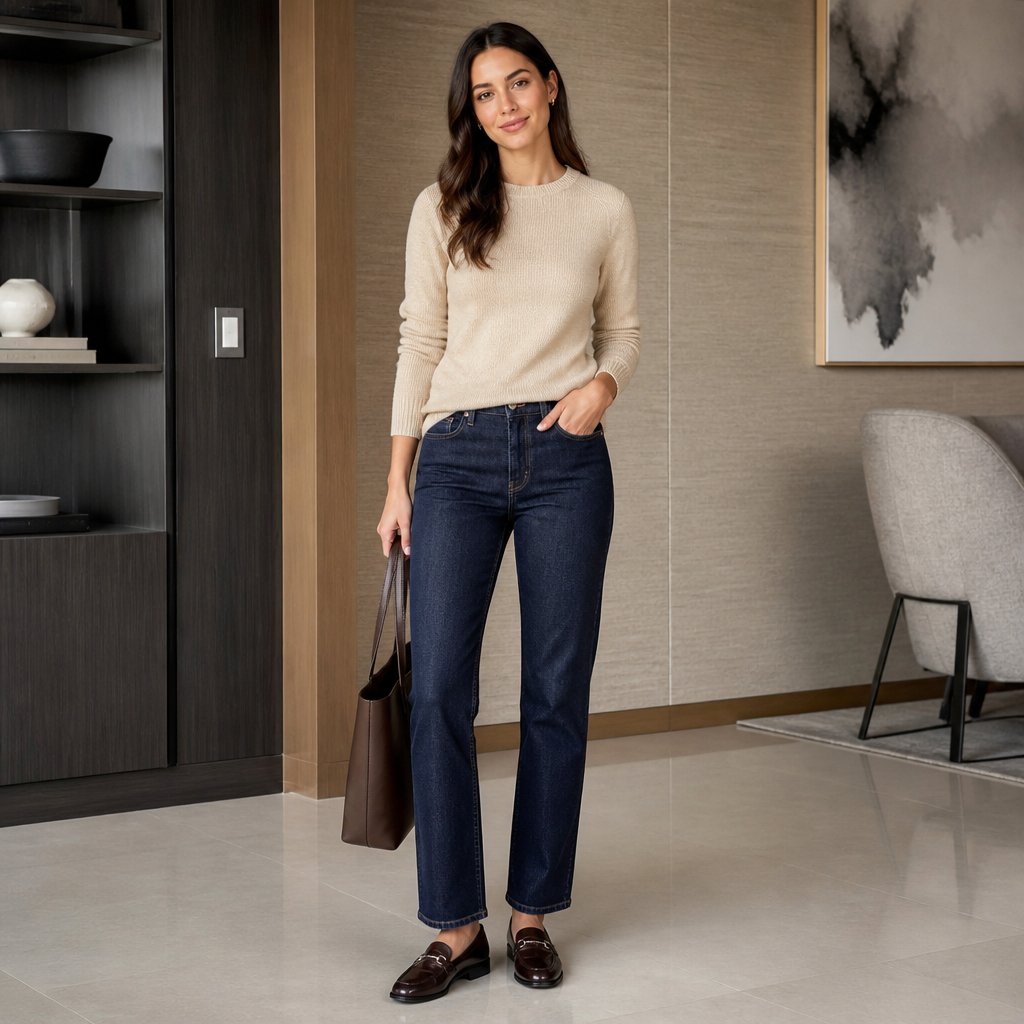
Dark denim may work for a travel day that includes an informal office stop, if the workplace permits it. Check the wash, fit while seated, and whether the jeans pair with a top or layer you already packed. A sweater is useful only if the destination temperature and care requirements make sense.
This combination can reduce outfit changes when plans shift, but it is not a substitute for checking the dress code. If you will go directly from a plane to a formal meeting, keep a layer in the tote or choose a more formal base. Avoid claiming any knit will stay wrinkle-free without checking that particular garment.
The presentation day: tailored suit, silk blouse, pumps

For a presentation, pack the suit or separates that fit comfortably and meet the room’s expectations. Sit, raise your arms, and test the full outfit before the trip. Check whether the jacket and trousers can also work separately; if not, decide whether the one-event use is worth carrying.
A blouse gives you another top combination, but silk or other delicate fabrics may need careful packing and care. Read the label and consider the meeting’s temperature. Keep the outfit simple enough to move through the presentation and any follow-up conversation without needing a change.
The quick turnaround: ponte dress, denim jacket, ankle boots
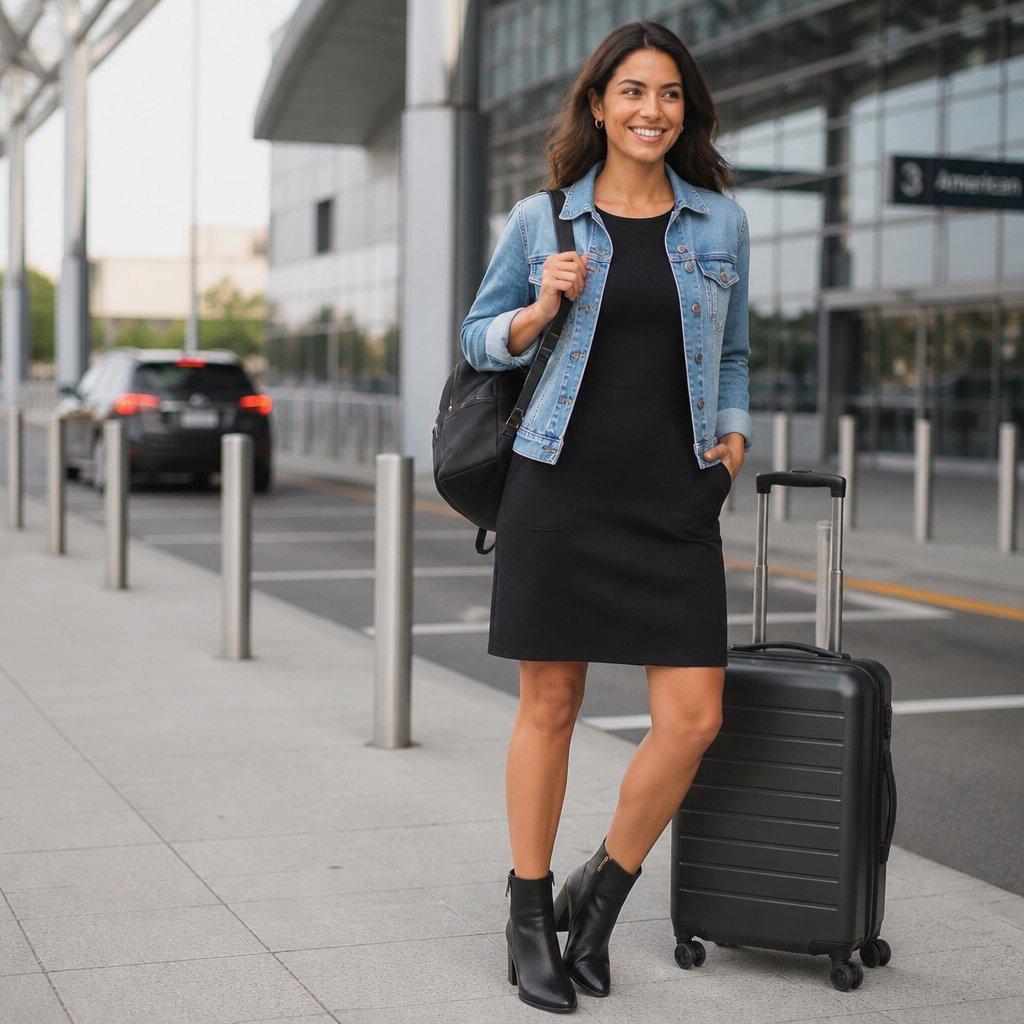
For the last meeting and flight home, choose a base outfit that can handle both settings, then add a removable layer if needed. Check dress code, temperature, and the comfort of sitting for the flight. A denim jacket or low boot is optional; choose the pieces that actually work with the other clothes in your bag.
Test your chosen bottom, top, and shoe together before departure. If the hem catches or the waistband presses after a meal, adjust the combination now. Do not assume ponte or crepe will stay smooth; appearance after sitting depends on the specific construction and wear.
The travel-home set: joggers, striped tee, hoodie, platform slip-ons
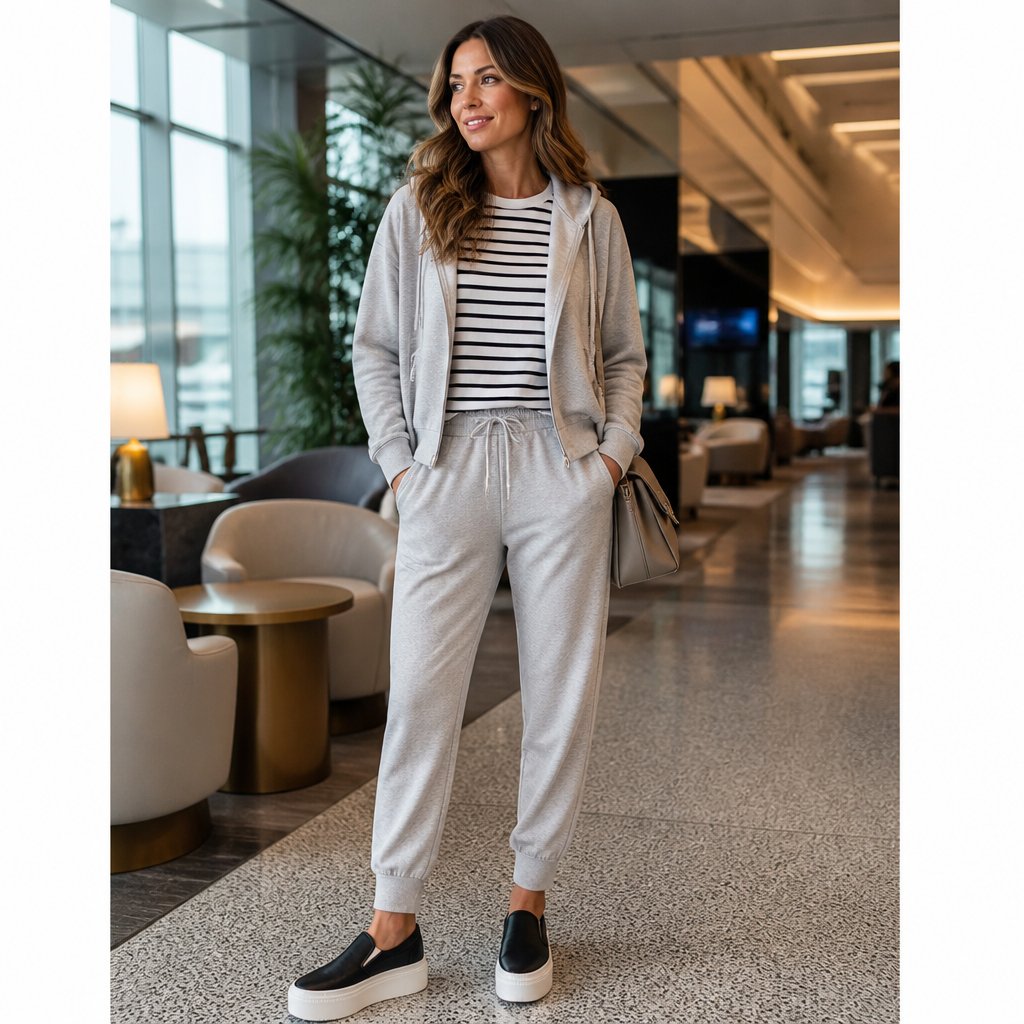
For the return flight, comfort may matter more than meeting formality. Choose layers that are easy to remove and shoes you can walk in. If joggers or a hoodie are not appropriate for the travel day’s plans, use the same comfortable base with a cleaner top or trouser instead.
Keep only the pieces that serve a real use in the schedule. A packing list can show when one shoe, jacket, or bottom repeats; it can also reveal when an extra item is needed for weather, dress code, or a backup plan. Use a short outfit checklist before closing the bag.
Plan the next step
To build your list, note each trip slot, the outfit assigned to it, and the pieces shared across looks. Include care needs, one forecast-appropriate layer, and a backup for the most important event. Then use the travel outfits for women hub for broader ideas.
For more specific options, see business casual travel outfits, winter travel outfits for women, travel outfit ideas, and the work outfit ideas hub. Adapt each idea to the actual itinerary and dress code.
Keep these outfit ideas handy.
Save this guide on Pinterest (opens in a new tab)More ideas for your wardrobe
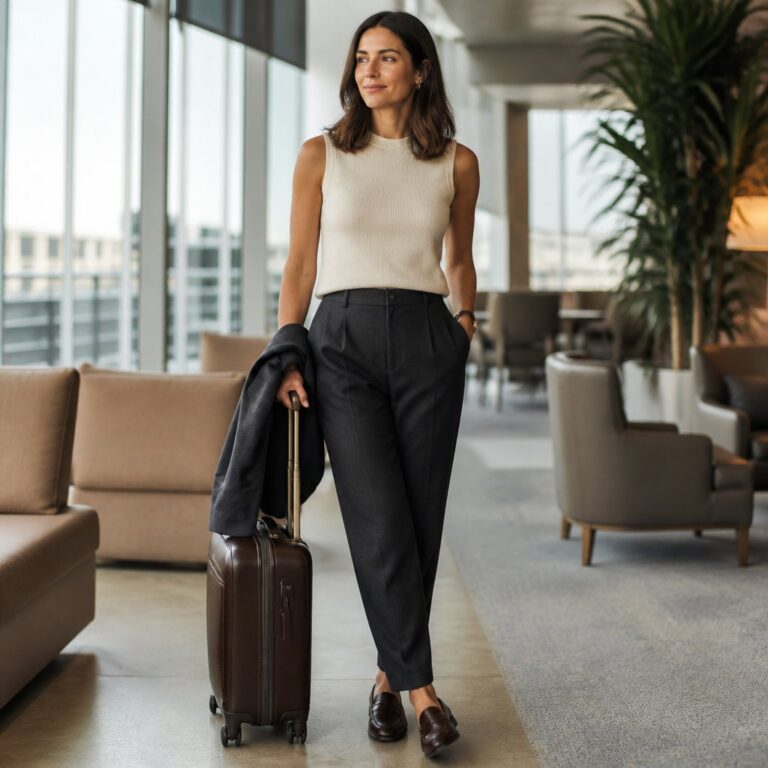 Travel Outfit IdeasBusiness Casual Travel Outfits for Women Who Need Plane-to-Meeting Polish
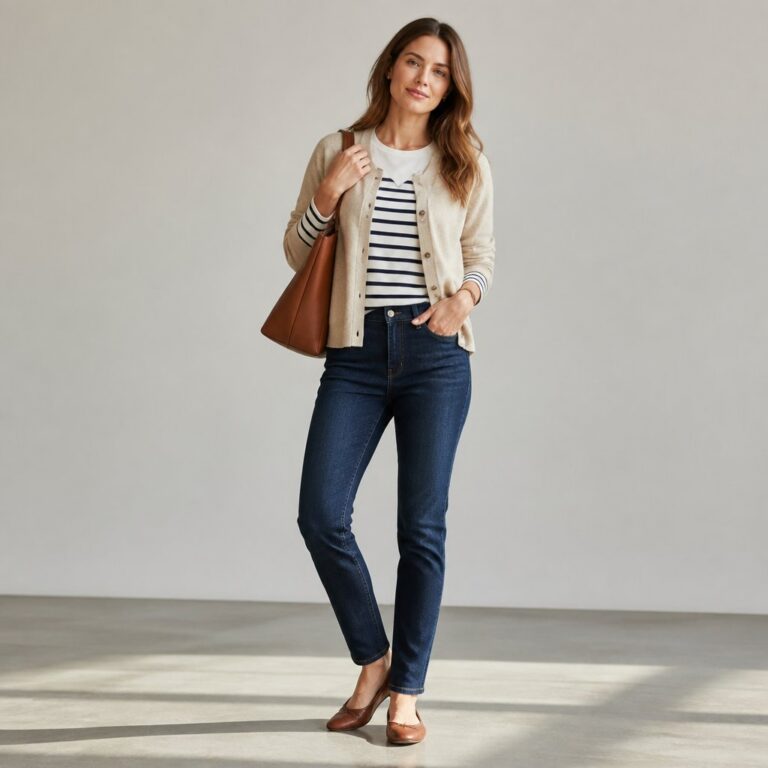 Travel Outfit IdeasTravel Outfit Formulas: Packable Looks for Trips Without Overpacking
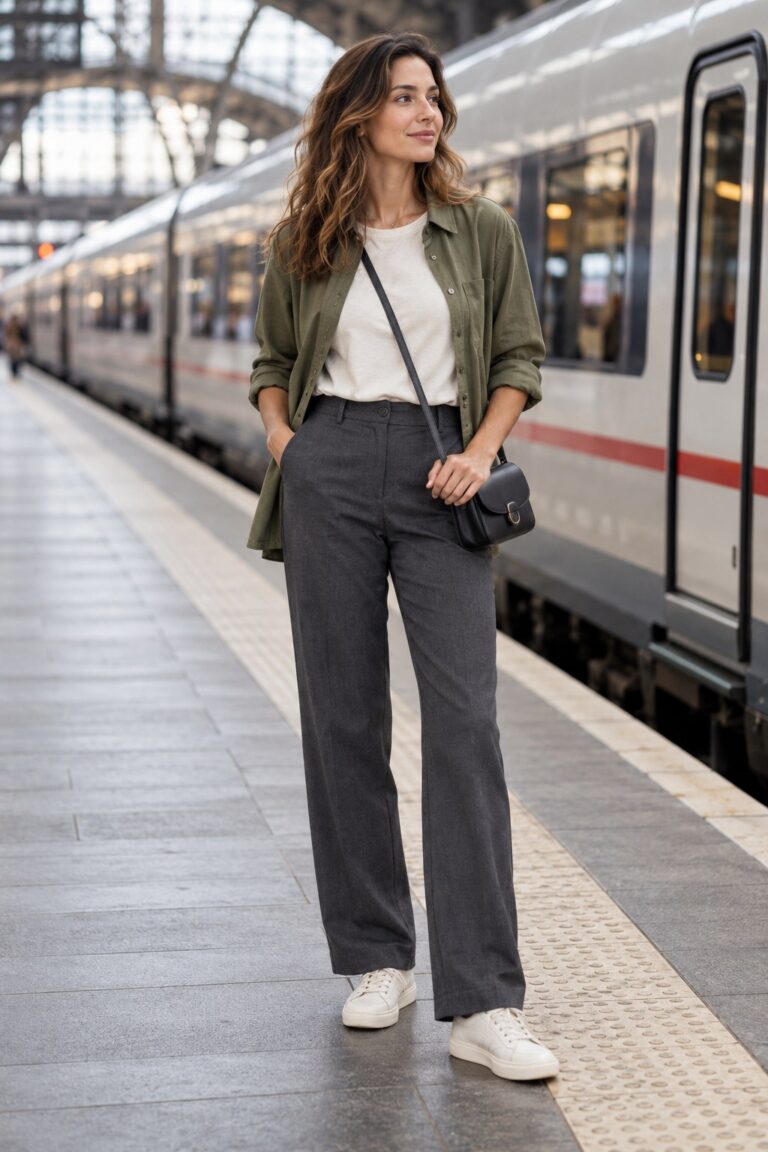 Travel Outfit Ideas8 Train Travel Outfits for Platform Changes, Overhead Bags, and Long Rides
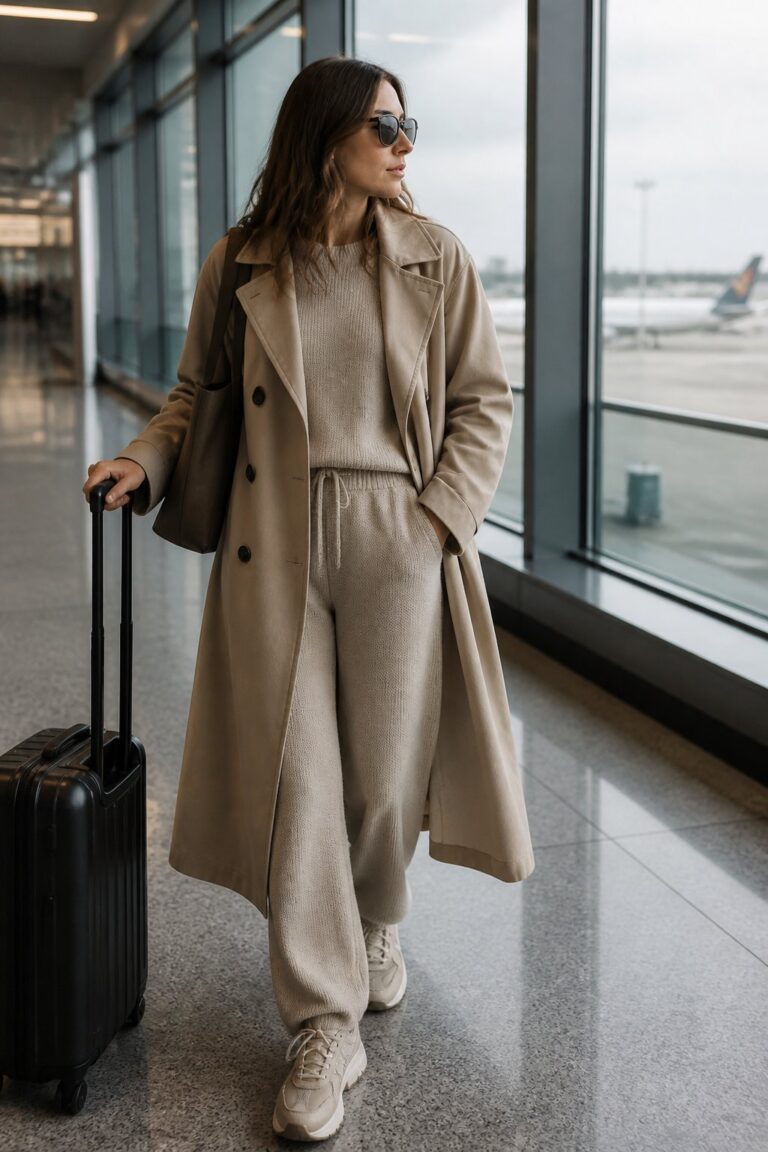 Travel Outfit IdeasAirport Outfits for Early Flights That Stay Comfortable and Presentable