8 Business Casual Outfits with Jeans for Different Office Dress Codes
Jeans can fit into some business-casual wardrobes, but the phrase means different things from one workplace to another. A polished outfit for a creative studio may feel too relaxed for a client-facing office, while a dark, simple pair can be perfectly ordinary on a casual Friday. The first step is not buying a particular blazer or copying an outfit photo. It is checking what your own office permits, then deciding how polished the rest of the outfit needs to feel.
These eight formulas show how to style jeans across different levels of workplace formality. Each one has a clear denim choice, a more polished anchor, and a practical shoe option. They are starting points, not permission to ignore an employee handbook or an event-specific dress code. If your office prohibits denim, use the non-denim swaps as a visual guide and build the same proportions with tailored trousers.
For this guide, “business casual with jeans” means denim is expressly allowed or commonly accepted in your setting. If you are new to a workplace, look at the written policy and observe what people wear on an ordinary day. For interviews, presentations, or client meetings, a safer choice may be trousers unless you know jeans are welcome. A polished outfit should help you feel prepared, not leave you worrying whether it crosses a line.
Start with the office, then choose the denim
There is no universal business-casual definition that makes jeans acceptable everywhere. A dress code can vary by organization, team, client, day, or event. Some workplaces allow dark, clean denim every day; others permit it only on casual days; some exclude it altogether. When the policy is unclear, ask a manager or HR contact a straightforward question such as, “Are clean, non-distressed jeans appropriate for this meeting?” That is more reliable than treating a social-media outfit as a rule.
Once denim is allowed, choose a pair that looks intentional for the setting. A clean wash, intact fabric, and hem that works with your shoe create a calm base. Straight, slim-straight, or a controlled wide-leg shape can all work if the fit is comfortable and the silhouette suits the office. Avoid assuming that one cut is professional on every body. Comfort, mobility, and the workplace standard matter more than a trend label.
Then add a polished anchor: a blazer, neat knit, button-front shirt, refined cardigan, or well-finished shoe. You do not need every piece to be formal. The goal is a balanced outfit whose overall impression fits the day. If the jeans themselves are the most casual piece, let the top layer or shoes do a little more work. If the office is creative and relaxed, a simpler combination may already be enough.
8 business casual outfits with jeans for different office dress codes
1. Dark straight-leg jeans, a soft blazer, a fine knit, and loafers
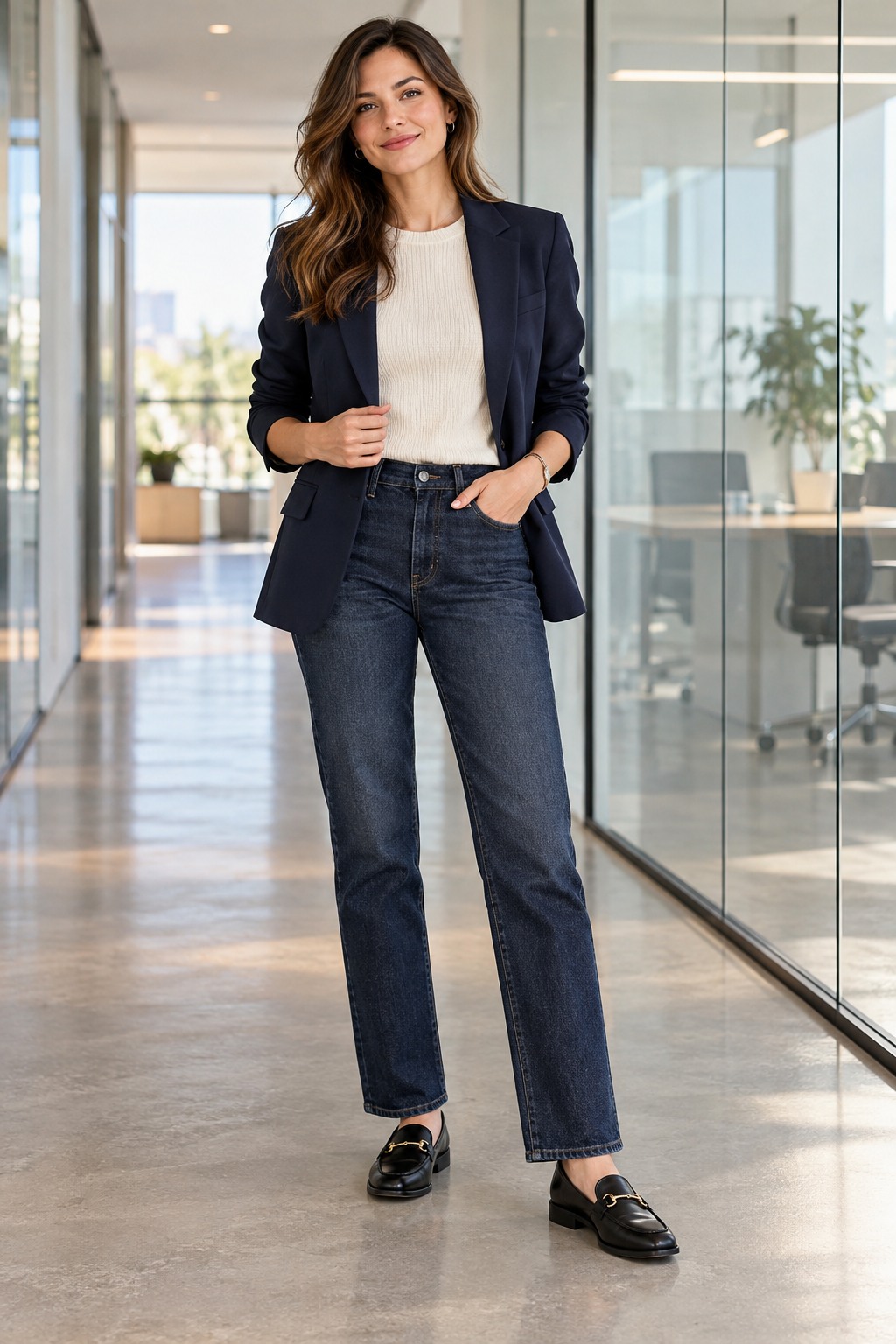
This is the most flexible formula for an office where business casual is established and clean denim is allowed. Start with dark straight-leg jeans without rips or heavy fading. Add a fine-gauge knit top in a neutral or one restrained accent color, then layer a soft blazer that does not feel like a full suit jacket. Loafers create a finished line without requiring a heel; choose a pair that fits securely and works for your commute and office floors.
Keep the proportions easy rather than overly tight. A top that skims the body and a blazer that lets you reach comfortably tend to look more relaxed and modern than a visibly restrictive outfit. If the jeans are full length, let the hem fall cleanly over the loafer or choose an ankle length that does not bunch. A slim belt can connect the pieces, but it is optional if the waistband sits neatly without one.
Use this on a regular office day when you want to look prepared without dressing for a formal event. For a presentation or external meeting, check the dress code for that occasion. If denim may be too casual, switch to dark tailored trousers and keep the knit, blazer, and shoes. The outfit’s useful idea is its clear structure, not the jeans themselves.
2. Black jeans, a fluid blouse, a collarless jacket, and pointed flats
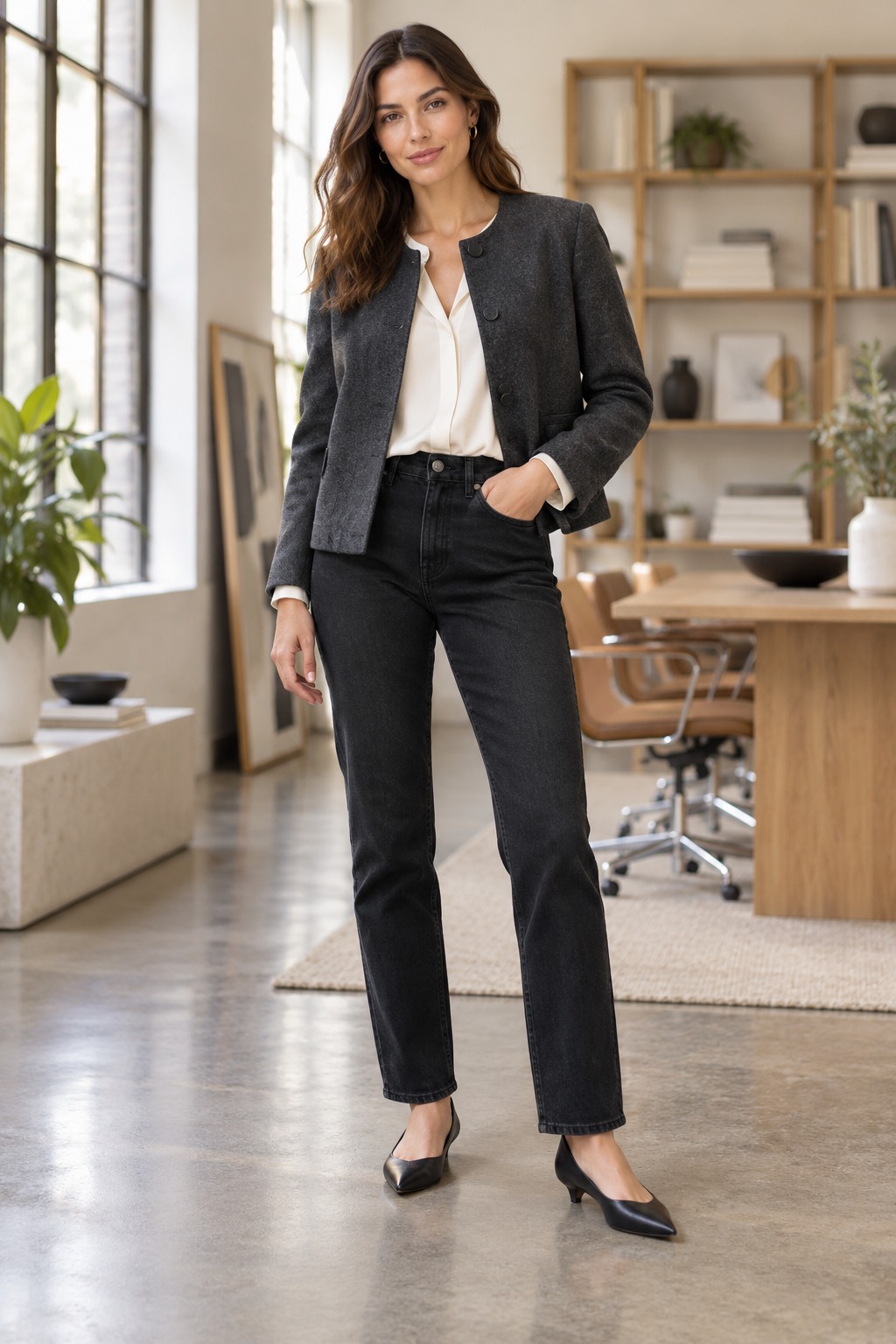
For a creative office or a relaxed team that still expects a polished appearance, black jeans offer a slightly dressier base than a visibly faded blue wash. Choose a straight or gently tapered shape in opaque fabric, then add a fluid blouse and a collarless jacket or structured cardigan. Pointed flats sharpen the outfit without making it feel like formal suiting. Keep the blouse fabric practical enough for a full workday, especially if it wrinkles easily or needs special care.
Black-on-black can look intentional when the pieces have different textures: matte denim, a soft blouse, and a lightly structured jacket. You can also use a cream or muted-color top for clearer contrast. If the jacket hits at the hip, check that it does not bunch against the rise of the jeans when you sit. A simple earring or a tidy bag can finish the outfit, but avoid adding accessories just to make casual denim look “acceptable.” The dress code decides that, not an accessory.
This formula suits a day spent at your desk, in a studio, or moving between internal meetings when your office permits jeans. For more traditional client settings, replace the black jeans with matching dark trousers. If your company has a no-denim rule, do not interpret black denim as a loophole; the material is still denim even when it looks dressier.
3. Dark wide-leg jeans, a crisp shirt, a knit vest, and low-heeled boots

A wider jean can feel current while still looking considered when the length and volume are deliberate. Choose a dark, clean pair that drapes rather than pools at the floor. Add a crisp button-front shirt and a fine-knit vest or sleeveless sweater for layered texture. Low-heeled ankle boots can sit neatly under a longer hem and provide a little structure. This combination is best for a workplace that already treats jeans as an accepted part of business casual, not for an office where denim is only tolerated on rare Fridays.
Pay attention to the shirt’s fit and the amount of fabric at the waist. A partial tuck or a shorter vest can show where the outfit is shaped without requiring a tight waistband. If the jeans are long, test them with the exact shoes before wearing them to work; a hem that catches underfoot becomes distracting. If you prefer flats, an ankle-length jean can be easier to manage. The right proportion depends on height, movement, and personal preference.
Use a simple bag and restrained jewelry so the outfit stays focused on a clean silhouette. If your workplace has a client-facing day, a slim tailored trouser can replace the jeans with almost no change to the top half. That swap is useful when the day changes but you still want to wear the same shirt and knit layer.
4. Ecru jeans, a tonal shell, a lightweight blazer, and closed shoes
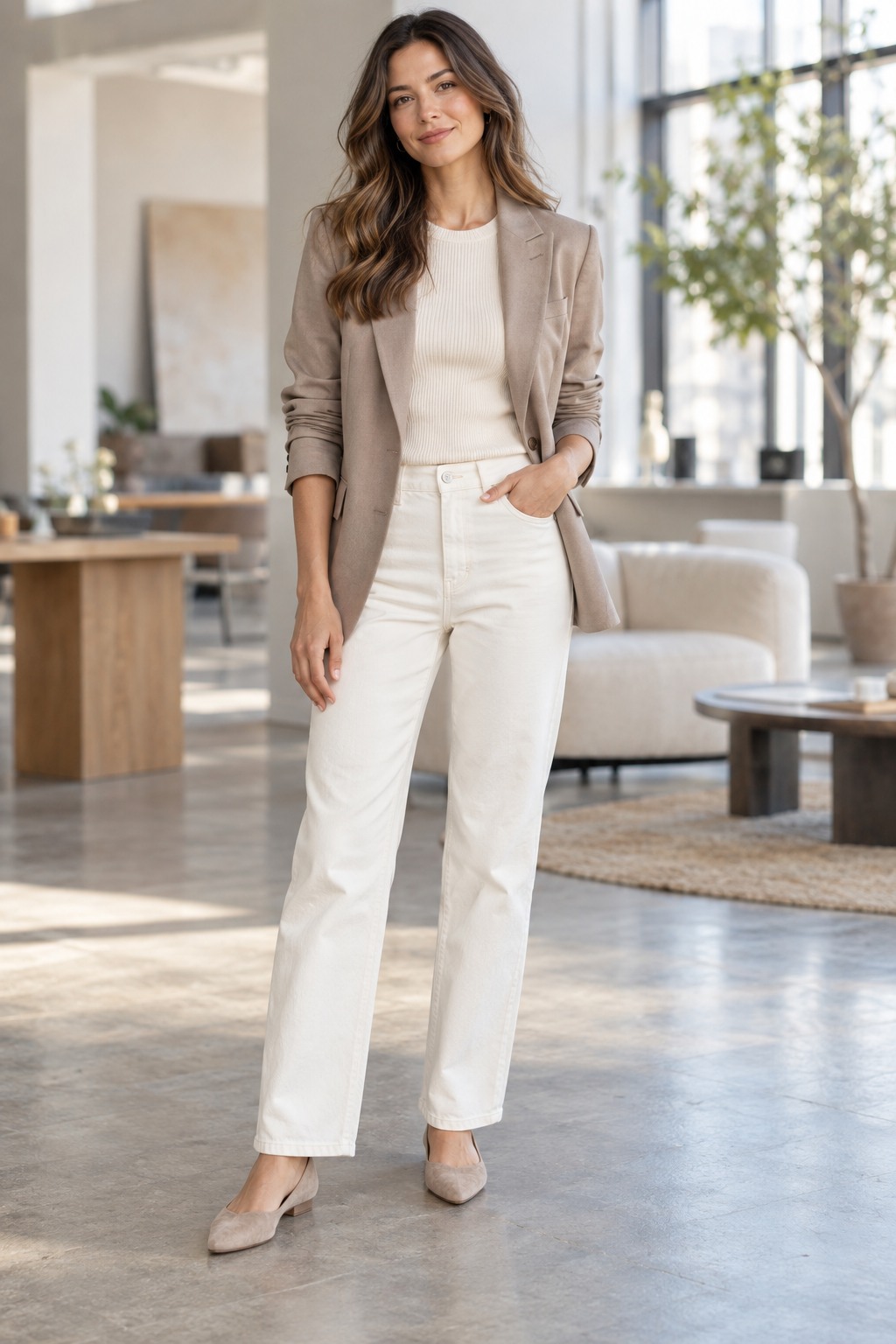
Light or ecru denim can feel fresh in a relaxed creative workplace, but it is more visually prominent than dark jeans. Choose a pair that is opaque, clean, and comfortable to sit in. Pair it with a tonal knit shell and a lightweight blazer in a related neutral, then finish with a closed-toe flat or another office-appropriate shoe. The tonal palette keeps the outfit cohesive while the blazer provides a clear polished layer.
Before wearing ecru denim to work, check the office culture and the fabric in daylight. Pale jeans may show pockets or underlayers more clearly, and small spills can be more visible than on dark denim. Those are practical considerations, not reasons that light jeans are automatically unprofessional. If the outfit needs more formality, switch to ivory or stone-colored tailored trousers. If the office is relaxed enough for denim, a neat top and a well-fitting jacket can make the look feel considered.
This is a good option for an internal workday, a warm-weather commute, or a creative team whose dress code welcomes lighter colors. Keep the fit easy and avoid adding an overly casual graphic tee if you want the outfit to land on the business-casual side. The clean color story does much of the visual work, so extra styling is unnecessary.
5. Dark ankle jeans, a striped button-front shirt, a refined cardigan jacket, and polished sneakers

When a workplace has a relaxed business-casual dress code or a clear casual-Friday tradition, dark ankle jeans can pair well with a fine striped button-front shirt and a refined cardigan jacket. Choose sneakers that are clean, intact, and simple enough for your office. A smooth leather or similarly neat finish can read more intentional than a gym shoe, but comfort and foot needs still come first. If sneakers are not appropriate at your workplace, swap in a loafer or closed flat.
The shirt brings a little structure, while the cardigan jacket feels softer than a blazer. Make sure the stripe scale and colors look calm together; a narrow stripe in blue, black, or another muted tone is easy to combine. An ankle hem shows the shoe, so check that the proportions feel balanced when standing and sitting. A longer cardigan can also work if it does not catch on a chair or interfere with movement.
This outfit is not a universal Friday uniform. Some offices expect the same standard every day, and some do not allow jeans or sneakers at all. Use it only where the written guidance and team norms make sense. If you need a more polished version, replace the sneakers with a loafer and the cardigan jacket with a blazer, keeping the same jeans only if denim remains permitted.
6. Indigo slim-straight jeans, a draped blouse, and a longline vest
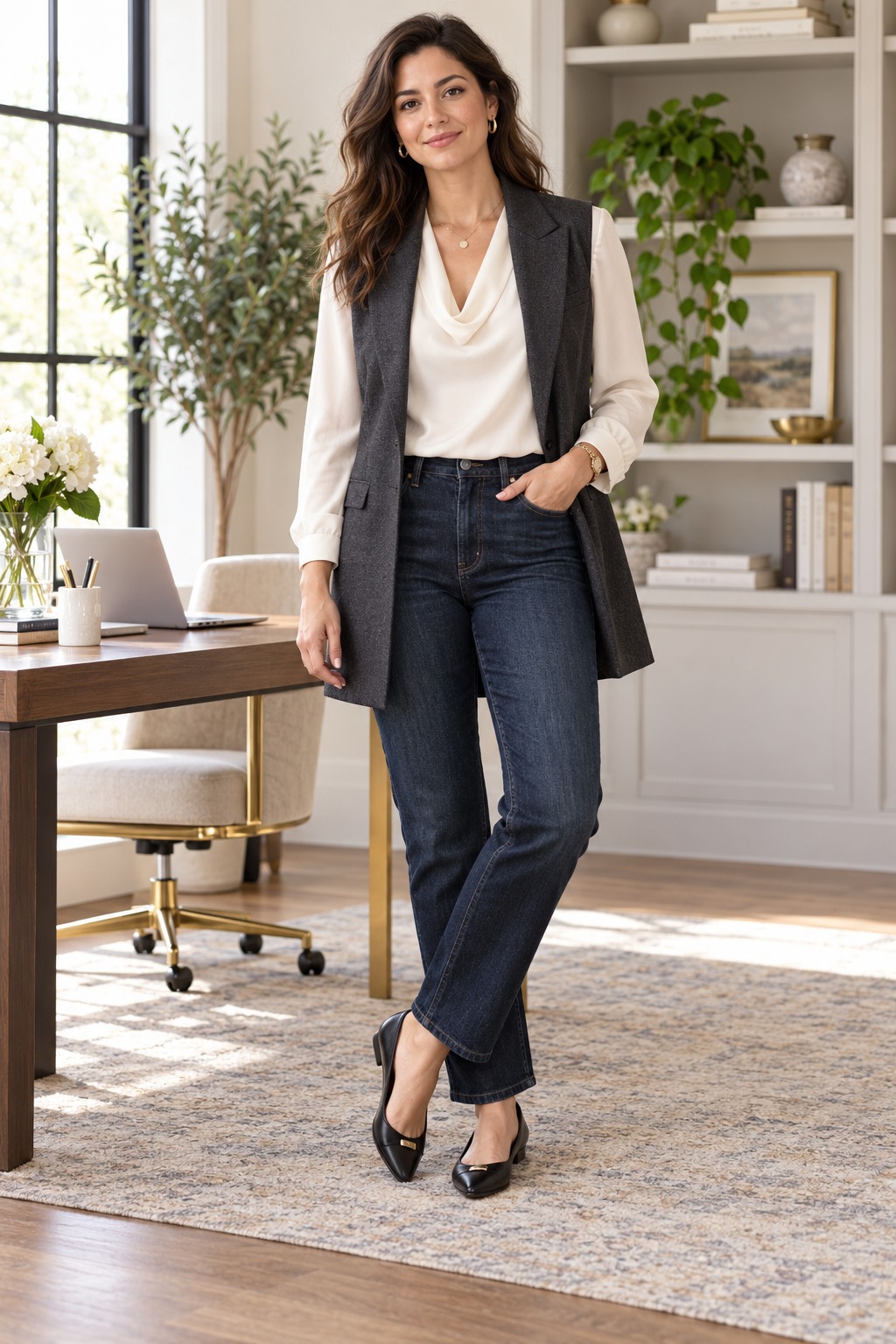
If your office permits dark denim for client-facing work, a longline vest can add structure without the formality of a full suit jacket. Pair clean indigo straight-leg jeans with a draped blouse and a vest that sits smoothly at the shoulders. The layers create a finished line while allowing the blouse to remain the softer focal point. Keep the jeans free of distressing and check that the hem does not pool over your shoes.
Before wearing this combination to an important meeting, compare it with the office’s usual standard. Some workplaces mean tailored separates when they say business casual; others allow neat dark denim. A polished flat, low heel, or loafer can keep the outfit professional while remaining practical for a commute. If the vest feels too warm, replace it with a lightweight open blazer.
7. Dark trouser jeans, a short-sleeve knit, and a refined cardigan jacket
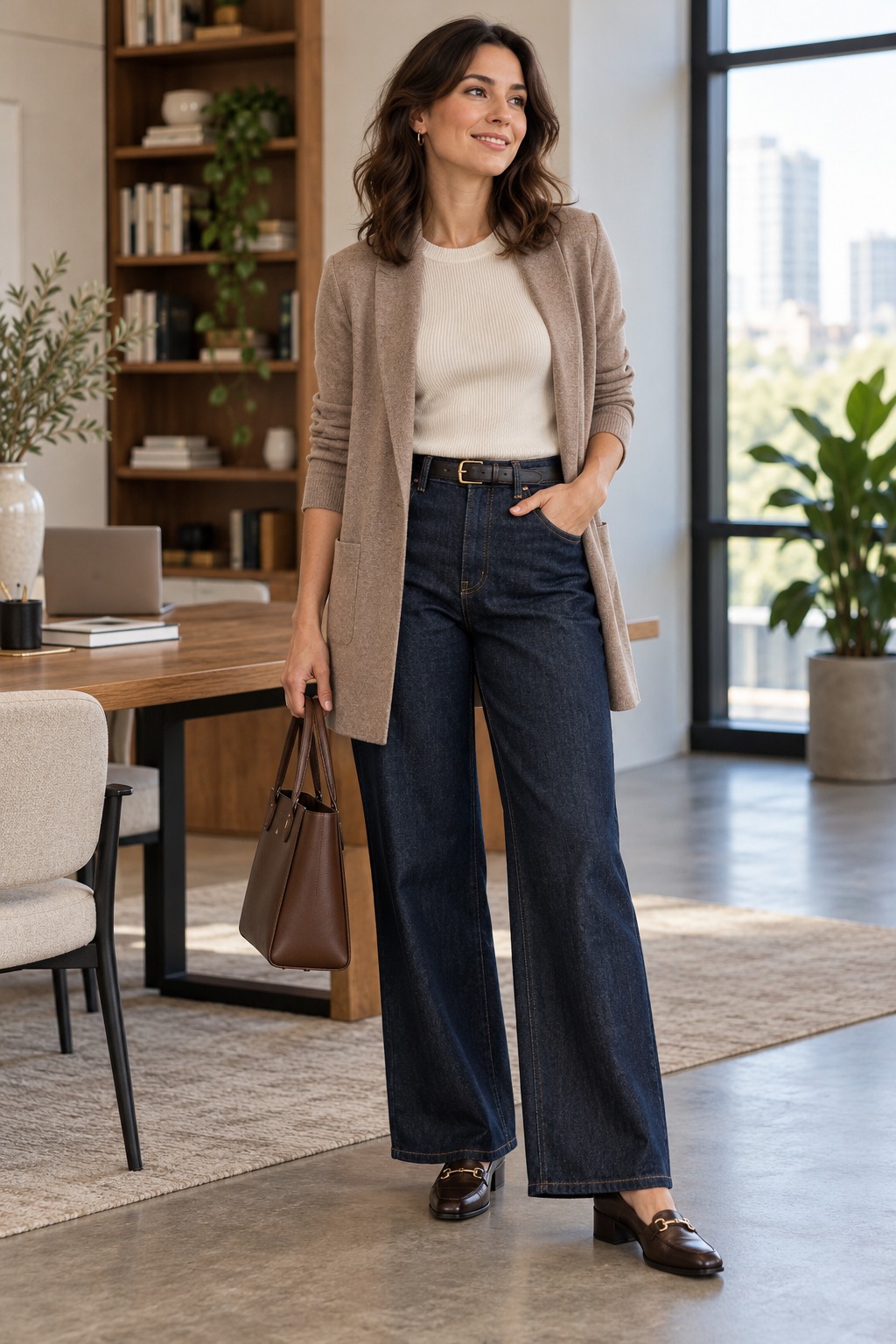
Trouser jeans have a wider, more tailored shape than many casual denim cuts. Pair them with a neat short-sleeve knit and a refined cardigan jacket for a comfortable hybrid-work outfit. The cardigan adds a layer for a chilly meeting room, while the shorter sleeve keeps the base from feeling bulky. Choose a clean dark wash and a hem that skims the shoe rather than dragging.
This outfit is strongest in a relaxed office where denim is clearly acceptable. For a more formal environment, use tailored trousers instead and keep the same knit-and-cardigan combination. A pointed flat or low block heel can sharpen the line; choose a supportive option if your day includes walking between buildings or standing at a desk.
8. Black ankle jeans, a fine turtleneck, and a soft structured jacket
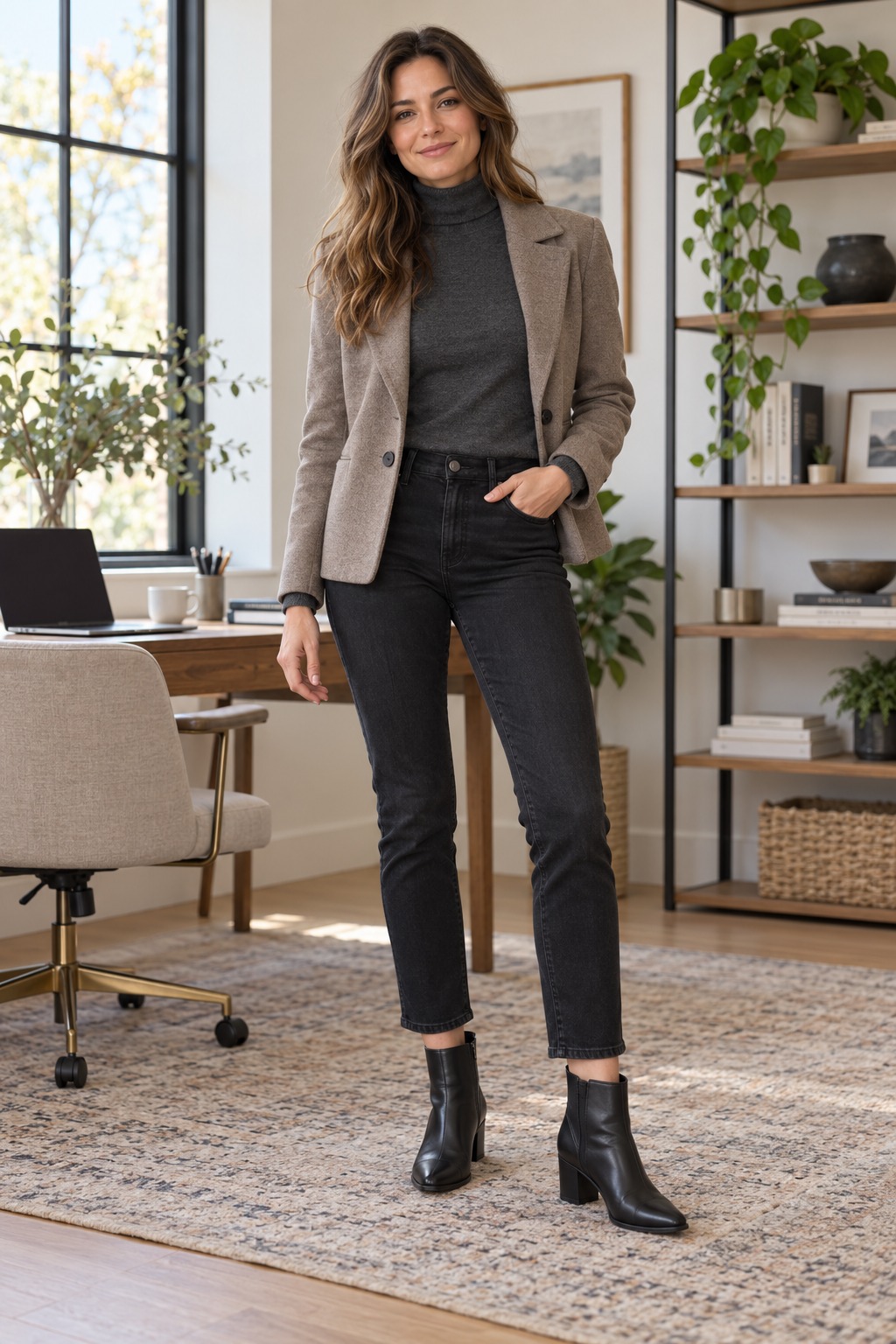
For a cooler office or a day with early meetings, wear black ankle jeans with a fine turtleneck and a softly structured jacket. The close-fitting knit sits smoothly beneath the jacket, while the ankle length makes it easier to show a flat, loafer, or low boot. Choose a jacket with enough room to move your arms and a knit weight that does not overheat you indoors.
Black jeans vary in wash and finish, so inspect them in daylight. A deep, even color usually reads neater than a heavily faded pair. If your workplace expects a more formal finish, substitute black tailored trousers; the turtleneck, jacket, and shoes will still create the same outfit structure. This makes the formula adaptable without pretending every dress code accepts denim.
How to make jeans look intentional without overcomplicating them
Use a short check before you leave home. Are the jeans clean and intact? Does the hem work with the shoe you are wearing? Is the top half finished enough for the people and tasks on your calendar? Will you be comfortable sitting, commuting, and moving through the day? These questions help you make a decision based on the actual setting instead of chasing a universal rule that does not exist.
- Read the policy: Follow written rules and any meeting-specific guidance.
- Observe the context: Notice what is worn on ordinary days, but do not assume one colleague’s choice overrides policy.
- Choose a clean base: Intact denim and a comfortable fit create a less distracting starting point.
- Add one polished anchor: A blazer, neat knit, shirt, cardigan jacket, or refined shoe is usually enough.
- Plan a simple swap: Keep dark trousers available for interviews, formal presentations, or unclear dress expectations.
Also think about the task, not only the title of the dress code. A day in a studio, a video call from home, a client visit, and an interview can all call for different levels of polish. You can repeat the same jeans with different tops if they suit your workplace and are clean. A small rotation is often easier to manage than trying to make every outfit feel completely new.
Common questions about business casual jeans outfits
Are jeans considered business casual for women?
Sometimes, but not in every office. Business casual is interpreted differently across organizations and may change by team or occasion. Check your workplace policy and ask if the answer is unclear. The outfit formulas here assume jeans are permitted; they do not establish a dress-code rule.
What color jeans look most polished for work?
Dark, clean denim is often an easy starting point because it creates a quiet base, but color alone does not make an outfit acceptable. Fit, condition, styling, and the written workplace standard all matter. Black, medium, and light denim can work in some relaxed settings, while some offices exclude every wash.
Can I wear ripped jeans to a business-casual office?
Only if your workplace explicitly allows that style, which many do not. When in doubt, choose intact denim without distressing. For an outfit with a more relaxed feel, use a casual shoe or softer layer rather than relying on ripped fabric to signal personality.
Can sneakers work with jeans in an office outfit?
They can in some workplaces, especially where casual business wear is common, but policies differ. Choose a pair that is clean and suitable for your role if sneakers are permitted. If not, a secure loafer or flat is an easy alternative.
What should I wear if my office dress code is unclear?
Ask a manager or HR contact, check the employee handbook, or wear tailored trousers until you understand the norm. For an interview, formal presentation, or external meeting, dressing one step more formally is a practical choice unless you have clear guidance otherwise.
Build an office-ready outfit around your real dress code
Jeans can be part of a business-casual outfit when the workplace allows them and the rest of the look suits the day. Start with the policy, choose denim that feels comfortable and deliberate, and add one or two polished pieces that reflect your office’s expectations. If the rules are stricter or the occasion is more formal, make the same outfit with tailored trousers. That flexibility is more useful than a single “perfect” pair of work jeans.
Keep these outfit ideas handy.
Save this guide on Pinterest (opens in a new tab)More ideas for your wardrobe
 Work Outfit IdeasBusiness Casual Capsule Wardrobe: What Belongs, What Doesn’t, and Why
 Work Outfit IdeasBusiness Casual Travel Outfits for Women Who Need Plane-to-Meeting Polish
 Work Outfit IdeasBusiness Casual vs Smart Casual: The 5 Decisions That Separate Them
 Work Outfit IdeasSmart Casual Capsule Wardrobe Ideas for Work and Weekend