
10 Vintage-Inspired Outfits Built Around One Familiar Detail
Sometimes the appealing part of a vintage reference is very small: a pointed collar, a neat cardigan, a full skirt, or a particular print. You can borrow that detail while keeping the shoes, bag, and fit you already prefer. The outfit does not need to recreate a complete period look unless that is what you enjoy.
These formulas use vintage-inspired as a styling description. They do not date a garment, establish that it is genuinely vintage, or assign every feature to one historical decade. A newly made piece can supply a reference, while an older garment still needs its own condition, care, and fit checks.
Each outfit below starts with one detail and gives the remaining pieces a quieter role. Use them for ordinary plans rather than as a shopping list. If you own the central piece already, begin there. If you do not, identify the feature you like before deciding whether a purchase would add anything useful to your wardrobe.
1. A Pointed-Collar Blouse with Straight Jeans
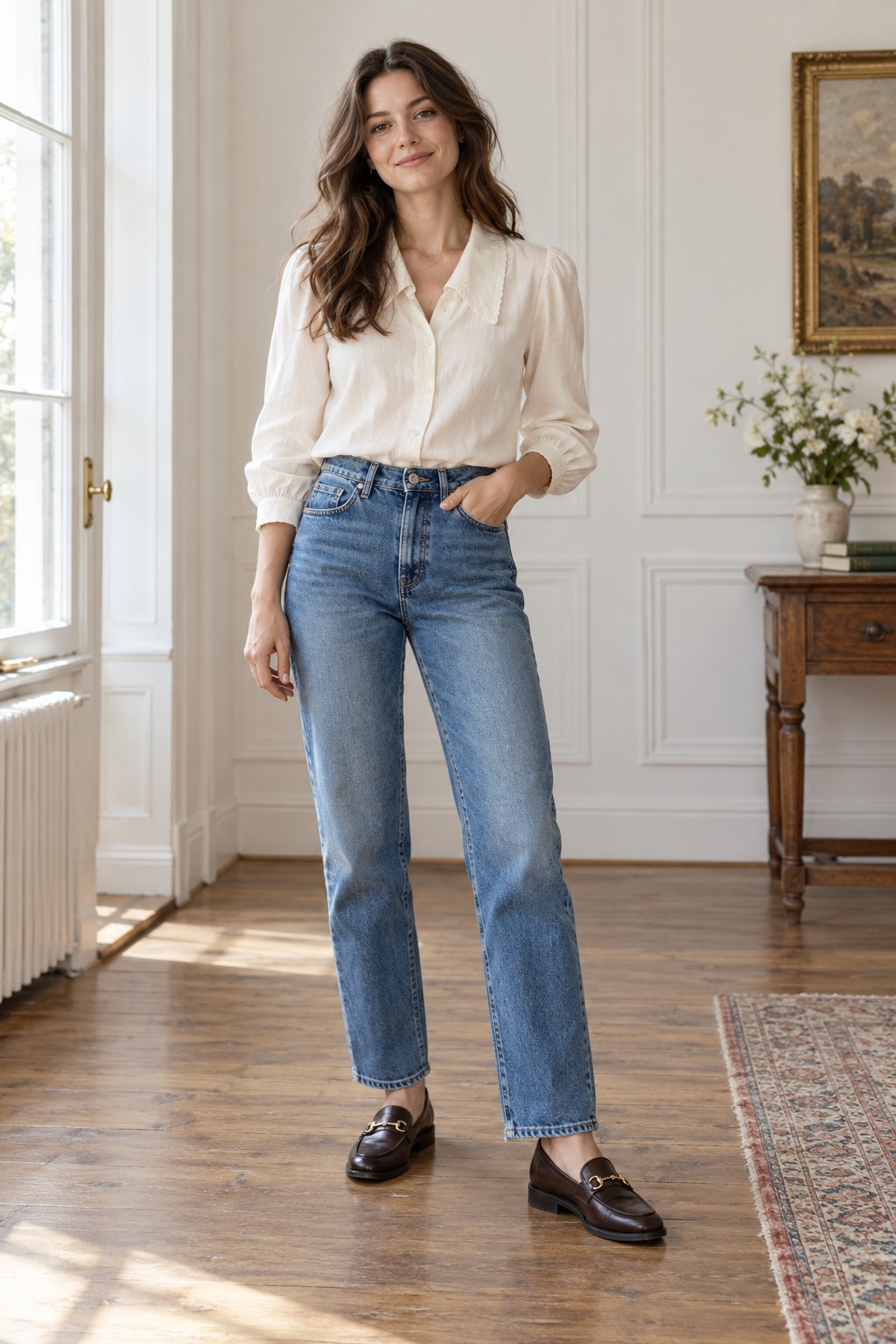
Let a cream pointed-collar blouse lead an outfit with straight blue jeans and dark loafers. The collar provides the reference; the denim keeps the rest familiar. A simple bag is enough, and the blouse does not need a matching hair accessory to make sense.
Start with the collar lying as the garment was designed. If it repeatedly folds under a jacket lapel, try the blouse without that layer or compare a simpler outer neckline. The detail should remain enjoyable rather than becoming something you arrange every few minutes.
For a lunch or a relaxed work setting where denim is appropriate, choose the jean wash and shoe finish that meet the actual expectations. A collar cannot change a dress code by itself. Wear the blouse tucked or untucked according to its length and your preference.
If the blouse is secondhand, inspect the collar and cuff condition along with the care information. The styling reference does not prove the garment’s age or quality. Choose it because the actual piece works and the collar is a detail you want to wear again.
2. A Pleated Midi Skirt with a Plain Tee
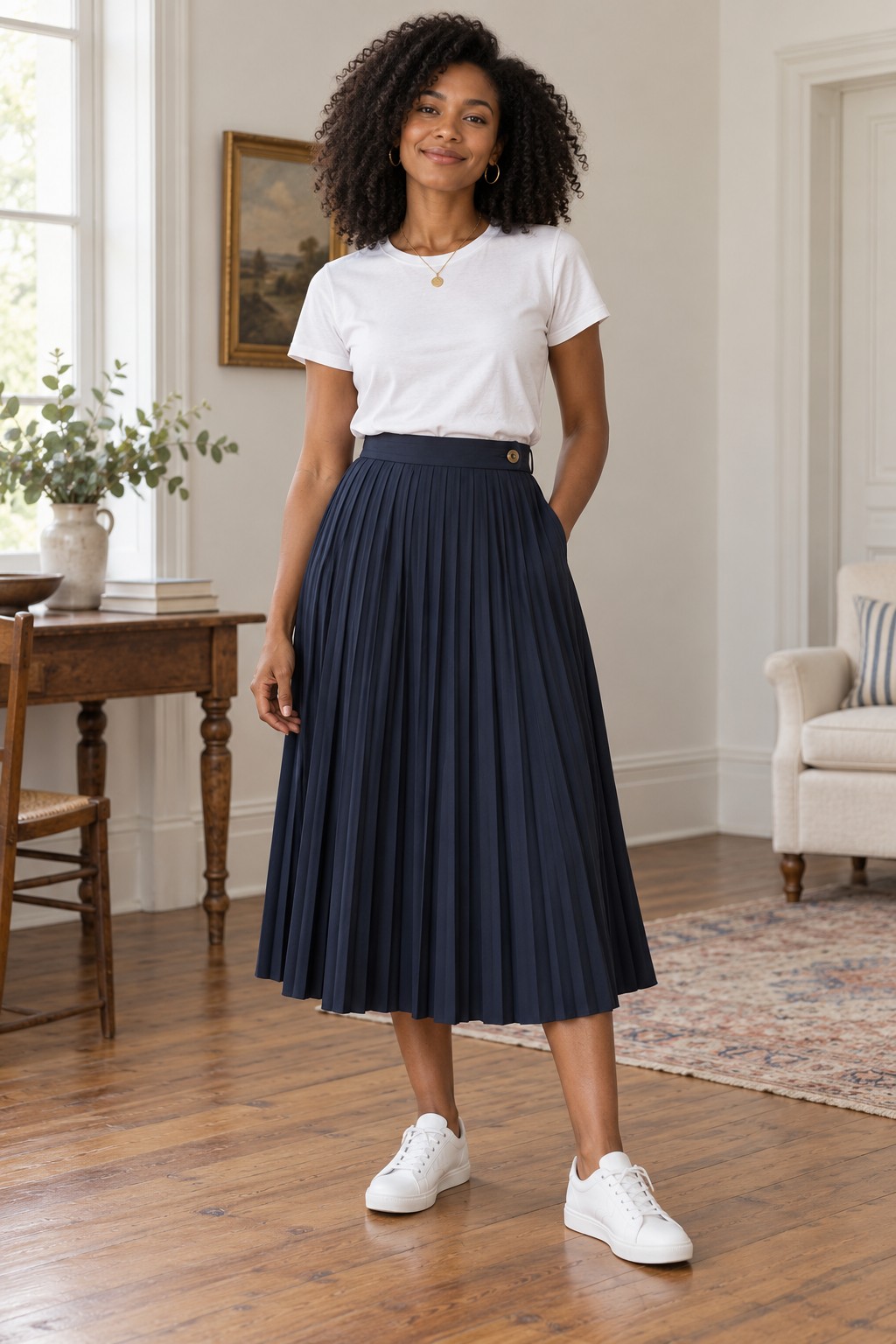
Pair a navy pleated midi skirt with a white tee and white sneakers. The skirt supplies the shape and movement, while the tee and sneakers make the outfit easy to use for an ordinary day.
Try the skirt with the shoes before choosing the top finish. A soft tuck can show the pleats from the waistband, while a shorter untucked tee leaves another clear edge. Neither is mandatory. Choose the version that stays comfortable after sitting.
Watch the skirt as you walk and turn. Pleats can open and settle differently across garments, so judge the actual piece rather than expecting the exact outline in a reference photograph. Keep the hem clear of the shoe and floor.
A plain jacket can be added if the day needs it. Begin with one already in your wardrobe and check where it ends against the skirt. You can make the look more referential with another detail later, but this first version asks a useful question: do you enjoy wearing the moving skirt with the practical base you already know?
3. An Argyle Vest over a Plain Shirt
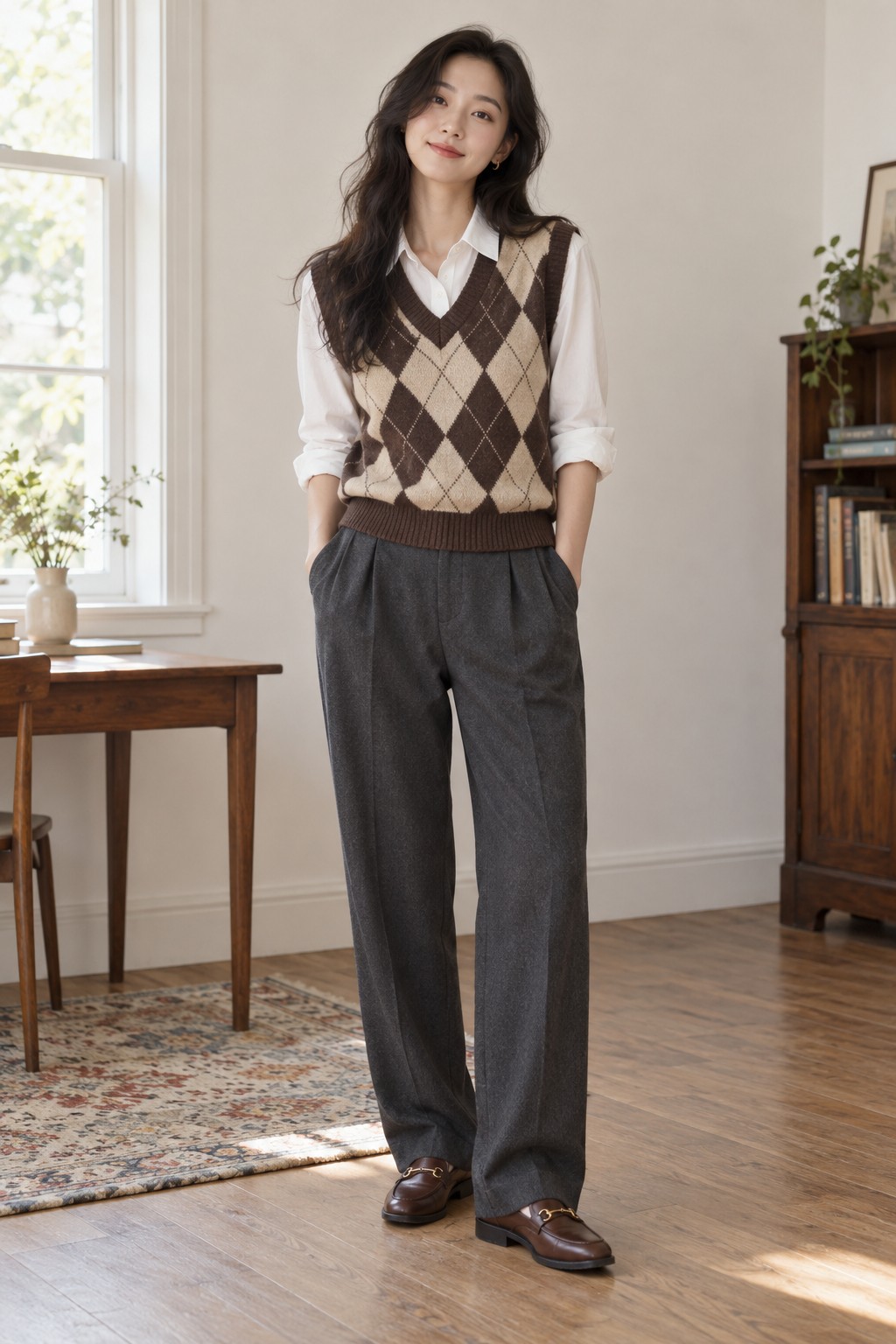
Use a muted brown-and-cream argyle vest over a white shirt with charcoal trousers and brown loafers. The vest is the main pattern. Keep the shirt plain so the diamond motif remains easy to read.
Check the two necklines together before adding jewelry. A shirt collar under a V-neck vest already creates several deliberate edges. You may find that is enough detail for a desk day or a casual meeting.
The shirt sleeves need to remain manageable beneath the vest’s armholes. Reach forward and notice whether the vest pulls the shirt toward the neck. A different shirt sleeve or roomier vest may make the combination easier without changing its visual idea.
Choose trouser length for the loafers and record the sock choice if it will be visible. A familiar dark bag can finish the outfit. If the pattern feels stronger than you expected, try a smaller motif or a quieter palette you already own. You do not need to abandon the formula or add more references to justify the knit.
4. A Pinafore Dress over a Fine Top
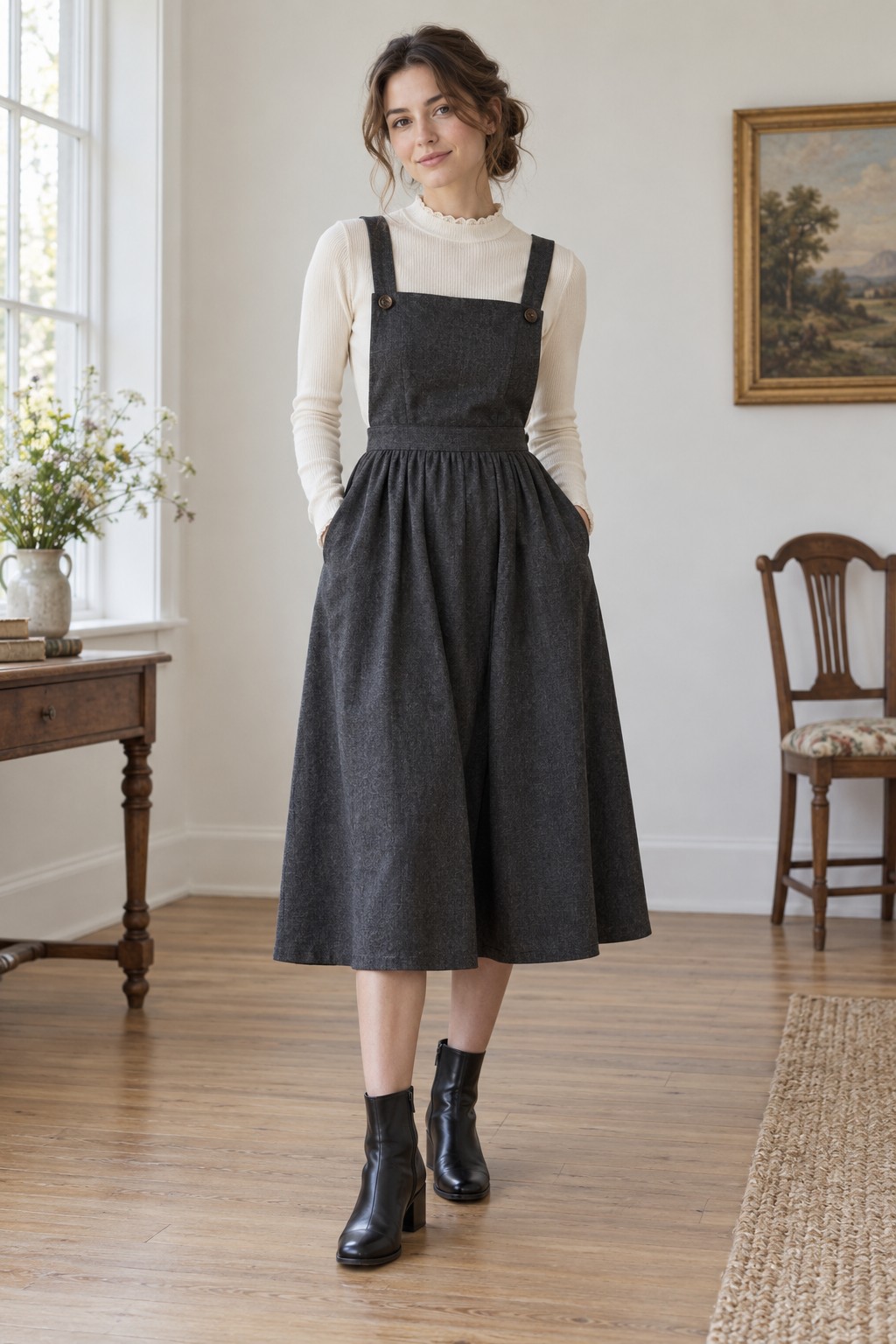
A charcoal pinafore-style midi dress over an ivory fine long-sleeve top gives the layered dress a clear role. Black ankle boots keep the lower half simple. Choose an underlayer that fits comfortably inside the dress’s armholes.
Put the top on first, settle the cuffs, and then add the dress. Check the neckline and shoulder seams where the two pieces meet. A bulky sleeve can crowd the area even when each piece works well alone.
For a day with indoor stops, the dress-and-top combination should be complete before you choose a coat. The coat can be selected for the conditions rather than used to conceal a base you do not want to wear uncovered.
Look at the dress hem with the boots while walking. If the fabric catches at the shaft, compare another boot or dress length. The reference comes from the layered garment structure, so the outfit does not need an additional themed bag or shoe. A practical everyday version can still feel distinctive with only those two main layers.
5. Wide-Leg Trousers with a Small-Collar Knit
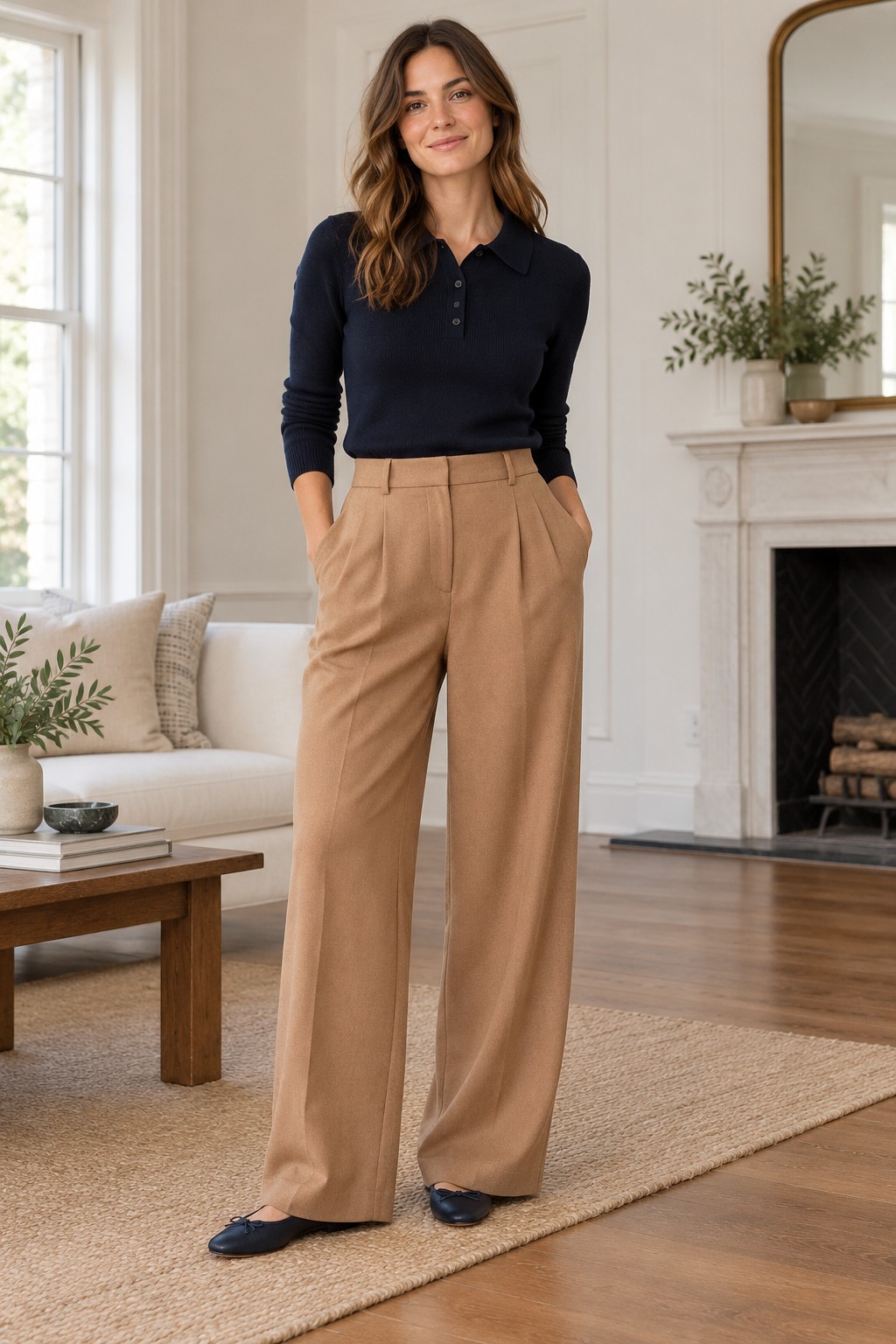
Try camel wide-leg trousers with a navy knit that has a small collar and dark flat shoes. The collar and broad trouser line provide the reference, while the palette stays straightforward.
Choose the knit finish according to the waistband. A shorter hem may sit comfortably above the trousers, while a finer knit can be tucked if you like that arrangement. Avoid forcing a substantial knit into a waistband just to imitate a photograph.
Put on the exact shoes and check the trouser back hem. A wide leg can hide floor contact from the front. Walk, turn, and sit before deciding whether the length is useful for the day.
This is a good formula to compare with clothes you already wear to work or a lunch. If the collar feels too formal for your preference, use a plain crewneck and let the trousers carry the idea. The outfit is a set of adaptable relationships, not a requirement to preserve every detail from the starting example.
6. A Small Polka-Dot Blouse with Dark Trousers
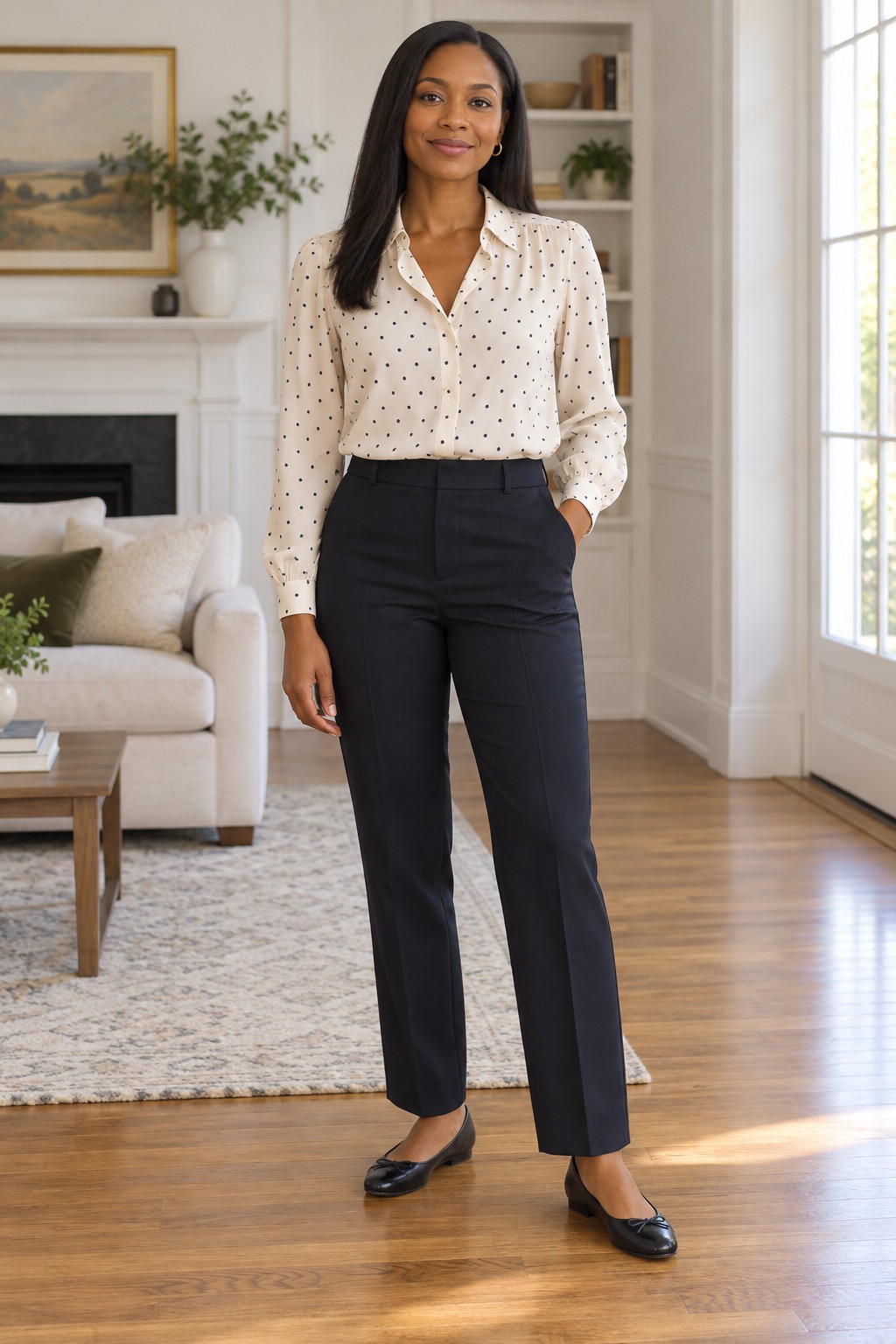
Use a cream blouse with small navy dots, dark straight trousers, and black flats. The print supplies the visual reference, while the lower half can remain the same reliable trouser-and-shoe pairing you use elsewhere.
Look at the dot scale from a normal conversational distance. A small motif may feel quieter than a larger one, but the actual contrast and spacing matter too. Choose a print you enjoy rather than one selected only because it seems to meet an aesthetic label.
For an office where the combination is appropriate, check the blouse while seated at a table. Make sure the front opening and cuffs remain comfortable during ordinary movements. If the blouse has a tie, decide whether you want it fastened or left as the design allows.
Keep the first accessory choice simple. A bag in a familiar dark color lets you assess the blouse without several competing details. If you want another accent, add it after the base works. The print can be one useful variation within your regular wardrobe rather than the start of a separate themed collection.
7. A Neat Cardigan with Relaxed Jeans
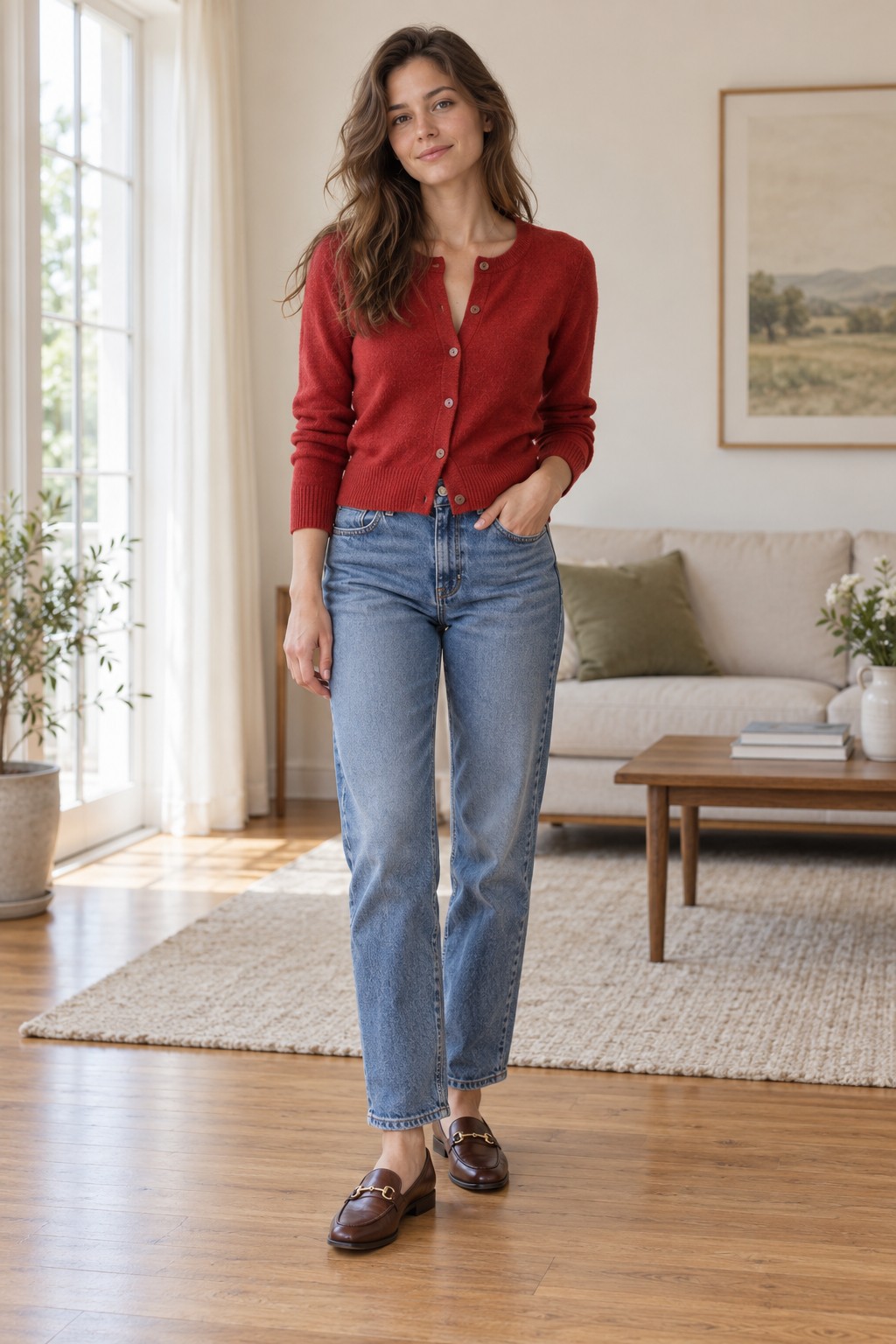
A soft red short cardigan, relaxed blue jeans, and brown loafers bring together a compact upper layer and familiar denim. Wear the cardigan as the design and your coverage preferences allow, with a base underneath if needed.
Check the closure seated. A buttoned knit should not need constant adjustment to maintain the coverage you want. If you prefer it open, choose a complete base and let the cardigan provide the color and finished edge.
The relaxed jeans are a deliberate supporting choice. They can keep the outfit from feeling more formal than the plan requires, but their actual fit still matters. Check the waistband, seat, and hem in the loafers rather than assuming a relaxed label guarantees comfort.
For a quiet café visit or an ordinary errand day, a plain shoulder bag is enough. If the red is stronger than you usually wear, try the formula with a cardigan you already own in another shade. The useful reference is the neat knit shape against the denim, not a mandatory color.
8. A Printed Shirt Dress with Plain Flats
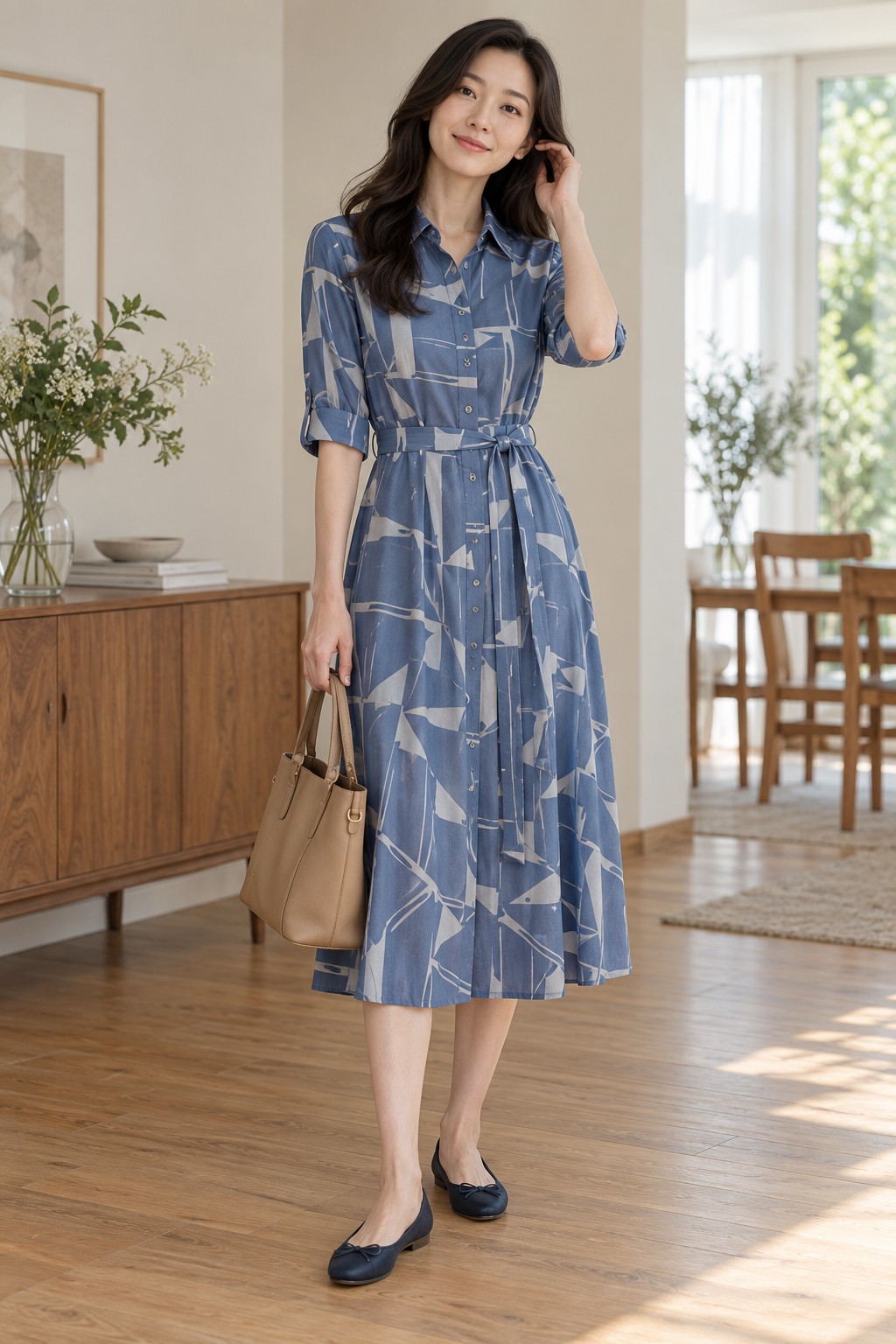
Choose a muted blue geometric-print shirt dress, plain dark flats, and a simple tan bag. The dress combines the print and garment shape in one main piece, so the supporting decisions can stay small.
Arrange the collar and fastening as intended, then sit and reach forward. Check any opening across the lap or chest according to your coverage preferences. A belt is optional if the design permits the dress to be worn without one.
Look at the print and bag together. The bag does not need to repeat an exact blue from the fabric. Tan can be a separate warm accent, or you can use a dark bag if you prefer a quieter finish.
If the dress is an older or secondhand piece, read the actual care information and inspect the closure before relying on it for a full day. A pleasing reference does not answer those practical questions. Add a plain outer layer only when the plan needs one, checking sleeve room over the dress rather than choosing it from color alone.
9. A Boxy Jacket with a Simple Trouser Base
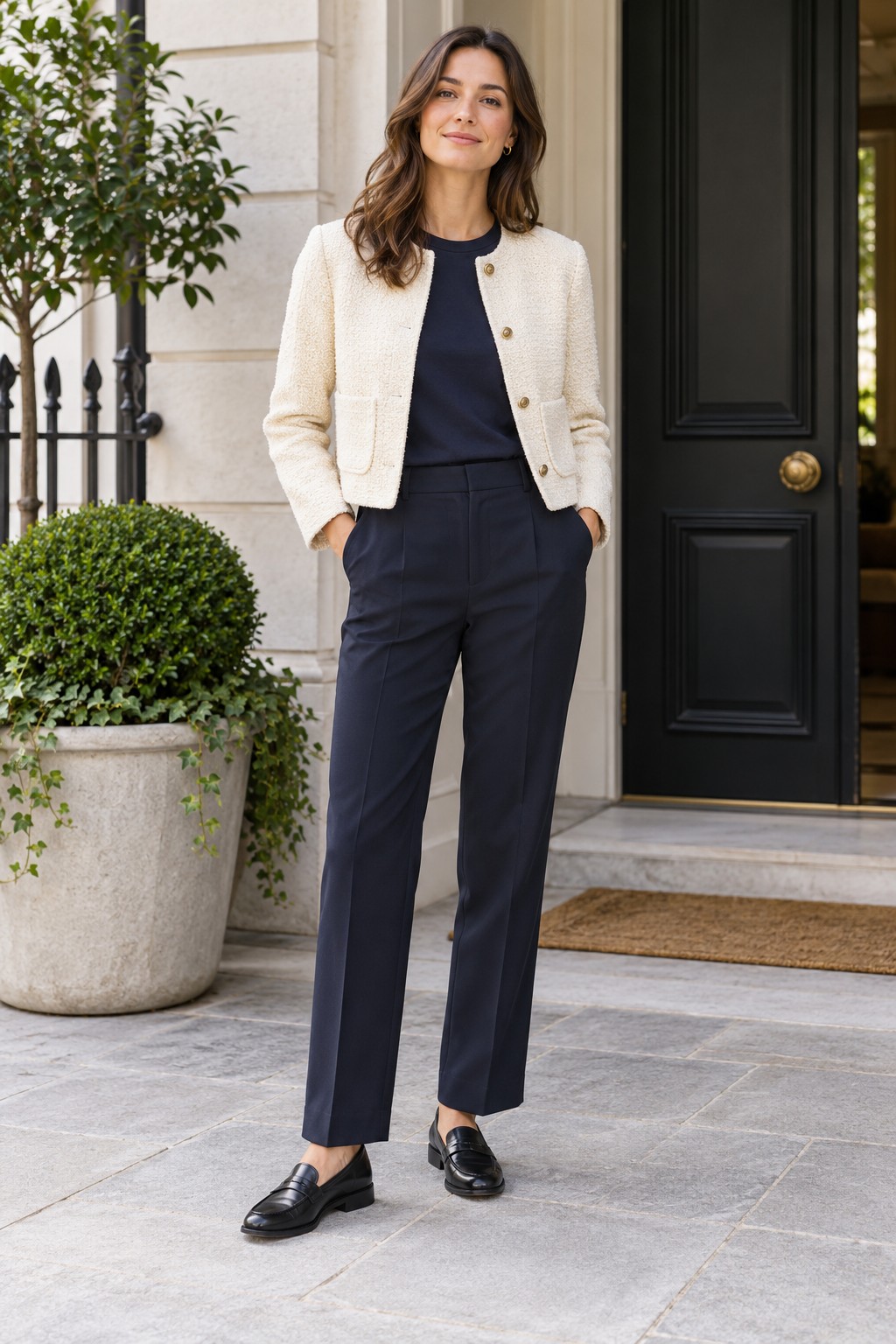
Pair a short boxy textured cream jacket with a navy tee, navy straight trousers, and black loafers. The jacket’s shape and surface provide the reference. The tonal base leaves those features easy to see.
Put the tee on first and check where its hem ends beneath the jacket. A visible edge may be intentional, or you may prefer a tuck or shorter tee. Compare one change at a time so you can tell which relationship you like.
Test the jacket while seated and reaching. A boxy outline can still have narrow sleeves or a close back, so do not judge movement from the silhouette name. If the layer comes off indoors, the navy base should remain something you want to wear on its own.
Keep the bag chosen for your actual carrying needs. You do not need a small formal bag just because the jacket has a referential shape. A larger practical bag can work when it does not interfere with the sleeves or closure. This formula lets one outer layer change a base you already trust.
10. A Narrow Scarf with a Plain Shirt and Jeans
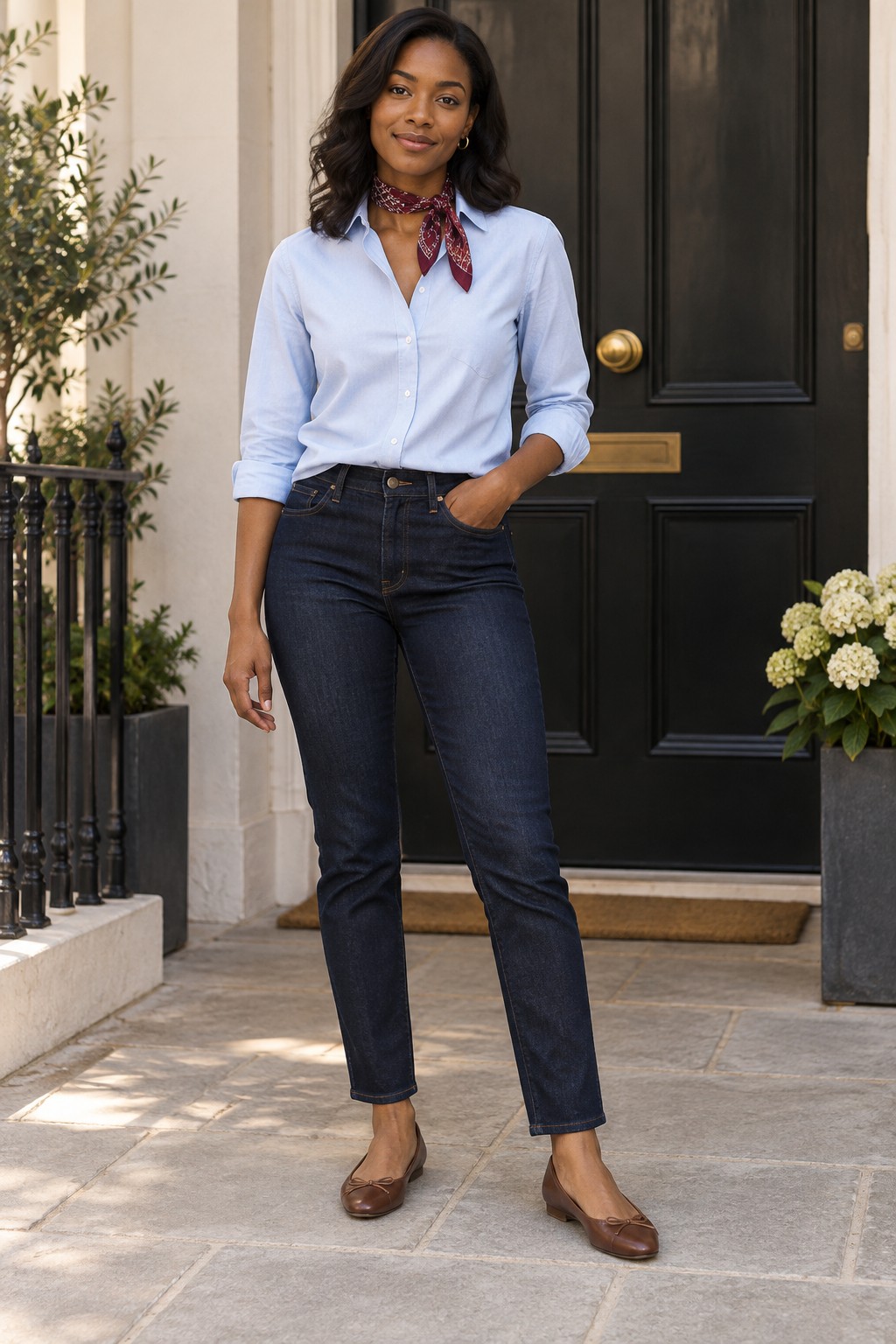
Finish with a pale blue shirt, dark jeans, brown flats, and a narrow burgundy patterned scarf. The scarf is the small reference; the rest can remain an ordinary combination from your wardrobe.
Try the scarf at the neckline only if that placement is comfortable and practical for your tasks. Another arrangement, such as attaching it to a bag, changes the effect without changing the clothes. Keep loose ends manageable for the activity you expect.
Look at the shirt collar with and without the scarf. You may prefer the simpler version for part of the day, so keep a place to store the accessory. The outfit should not depend on keeping a knot perfectly arranged at every moment.
A small accessory is a useful first experiment when you are curious about a reference but unsure whether you want a larger wardrobe change. Wear the combination for a familiar plan and note whether you enjoyed the detail after the first photograph. Repeating it gives you more useful information than buying several related accessories before trying one.
Borrow the Feature You Actually Like
When a reference image appeals to you, name the feature before naming the whole aesthetic. It might be a collar, a patterned knit, a moving skirt, or a short jacket. Search your wardrobe for that relationship first. You may already own enough to try it.
Use the outfit formula method to record the central piece and its supporting base. Then add the successful version to your weekly outfit planner for a suitable day. Keep notes about the actual garment, including layers and shoes, so the saved reference remains wearable.
If you want a stronger reference, add one more detail and compare the result. If you prefer the quieter version, stop there. There is no minimum amount of historical resemblance your everyday clothes need to achieve. The useful outfit is the one whose details you enjoy and whose practical demands fit the day.
For genuinely older garments, keep the styling decision separate from dating, authenticity, condition, and care. Those questions require information about the particular piece. A vintage-inspired look can be assembled from clothes of different ages without pretending that the finished combination represents an accurate historical outfit.
Keep these outfit ideas handy.
Save this guide on Pinterest (opens in a new tab)More ideas for your wardrobe
 Capsule Wardrobe Systems7 Leather Jacket Outfits That Still Work When You Take the Jacket Off
 Capsule Wardrobe Systems9 Romantic Outfits with Practical Shoes and a Complete Layer Plan
 Capsule Wardrobe Systems7 Western-Inspired City Outfits with a Clear Starting Detail
 Capsule Wardrobe Systems8 Everyday Boho Outfits with One Clear Statement Element