
9 Romantic Outfits with Practical Shoes and a Complete Layer Plan
A romantic outfit can begin with a soft color, a floral print, a small bow, or a textured neckline. It does not need a high heel, a delicate bag, or a day spent avoiding ordinary movement. Choose the detail you enjoy, then give the shoes and layers real jobs.
The nine formulas below use romantic as a visual description rather than a rule about personality, body shape, or femininity. You can choose more or less coverage, a stronger contrast, or a quieter version of a detail. The colors and garments are examples to adapt from your own wardrobe.
Start with footwear that suits your route and a base outfit that remains complete when the outer layer comes off. Then check the sleeves, neckline, hem, and bag in the actual movements of the day. A soft-looking outfit is most useful when it can be worn normally, not only arranged for a photograph.
1. A Small Ruffle Collar with Jeans and Loafers
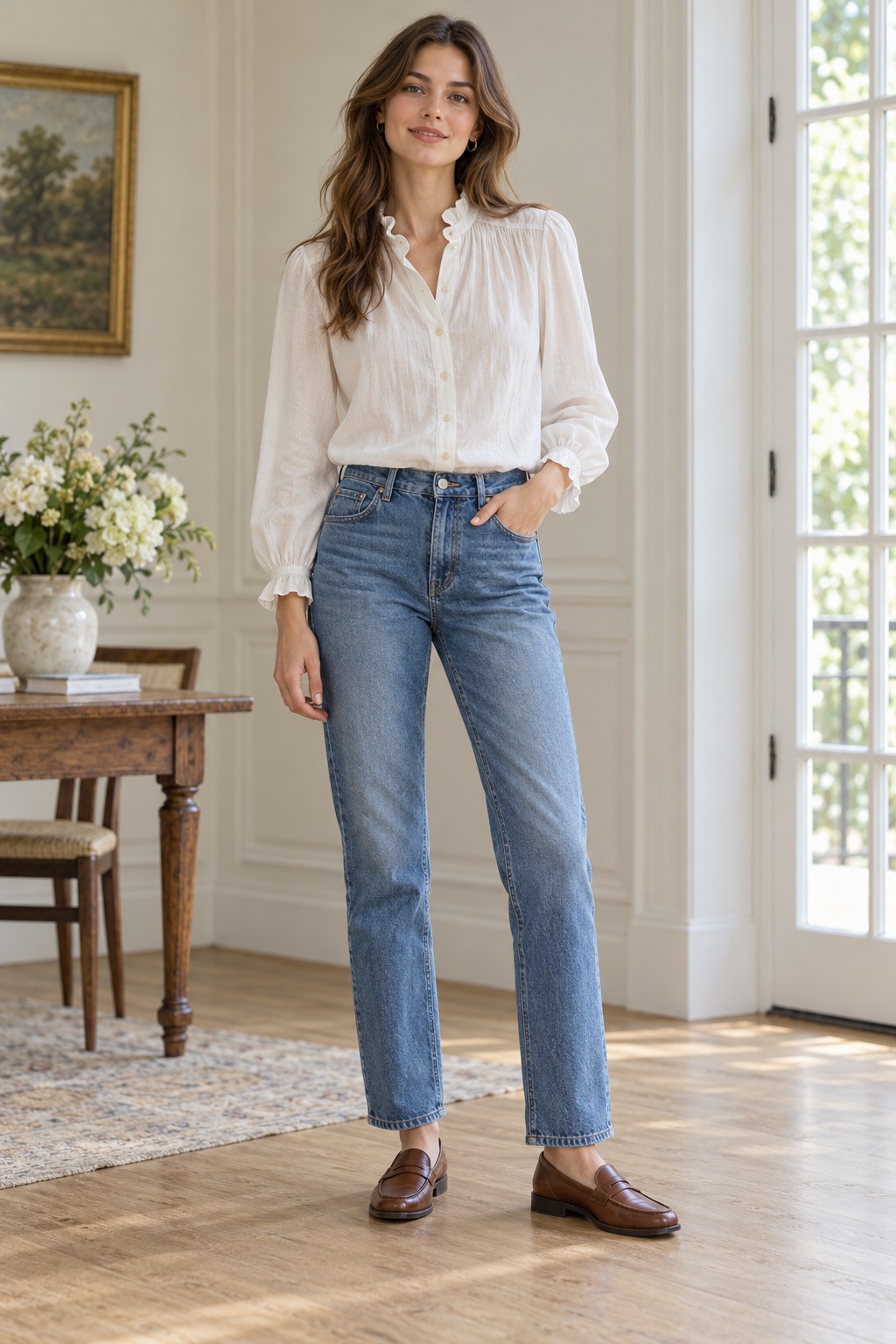
Try an ivory blouse with a small ruffle collar, straight blue jeans, and brown loafers. The collar supplies the detail while the denim and shoes keep the rest familiar. You can begin without jewelry near the neckline and decide later whether you want anything more.
Check where the collar sits during normal movement. If you add a jacket, put it on and take it off once to see whether the ruffle folds in a way you dislike. A different outer neckline may be easier than repeatedly arranging the same edge.
For a lunch or relaxed afternoon, choose the jean length that works with the loafers and your preferred socks. The blouse can be tucked or untucked depending on its hem. Test the seated version before deciding that one finish looks better in a photograph.
A plain bag is enough to make the outfit useful. If the ruffle feels stronger than you expected, try a smaller detail you already own rather than assuming the whole style direction is unsuitable. The practical base lets you change only the blouse and compare the result clearly.
2. A Rose Knit with Tailored Trousers and Flats
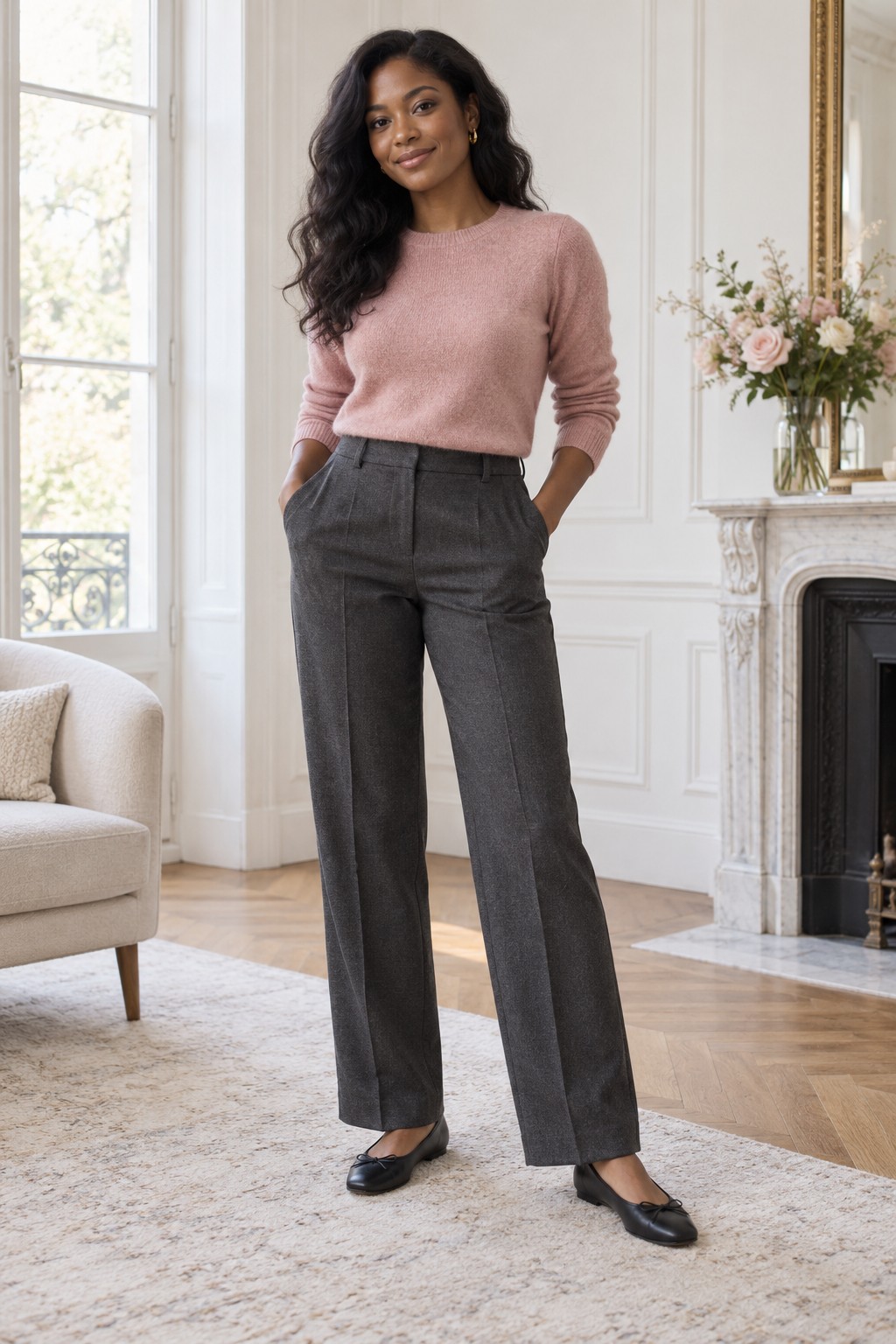
Use a soft rose fine knit, charcoal tailored trousers, and black flats. Here the color supplies the softness, so the outfit does not need lace or a floral print as well. This is a useful option when you prefer a simpler surface.
Try the knit untucked if its finished hem sits comfortably with the waistband. A soft tuck is another choice, but check how much fabric collects when you sit. The knit does not need to be close-fitting to make the color feel intentional.
Choose the trouser length in the actual flats. A pair usually worn with a higher shoe may drag at the back. Look from the side and behind while walking rather than relying on the front view.
For a workplace, judge the complete outfit against your own office expectations. A pale color does not establish formality. If the setting allows this combination, a plain jacket can provide a removable layer. Keep the rose knit visible when you want it to lead, or choose a quieter shade if you prefer less contrast against the charcoal. The formula is about color placement, not a required palette.
3. A Floral Midi Dress with Familiar Sneakers
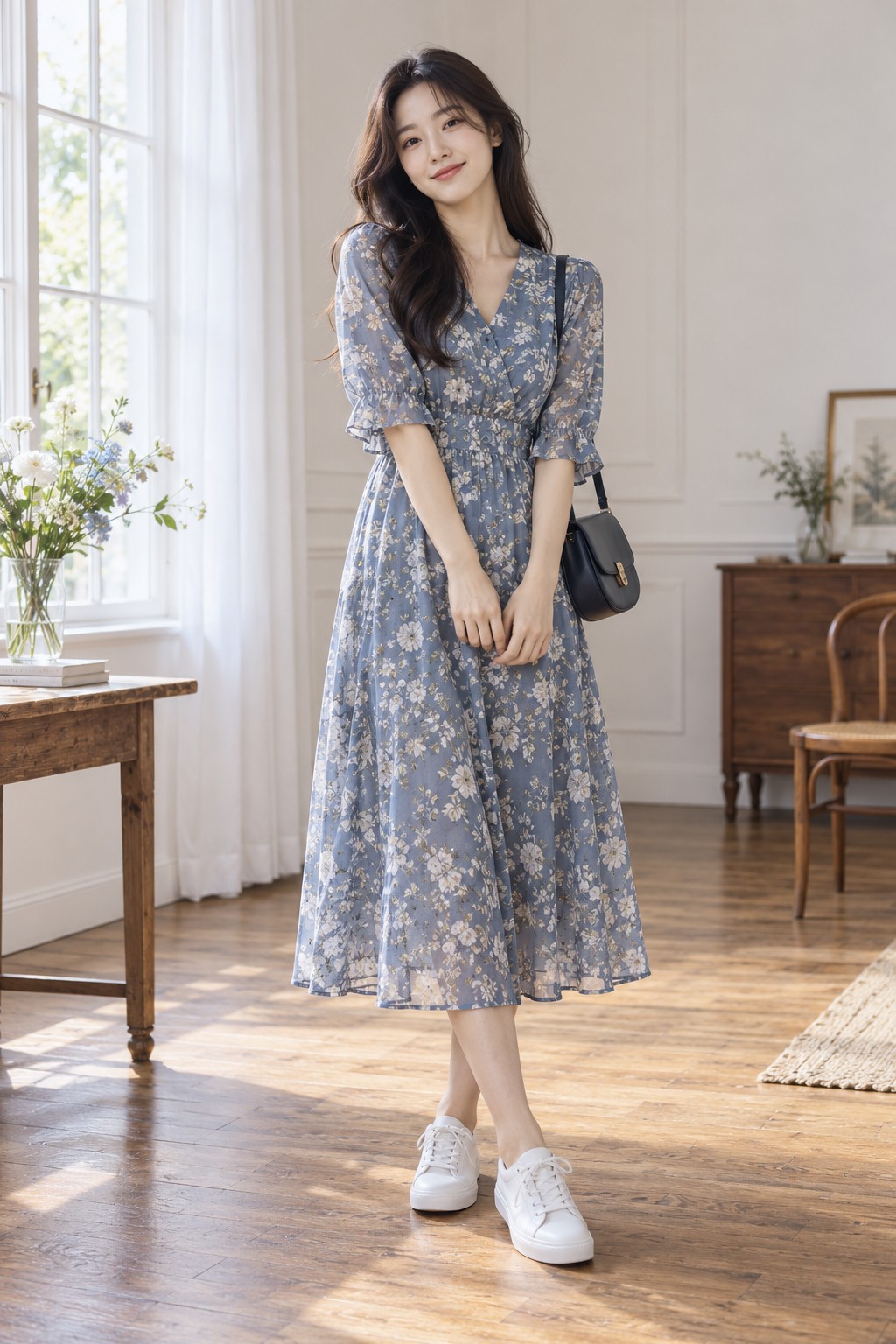
Pair a muted blue floral midi dress with white sneakers and a simple dark shoulder bag. The print carries the romantic detail, while the shoes can be the familiar pair you have already assessed for your own route.
Put the sneakers on before checking the dress length. A hem that works with a different shoe may sit lower than you expect. Walk, turn, and look at the back hem. The dress should stay manageable without frequent lifting.
Check any sleeve gathering beneath the outer layer you plan to use. A roomy-looking jacket can still crowd a puffed shoulder or full sleeve. Try the actual combination and reach forward before leaving.
A plain cardigan or jacket can keep the print as the main detail. Remove it once and assess the dress on its own for indoor portions of the day. If you prefer different neckline coverage, solve that in the base outfit rather than relying on a layer you may want to take off. The sneaker pairing changes the outfit’s feel, but the destination still determines whether the overall combination is appropriate.
4. A Lace-Detail Blouse with Dark Jeans and Flat Boots
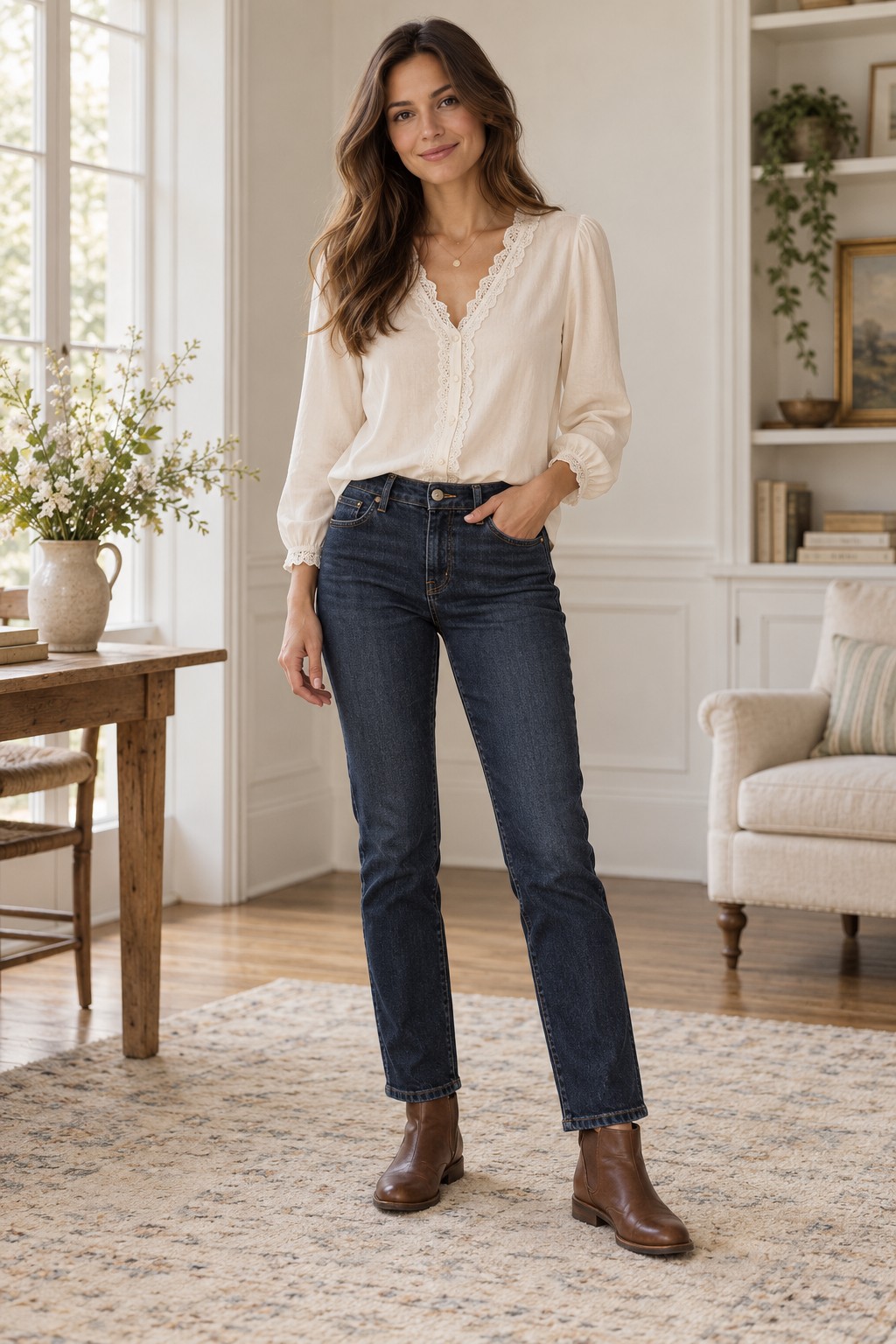
Choose a cream blouse with a small area of lace trim, dark straight jeans, and brown flat ankle boots. The trim introduces texture while the jeans provide a quiet base. Select the amount and placement of lace according to your own preferences.
Check the blouse with the base layers you intend to wear. Lace panels and trims vary, so look at the actual coverage in ordinary light rather than assuming the whole garment behaves the same way. If you add another layer, include it before assessing fit.
Wear the boots during the jean hem check. The opening should move around the shaft as intended and settle after sitting. A flat heel does not by itself tell you how the boot will feel for a long walk; use your own experience with that pair.
Keep the first bag choice plain and practical. If the blouse has enough detail for you, leave the neckline uncluttered. If you want a piece of jewelry, choose it because you enjoy the relationship rather than because the outfit seems to require another delicate element. The combination works through one textured area against a familiar lower half.
5. A Fluid Skirt with a Plain Top and Mary Janes
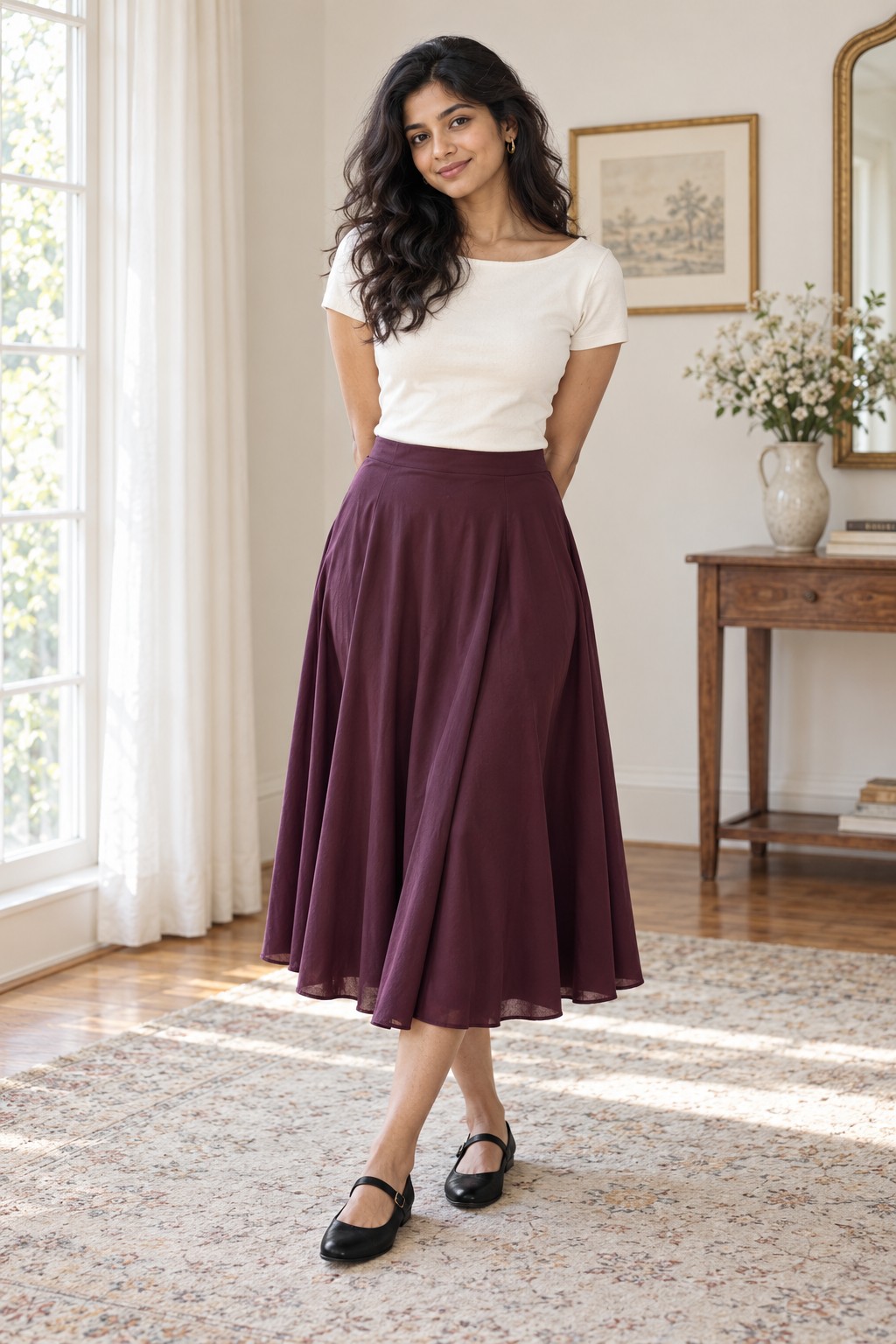
Try a plum fluid midi skirt, plain ivory top, and black flat Mary Jane shoes. The moving skirt and strap detail supply the visual interest. The top can remain a simple piece you already wear with other bottoms.
Check the shoe strap and foot fit with the socks or tights you plan to use. The shape name does not guarantee comfort. Walk and sit in the exact combination before depending on it for a longer day.
The skirt should have comfortable stride room and a hem that stays clear of the shoe. If the fabric catches at a strap or gathers beneath your heel, compare another length or pairing. A fluid look does not need a trailing hem.
At the waistband, choose a top finish you can maintain. A shorter untucked top may be easier than a substantial tuck. If the outfit needs a cardigan, start with a plain one and check its hem against the skirt. This keeps the moving lower layer visible without forcing a particular waist emphasis or adding several new details at once.
6. A Soft-Sleeve Dress with Flat Sandals
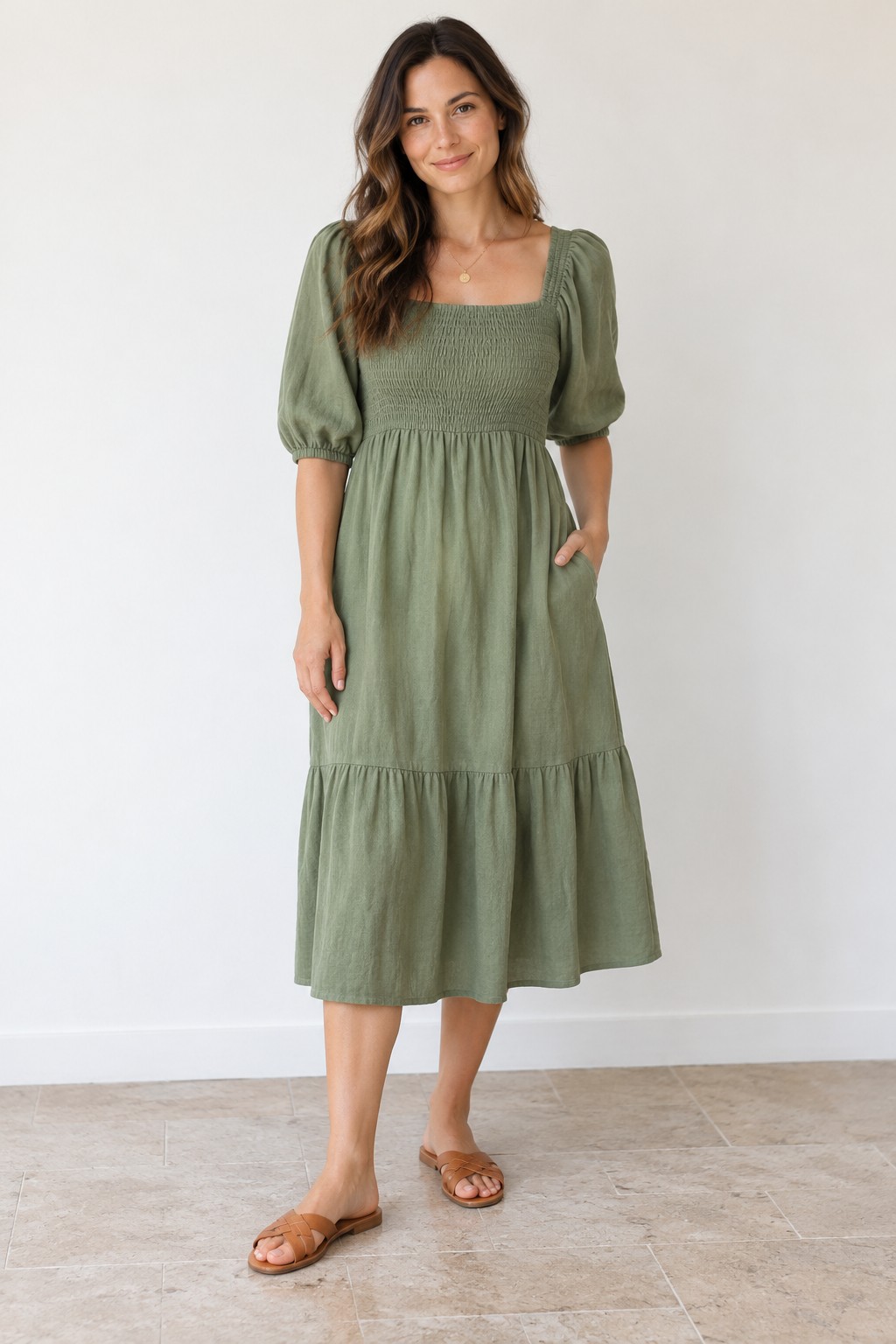
Use a muted green midi dress with gently gathered sleeves and tan flat sandals. The sleeve shape provides the detail, so a plain neckline and bag can keep the overall outfit easy to finish.
Try the dress with your arms at rest and while reaching forward. A sleeve can look generous while the armhole or back remains restrictive. Assess the actual movement rather than choosing from the silhouette alone.
If you need an outer layer, test it over the gathered sleeves. A coat or cardigan that works over a fine tee may feel different over this dress. You may prefer a roomier sleeve or another layer for that particular combination.
With the sandals, check the hem during a short walk and when sitting. Make sure any ties or straps are arranged as designed and remain manageable. This outfit can suit a relaxed social plan when the conditions and destination allow it. The green is simply one color option. A deeper shade or a different print can preserve the sleeve-led idea without requiring you to adopt a light or pastel wardrobe.
7. A Small Bow Blouse with Plain Trousers
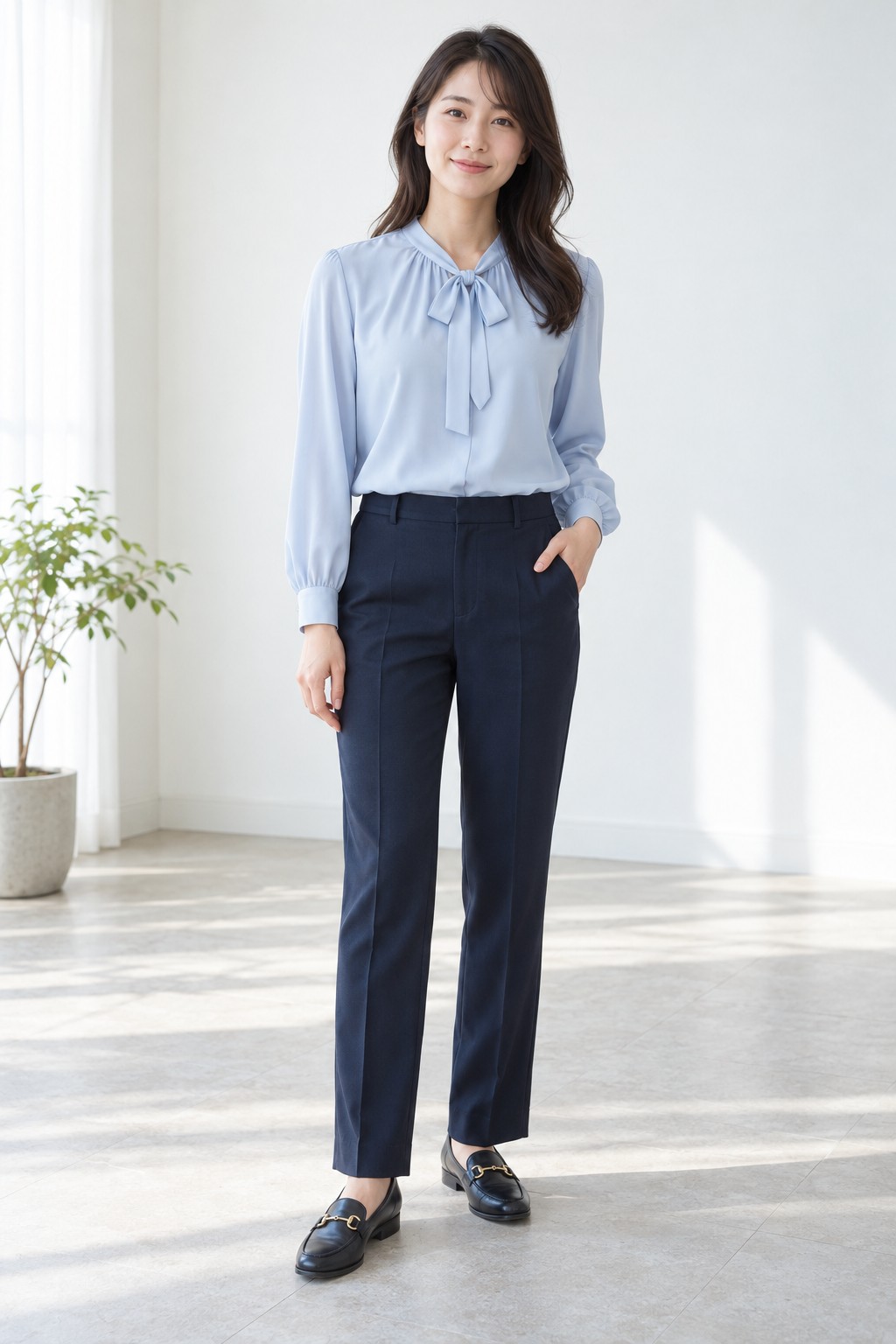
Pair a pale blue blouse with a small neckline bow, navy straight trousers, and dark loafers. The bow is the focal detail. The plain lower half gives you an easy way to use it in a familiar shirt-and-trouser structure.
Arrange the tie as the design allows and check the ends while seated at a table. If they fall into the area where you are working or eating, choose a more manageable arrangement or another blouse for the plan. A decorative detail should not become a task you supervise all day.
Look at the collar and bow beneath any jacket. You may prefer the blouse with a simple open cardigan or without another neckline nearby. Compare the actual layers before deciding you need a new outer piece.
The trousers should work with the loafers independently of the blouse. Keep that proven lower pairing if it already suits your day. A familiar bag can finish the outfit. If you want a quieter version, loosen or remove the tie only where the garment is designed for that option; do not assume every bow detail can be detached.
8. A Textured Cardigan over a Plain Dress
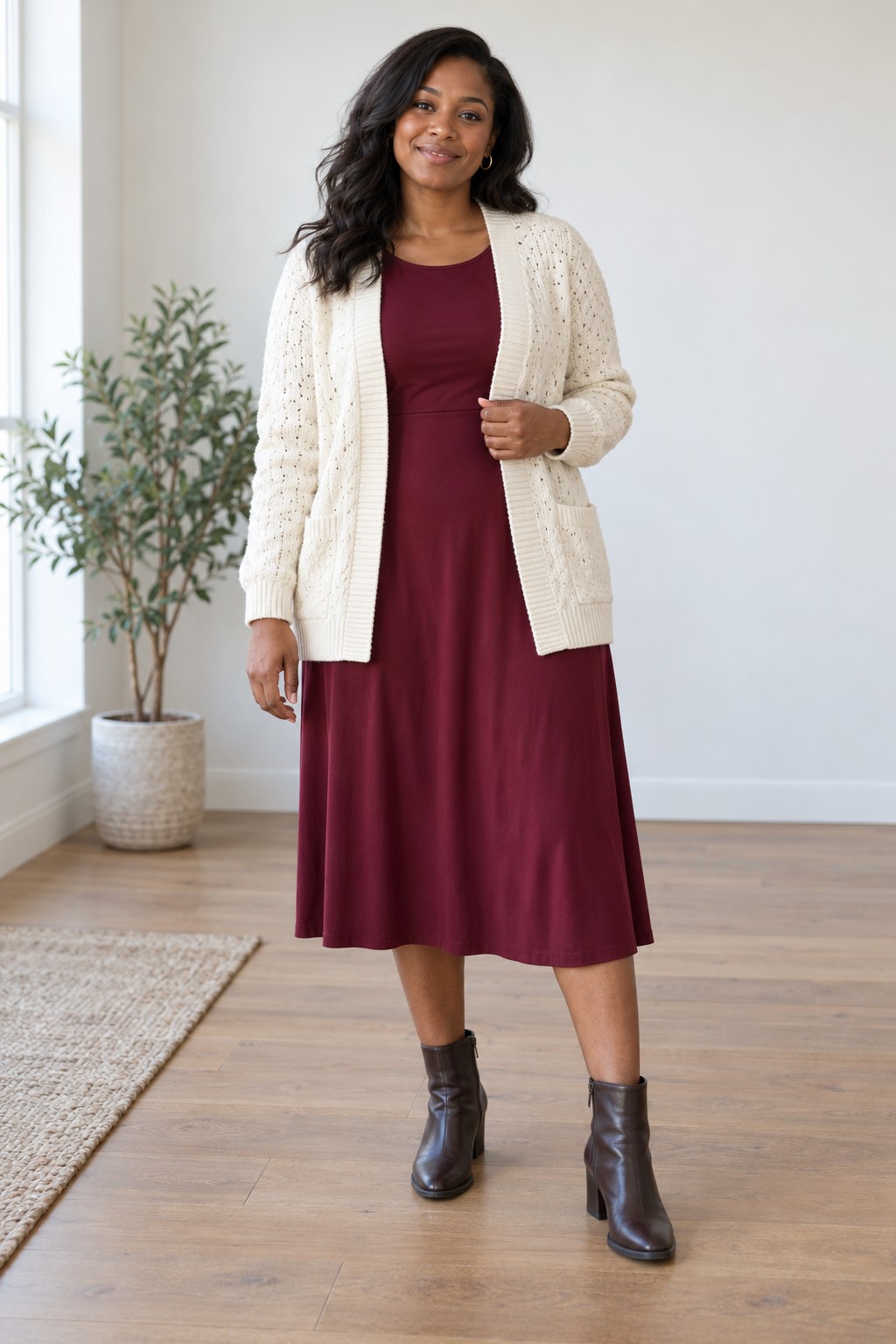
Choose a cream cardigan with small textured knit details, a plain burgundy midi dress, and dark ankle boots. The cardigan adds a soft surface, while the dress keeps the base visually continuous.
Wear the cardigan open if that gives the dress the visibility you want. If you prefer it fastened, check the closure seated and make sure the neckline and coverage remain comfortable. The cardigan’s job can be both decorative and practical, but its actual warmth needs to suit you.
Walk and sit to see whether the knit catches against the dress. A texture that looks appealing on its own may interact differently with another fabric. If the cardigan repeatedly rides up, try another base rather than assuming you need to tolerate constant adjustment.
Check the dress hem with the boot shaft and choose a bag strap that does not pull the cardigan diagonally. Remove the knit once and assess the dress-and-boot outfit for the indoor plan. The complete base gives you flexibility if the room is warmer than expected. Save the exact cardigan and dress combination rather than treating every cream knit as interchangeable.
9. A Soft-Color Blazer with a Plain Skirt
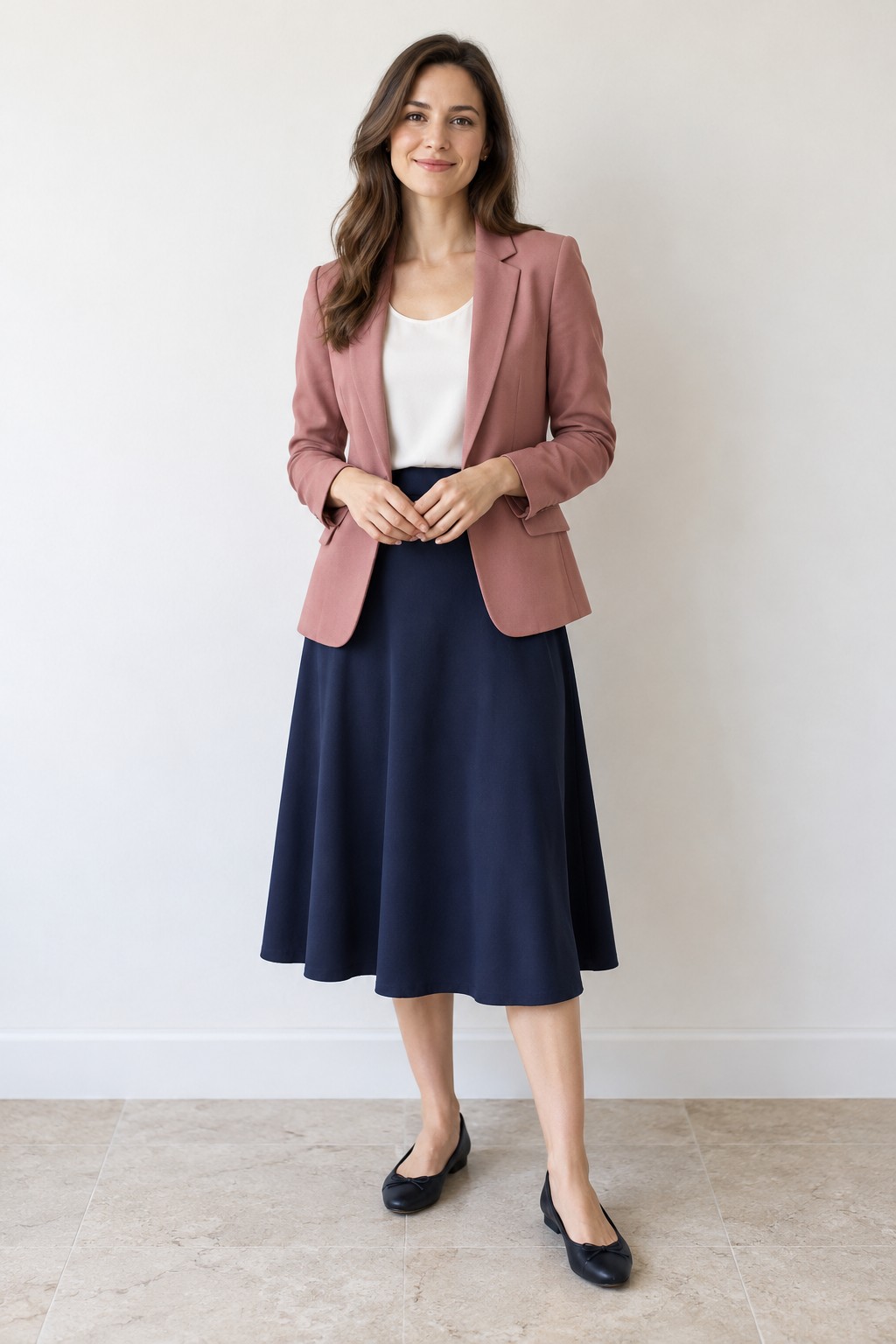
Finish with a muted rose blazer, ivory top, navy midi skirt, and black flats. The blazer color supplies the soft reference while the skirt and shoes keep the remaining choices familiar.
Check the blazer over the actual top, especially at the sleeves and back. Sit, reach forward, and remove it once. If the layer comes off indoors, the ivory top and navy skirt should still provide the coverage and comfort you want.
Look at the blazer hem against the skirt. A longer jacket and a shorter one create different outlines, and neither is automatically correct. Compare what you own before deciding the combination needs a new length.
For a meeting or dinner, choose the bag and jewelry from the setting and your carrying needs. The rose blazer does not require every accessory to be delicate or pale. A dark bag can keep the outfit quiet and useful. If you enjoy the color but prefer a softer layer, try a cardigan with the same base. Keep the skirt and shoes fixed so you can judge the effect of that single change.
Let the Detail and the Day Work Together
Name the feature you want to enjoy: color, print, texture, a collar, or a small tie. Then choose shoes and layers for the actual route and destination. You do not need to trade practical movement for a particular visual mood, and you do not need every item to repeat the same detail.
Use the outfit formula method to keep the combination repeatable. Record the exact footwear, base layers, and removable piece. Add it to your weekly outfit planner for a day with similar demands.
If the first version feels too detailed, keep the base and remove one decorative element. If it feels too quiet, add a piece you already enjoy. The useful comparison changes one thing at a time. A floral dress with plain sneakers and the same dress with flats may answer your question without changing the bag, jacket, and jewelry too.
After wearing the outfit, save one practical observation. The sleeve that fit beneath the coat, the scarf-free neckline that stayed comfortable, or the skirt that cleared the shoe is worth remembering. Those small facts help the outfit become part of your routine rather than a look you only liked in a still photograph.
Keep these outfit ideas handy.
Save this guide on Pinterest (opens in a new tab)More ideas for your wardrobe
 Capsule Wardrobe Systems7 Leather Jacket Outfits That Still Work When You Take the Jacket Off
 Capsule Wardrobe Systems7 Western-Inspired City Outfits with a Clear Starting Detail
 Capsule Wardrobe Systems10 Vintage-Inspired Outfits Built Around One Familiar Detail
 Capsule Wardrobe Systems8 Everyday Boho Outfits with One Clear Statement Element