Modest Office Outfits That Feel Modern Without Being Fussy
Modest office style is a set of choices, not a single dress code. For one person it may mean a higher neckline; for another, a sleeve length, a longer hem, a preference for looser tailoring, or simply an extra layer during meetings. These ten outfit formulas focus on how pieces work together through a real workday, so you can adapt the coverage, fabric, and formality to your own comfort and workplace.
Before building an outfit, check the rules that actually apply: your employer’s dress code, the weather, and what your day involves. A look for a client presentation may need a sharper jacket than a studio day. The best formula is the one that feels like you and lets you move without constant adjustments.
Start with a fit-and-movement check
- Sit and stand: notice whether a hem shifts or a waistband presses.
- Reach and walk: test sleeves, button fronts, and side vents before wearing them for a full day.
- Check the layer: make sure the outfit still feels finished if you remove a blazer or cardigan.
- Check in daylight: pale or lightweight fabric can look different near a window than it does indoors.
Ten modest office outfit formulas to adapt
1. Relaxed suit, soft blouse, and loafers
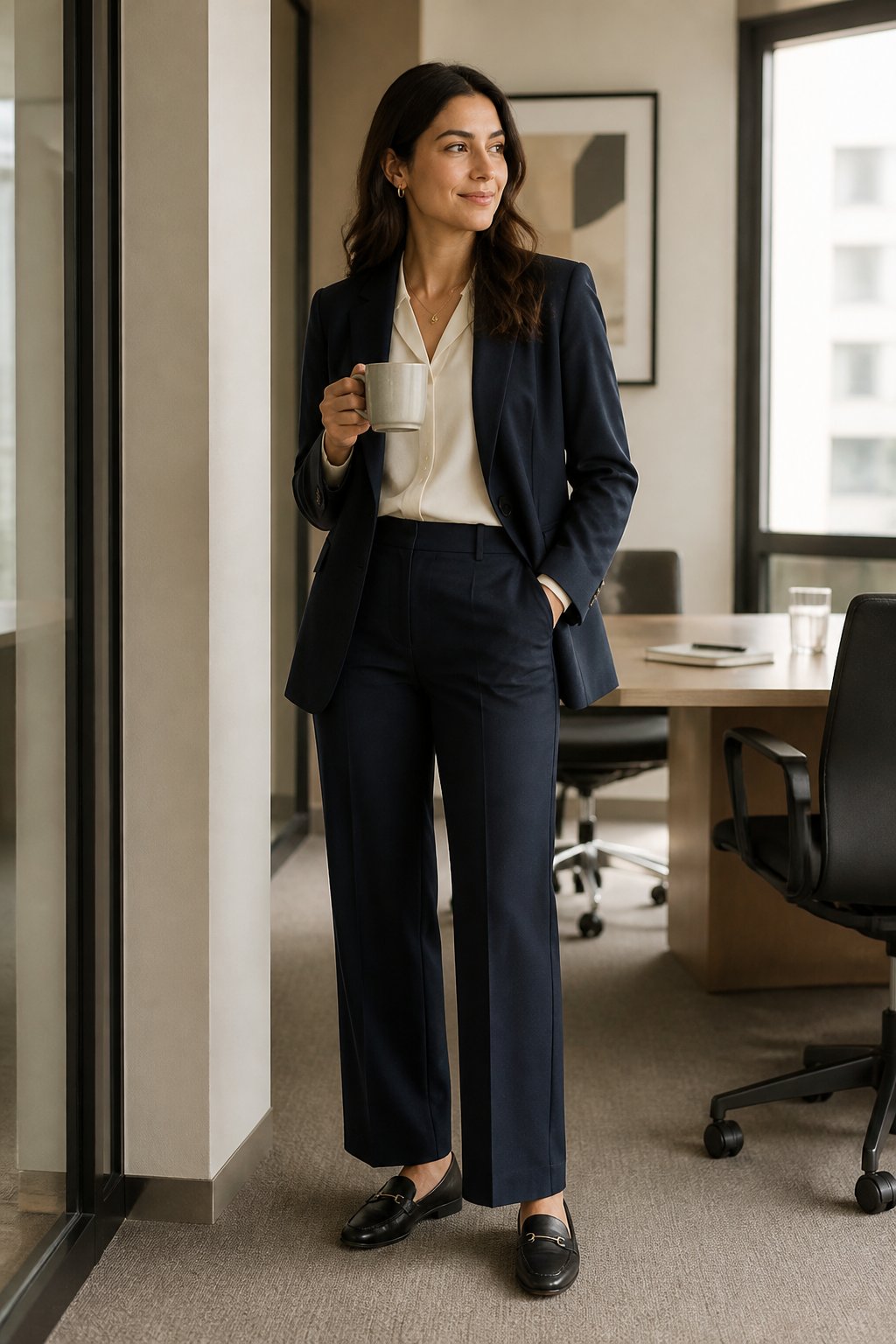
Let the suit do the layering work. A softly structured jacket and matching trousers create a clean outline, while a blouse with a neckline you like keeps the base comfortable on its own. This is a useful presentation-day formula because the jacket can come off without leaving the outfit unfinished. Check the shoulders when you reach forward and choose loafers that are comfortable for your commute.
2. Pleated trousers, buttoned knit, and flats
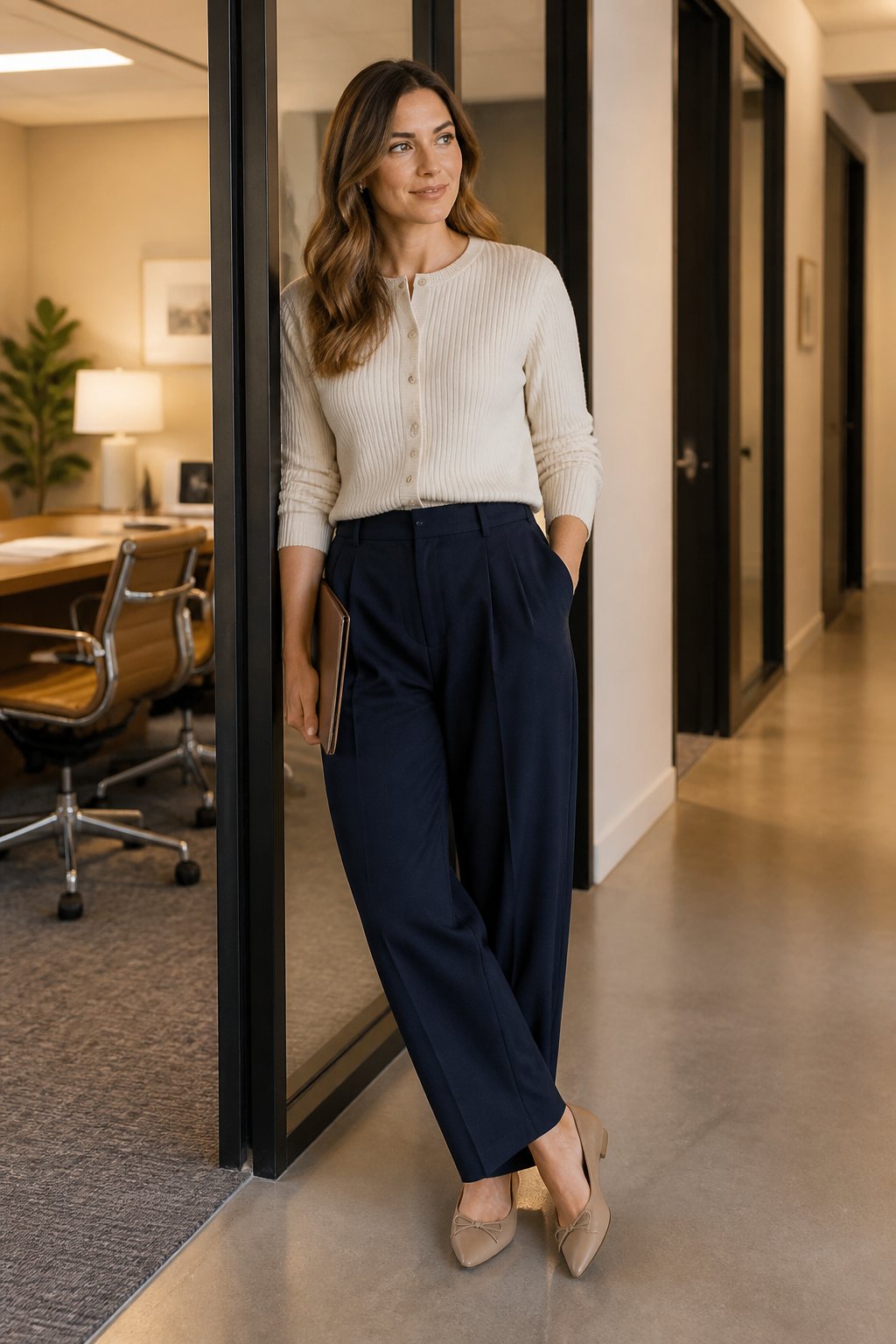
This combination gives you texture without a complicated layer stack. A fine knit can sit neatly under a coat, and pleats add movement through the hip. If you prefer more coverage at the neck, button the knit to the point that feels right; if you prefer an open neckline, wear a smooth base layer underneath. Sit once to make sure the waistband stays comfortable.
3. Midi skirt, tucked tee, and an open blazer
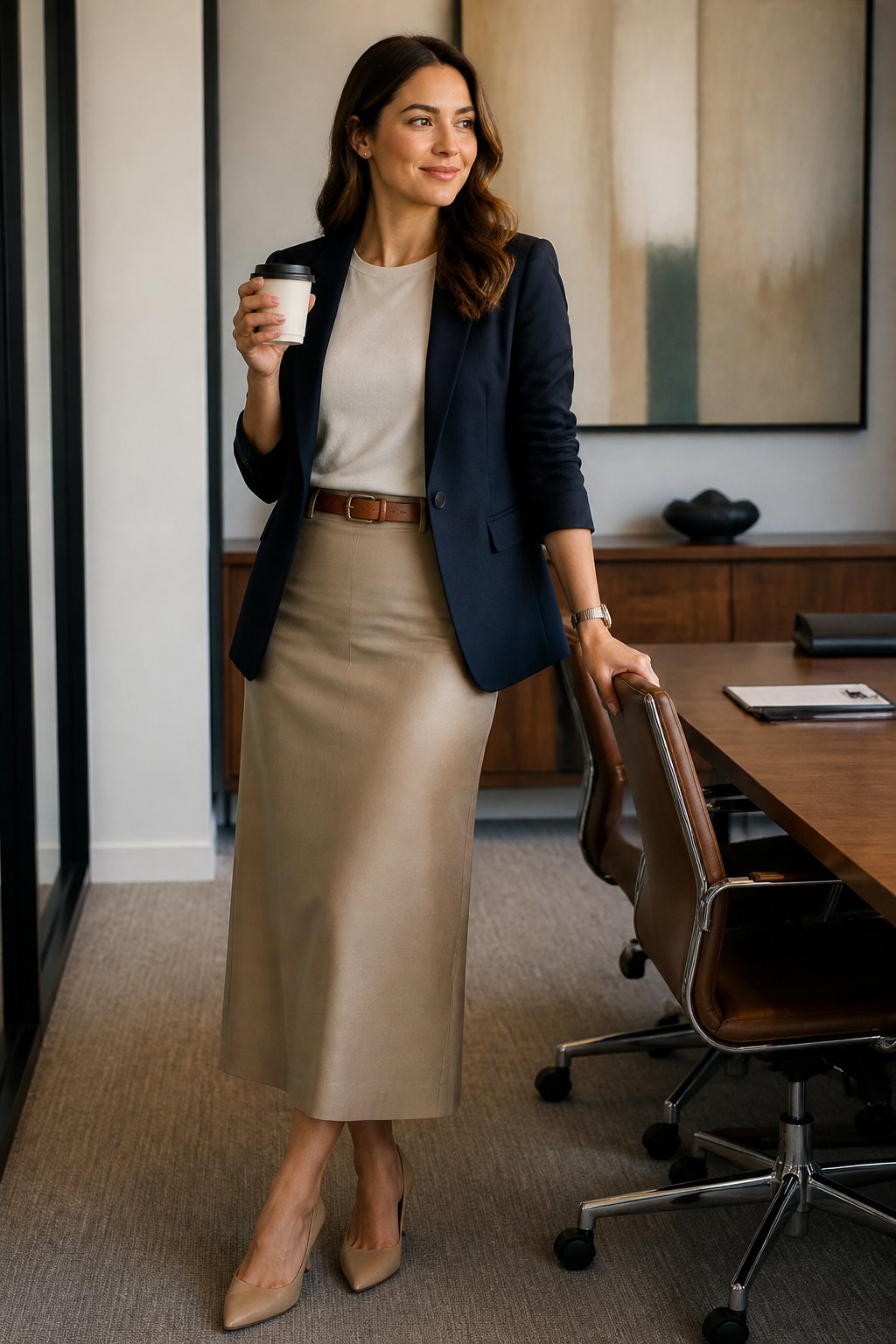
A simple tee keeps the base relaxed; the blazer adds structure when the day calls for it. Choose a skirt length and shape that suit your stride, then test the tuck while sitting so the tee does not pull uncomfortably. A soft A-line is easy to walk in, while a straighter skirt can work if its vent allows a full step.
4. Shirt dress, optional belt, and low shoes
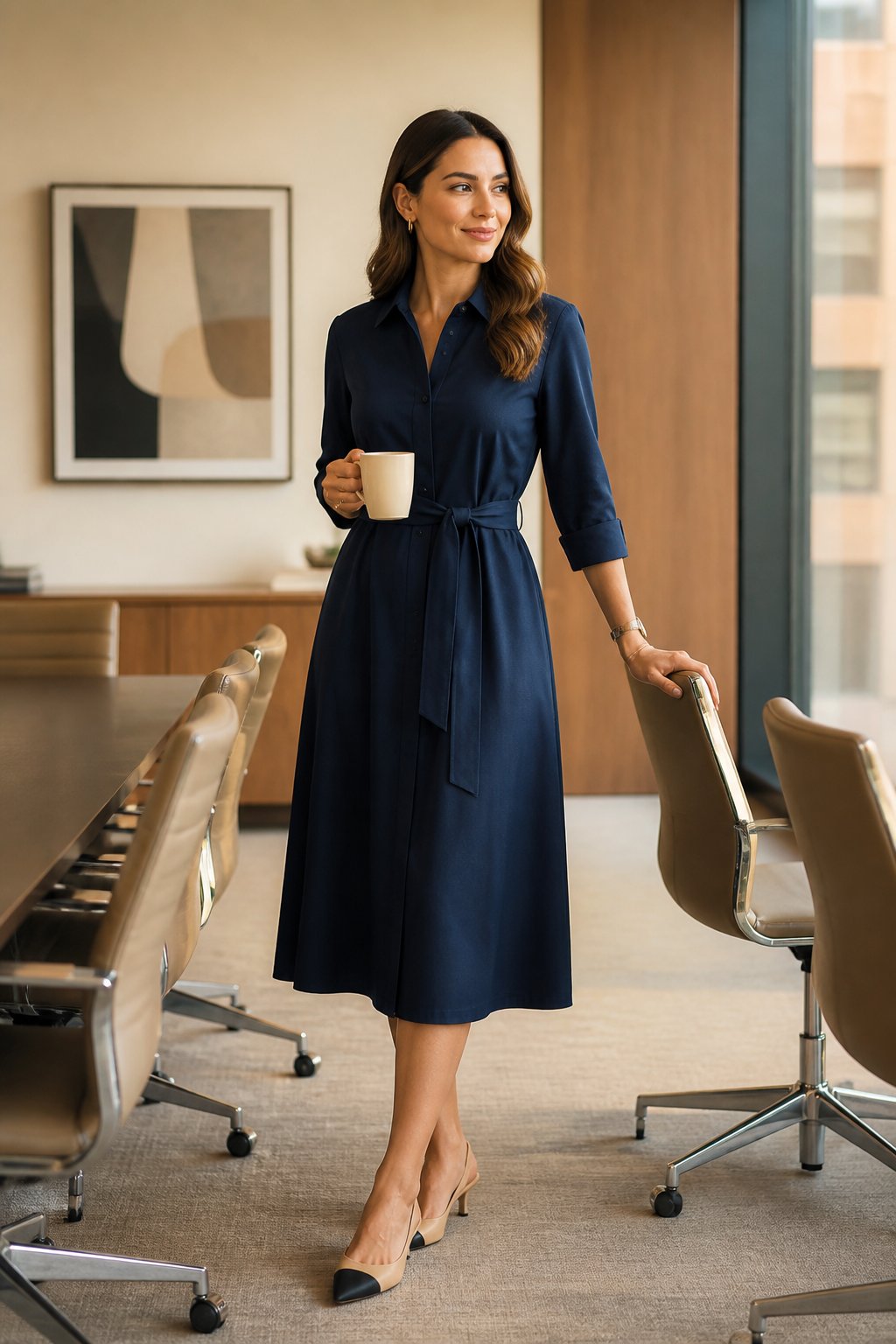
A shirt dress is a useful one-piece base when you want a quick outfit. Wear the belt loosely or skip it if you prefer a straighter silhouette. Check that the button placket stays closed as you move; a hidden snap can help if you want it. On cooler days, add a cardigan or jacket rather than sizing up into fabric that overwhelms the shape.
5. Cream knit, navy trousers, and tan tote
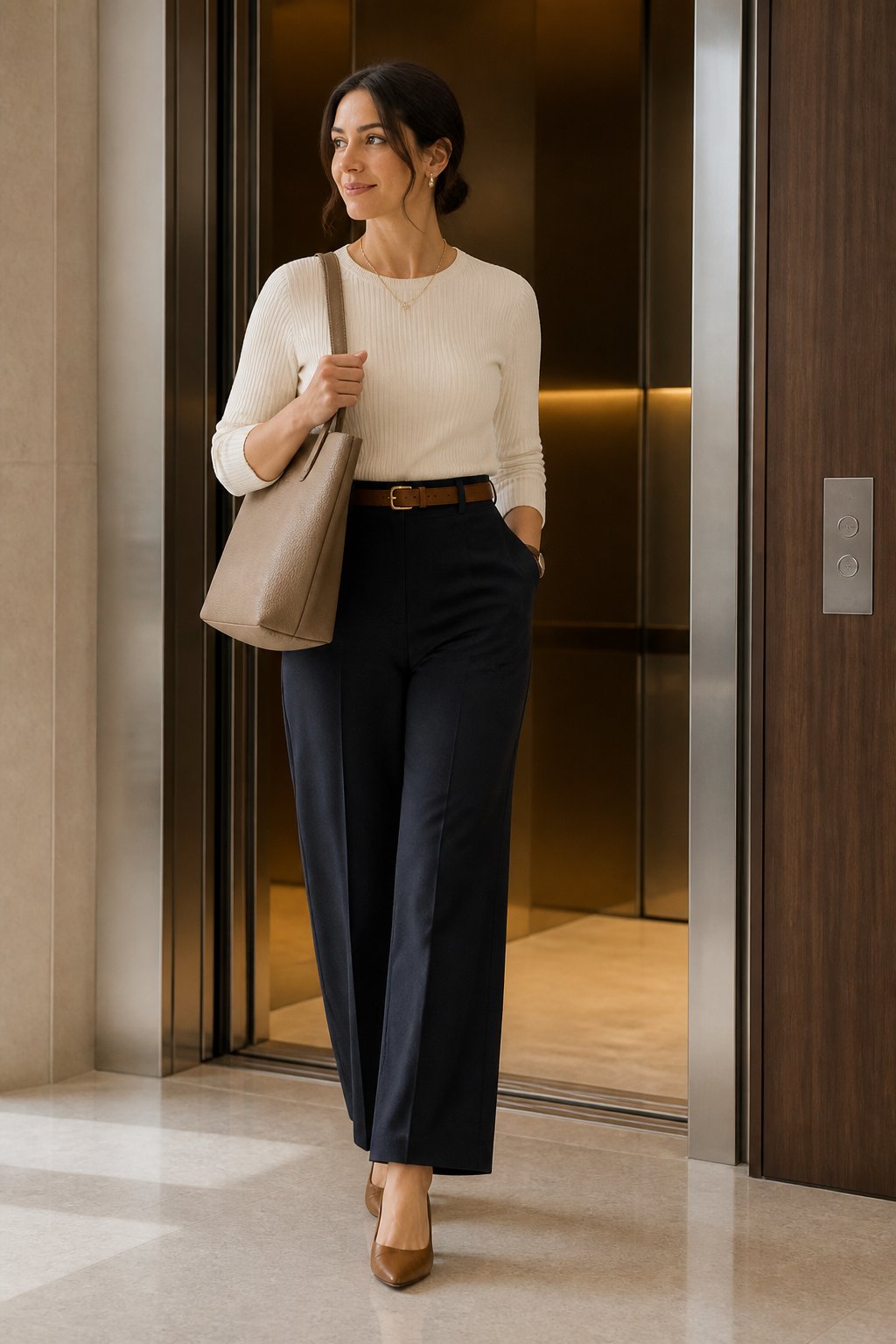
A cream ribbed knit and navy trousers create a clean contrast that is easy to repeat with pieces already in a work wardrobe. A tan tote and shoes soften the pairing without competing with it. Keep the knit fitted enough to tuck comfortably, and choose a trouser length that clears your shoe. If the waist feels too defined, try the top untucked and check where its hem falls when seated.
6. Cream blouse, dark denim, and pointed shoes
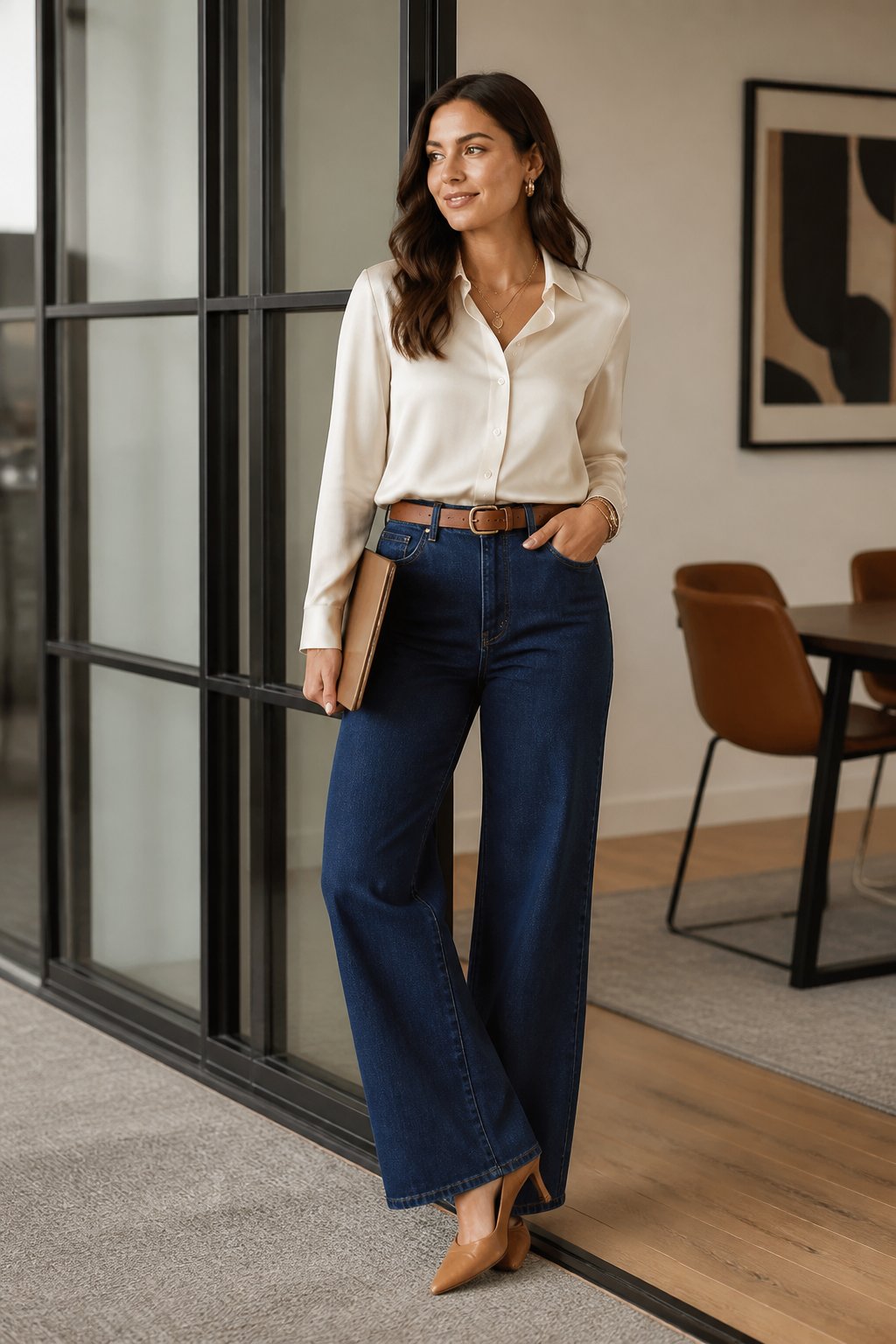
A cream blouse and dark denim give this look a relaxed edge; the brown belt and pointed shoes make it feel more office-ready. Check your workplace dress code before choosing denim, and test that the waistband stays comfortable while seated. Tuck the blouse only as much as feels comfortable, and make sure the hem clears the shoe without dragging.
7. Midi dress, cropped cardigan, and Mary Janes
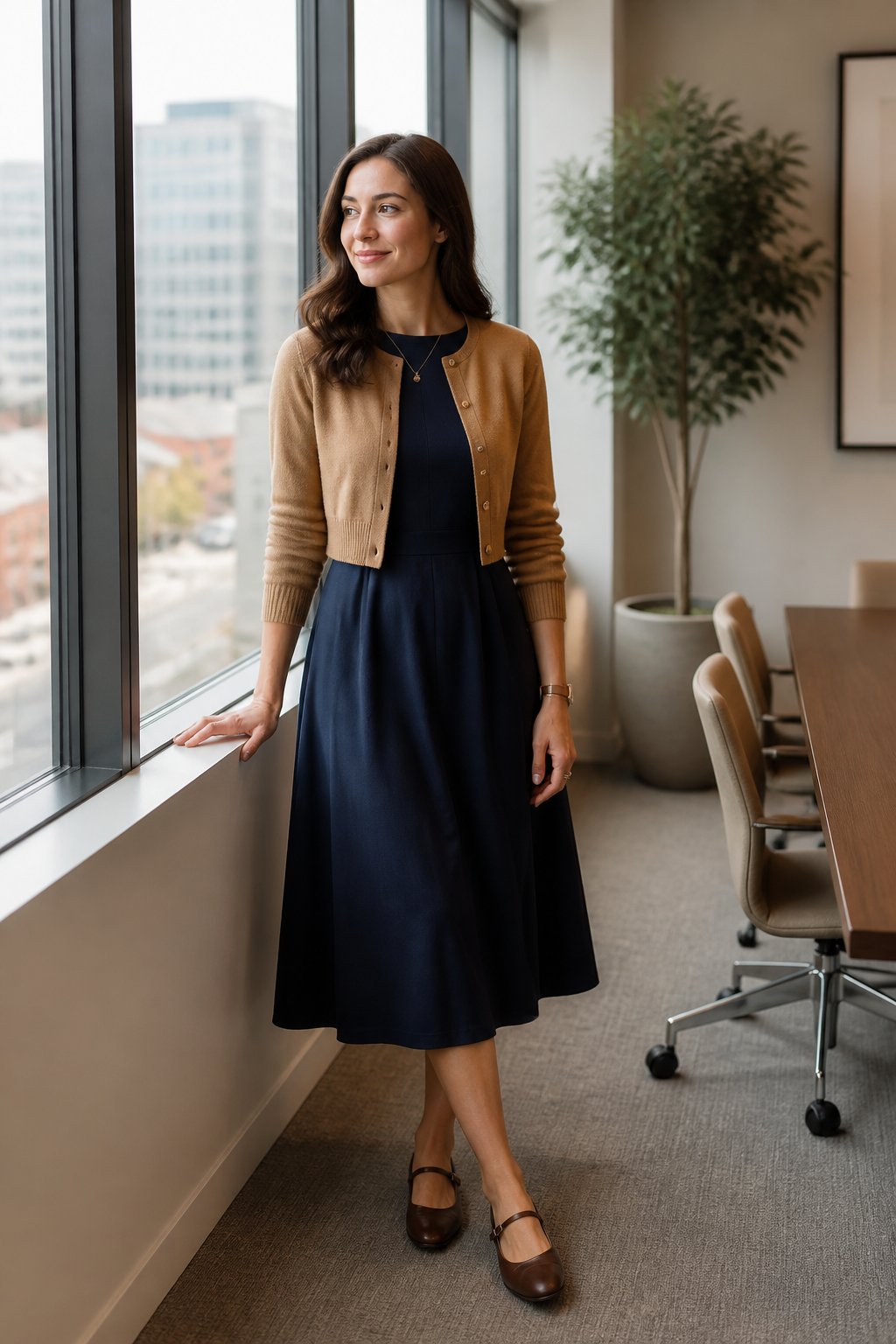
A shorter cardigan leaves more of the dress visible, while a longer cardigan creates a softer vertical line. Pick the proportion you prefer and check that the dress does not cling or ride up when seated. Mary Janes or ballet flats keep the outfit comfortable; a structured bag adds definition if the knit is soft.
8. Sleeveless vest, long-sleeve base, and straight trousers
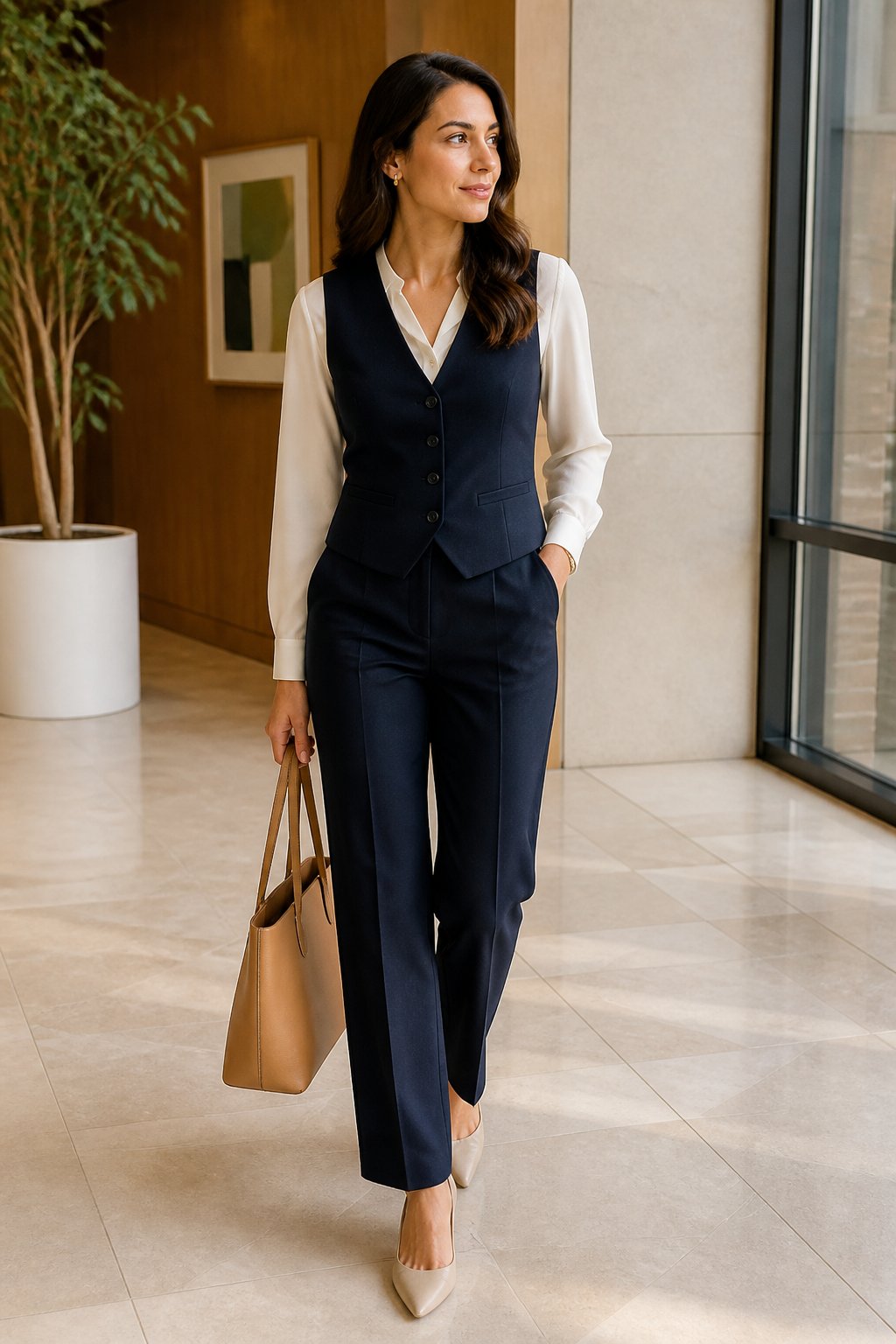
A vest gives the outfit a defined center without the warmth of a full jacket. Wear it over a lightweight long-sleeve shirt or knit, and choose straight trousers to keep the shape uncomplicated. This is especially practical in transitional weather or offices where temperatures vary. If the armholes pull over your base layer, try a lighter fabric underneath.
9. Matte blazer, fluid top, and tailored trousers
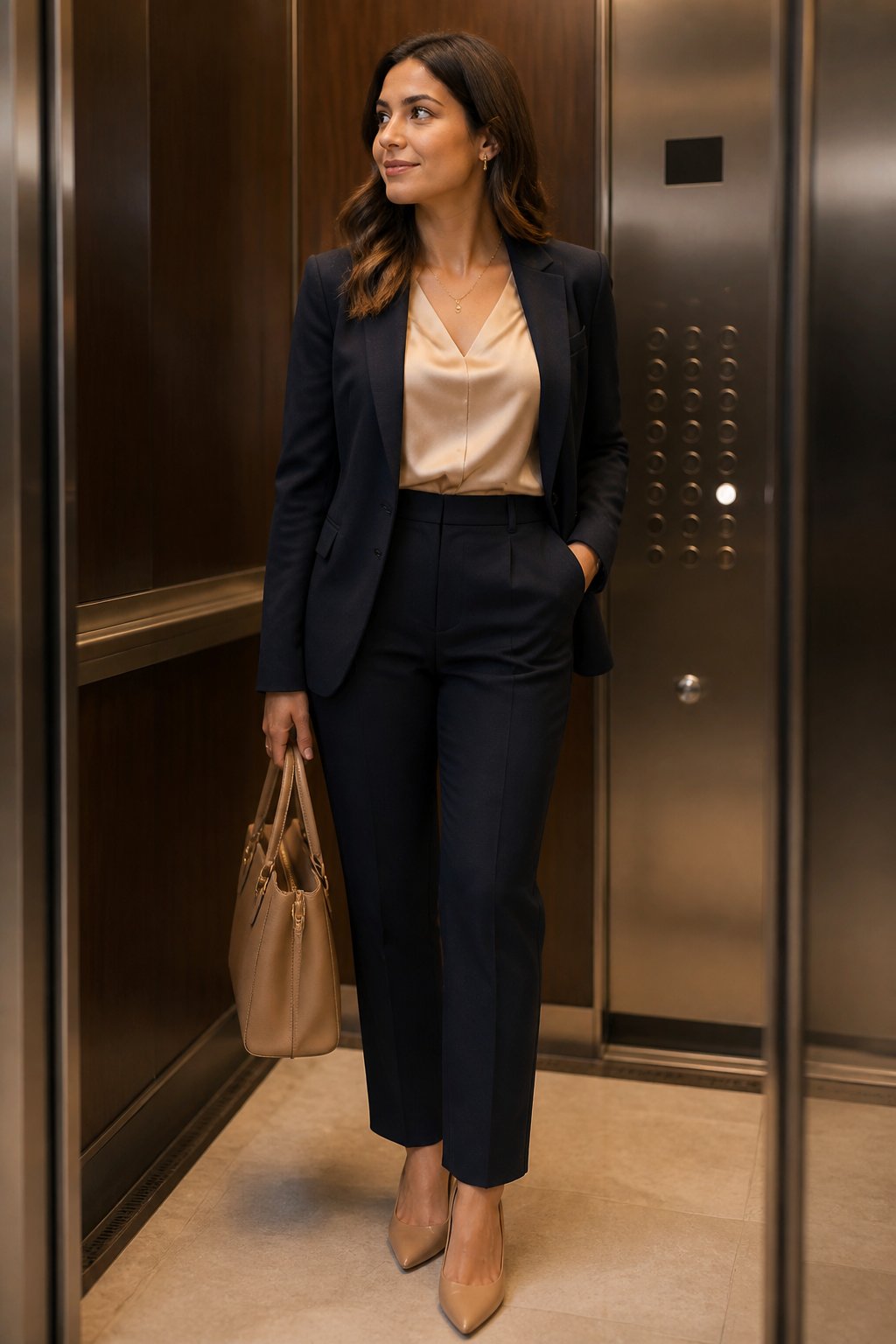
For a slightly dressier office, use one fluid or softly lustrous piece with matte tailoring. The contrast gives the outfit interest without relying on extra accessories. If you prefer more coverage, choose a top that stays in place when the blazer is open. Keep the jacket relaxed enough to move in, especially if you will be carrying a bag or sitting for long meetings.
10. Fine-gauge sweater dress and boots
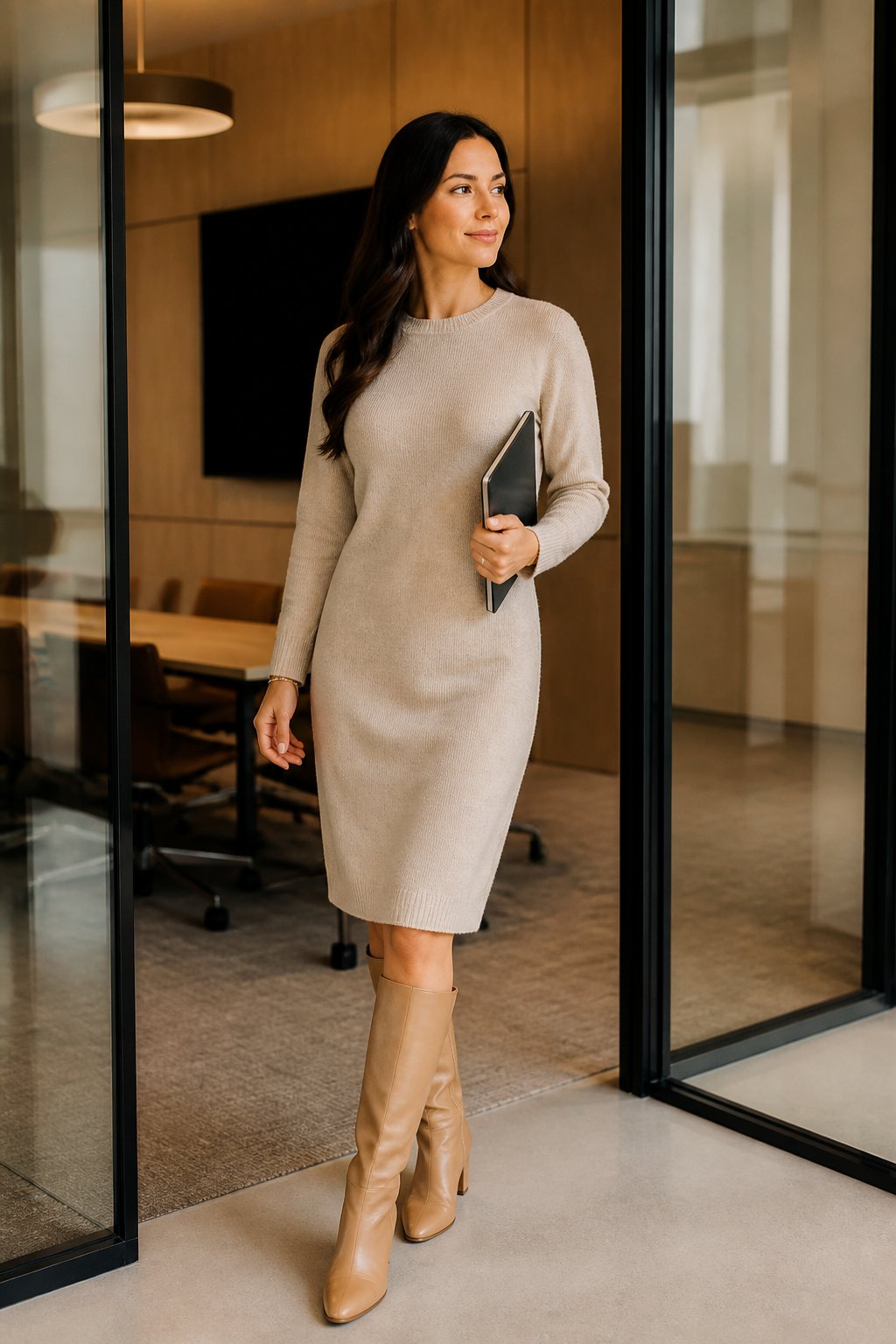
A sweater dress is the simplest option on days when you do not want to coordinate separates. Look for a knit with enough weight to keep its shape, and layer tights or a slip if that suits your preference. A slim boot keeps the lower half tidy; a belt is optional. Check your workplace guidance before wearing knit dresses if the setting expects more formal tailoring.
Make one formula work across your week
Choose two bottoms, three tops, and one or two layers that pass your movement check. Build a more formal combination for presentation days and a lighter one for commuting or warm rooms. Repeat the silhouettes while changing color, texture, or shoes; repetition is useful when the pieces work, not a sign that you need to buy more. When something feels wrong, name the specific problem first: a hem shifts, a sleeve binds, a fabric is too warm, or a jacket feels too formal. Then adjust that one element.
Continue building your work wardrobe
For covered outfits beyond the office, browse modest outfit ideas. If you want more mix-and-match work looks, see work outfit formulas and the guide to business casual versus smart casual. Use the weekly outfit planner to map layers, shoes, and formality to the week ahead.
Keep these outfit ideas handy.
Save this guide on Pinterest (opens in a new tab)More ideas for your wardrobe
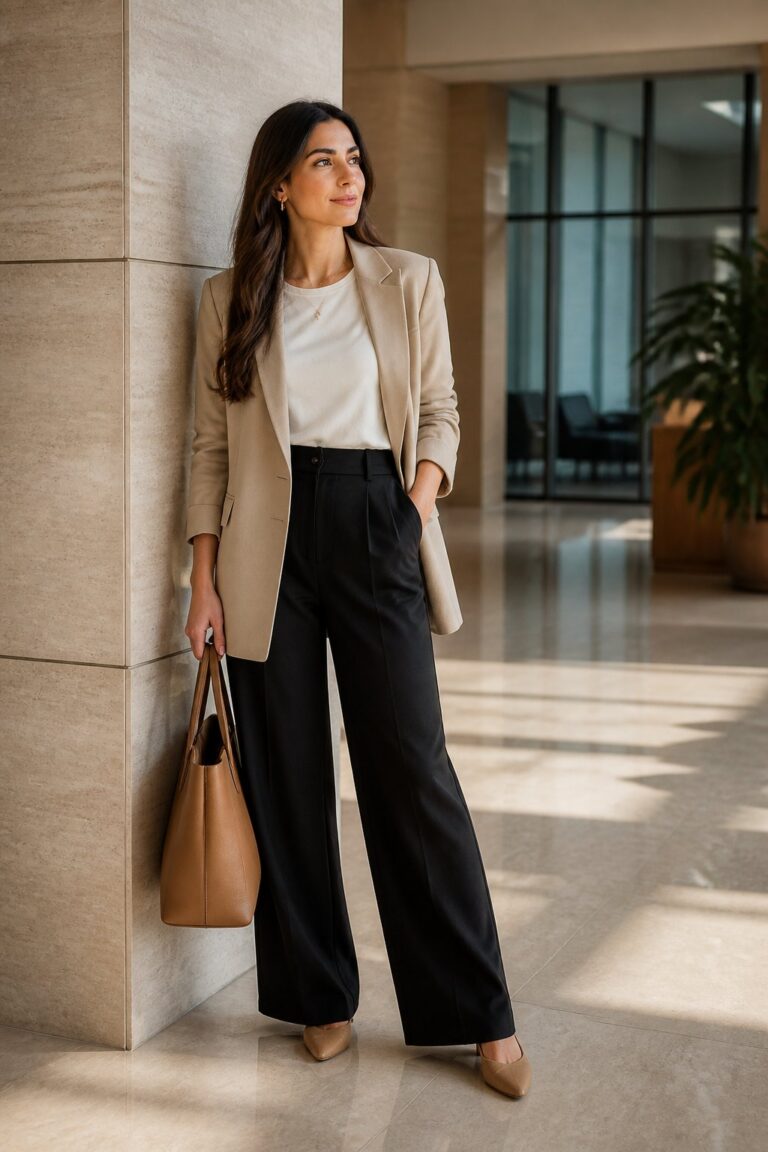
 Modest Outfit IdeasModest Corporate Outfits That Look Polished Without Sacrificing Coverage
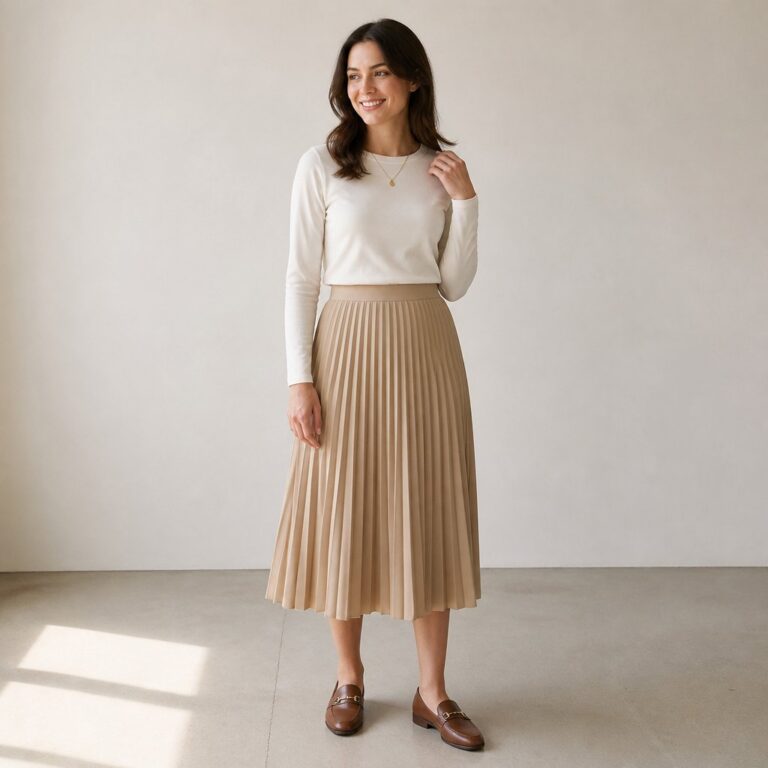
 Modest Outfit IdeasModest Work Outfits for Women That Stay Professional and Comfortable
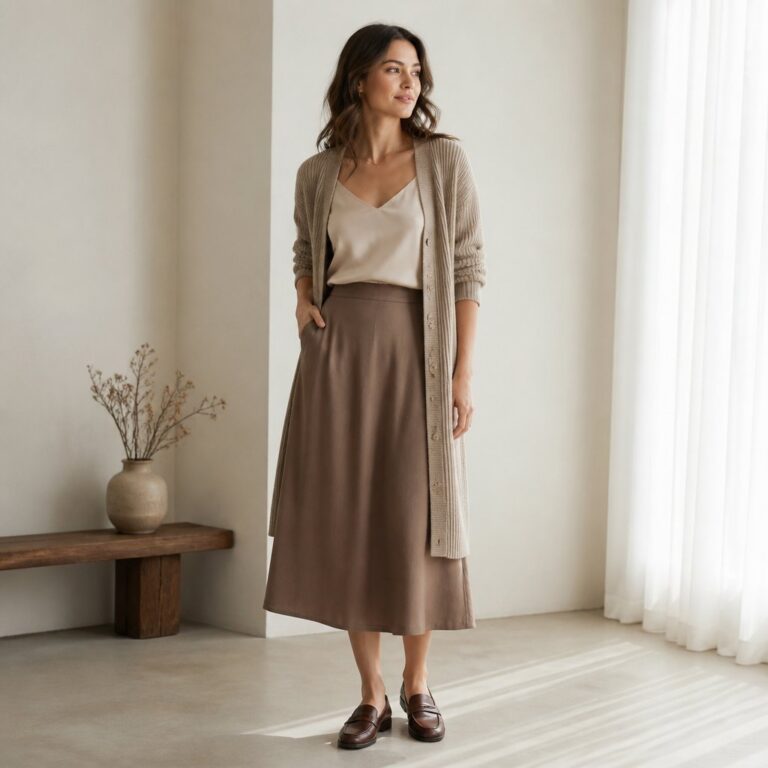
 Modest Outfit IdeasA Modest Capsule Wardrobe Built On Real Outfits
 Modest Outfit IdeasModest Layering Formulas for Easy Coverage and Less Bulk