Work Interview Outfits That Feel Polished Without Looking Overdone
The question comes up before every interview: how polished is too polished, and how casual is too casual? You want to signal that you take the opportunity seriously without looking like you borrowed a costume. The outfits below are built around a simple idea — each piece earns its place by contributing to a complete, comfortable look. None of them relies on a single statement item or a complicated silhouette. If you are building a broader professional wardrobe, the work outfit ideas hub has more direction on how these pieces fit together across different settings.
The blazer-and-trouser formula that never misses
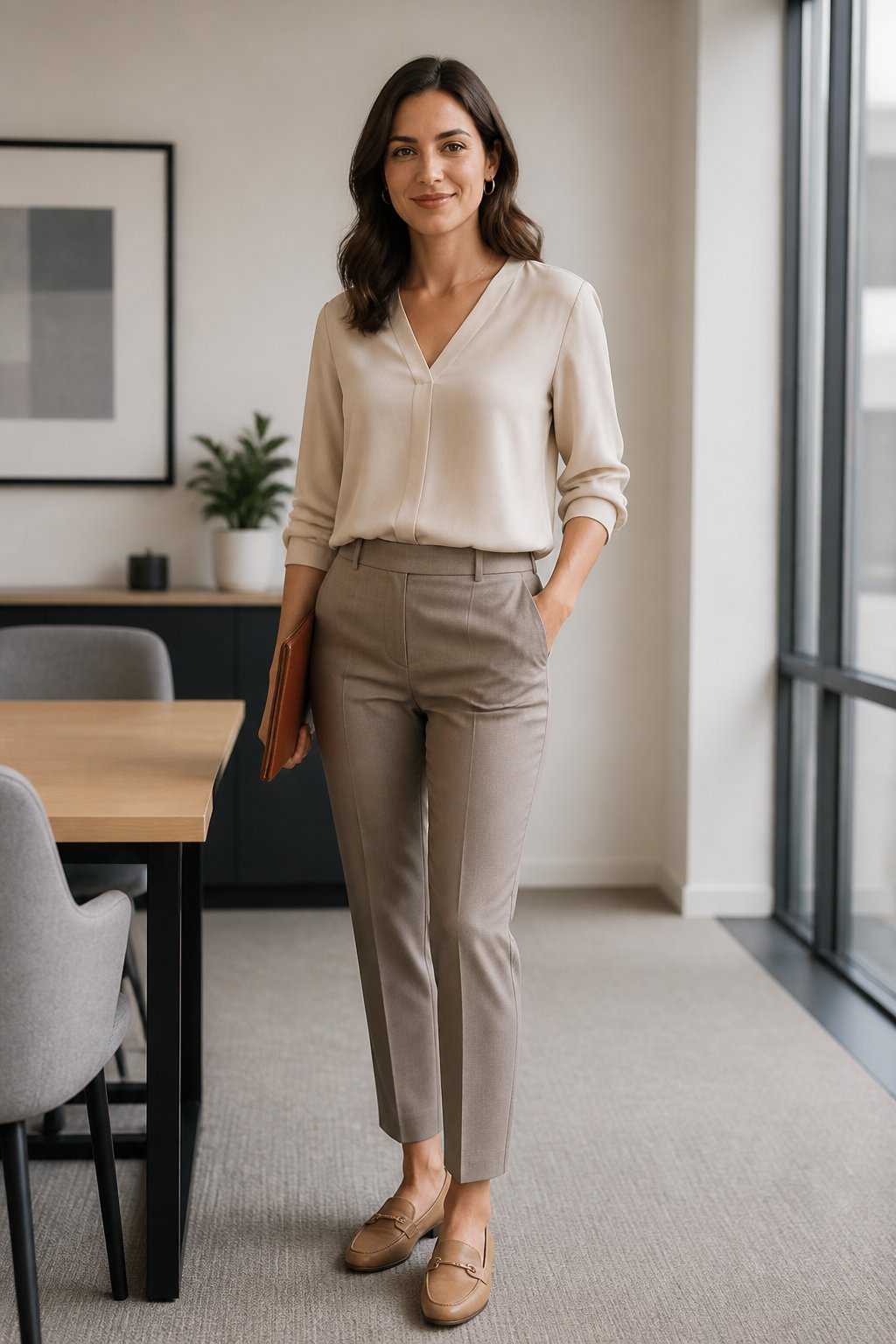
A tan blazer with a white top and black trousers — this is the combination that shows up in every industry and never looks out of place. The blazer adds structure at the shoulders, the trousers keep the line clean, and the white top prevents the whole thing from reading too dark or heavy. What matters here is that none of the three pieces fights for attention. Each one does its job quietly. The tan tone is warmer than navy or charcoal, which keeps the look approachable without sacrificing the formality a blazer brings. If you own only one interview outfit formula, this is the one to perfect first.
Make sure your blazer works when you sit down
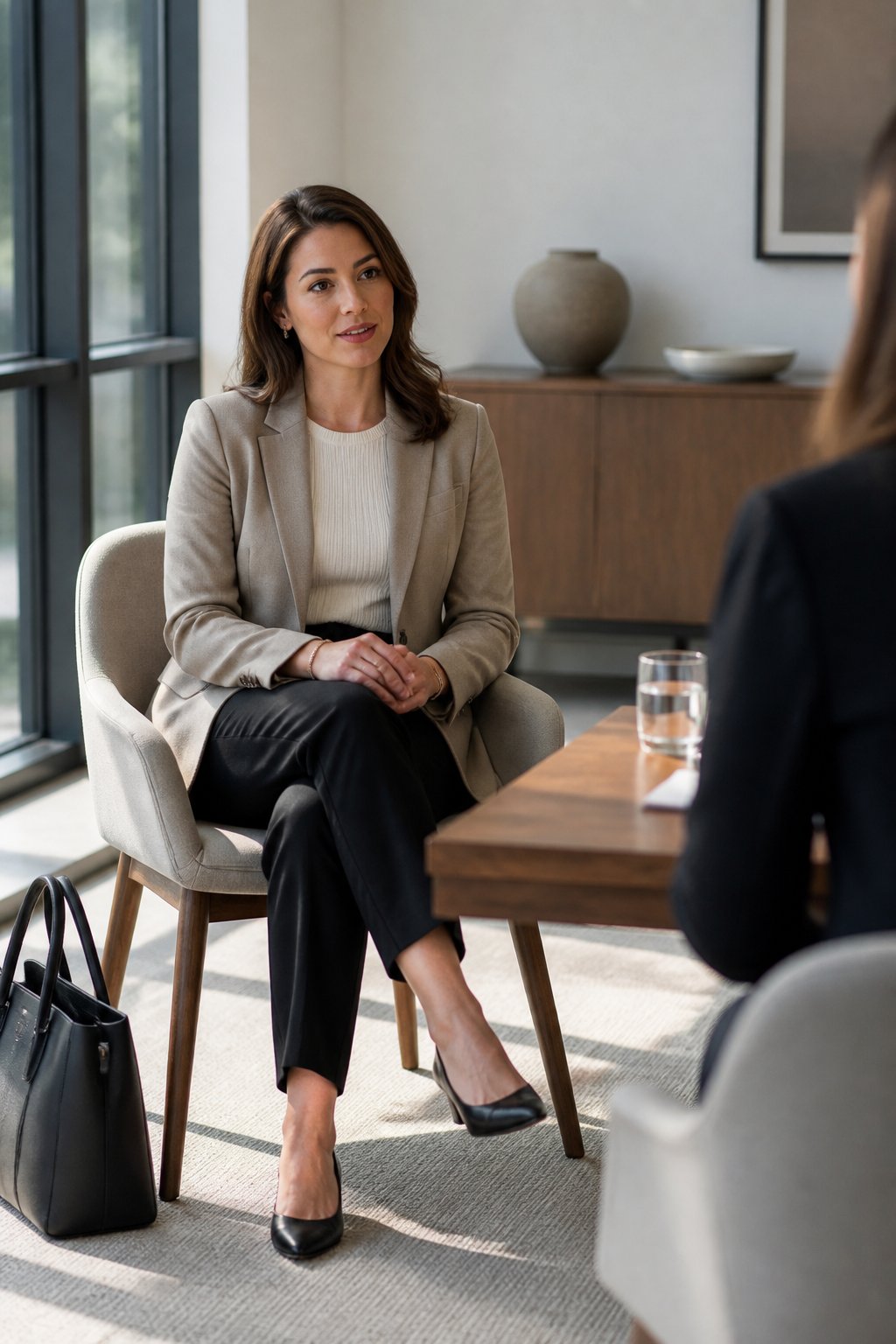
A black blazer with a cream top and black trousers looks sharp in the mirror, but the real test happens when you settle into a chair across from the interviewer. If the blazer pulls across the shoulders or creeps up at the collar, you will spend the conversation adjusting it instead of listening. The version shown here has enough ease through the body to let you lean forward, gesture, and sit back without the fabric catching anywhere. That is the detail that separates a blazer that photographs well from one that actually works in an interview. Before you commit to an outfit, sit down in it for at least a minute.
When fabric does the talking
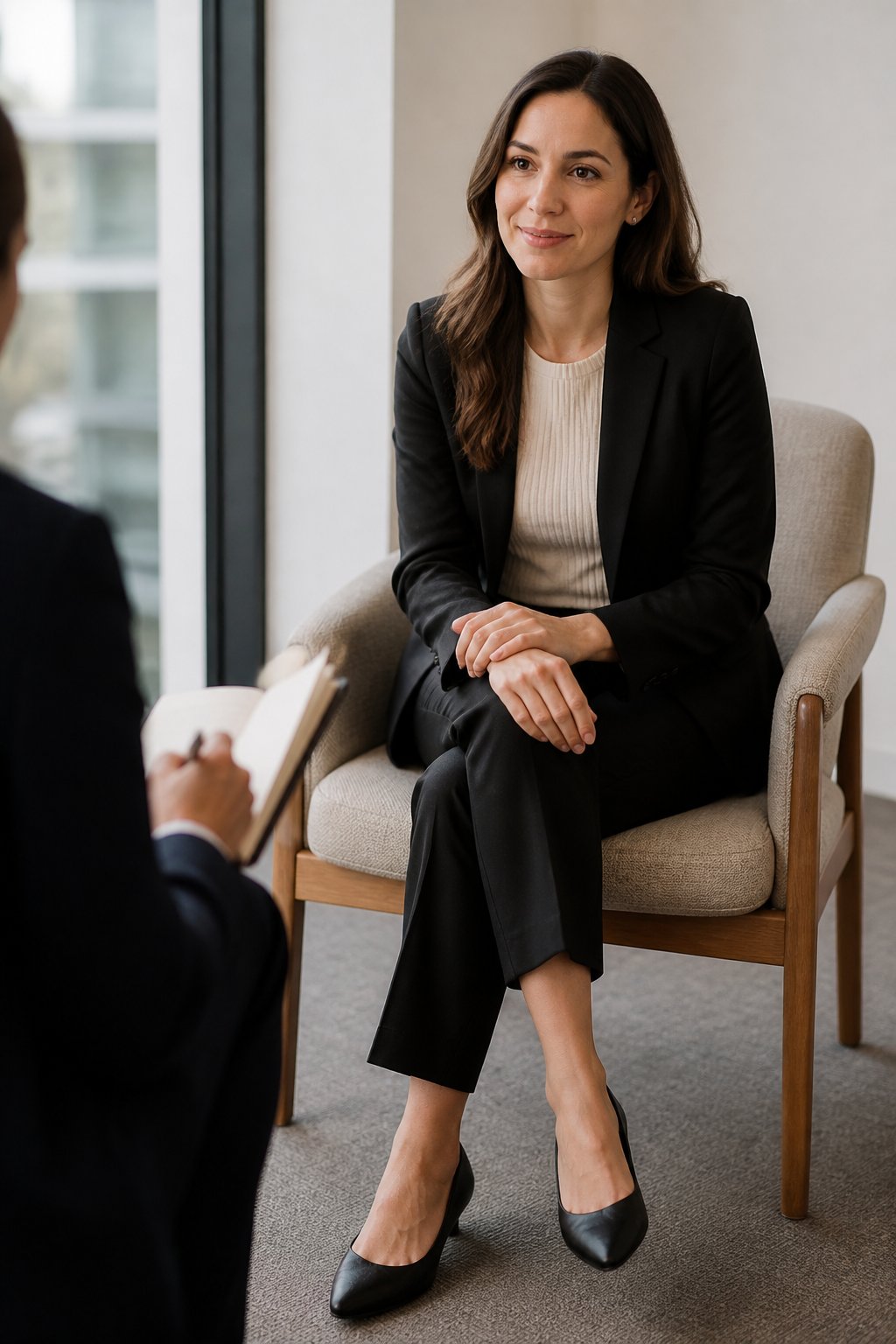
The same black blazer and black trousers, but now the top is a cream ribbed knit instead of a smooth weave. Texture is an underused tool in interview dressing. A ribbed surface catches light differently than flat cotton or silk, which means it adds visual interest without adding color, print, or pattern. In a room where everyone else is wearing smooth fabrics, a ribbed layer stands out in a way that feels intentional rather than loud. It also has a practical advantage — ribbed knits tend to hold their shape well through a long day, so you are not worrying about wrinkles or creases by the second interview round.
A shirt dress is the ultimate one-layer interview outfit
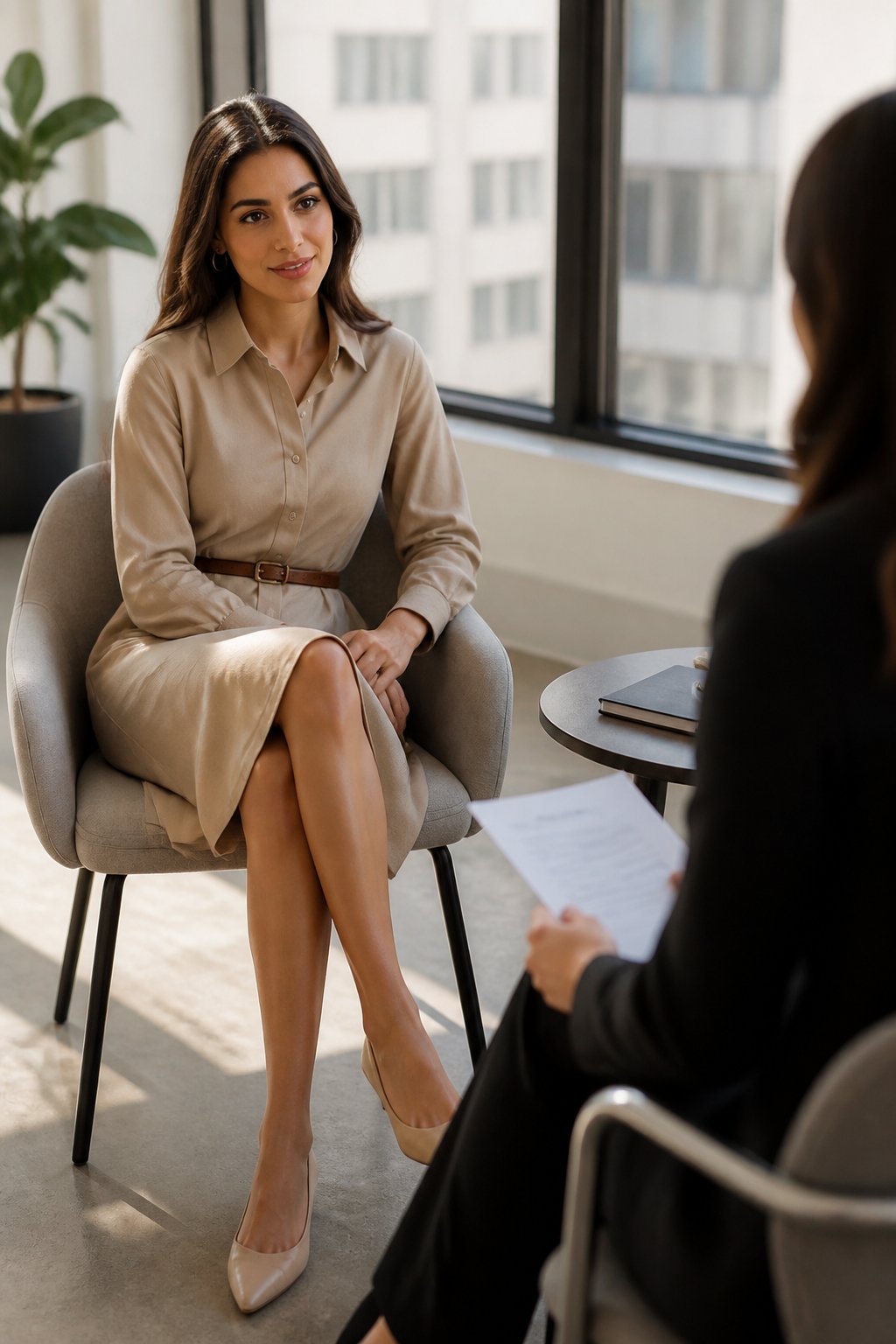
A tan button-down shirt dress with a brown belt and tan heels. One piece of clothing that does the work of three. The collar brings the polish of a shirt, the belt defines the waist, and the hemline lands at a length that reads professional without feeling severe. There is no risk of mismatched separates, no question about whether the top works with the bottom, and no extra layer to adjust. This is the outfit you reach for when you want to spend zero mental energy on coordination and put all of it toward the conversation. A shirt dress also transitions naturally from interview to lunch or coffee afterward, so you are not stuck in a full suit when the formal part ends.
A gray blazer and loafers for back-to-back interviews
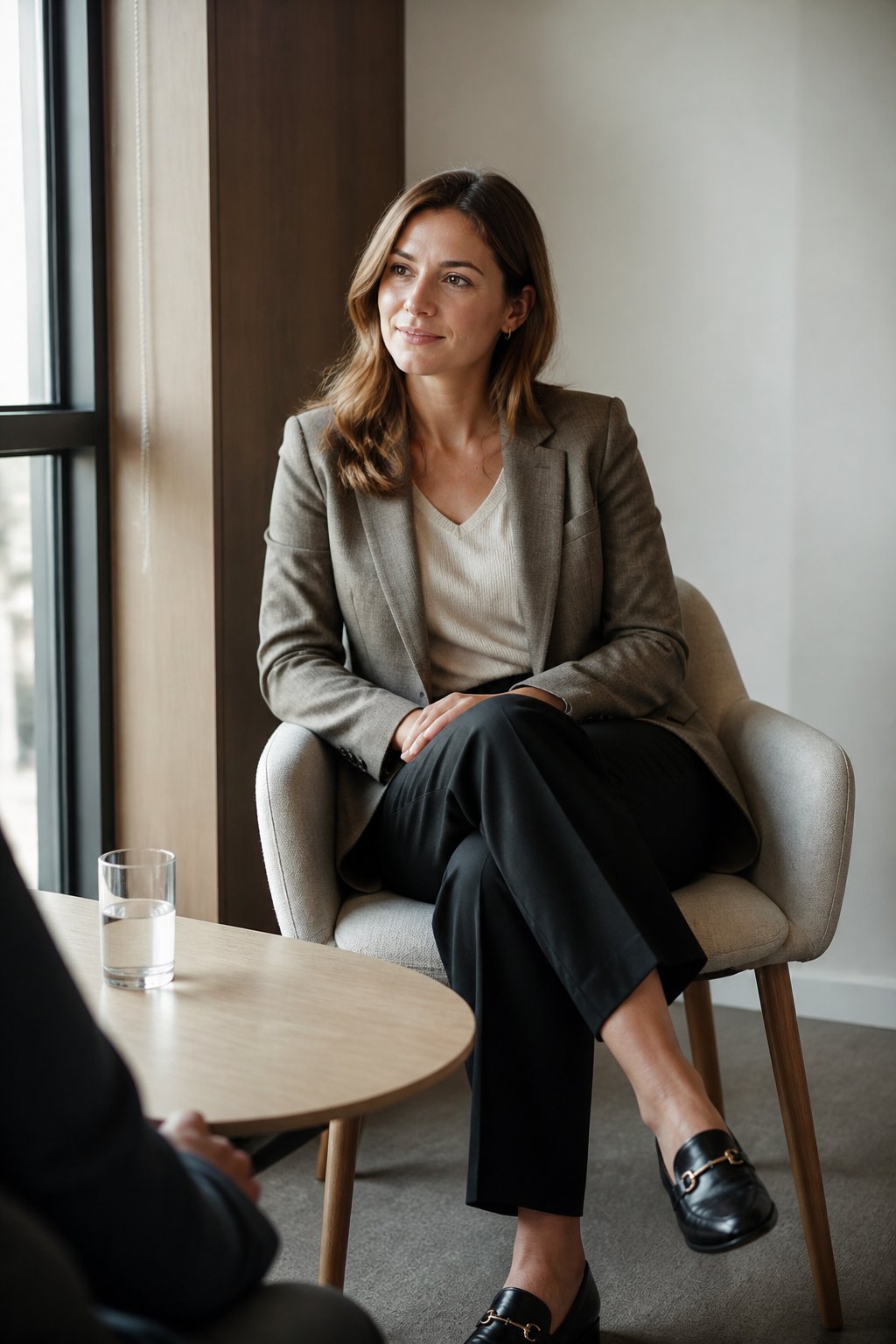
A gray blazer over a white V-neck with black trousers and loafers with gold hardware. This is the formula for a day with multiple back-to-back interviews — comfortable enough to wear for hours, polished enough for every conversation, and easy to adjust between meetings. The gray blazer is softer than black or navy, which makes the overall impression less rigid. The loafers keep the look grounded and quiet. And the V-neck prevents the outfit from reading as a uniform, because there is a sliver of skin that breaks up the layers. The trick with loafers in an interview setting is to choose a pair with a low profile and minimal detailing so they support the outfit without becoming the topic.
Choose shoes that support the outfit, not upstage it
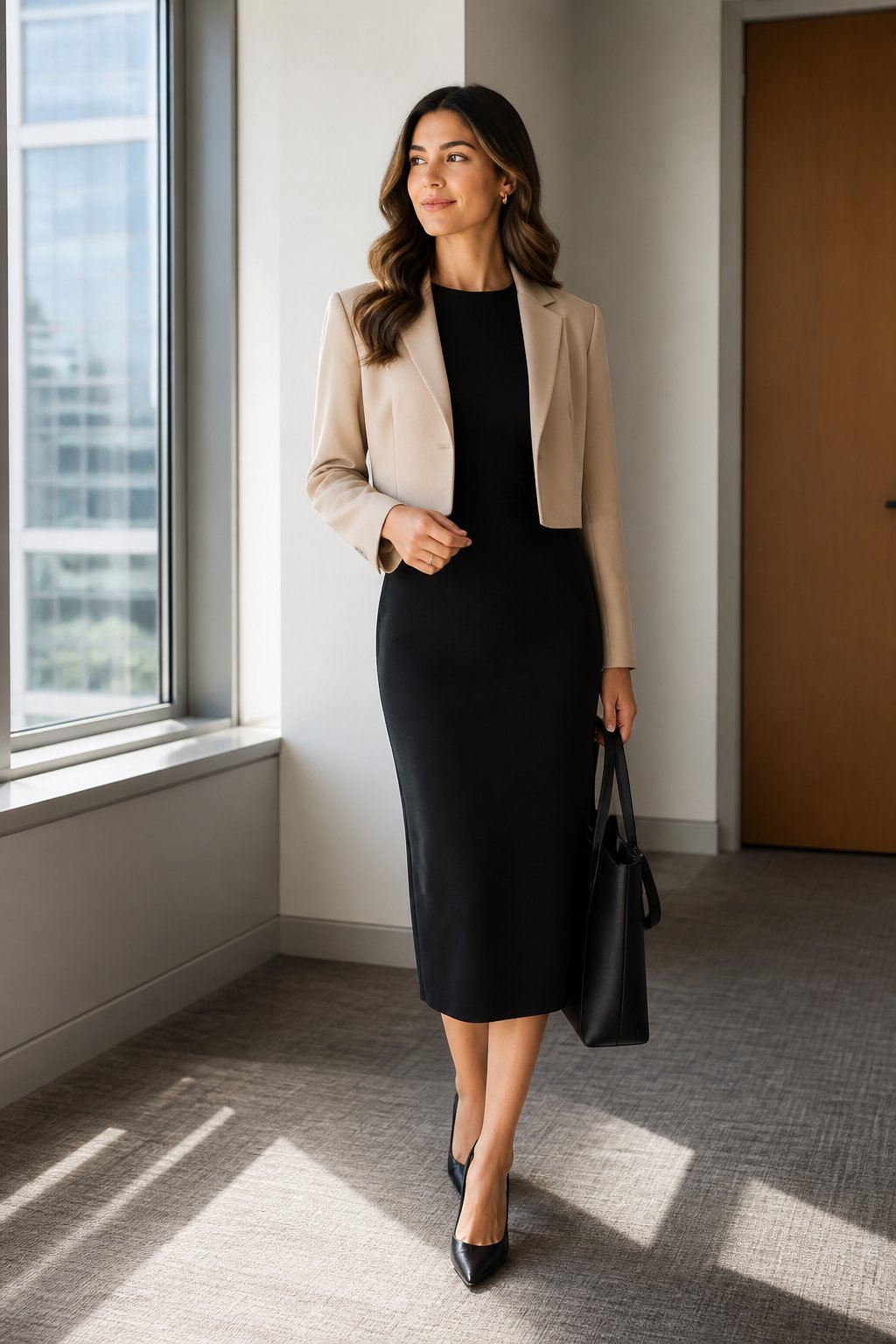
A black midi dress with a cropped beige blazer and black pumps. The dress is the foundation — it is a single piece that covers enough ground to stand on its own. The cropped blazer adds the professional frame without covering the dress entirely. But the shoes are the detail that could tip this look into either direction. A moderate heel height and a classic pump shape keep the focus on the outfit as a whole rather than on what is happening at ground level. The stride matters too — in the image the woman is walking, not posing, and that movement shows how the shoes land in real life. If you cannot walk comfortably in the heel you are considering, it will show in your posture and your confidence.
Let accessories sit quietly in the background
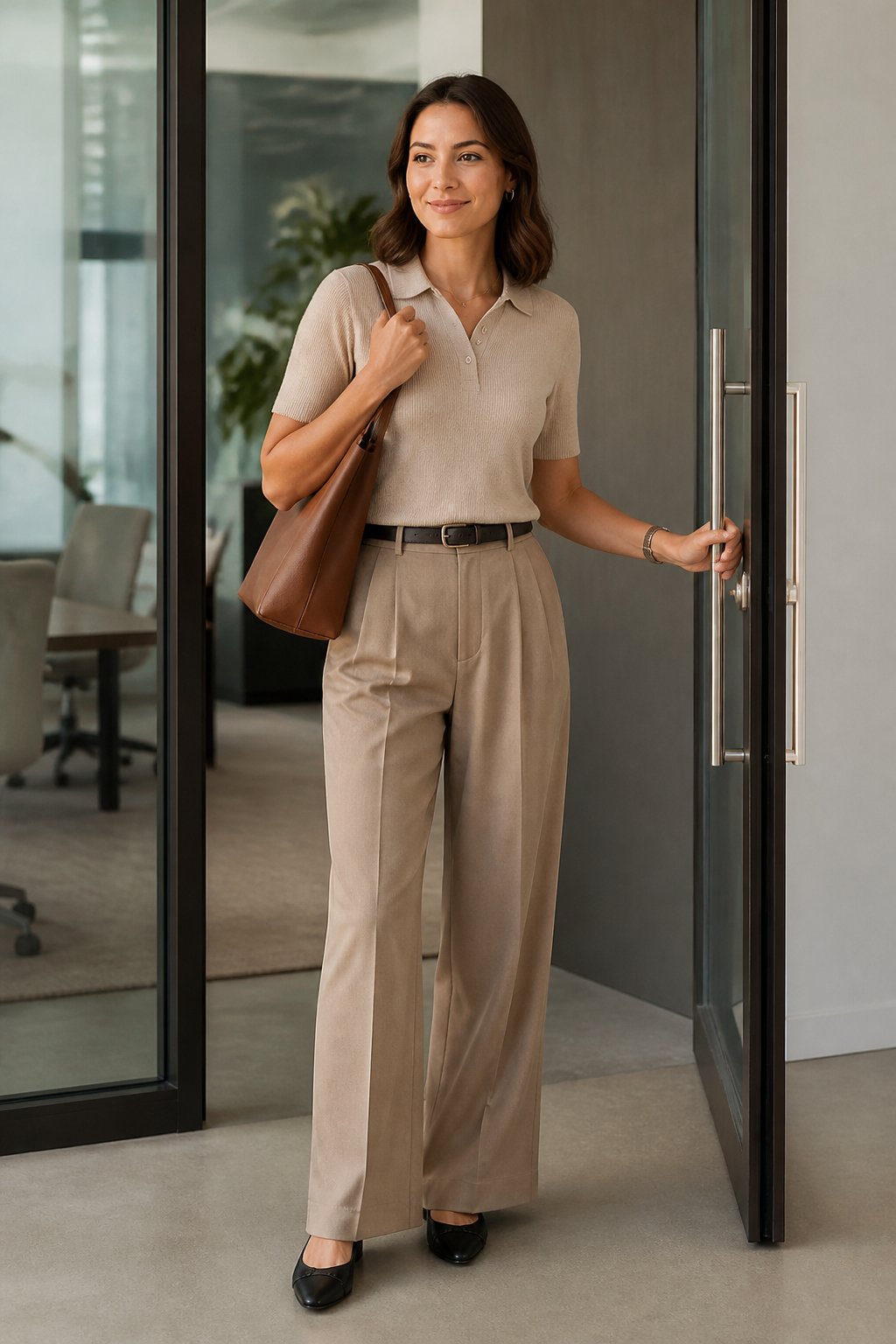
A beige polo with wide-leg tan trousers and a brown tote. The accessories here are intentional and minimal: one structured bag with clean lines, one belt at the waist, and shoes that match the tone of the trousers. None of them has a logo large enough to read from across a conference table. That is the standard for interview accessories. A bag should hold what you need (portfolio, second copy of your resume, phone on silent) without becoming a prop you fidget with. A belt should sit flat and stay where you put it. When accessories require attention during the conversation, they are working against you — not for you.
The cold-room combination that keeps you comfortable
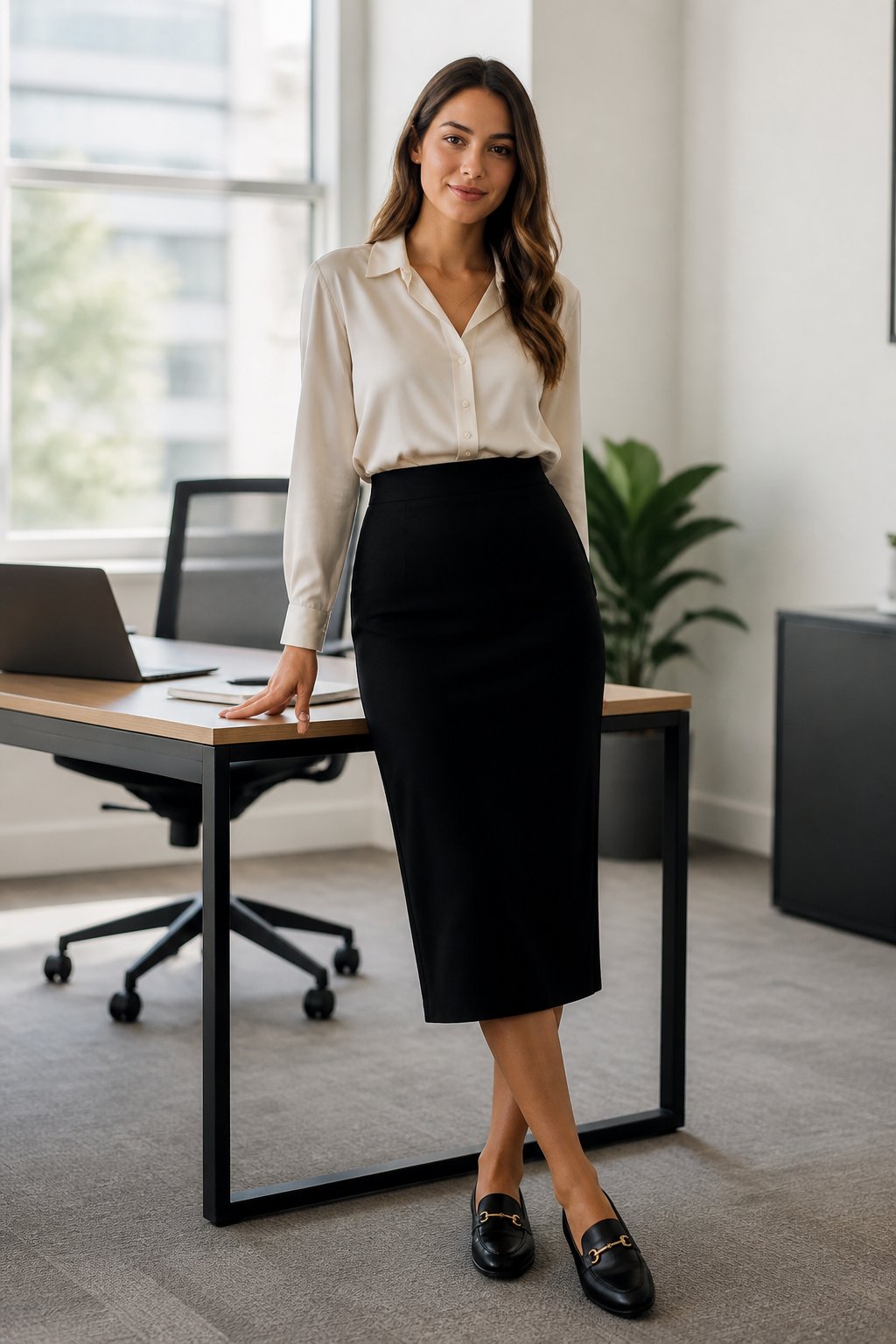
A cream silk blouse with a black pencil skirt and horsebit loafers. Office temperatures are unpredictable, and interview rooms tend to run colder than the rest of the building. This combination handles that better than most because of how the two layers relate. The silk blouse is light enough for a warm commute or a hallway walk, and the pencil skirt is substantial enough to keep your legs comfortable in a cold conference room. You can add or remove a blazer if needed, but the core outfit holds its own without one. The horsebit loafers keep the look polished while staying quiet under the desk. If you tend to run cold in meetings, this is a reliable structure to build around.
A vest suit says confident without saying a word
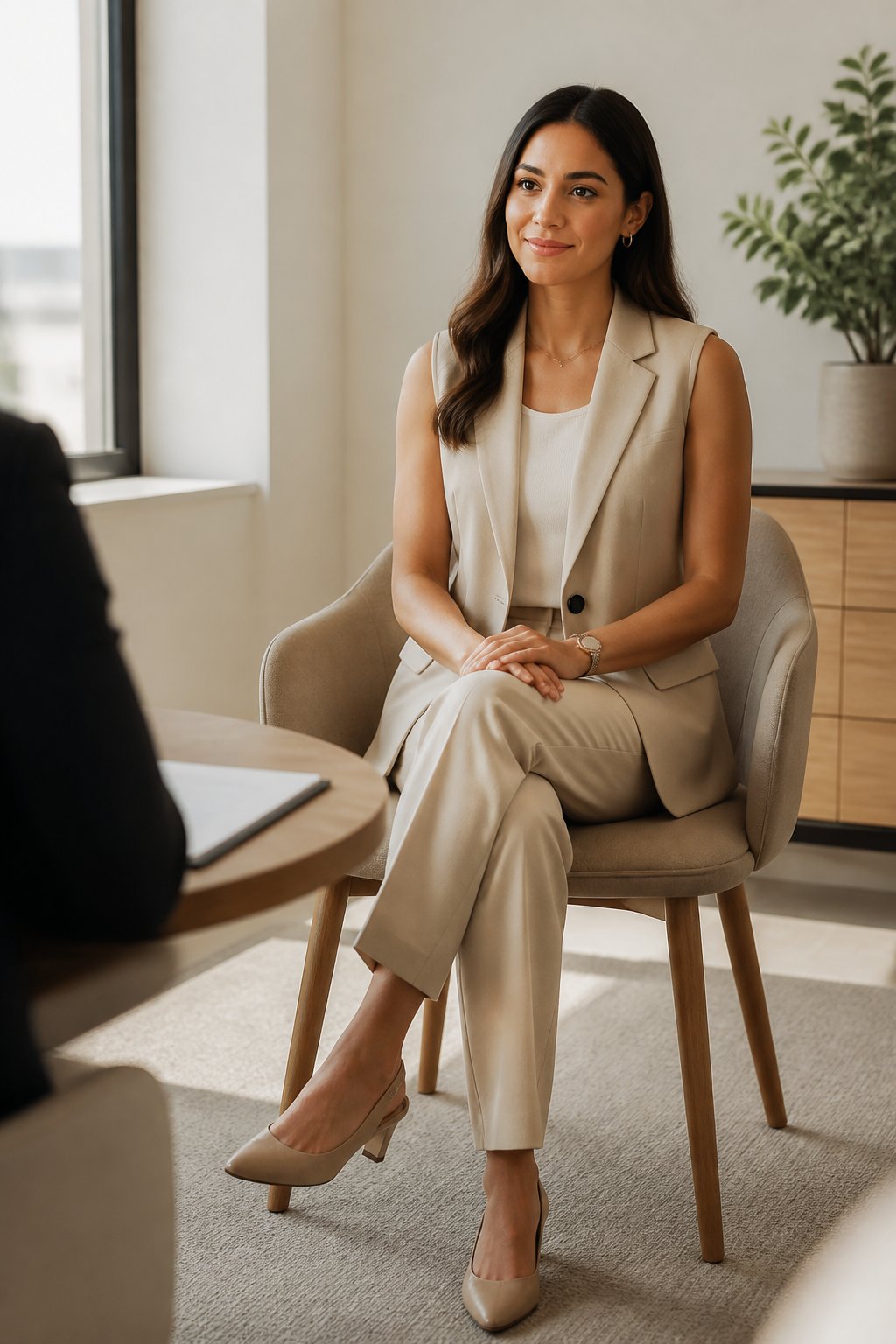
A beige longline vest suit with a white tank and nude kitten heels. This is the most modern option in the set, and it works because the proportions are deliberate — the longline vest creates a clean vertical line that elongates the silhouette without relying on a jacket. The sleeveless cut signals an ease with current professional dressing that a traditional suit does not. It also removes the jacket question entirely. No button to fidget with. No lapel to adjust. The vest suit stands on its own terms, which is exactly the energy you want in an interview. Kitten heels keep the vertical line intact without adding height that might affect how you walk into the room.
The full picture: when your outfit feels finished
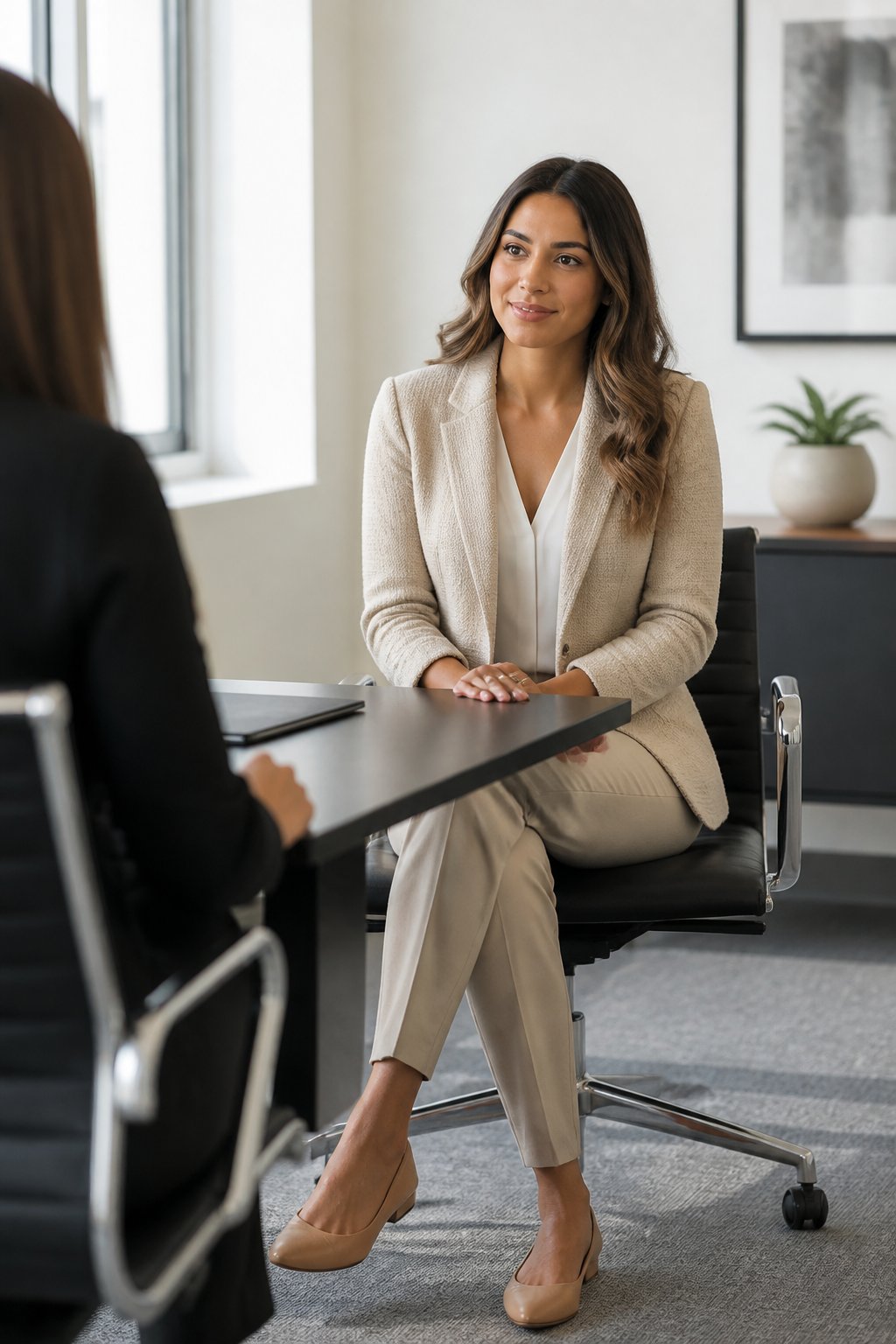
A beige blazer with a white blouse and matching beige trousers, finished with flat shoes. This is the outfit that looks the most settled of the ten. Nothing is pulling, bunching, or sitting at an angle that needs correction. The monochrome beige palette keeps the eye moving vertically, which reads as composed and intentional. The flat shoes remove any question about comfort or gait. When every piece fits the way it should and no layer requires mid-conversation adjustment, you stop thinking about your clothes entirely. That mental freedom — the ability to focus fully on the person across the table — is the real goal of interview dressing.
Plan the next step
If you want a wider starting point, the work outfit ideas hub shows the base pieces that make interview dressing easier, and the work outfit formulas guide helps you turn those pieces into repeatable combinations.
When the dress code sits somewhere between polished and relaxed, the business casual vs smart casual comparison can help you decide how sharp the outfit should feel before you get dressed.
Keep these outfit ideas handy.
Save this guide on Pinterest (opens in a new tab)More ideas for your wardrobe
 Work Outfit IdeasOffice Capsule Wardrobe: 15 Pieces I’d Choose for a Real Workweek
 Work Outfit IdeasCorporate Capsule Wardrobe Ideas for a Polished Office Rotation
 Work Outfit IdeasBusiness Casual Capsule Wardrobe: What Belongs, What Doesn’t, and Why
 Work Outfit IdeasWork Outfit Formulas: Repeatable Office Looks for Busy Workdays